Anodized Titanium Doesn’t Peel Like Plating. It Still Scratches.
Titanium’s vivid blue, purple, and gold tones can come from its own oxide layer. That color wears differently from an applied coating, especially on earrings kept in around the clock.
September 22, 2026 · 8 min read
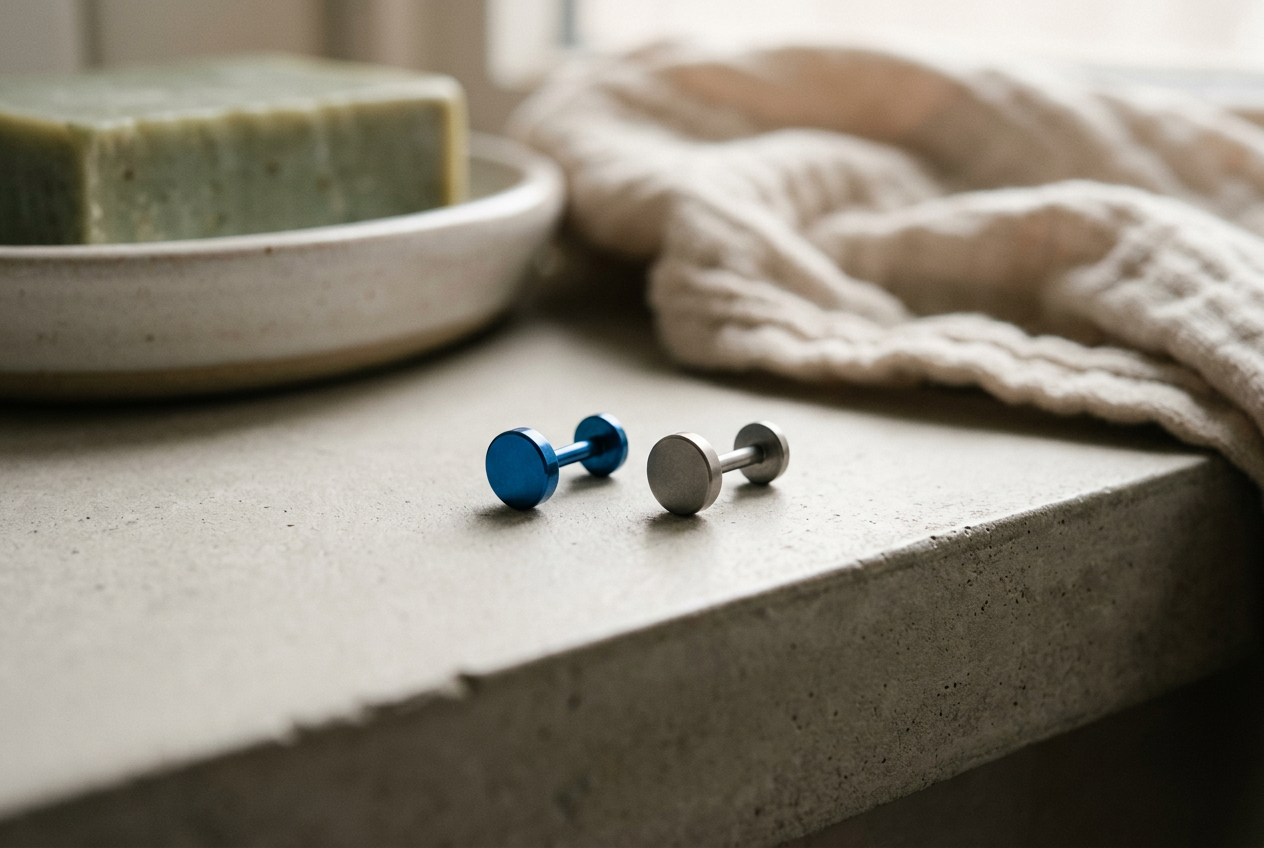
Use a cobalt-blue flat-back stud as the decision test: an implant-grade titanium post, a flush disk behind the ear, and a polished blue disk at the front. It stays in for sleeping and showering rather than coming out with the rest of the day’s jewelry. That routine is where the difference between anodized color and an applied gold-color coating becomes useful.
A flat-back earring, meaning the post’s backing sits flush against the earlobe, puts different parts of the piece through different wear. The front catches fingers, phone edges, and hair tools. The post sits against skin. The back meets the pillow.
If the blue surface changes, its location often explains more than the jewelry’s age does.
This is unisex advice. The chemistry and wear pattern do not change across wardrobes, and the same buying checks apply to earrings, rings, chains, and body jewelry.
The color comes from light, not pigment
Titanium naturally forms a thin oxide layer when it meets oxygen. Anodizing, an electrochemical treatment that uses current in a conductive bath, controls the thickness of that layer. Light reflects from the oxide’s surface and from the titanium beneath it; the interaction between those reflections creates the visible color.
There is no blue dye inside our stud and no blue sheet wrapped around it. A maker adjusts the electrical conditions to produce a particular oxide thickness, which can yield bronze, purple, blue, yellow, pink, or green effects. The exact appearance also depends on the underlying polish and the viewing light, so two pieces anodized to the same general blue may not look perfectly matched.
A mirror-polished disk tends to show a brighter, more reflective color. A matte surface scatters light and reads softer. Finger oil can temporarily mute either finish, which is why a blue stud may look grayish at the end of a week and vivid again after a gentle wash.
Anodizing does not upgrade the metal underneath
Color says little about titanium grade. A vivid finish does not prove that the piece is implant-grade, a term used for titanium that meets a recognized material standard for long-term contact with the body. Look for a stated grade or standard from the seller, especially for jewelry worn through a piercing.
Anodizing also does not turn titanium into gold, strengthen a weak clasp, or correct rough polishing. The cobalt-blue flat back remains titanium throughout. Its weight, thread quality, post length, and surface finish still determine whether it feels comfortable. If the post is too short, color will not stop pressure at the lobe.
If the disk has a sharp edge, anodizing will not round it.
“Hypoallergenic” deserves the same caution. Implant-grade titanium is widely chosen for people who avoid nickel-bearing jewelry, but the marketing word alone does not identify an alloy, and a complete piece may include separate components. Check the post, decorative end, pin, and backing rather than judging the blue surface.
Scratching is different from peeling
An anodized oxide layer is part of titanium’s surface, so it does not peel away as a separate skin in the manner of a failing applied coating. It can still be scratched or abraded. A deep mark changes or removes the oxide at that spot, revealing gray titanium or a different interference color beneath.
On the blue flat-back stud, inspect the rim of the front disk first. That edge meets hard objects more often than its center. A mark from metal tweezers or a countertop may stay visible after cleaning; a cloudy patch made by skin oil usually will not. The back can develop fine wear from repeated contact with bedding, although that matters less visually because it sits behind the ear.
Applied gold-color finishes follow another wear pattern. Conventional gold plating deposits a layer of gold over a base metal, while physical vapor deposition, often shortened to PVD, bonds a thin decorative coating to the surface under controlled conditions. Their durability varies with preparation, coating thickness, and friction. PVD is often chosen for tougher daily-wear finishes, but it remains an applied layer.
When a gold-color coating wears through, the contrast can be obvious because a pale or gray base appears underneath. Anodized blue titanium also reveals gray at a deep scratch, yet there is no coating edge waiting to lift or flake. Neither finish is immune to wear. They fail differently.
Solid gold is the alternative when a lasting gold tone matters more than price or low weight. It scratches, but the material beneath the scratch remains gold-colored. It also costs far more than anodized titanium, which generally sits above anonymous fashion-metal jewelry and below comparable solid-gold pieces.
Daily wear favors protected shapes
Anodized color tends to fare best on smooth earrings, pendants, and recessed details that avoid repeated scraping. Rings and bracelets take harder contact from desks, door handles, and other jewelry, so their high points can show wear sooner. This is a placement issue as much as a finish issue.
The flat-back format helps our blue stud. Its rear disk does not have a butterfly clutch projecting into the pillow, and the decorative front presents one compact surface rather than several exposed prongs. Fit remains crucial. A correctly sized post leaves enough room for the tissue without allowing the earring to swing and rub; a post that is too long can snag, while one that is too short can press.
For a healed piercing, a vivid anodized end can make a small color point without the weight of a larger stone. For a fresh or irritated piercing, follow a qualified piercer’s material, sizing, and aftercare guidance rather than swapping jewelry to chase a color.
Cleaning should remove film, not grind the finish
Start gently. For removable jewelry, brand care instructions commonly call for warm water, mild soap, and a soft cloth, followed by thorough rinsing and drying. That is enough to remove the skin oil that makes interference colors look dull. Do not judge the blue disk until it is clean and viewed in neutral light.
Skip toothpaste, metal polish, abrasive pads, and stiff brushes. They can scratch the oxide or change the underlying polish, which changes how the color reflects even if much of the anodized layer remains. Harsh household chemicals are also a poor default. Gemstones, adhesives, and threaded or threadless mechanisms may impose stricter limits than titanium itself, so the complete piece’s instructions win.
Jewelry still installed in a piercing needs a different approach. Do not remove, rotate, or soak it merely to restore shine, particularly while the piercing is healing. Use the aftercare method recommended for the piercing, then have a piercer inspect persistent discoloration or buildup.
The useful buying checks
Choose anodized titanium when you want saturated color, low weight, and no decorative plating layer. Ask for the titanium grade, find out whether every skin-contact component uses the stated material, and look closely at the polish around edges and connection points. A reputable seller should also explain whether the piece can be reanodized if its color becomes marked.
Color matching needs realism. Interference color shifts with light and viewing angle, and separate pieces may show small differences. Buy paired earrings together if a close match matters. For a curated ear, slight variation is less distracting and can be used deliberately beside plain gray titanium.
Return to the cobalt-blue flat back after cleaning. An even blue surface that brightens once oil is removed is behaving as expected. A permanent gray line at the rim is wear. If that visible mark would bother you more than a thinning gold-color coating, plain polished titanium or solid gold is the cleaner daily choice.
Questions people ask
Does anodized titanium color rub off on skin?
The color does not normally transfer like paint because it comes from titanium’s oxide layer rather than pigment. Friction can scratch or thin that layer, leaving a gray mark on the jewelry itself. Discoloration on skin may instead come from residue, cosmetics, or another component and warrants checking the full piece.
Can anodized titanium be worn in the shower?
Titanium itself handles ordinary water well, but shower products can leave a film that dulls the visible color. Rinse the jewelry and dry it gently. Follow the maker’s directions when the piece includes stones, adhesive, or non-titanium components, since those details may be less water-tolerant.
Can scratched anodized titanium be repaired?
A specialist may be able to polish and reanodize plain titanium jewelry, although deep scratches can require enough refinishing to alter a crisp edge or fine detail. Reanodizing alone will not fill a gouge. Ask the original maker or a qualified jewelry professional before attempting electrical or chemical treatments at home.
Is anodized titanium better than gold-plated jewelry?
It is better for someone who wants lightweight vivid color without an applied decorative layer. Gold plating is the better visual choice when a conventional gold tone matters, but it can wear through and reveal the base metal. Compare the stated titanium grade, coating method, construction, and repair options rather than relying on color alone.
One update a day
Today's fashion update, in your inbox
One fashion update each morning — no hype, no filler, just pieces worth wearing.