An Unlined Summer Blazer Can Cost More for Good Reason
With no lining to hide the interior, an unlined blazer demands cleaner construction. Here is how to tell deliberate summer tailoring from a jacket that is merely unfinished.
November 19, 2026 · 8 min read
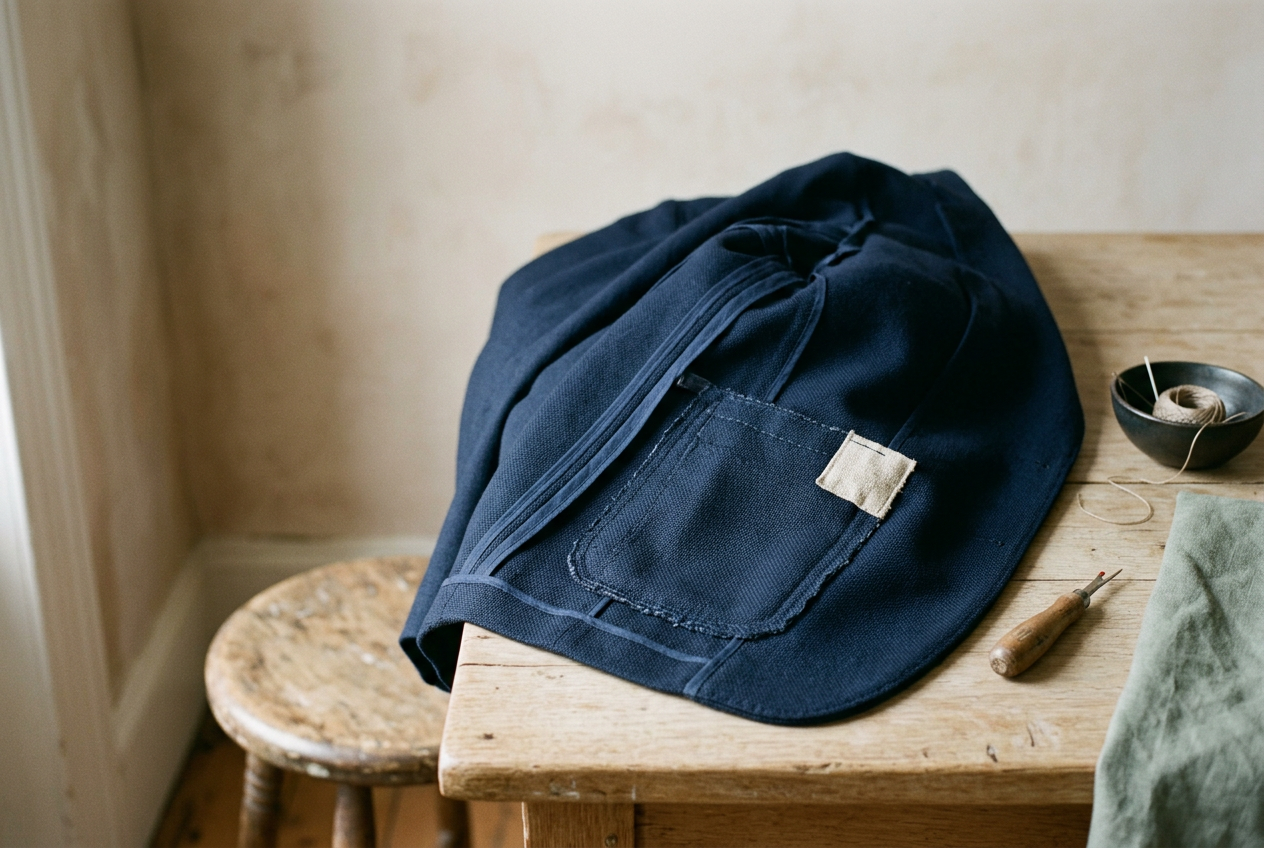
The concrete case for this comparison is an unbranded navy wool hopsack blazer, meaning its fabric has an open basket weave, worn over a cotton poplin shirt during a warm week. It has no body lining, neatly bound interior seams, light fused support through the upper chest and two patch pockets. The alternative was a fully lined tropical-wool blazer with a similar fit.
The unlined jacket felt less sealed-in while walking and sitting outdoors. More important, it still looked like tailoring rather than a soft overshirt once the sleeves creased and the pockets held a phone. That distinction came from work visible on the inside, where a lined jacket could have concealed faster stitching, bulkier seam allowances and less attractive reinforcement.
This is unisex advice. Button placement and shaping vary across women’s and men’s departments, but the construction checks are the same, especially around the shoulder, front edge and pockets.
The inside is part of the finished garment
A lining gives a jacket a smooth interior, helps it slide over a shirt and covers the seam allowances, which are the strips of fabric left beyond each stitched seam. Removing that layer does not remove the need to finish those edges. It makes the finish easier to judge.
Turn the jacket inside out as far as the construction allows. On the navy hopsack blazer, the main seams were bound, meaning a narrow strip of fabric enclosed each raw edge. The binding lay flat and followed the curves without rippling. This treatment takes additional material and accurate sewing, and it prevents the loosely woven wool from fraying against a shirt or bag strap.
Overlocking, where thread wraps around a raw edge, can also be serviceable. Look for dense, even stitching without loose loops, puckered cloth or fuzzy edges already escaping the thread. A low-priced unlined jacket may use overlocking throughout because it is quick; that is acceptable when the fabric is stable and the price reflects the shortcut. It becomes a poor investment when the jacket is priced like refined tailoring but looks inside like an altered pair of pants.
Inspect the junction under the arm and the point where the side seam meets the hem. Several layers converge there, so weak finishing shows quickly. Pull gently rather than stretching the garment. The seam should remain closed, the binding should stay flat and no needle holes should widen in the cloth.
Sleeves require a separate look. Many jackets described as unlined still have sleeve linings because bare wool can catch on cotton shirts. That compromise adds little insulation around the torso while making the jacket easier to put on. On the reference blazer, the bare sleeves moved comfortably over poplin but dragged over a textured knit.
A summer blazer intended for frequent layering may be more useful with lined sleeves, even if the body remains open.
Structure should be light, not absent
The front of a tailored jacket needs some support or it can collapse around the buttons, lapels and pockets. Canvas is an internal layer, traditionally made with resilient fibers, that helps the front hold its shape while moving with the wearer. Fusing is an adhesive-backed interlining bonded to the outer cloth with heat and pressure.
Neither method automatically determines quality. A light fused front can suit an airy summer jacket because it keeps the lapel stable without adding the bulk of a heavily built chest. Poor fusing feels stiff, blocks airflow and may bubble away from the face fabric after wear or cleaning. Canvas can make an excellent unlined blazer, although exposed sections must be covered or finished so they do not scrape a shirt.
Pinch the front gently below the lapel, away from the hem. A separate inner layer may be detectable between the outer cloth and facing, but the useful test is how the whole area recovers. The lapel should roll rather than fold like cardboard, and the cloth near the top button should settle without a diagonal ridge.
The navy hopsack example used a thin fused layer across the upper front, while its lower body remained soft. After the jacket had been folded over a chair and worn with the buttons open, the lapel returned to its original line without making the torso feel padded. A completely unstructured alternative would have been cooler by a small margin, but less dependable for an office, dinner or any setting where a blazer needs to retain a clear front edge.
Shoulder construction matters as well. An unlined jacket does not need pronounced padding, but the sleeve head should meet the shoulder without a hollow dip or a rope-like ridge unless that shape is intentional. Check both sides while wearing the jacket. Uneven shoulders are common on bodies, so judge whether the jacket accommodates yours rather than demanding perfect symmetry.
Opacity decides how polished it looks
Open weaves release heat, but the same gaps can reveal a shirt, waistband or pocket bag underneath. Hold the jacket toward ordinary room light, then try it over the lightest shirt or top you expect to wear. A showroom’s dark fitting-room walls can make thin fabric seem more opaque than it will look near a window.
The navy hopsack remained visually solid over white poplin even though pinpoints of light showed through when it was held up. That is a useful balance: air can pass through the weave, while the jacket still reads as navy from a normal distance. A pale linen blazer presents a harder test because its seam allowances and pockets may show as blocks beneath the surface.
Transparency is not always a defect. It becomes a construction problem when the front facing ends in a visible vertical line, the pockets create dark rectangles or the internal reinforcement changes the color of only part of the chest. A lining can soften those contrasts. Without one, the maker must choose compatible materials and trim internal layers so their edges do not announce themselves.
Wrinkling belongs in this decision too. Linen will crease, and an unlined linen jacket usually shows those creases more freely because no inner layer holds the body in place. Wool hopsack tends to recover better, while cotton can develop firm bends at the elbows and back. Pay more only if the fabric behavior suits the use; meticulous seams cannot make rumpled cotton behave like springy wool.
Pockets can pull a light jacket out of shape
Patch pockets, which are pieces of fabric sewn onto the outside, work well on casual unlined tailoring because they avoid bulky internal pocket bags. Their top corners need reinforcement. Look for short bar tacks, which are dense rows of stitches placed at stress points, or another compact reinforcement that does not distort the fabric.
The reference blazer’s patch pocket held a phone without exposing the pocket bag, but the weight still lowered that side of the hem slightly. This is a limitation of light tailoring rather than proof of bad work. Keys, a large wallet and a phone will overwhelm many summer jackets, regardless of price.
A welt pocket, meaning a slit pocket finished with narrow fabric lips, gives a cleaner appearance but requires hidden support. Reach inside and feel whether the pocket bag hangs freely or has been secured discreetly to an interior seam. An unsupported bag can swing, show through pale fabric and tug on the opening. Loose threads around the welt are an early warning because repairs there are more involved than resewing a patch-pocket corner.
Climate determines whether the extra work earns its price
An unlined blazer makes the strongest case in warm, humid conditions where a full lining traps heat and sticks to damp skin. The advantage is smaller in dry air, air-conditioned offices or climates where a jacket is worn mainly after sunset. Fabric remains decisive: a dense unlined cotton twill may feel hotter than a lined jacket made from porous tropical wool.
Wear the jacket for several minutes in the fitting room. Button it, sit down and move both arms forward. The navy hopsack blazer released heat well through the back, though its bare wool interior created more friction than the lined alternative when worn over a coarse shirt. Comfort depended on the shirt as much as the blazer.
Care can narrow the value gap. Bound seams resist fraying, but an unlined interior is exposed to perspiration, deodorant and friction. Air the jacket after wear, brush off surface dust and avoid sending it for cleaning merely because it has been worn once. Check the care label before purchase.
Some loosely woven jackets distort if washed even when their relaxed appearance suggests otherwise.
A practical investment test
At the low-priced end, accept machine overlocking, limited internal structure and straightforward patch pockets if the jacket hangs evenly and the edges are secure. This can be the right buy for occasional dinners or a short warm season. Do not pay a tailoring-level premium for decorative pick stitching while raw interior edges are shedding fibers.
In the mid-market, expect consistent seam finishing, reinforcement at pockets and enough front structure to control the lapel. Sleeve lining is a useful addition rather than a compromise. At a higher tailoring price, the interior should reward close inspection through shaped facings, clean transitions and construction that keeps support from showing through the outer cloth.
Compare the unlined jacket with a lined one in the same general price neighborhood. If the unlined option breathes better, remains opaque and holds its front edge after sitting, the extra visible workmanship can justify equal or higher pricing. If it saves the maker material while leaving raw seams, transparent pocket bags and a collapsing lapel, less lining should mean less money.
The navy hopsack blazer passed because its exposed interior was finished as deliberately as its lapels. Its value came from being wearable through heat without turning into a shirt-jacket, a job the lined tropical-wool alternative performed less comfortably during daytime walking.
Questions people ask
Is an unlined blazer always cooler than a lined one?
No. A porous wool or linen fabric usually matters more than the absence of lining, and a dense cotton jacket can retain substantial heat. Compare the weave, weight and internal structure, then consider whether the sleeves or body contain synthetic lining that may reduce airflow.
Are fused unlined blazers poor quality?
Not by definition. A thin, well-bonded fused layer can stabilize the lapel and upper chest without making the whole jacket heavy. Avoid fronts that feel board-like, show bubbles or create a sharp visible boundary where the reinforcement ends.
What should I check first in the fitting room?
Open the jacket and examine the main seams, underarm junctions and pocket attachment points. Then wear it over a light-colored shirt, sit down and check whether the lapel twists, the fabric turns transparent or a loaded pocket pulls the hem out of line.
Can an unlined blazer work for formal settings?
Yes, if the cloth is opaque, the shoulder and lapel hold a defined shape, and the exposed construction looks controlled. Very soft linen with large patch pockets reads more casually, while dark hopsack or tropical wool with restrained pockets can cover offices, dinners and many summer events.
One update a day
Today's fashion update, in your inbox
One fashion update each morning — no hype, no filler, just pieces worth wearing.