A Viscose Dress Can Get Longer While You Wear It
Humidity, perspiration and garment weight can pull some viscose dresses out of shape. The right seam, fit and care-label checks help you spot the risk before buying.
Women's · November 12, 2026 · 8 min read
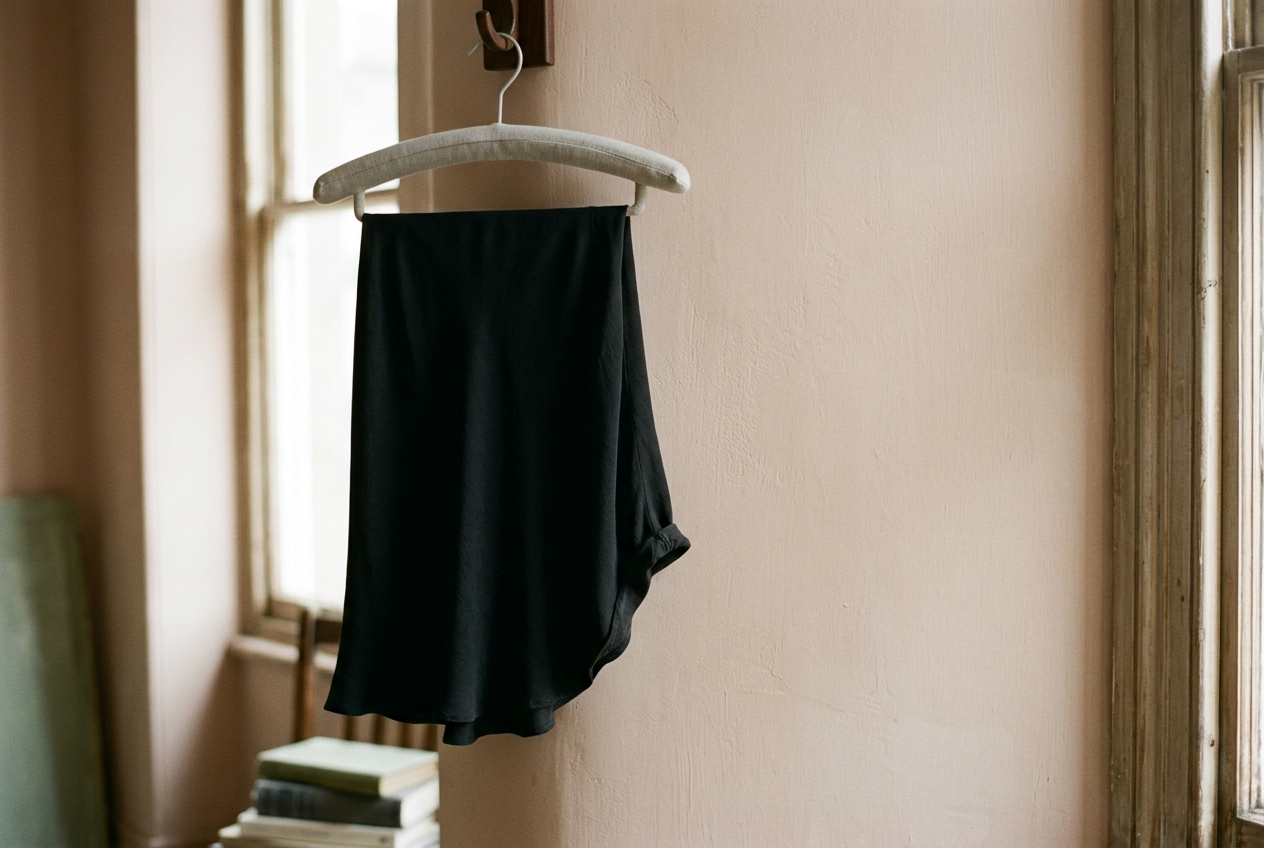
Use a black, unlined, bias-cut viscose midi dress as the test case: narrow straps, a close fit through the hip and a fine rolled hem that starts at mid-calf. It looks balanced in the fitting room, yet after a humid commute and several hours of sitting, walking and carrying its own weight, the hem may sit lower and less evenly.
That change is plausible without being inevitable. This is women’s coverage because the fit checks center on dresses, particularly close-cut midis, but the same fabric mechanics can affect viscose skirts, shirts and wide-leg pants.
Why moisture can change the length
Viscose, a regenerated-cellulose fiber made from plant-derived cellulose, is absorbent. In humid air, and more noticeably where the garment meets perspiration, the fibers take on moisture and become more flexible. The fabric can then relax under tension from the wearer’s movement and from its own weight.
A long dress supplies plenty of that weight. The skirt hangs from the shoulder seams and straps, while the fitted hip interrupts the fall of the fabric, so different areas carry different loads over the course of the day. If the cloth has a fluid weave and little structural support, it may settle downward rather than springing back as soon as the wearer stands.
The black midi makes that movement visible at the hem. Its rolled edge may drop at the front and back while the side seams remain shorter, or one section may lengthen more where a seam, zipper or lining changes the weight. The dress has not necessarily stretched to a larger size everywhere. It has relaxed unevenly along the directions in which the cloth had the most give.
Humidity alone will not make every viscose garment grow. A tightly woven shirt with a straight cut has less freedom to move than a long, fluid dress, and a viscose blend may behave differently depending on the companion fiber and construction. Price is no guarantee either. More expensive cloth can still relax if it is cut for drape and supported poorly.
Bias cuts need a closer look
The black midi is bias-cut, meaning its pattern pieces are positioned diagonally across the fabric rather than straight along its woven direction. That diagonal placement creates softness and stretch without elastic fiber. It is the reason a bias dress can skim the body so well, and it is also why the same dress may lengthen as gravity, heat and moisture encourage the cloth to settle.
A well-made bias garment should be allowed to hang and relax during production before its hem is finished. A shopper cannot verify that step from the tag, but the finished dress offers clues. Set it on a hanger and look at the hem from a few feet away. A deliberate asymmetric hem has a clear shape; accidental distortion tends to appear as isolated dips, often near seams or heavier components.
Follow the side seams next. They should descend without corkscrewing around the body, although a slight curve is normal on a shaped dress. Ripples beside a zipper, puckering at the hip or a seam that pulls open under light tension suggest that the cloth is already working hard.
Seam slippage, meaning yarns pull apart beside the stitching while the seam itself stays intact, deserves particular attention in a fine viscose weave. Examine the seat, the fullest part of the hip and the base of the zipper under good light. Tiny gaps beside the stitch line are not extra ease. They are early damage, and moisture plus a close fit can make them worse.
Run a fitting-room strain check
Start with the size that lets the black dress fall from the hip rather than grip it. Bias fabric often feels forgiving because it stretches diagonally, but that softness can hide strain, and sizing down to get a sharper outline transfers more load to the side seams and zipper.
Sit for a minute. Stand, smooth nothing, and check whether horizontal drag lines remain across the lap or seat. Walk several lengths of the fitting room, then look at the side seams and hem again. The test cannot reproduce an afternoon of humidity, but it shows whether ordinary movement is already pulling the dress off balance.
Lift the skirt lightly at its center and release it. A fluid fabric should settle, yet the side seams should not twist sharply or the zipper buckle. If the sample has been hanging on the sales floor, compare it with another dress in the same size when possible; a worn sample that is visibly longer than fresh stock is useful evidence, even if handling rather than humidity caused part of the change.
Leave enough length tolerance for the shoe you intend to wear. A midi that can drop a little and remain clear of the ankle is lower risk than a near-maxi that already brushes the top of a flat sandal. Alterations are possible, but hemming a bias dress takes more care than shortening a stable straight-cut skirt because the fabric should settle before the new hem is marked.
The practical alternative is not to avoid viscose. Choose a straighter cut, a shorter skirt or a design with a waist seam that divides the garment’s weight. A lining can add stability, although it also adds heat, and it will not rescue an outer layer that is too tight through the hip.
Read the care label as part of the fit
On the black midi, a label that says 100% viscose identifies the fiber but not the exact weave or finishing treatment. Rayon may appear instead on US labeling, and either name should prompt the same question: how does the maker expect the garment to be cleaned and reshaped?
Instructions to hand wash, avoid wringing, reshape or dry flat indicate that wet handling matters. That does not make the dress defective. It does mean the owner must support the garment while it is damp, when viscose can be more vulnerable to stretching and abrasion. If the label specifies dry cleaning, factor that repeated cost and errand into the purchase rather than assuming a delicate machine cycle will be close enough.
A washable dress still needs restraint. Use the labeled water temperature and cycle, keep it out of a crowded load, and do not lift it by one strap or shoulder while saturated. Press out water without twisting, arrange the seams and hem in their intended positions, then dry it as directed. Heat can introduce shrinkage, which may temporarily disguise uneven stretching while creating a different fit problem.
Steaming deserves similar caution. Suspending the dress and applying a large amount of steam can encourage more relaxation because heat, moisture and gravity are acting together. If the care label permits steaming, support the dress and use only what is needed to release wrinkles.
Store it without making gravity permanent
Do not leave the black midi hanging from its narrow straps for months. Fold it loosely with the seams aligned, or use a broad, padded hanger that supports the bodice rather than concentrating the garment’s weight on two small points. Avoid clips on a delicate skirt because they can leave pressure marks and pull the fabric out of line.
After a humid day, let the dress dry before closing it into a crowded closet. Lay it flat on a clean surface, straighten the side seams without stretching them, and allow the fabric to rest. A hem that shifted during wear may recover partly once the moisture leaves and the garment is no longer carrying its own hanging weight.
Do not rush to a tailor after one uneven afternoon. Clean the dress according to its label, dry and store it correctly, then assess the hem after another wear. If the same sections remain longer through repeated care cycles, a tailor can level the hem after the fabric has settled. Shortening it while it is temporarily damp and extended risks producing a skirt that looks uneven once dry.
Questions people ask
Does all viscose stretch in humid weather?
No. Fiber content creates the possibility, but fabric weight, weave, cut and fit determine how noticeable the change becomes. A straight, lightly fitted viscose shirt may show little movement, while a long bias-cut dress can relax because more fabric weight is pulling through a direction designed to give.
Will a viscose dress return to its original length?
It may recover partly after it dries and rests without tension, especially if the change came from one humid wear. Repeated stretching, seam damage or incorrect wet handling can leave a more lasting distortion. Follow the care label before deciding that the hem needs alteration.
Should I size up in a bias-cut viscose dress?
Size up when the intended size grips the hip, opens at the seams or leaves persistent horizontal lines after sitting. Do not size up automatically, since excess fabric adds weight and may change the intended drape. The useful test is whether the dress can move without borrowing stretch from its seams.
Is hanging or folding better for a viscose dress?
Folding is safer for a long, heavy or narrow-strapped viscose dress because it removes continuous downward pull. A light, structured dress can hang on a broad support if its care instructions allow it. Never store the garment hanging while damp, when its own weight can create extra length.
One update a day
Today's fashion update, in your inbox
One fashion update each morning — no hype, no filler, just pieces worth wearing.