A Mary Jane Strap Only Stops Heel Slip in the Right Place
The best Mary Jane straps cross the instep and pull the foot into the heel. Straps set lower or higher can replace slipping with toe pressure or ankle rub.
Women's · November 13, 2026 · 7 min read
Mary Janes have returned with straps in almost every possible location, including several that look convincing in product photos and contribute very little once the shoe starts moving. The useful version crosses the instep, the raised top of the foot between the toes and ankle, where it can hold the foot down and slightly back.
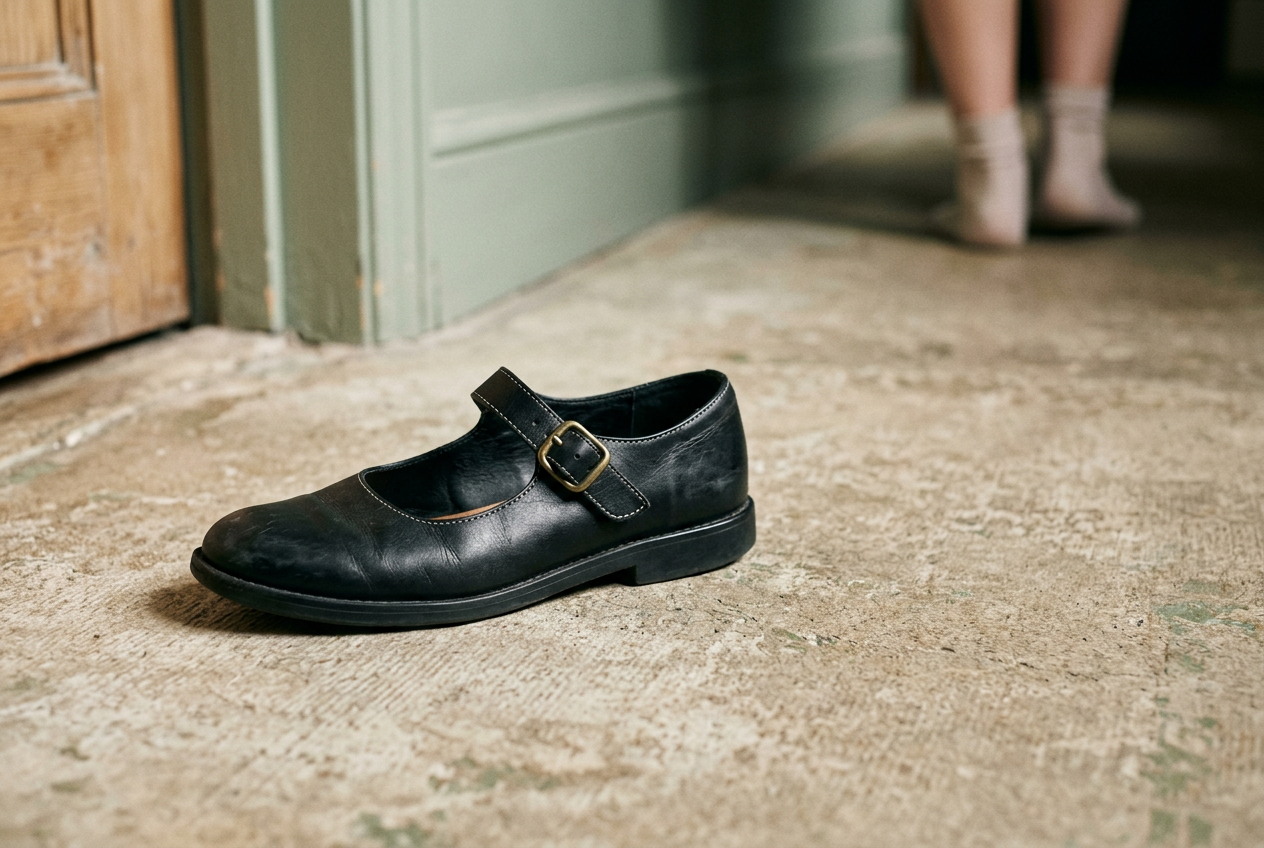
This is women’s footwear coverage, though the underlying fit mechanics apply to anyone wearing the shape. The fitting-room control here is a black leather Mary Jane flat with an almond toe, a thin rubber outsole and one adjustable buckle strap. It is ordinary on purpose. Patent leather, mesh and high heels introduce other problems, but the plain black flat makes the effect of strap position easier to isolate.
What the strap has to do
Heel slip occurs when the rear of the foot lifts away from the insole during a step. A strap can reduce that movement only if its tension reaches far enough back to keep the heel seated against the heel counter, the stiffened section surrounding the back of the foot.
The centered strap on the black flat crosses just behind the widest part of the forefoot. Tightened to a secure but non-pinching hole, it presses the foot into the shoe and prevents the forefoot from sliding forward, which also leaves the heel with less room to rise. That is the practical sweet spot for many feet.
Placement is only half of it. The strap must connect to structurally useful parts of the upper rather than to a loose piece of trim, and it needs enough adjustment to suit the wearer’s instep. If the buckle reaches its tightest hole while the strap still floats above the foot, the shoe may have a strap but does not have retention.
A functional strap should feel mildly present during the first few steps. Invisible is an ambitious comfort claim usually made by people who are not currently wearing buckled shoes. Pressure that stays broad and steady can be acceptable; a narrow line that becomes sharper as the toes bend is not.
A low strap mostly manages the front of the shoe
Move the black flat’s crossing point forward, so the strap sits over the lower vamp, meaning the part of the upper covering the forefoot, and its leverage changes. It can stop a loose shoe from spreading or gaping at the sides, but it does little to pull the heel back into place.
The problem becomes obvious during the push-off phase of a step. The foot bends at the toe joints, the low strap bears down near that flex point, and the heel may still rise behind it. Tightening the buckle adds pressure where the foot is already bending rather than correcting the movement at the rear.
This placement is especially awkward in a short or tapered toe box. As the foot slides forward, the strap prevents it from lifting naturally while the upper and toe box restrict it from the front. The likely result is compressed toes, pressure across the joints or both. A decorative little strap has now become an administrative burden for the forefoot.
Visually, a low strap can be appealing. It leaves more of the instep exposed and reads closer to a ballet flat with an added line across it, particularly when the strap is thin or matches the upper. That openness can make the shoe look lighter, but the effect should not be confused with heel control.
On the black leather control pair, this is the version to skip if heel slip is already apparent before the buckle closes. It may improve the look of the gap around the opening without changing the amount of lift at the back.
The centered strap gives the best leverage
A strap crossing the middle of the instep has a clearer job. Its tension acts behind the forefoot’s widest point, where it can limit forward travel and hold the foot lower inside the shoe through the middle of a step.
This position works best when the strap angles slightly back toward its attachment points. A perfectly straight strap can still retain the foot, although a rearward angle directs more of the pull toward the heel. The distinction is small in a soft flat and more noticeable when the outsole is stiff, because a rigid sole resists bending and tries harder to stay on the floor while the heel rises.
Centered does not mean universally comfortable. A high instep can meet the strap before the rest of the foot is properly seated, leaving the buckle on its last hole and a concentrated band of pressure across the top. A low-volume foot, meaning one that occupies less vertical space inside the shoe, may need the tightest hole or an added hole made by a shoe repair shop.
The strap’s width and edge finish matter here. A moderately wide leather strap distributes tension better than a narrow patent strip, while a stiff folded edge can dig in even when the placement is sound. Leather may relax with wear, but shoppers should not rely on a painful strap stretching into good manners. Patent coatings and many synthetic uppers tend to give less.
For the black flat, the centered position offers the cleanest tradeoff: less heel lift without forcing the toes farther into the almond-shaped front. It is still a strapped leather shoe, not a spa appointment, but the pressure lands where it can perform useful work.
A high strap can hold well and rub badly
Set the strap closer to the ankle crease and heel retention can improve again, particularly on a foot with a narrow heel. The high position stops the foot from lifting out through the opening, and it may secure a shoe whose cut is otherwise too shallow.
That does not make it the automatic winner. The ankle flexes repeatedly while walking, so a high strap can rub at the front crease or catch below the ankle bones if the attachment points sit too far back. Buckle placement becomes more important as well. A buckle that feels harmless while standing may knock against the ankle once the foot rolls outward on a turn.
High straps also change the visual proportions more decisively. On the black flat, the line divides the upper foot nearer the ankle and makes the shoe read more like an ankle-strap flat than a classic Mary Jane. That can look deliberate with cropped pants or a visible sock, but it is less visually neutral with a bare leg.
There is another fit warning. If the high strap is doing all the work while the shoe gapes around the sides and the forefoot slides freely, it is securing an ill-matched upper rather than correcting it. The foot may remain inside, technically, while moving around enough to create friction under the ball and at the toes.
How to test the strap before buying
Start with the shoe unbuckled and slide the foot fully back. The toes should lie flat without touching the end, and the widest part of the foot should align with the widest part of the shoe. Buckling cannot repair that relationship.
Fasten the centered strap so one finger can pass beneath it with light resistance. Walk at a normal pace, then take a few quicker steps and use a staircase if the store allows it. Watch for vertical heel movement rather than expecting zero motion; a small amount can occur in a flat, while repeated lifting that creates friction is the problem.
Next, notice where the pressure appears. A useful strap feels secure over the instep while the toes remain relaxed. If tightening it reduces heel lift only by driving the foot forward, the toe box is absorbing the correction and the shoe is the wrong shape or length.
Check the construction by gently pulling the strap upward. Its attachment points should feel integrated with the sides of the upper. A strap sewn onto a thin decorative overlay may flex the trim without controlling the shoe beneath it. Elastic hidden near the buckle can make the strap easier during ankle movement, though too much stretch weakens retention.
Repeat the walk with the thin sock or hosiery intended for the shoe. Bare feet create more friction and occupy slightly less room than some socks, so a pair that behaves while worn bare may loosen when styled differently. The black leather flat should be tested in its real outfit conditions, not under the fitting-room fantasy that every shoe will somehow cooperate with every sock.
When the strap is not the answer
Heel slip can come from a stiff outsole, a heel cup that is too wide or a shoe that is too long. Sizing down is risky when the toes already sit correctly, because shorter shoes often reduce heel movement by removing space the forefoot needed.
A different last, the foot-shaped form around which a shoe is built, is the better alternative when the heel remains loose but the front fits. Look for a narrower rear, a deeper heel counter or a more flexible sole. A thin heel grip may help with a small mismatch, but it also shortens the internal length and can push the foot forward.
The black Mary Jane earns approval only when its centered strap improves retention without changing toe position. If the shoe needs a low strap cranked tight, an adhesive pad and smaller sizing to stay attached, it does not fit. It has assembled a committee around the problem.
Questions people ask
Where should a Mary Jane strap sit?
For the strongest balance of heel retention and forefoot comfort, the strap should cross the instep just behind the widest part of the foot. It should hold the foot down and slightly back without pressing on the toe joints. Exact placement varies with foot shape, but a strap over the bending point is usually too low.
Can a
Mary Jane strap fix shoes that are too big?
It can control a small amount of extra volume, especially over a low instep, but it cannot correct excess length or a heel cup that is much too wide. If the toes slide forward or the heel lifts despite firm strap tension, try another size or a shape with a narrower rear rather than tightening further.
Should a new leather strap feel tight?
A leather strap may soften and relax a little, but it should not cause sharp pressure, numbness or a deep mark during a brief fitting. Choose a buckle setting that feels secure with light resistance. A painful strap is not a sensible break-in project, particularly when patent coating or stiff edge finishing limits how much it can yield.
Is a high Mary Jane strap better for narrow heels?
A high strap can improve retention because it sits closer to the ankle and blocks upward movement, which often helps narrow heels. Check for rubbing at the ankle crease and below the ankle bones, then walk through turns and stairs. If the rest of the shoe still gaps, the strap is compensating for the wrong upper shape.
One update a day
Today's fashion update, in your inbox
One fashion update each morning — no hype, no filler, just pieces worth wearing.