A Jelly Sandal Buckle Cannot Fix a Stretching Strap
Buckled PVC sandals look more adjustable than molded jellies. Heat, water and buckle placement decide whether that adjustment lasts beyond the mirror.
September 7, 2026 · 7 min read
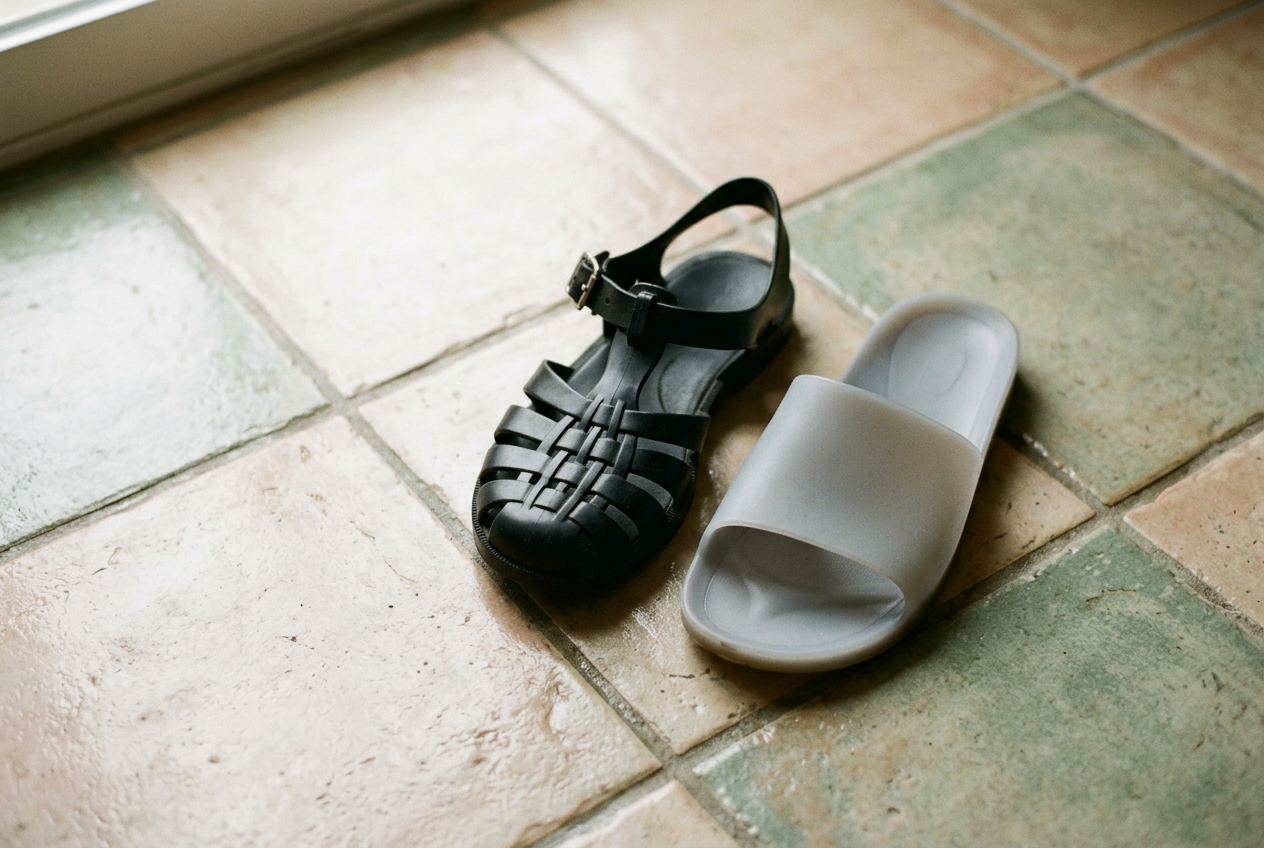
The useful comparison is not “adjustable” against “unadjustable.” It is a buckled strap that changes length at one point against a molded strap, meaning the upper and sole are formed as one continuous piece, whose shape has to fit from the start.
The concrete fit point to watch is the buckle hole that feels right indoors. If that setting keeps the heel centered once the sandal is warm and wet, the hardware has earned its place. If the same hole leaves the strap loose after the PVC softens, while the next hole presses the buckle into skin, the apparent range of adjustment is mostly decorative administration.
No physical samples or completed wear-test notes were supplied with this commission, so I am not going to invent a heroic afternoon of puddles and blisters. What follows is a construction-led evaluation and a repeatable fitting protocol for comparing a buckled PVC jelly with a one-piece molded pair before the return window closes.
This advice is unisex. Foot width, instep height and heel movement matter more here than the department named on the box, although shoppers crossing between men’s and women’s sizing should use the brand’s length chart rather than relying on a familiar number.
What the buckle can adjust
On a fisherman-style jelly sandal, the buckle usually tightens an ankle or instep strap. That can stop the heel from lifting and reduce forward travel, particularly when the foot is low-volume, meaning it takes up less vertical space inside the shoe. It cannot narrow a loose toe cage, shorten an overlong footbed or move a badly placed strap away from a toe joint.
That limit matters because PVC jelly uppers often look more adaptable than they are. Plasticized PVC, a flexible vinyl softened with added plasticizers, bends around the foot but does not behave like woven webbing or leather. Pulling the buckle tighter may shorten the strap while leaving the rest of the upper in the same molded position, so pressure collects near the hardware instead of spreading evenly.
Start with the indoor hole. The strap should lie flat, with enough room for the foot to flex, and the buckle frame should sit beside the ankle or above a relatively flat part of the instep rather than directly over a joint. Walk quickly, turn, climb stairs and stand on the ball of the foot. If the heel stays centered only when the buckle leaves a visible dent, the sandal is the wrong shape.
Do not count spare holes as spare fit. A long row of holes can amount to one wearable setting, several settings that allow sliding and one that treats circulation as an optional extra.
Heat changes the setting
A PVC sandal left in warm conditions becomes more pliable. The exact change depends on its formulation and thickness, which cannot be judged reliably from color or shine, but the practical effect is familiar: a strap that felt firm in an air-conditioned room may flex more after pavement, body heat and sustained walking warm it.
That does not mean every jelly grows a full size. It means the indoor buckle hole must be tested again after the upper has warmed, because small increases in flex can create noticeable foot movement when the sandal already sits near the loose end of acceptable. Watch the heel during a brisk turn. If it shifts sideways while the sole continues straight, the upper is no longer controlling the foot.
The tempting response is to move from the comfortable hole to the next tighter one. Sometimes that works. More often, the shorter setting pulls the buckle frame into the skin while the forefoot remains free to move, which trades sliding for concentrated pressure and produces the sort of improvement best appreciated while sitting down.
A molded pair avoids the hard pressure point and distributes flex across a broader strap. Its weakness is less negotiable: if the opening is too generous, there is no correction available. A correctly shaped molded jelly can therefore feel steadier than the buckled pair after both have warmed, while a slightly loose one remains slightly loose until it becomes gardening footwear.
Water exposes the difference
PVC does not become waterlogged in the way an absorbent fabric upper can, but water changes the contact between foot and shoe. Skin, sweat, sunscreen and a smooth footbed can form a slippery layer, allowing the foot to travel farther before the upper stops it.
Test this without soaking the whole shoe at first. Dampen the footbed and the underside of the straps, put the sandals on, then walk on a safe indoor surface where a slip will be merely undignified rather than orthopedic. Pay attention to forward travel on a slope or stair and sideways movement during a turn. The toes should not grip the footbed to keep the sandal attached.
Return to the original buckle hole. If the wet foot slides but the strap itself remains correctly placed, try one tighter setting for a short walk. Stop if the buckle edge bites, the strap forms a raised ridge or the skin blanches beneath it. Those are fit failures, not break-in milestones.
The molded pair gets the same test. A broad molded strap often has no metal or pin assembly to create a local pressure point, although its fixed opening may permit more lift. The better shoe is the one that limits movement without asking the toes to work and without leaving one sharp mark. Neither construction deserves credit merely for remaining attached.
Strap stretch is only half the problem
Shoppers often describe a warm jelly as “stretched,” but several things can be happening. The PVC may be flexing more under load, the foot may be swelling in the heat, or the wet foot may be slipping against the footbed. Each produces a different answer.
If the strap feels looser while the foot stays centered, let the sandal cool and check the same buckle hole later. If the fit returns, warmth was the main variable. If the foot swells and the buckle becomes painful, extra holes help only when the hardware still lands on a comfortable part of the foot. If sliding appears only when wet, tightening may increase friction at the strap without improving grip beneath the sole.
Inspect the buckle attachment as well. The slot or hole should not look whitened, elongated or sharply creased after flexing, since damage around a punched opening removes the benefit of future adjustment. A one-piece molded upper has no buckle hole to distort, though thin areas where the strap joins the sole can still carry stress.
The test needs repetition because a promising first lap says little about an upper that changes as it warms. Wear each pair indoors for a longer session, let it cool, then repeat with damp feet. That costs more time before deciding, but considerably less time than negotiating a full day in sandals that become hostile around lunch.
The buying verdict
A buckle produces a meaningfully better fit when the sandal already matches the forefoot and sole, while the ankle or instep needs a modest reduction. In that case, the indoor buckle hole and the warm, damp buckle hole should be the same, or at most adjacent settings that both leave the hardware flat and painless.
Choose the molded pair when its fixed strap holds the foot without toe gripping and the buckled alternative needs aggressive tightening to do the same job. The molded design gives up fine adjustment, but it also removes a rigid frame, a pin and a punched stress point from a material that becomes more flexible with warmth.
Skip both when the heel moves sideways, the foot repeatedly slides forward or the strap edge lands on a joint. Color will not improve those mechanics. Neither will styling the problem with a good pedicure.
Compare pairs within the same budget or mid-priced band rather than paying extra for hardware alone. A buckle is worth additional money only when it changes the usable fit; if there is one comfortable hole and it fails once wet, the sandal is functionally fixed-size with more components.
Questions people ask
Do buckled jelly sandals stretch in hot weather?
Flexible PVC can soften and flex more as it warms, which may make a secure strap feel looser even without permanent stretching. Recheck the same buckle hole after a warm indoor wear session, then again after the sandal cools. Persistent distortion around the holes is a stronger warning than temporary softness.
Are molded jelly sandals better for water?
They remove buckle hardware and punched holes, but that does not guarantee a secure wet fit. A smooth footbed and generous fixed strap can still allow sliding. The better molded pair holds the heel centered during turns without forcing the toes to grip, both dry and damp.
Should jelly sandals fit tightly at first?
They should fit close enough to control movement, not tightly enough to leave a sharp buckle mark or blanch the skin. Do not buy a painful pair on the assumption that heat will soften it into cooperation; warmth can increase strap flex while also increasing swelling and friction.
How can
I test jelly sandals before returning them?
Wear them only on clean indoor floors, first dry and then with a lightly dampened footbed if the retailer’s return rules permit it. Repeat the walk after the upper has warmed, using the same buckle hole, and reject any pair that requires toe gripping or tighter, painful adjustment.
One update a day
Today's fashion update, in your inbox
One fashion update each morning — no hype, no filler, just pieces worth wearing.