A Chest Measurement Is Not Enough for a Secondhand Blazer
The expensive fit problems sit above and around the chest. Use a blazer you own to check five measurements before taking a chance on an online listing.
November 18, 2026 · 8 min read
Keep one representative listing in mind: a charcoal, two-button wool blazer with clear front photos, a tagged size and one flat chest measurement. It looks promising. The cloth appears clean, the lapels lie flat, and the price leaves room for modest tailoring, but the listing gives no useful information about the upper body or overall proportions.
That is not enough evidence to buy.
This guidance is unisex and applies across women’s and men’s resale categories, where tagged sizes may reflect different fit systems, decades or intended silhouettes. The useful comparison is garment against garment, not a current body measurement against the number inside an older blazer.
Start with a blazer that already fits
Choose a reference blazer with the shoulder position, length and arm movement you want. It does not need to share a brand or tagged size with the resale candidate, though similar construction helps: compare a softly structured wool blazer with another soft jacket rather than with a heavily padded double-breasted style.
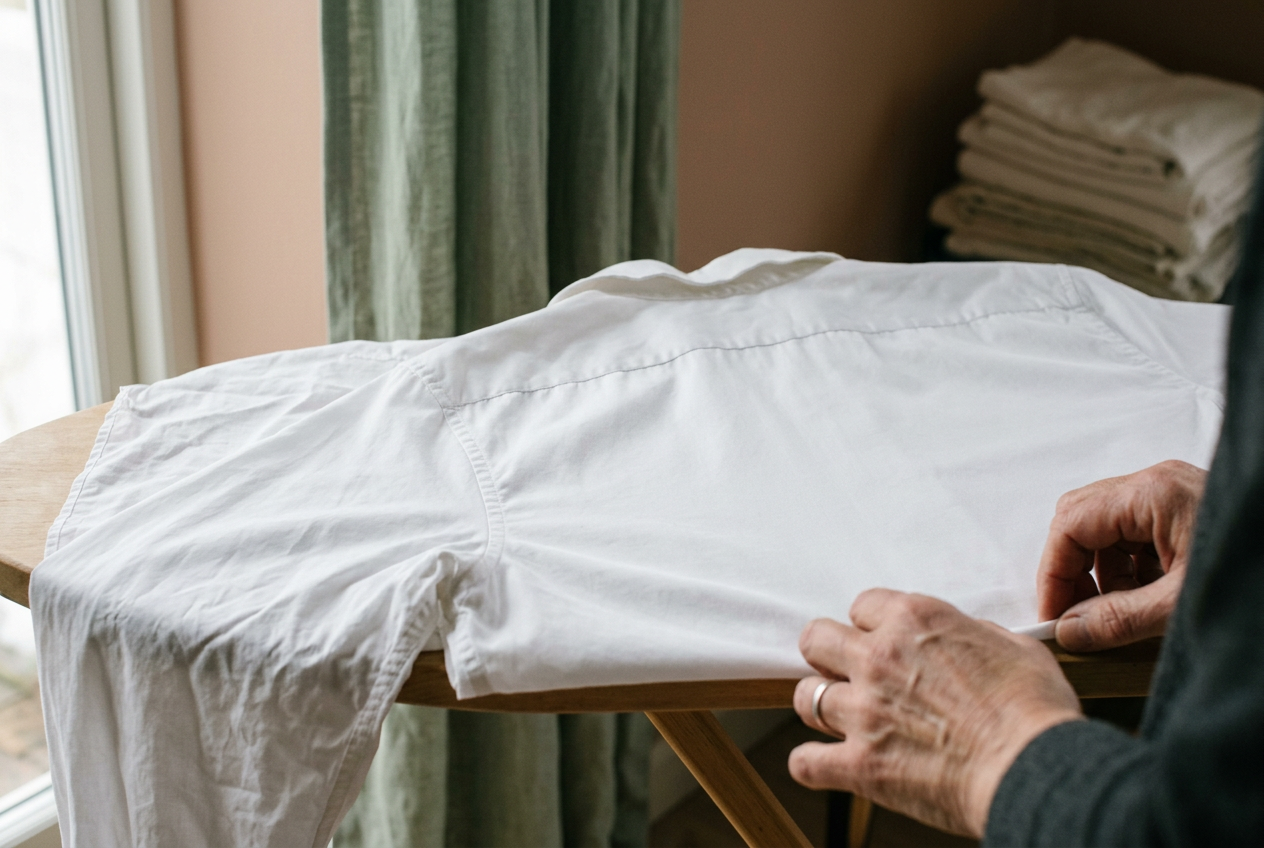
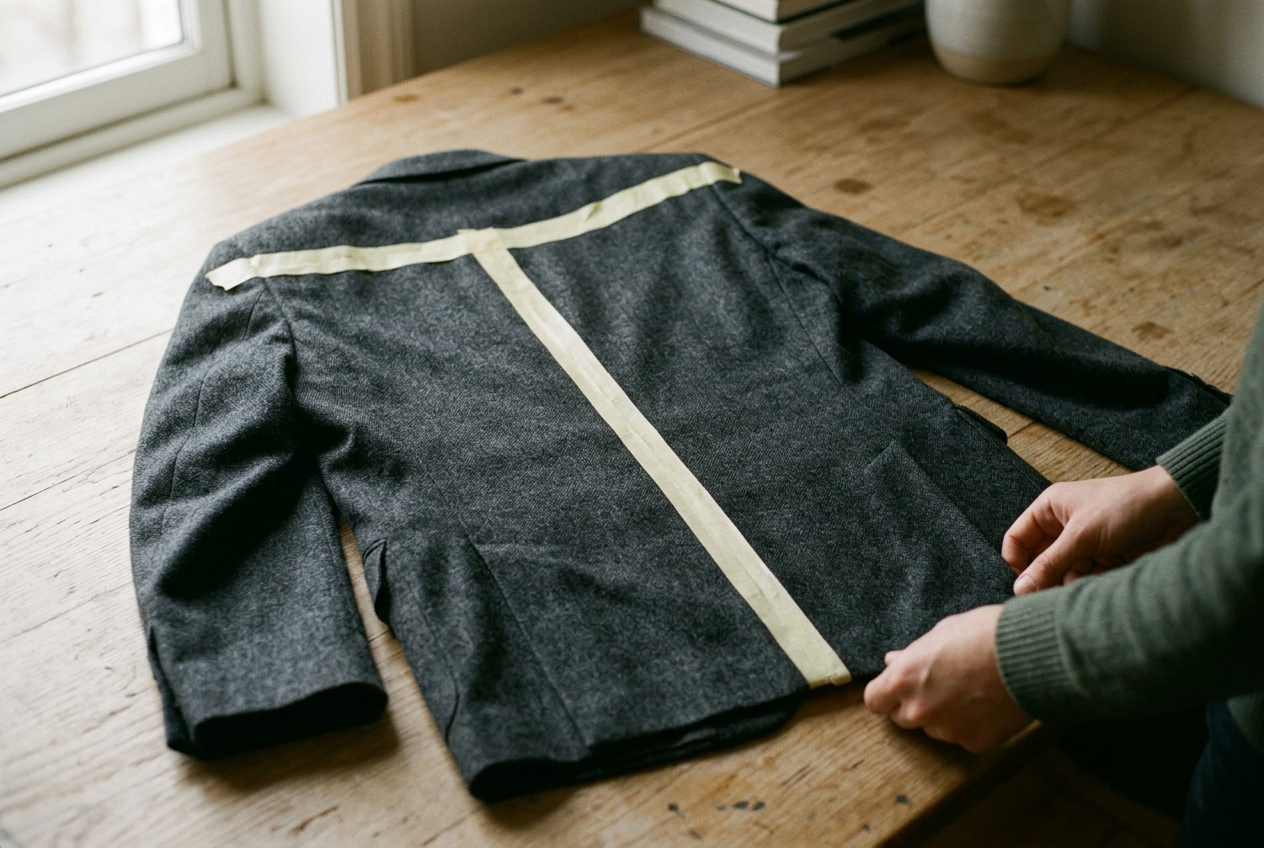
Button the reference blazer, lay it face down on a firm surface and smooth the fabric without stretching it. Use a flexible tape, record where each measurement begins and ends, then take quick photos showing the tape in place. Sellers measure differently, so those photos make it easier to request the same method.
Chest width still belongs in the notes. It is usually measured flat from underarm to underarm, and doubling that number gives the garment circumference rather than the wearer’s chest size. The difference between body and garment is ease, meaning the extra room built in for movement and silhouette. A blazer can match your preferred chest width while failing everywhere around it.
Our charcoal listing has reached that point. Its chest looks plausible, but there is no reason yet to believe its sleeves will hang cleanly or its waist button will land near the wearer’s waist.
Shoulder span decides whether the jacket can settle
Shoulder span is the distance across the back from one sleeve seam to the other. Measure straight across at the widest point where the sleeves join the body, using the same landmarks on both the reference blazer and the listed one.
A narrow shoulder pulls the sleeve heads inward and can produce tension across the upper back. Too much width lets the shoulder line extend beyond the body, leaving the sleeve head unsupported or visibly dented. Padding and an intentionally extended shoulder can change the desired result, which is why the comparison jacket matters more than a generic size chart.
Shoulder alteration is rarely the sensible rescue plan for an ordinary resale buy. A tailor may need to remove the sleeves, reshape the upper body, adjust padding and set the sleeves again, and the result still depends on whether the armhole and sleeve have enough cloth to cooperate. That labor can erase the financial advantage of buying secondhand.
Reject the charcoal blazer if the seller cannot provide its shoulder span and there is no return option. A front photo cannot show whether the shoulder seam ends in the right place, especially on dark wool.
Button stance controls the jacket’s visual waist
Button stance is the vertical position of the main fastening button. On this two-button blazer, that means the upper button, which is the one intended to close. Measure from the shoulder at the base of the neck down the front to the center of that button, following the same route on both jackets.
This number affects more than styling. When the button sits much higher or lower than the wearer’s natural waist, closing the blazer can pull the fronts out of alignment, shift the lapel shape and put fullness in the wrong place. A low stance lengthens the lapel and can make the torso look longer; a high stance shortens the opening and may feel cramped over the ribs.
Photos help confirm the measurement. Look for the button’s relationship to the pocket openings and the narrowest part of the jacket, then compare those proportions with the reference blazer. Moving a button a small distance may be possible, but a meaningful change also alters how the fronts overlap and where the lapel finishes rolling. It is not a reliable fix for the wrong basic cut.
Back length has consequences at both ends
Measure back length from the seam below the collar to the center hem. Do not start at the top edge of the collar, which adds a variable amount and makes comparisons unreliable.
Length is partly a styling choice, but it also determines where the vents, pockets and button stance sit on the body. A shorter blazer can work with high-rise trousers or a skirt even if your reference jacket is longer. That choice should be deliberate. If you are hoping a tailor can remove several inches after purchase, the pockets may end up crowded against the hem and the original proportions may disappear.
Lengthening is usually more limited because the hem needs enough fabric turned inside. Older tailored jackets sometimes contain an allowance, but an online shopper should not assume it exists. Ask for an interior hem photo if extra length is essential.
For the charcoal blazer, the back-length measurement tells us whether its promising chest width belongs to a compact cut or a longer jacket. Without it, even a full-length front photo can mislead because sellers crop images and hang garments at different heights.
Sleeve pitch is visible even when it is hard to measure
Sleeve pitch is the angle at which a sleeve is sewn into the armhole to follow the natural resting position of the arm. Some people’s arms hang fairly straight; others angle forward. A mismatch can create diagonal wrinkles, twisting near the biceps or a sleeve that swings away from the hand.
There is no single tape measurement that settles sleeve pitch remotely. Ask for a clear side view with the blazer hanging naturally on a broad hanger, plus close photos of the front and back of each sleeve. Existing twists or ripples deserve attention, although a hanger cannot reproduce the way the jacket will react on your body.
This is where uncertainty should lower the price you are willing to accept. Correcting pitch can require removing and resetting the sleeve, and changing the shoulder or armhole may become part of the job. A bargain blazer with obviously twisting sleeves is not a bargain if clean sleeve hang matters to you.
The charcoal blazer’s straight-on photographs show smooth cuffs, but they say almost nothing about pitch. Until a side image arrives, that part of the fit remains unknown rather than approved.
Armhole depth governs movement
Armhole depth is the vertical distance from the top of the armhole to the underarm seam. With the blazer laid flat, measure from the shoulder seam near the sleeve head straight down to the underarm seam, noting that padding and seam placement can make small comparisons imprecise.
A low, deep armhole may feel roomy while the arms are down, yet it can drag the whole jacket upward when you reach forward or lift an arm. A higher armhole often allows cleaner movement, provided it is wide enough around the upper arm and does not cut into the underarm. Chest width alone reveals none of this.
Changing armhole depth can affect the side body, shoulder and sleeve. Treat a large mismatch as structural, not as the equivalent of taking in the waist. If the seller cannot measure it, close photos of the underarm and a flat back view may offer partial evidence, but they do not replace a measurement when returns are impossible.
Send one request before paying
A seller does not need tailoring vocabulary if the request includes landmarks. Send the measurements from your reference jacket and ask for the listed blazer to be checked the same way.
Please measure the shoulder seam to seam across the back, center-back length from below the collar to the hem, shoulder-to-main-button distance, and armhole depth from the shoulder seam to the underarm seam. Please also add one clear side photo showing how each sleeve hangs.
A careful response does not guarantee fit, but it turns the listing into something you can assess. If the seller supplies only the chest again, decide according to the stakes. A very inexpensive, returnable blazer may justify uncertainty. A final-sale jacket priced like an investment piece does not.
Condition still matters. Ask about moth damage, lining tears, shine at the elbows and stains around the collar, but do not let detailed condition photos distract from missing fit information. Clean wool cannot compensate for an incompatible shoulder or armhole.
Spend alteration money where it can work
Sleeve length is often adjustable from the cuff, though working buttonholes, meaning cuff buttons with openings that function, can limit how much fabric a tailor can remove without upsetting the spacing. Waist suppression may also be possible through the side or back seams when enough allowance remains.
Those are different propositions from rebuilding shoulders, resetting sleeves or changing armholes. Before buying, separate the changes that refine a fit from the ones trying to replace the original pattern. The first category may make a strong secondhand blazer better. The second can cost enough time and money that waiting for another listing is the sounder decision.
Our charcoal blazer should stay in the saved folder until its shoulder span, back length and armhole depth arrive, along with a side view of the sleeves. The missing information sits in precisely the areas that are hardest to alter.
Questions people ask
How much larger should a blazer be than my chest?
There is no universal allowance because cloth, lining, shoulder structure and intended silhouette all change how that extra room behaves. Measure the flat chest of a blazer that closes comfortably over the layers you plan to wear, then compare the secondhand listing with that garment rather than adding a fixed number to your body measurement.
Can shoulder pads fix a blazer that is too wide?
Shoulder pads can add height or support, but they do not reliably remove excess horizontal width. If the sleeve seam falls beyond the intended shoulder line, changing pads may create a different shape without correcting the placement of the sleeve and armhole.
Is a deeper armhole always more comfortable?
No. A deep armhole can feel loose with your arms at rest, but it may pull the jacket body upward when you reach or lift. Compare its depth with a blazer that lets you move well, while also checking that the upper sleeve has enough room.
Should
I buy if the seller will not provide measurements?
Skip a final-sale or relatively expensive blazer when shoulder span, back length and armhole information are missing. A low-cost listing with returns may be worth the risk, but budget for return time and shipping rather than assuming a tailor can repair any fit problem.
One update a day
Today's fashion update, in your inbox
One fashion update each morning — no hype, no filler, just pieces worth wearing.