20-Gauge Earrings Should Fit 18-Gauge Piercings. Don’t Force It.
A 20-gauge post is thinner than an 18-gauge post. If it stalls in a healed piercing, the problem may be the channel, the jewelry’s construction, or its labeling.
October 1, 2026 · 7 min read
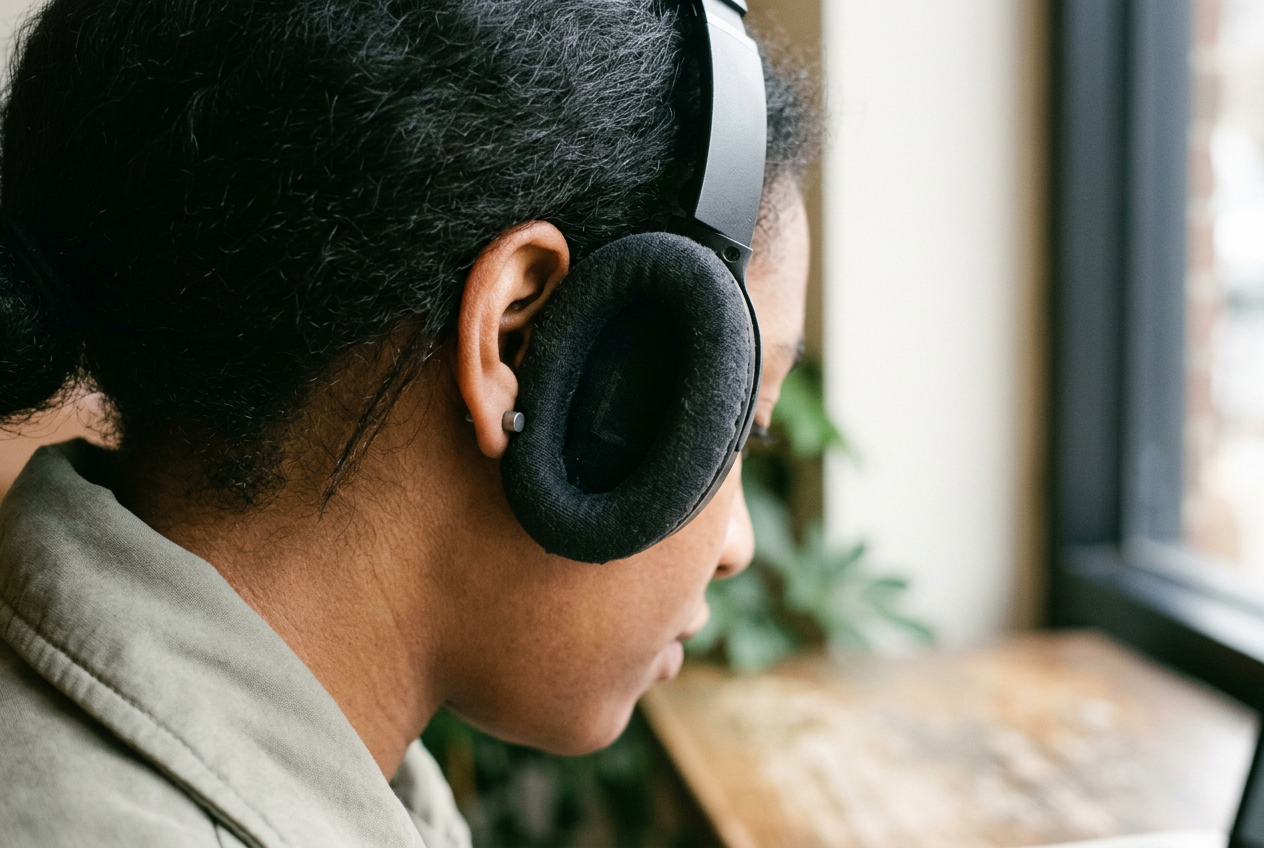
A slim titanium post reaches the back of the earlobe and stalls. The package says 20 gauge. The healed piercing was made at 18 gauge. On paper, this is the easy direction: the new post is narrower than the established channel.
That physical mismatch is the useful clue. It suggests that the nominal gauge is not the whole fit story, whether the channel has narrowed, the post has a rough transition, or the jewelry is not the size stated. Pushing harder cannot identify which one is responsible. It can irritate tissue that was comfortable minutes earlier.
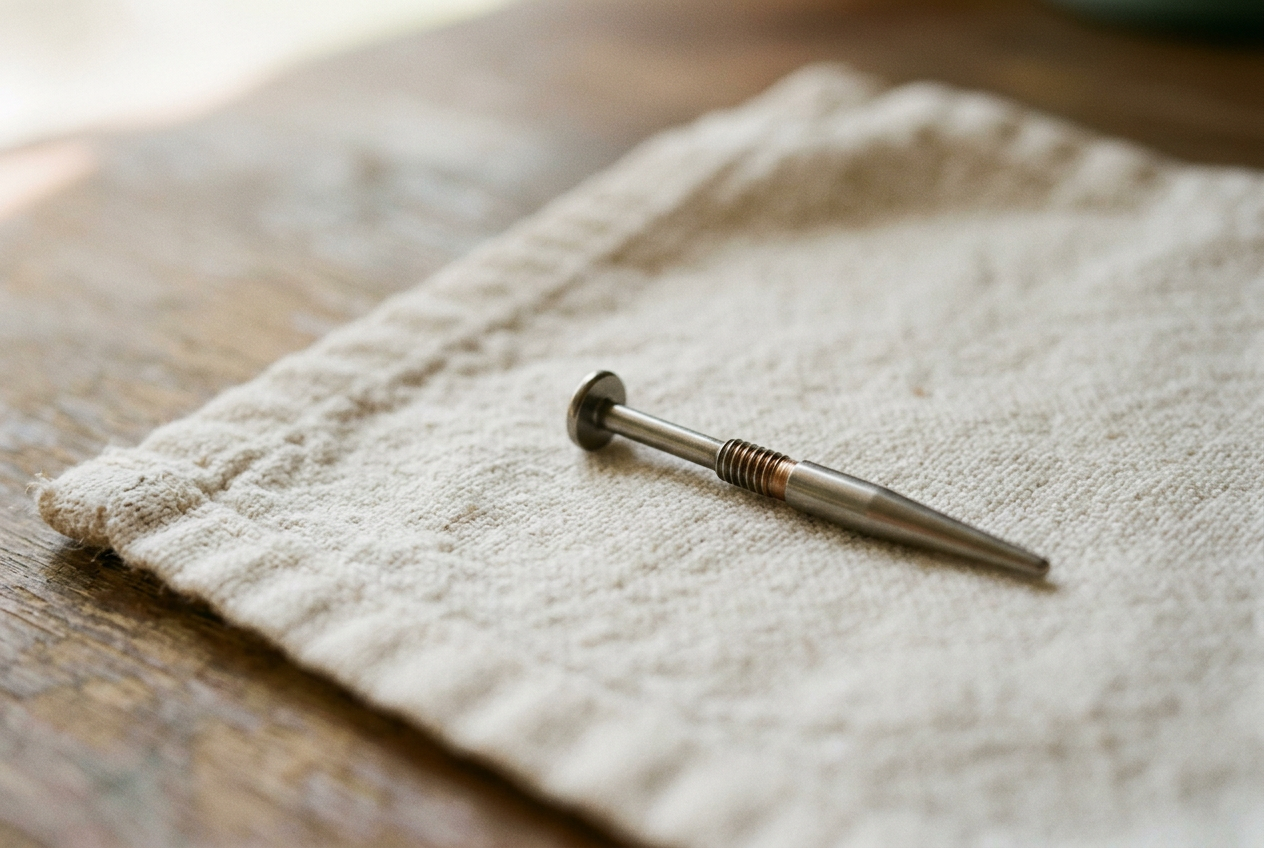
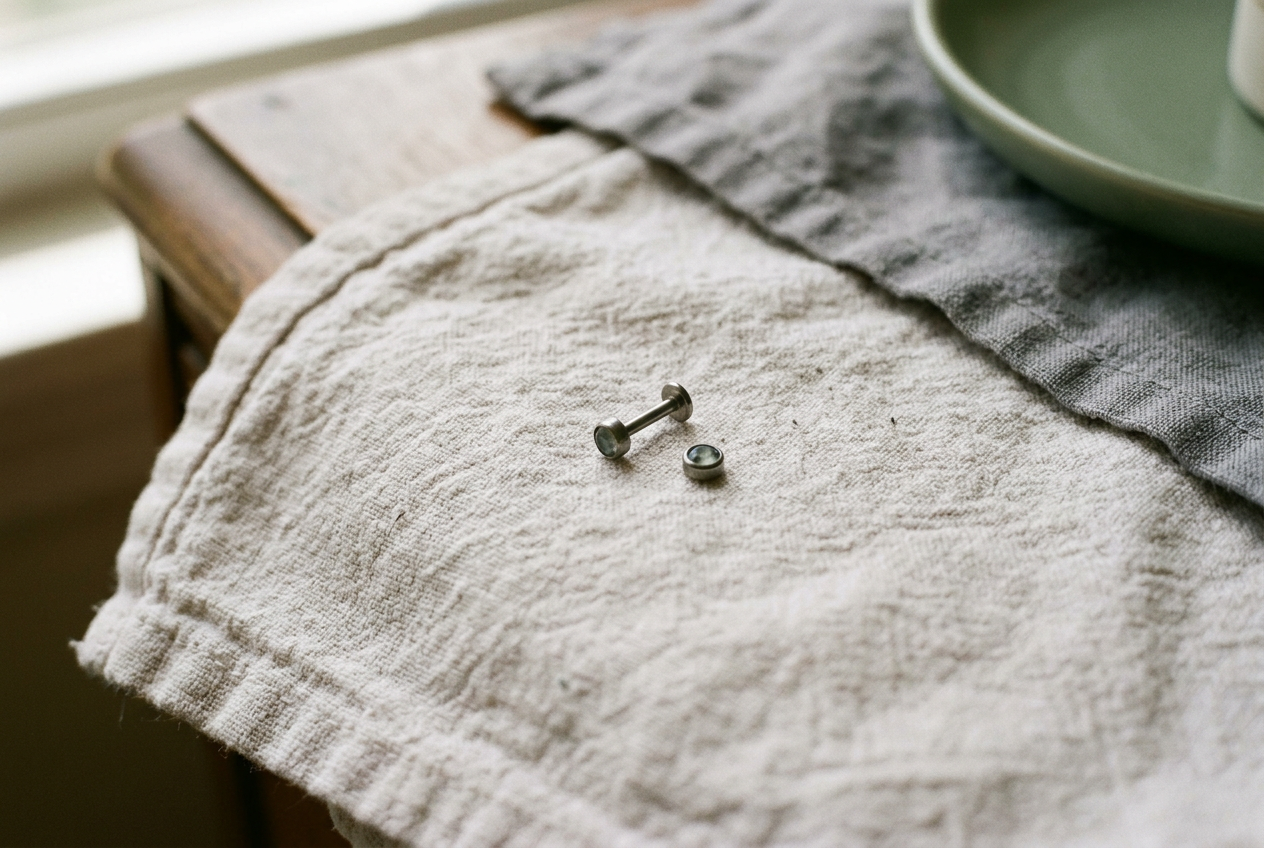
Take one common earring as the case throughout this walkthrough: a 20-gauge implant-grade titanium flat-back labret, meaning the post ends in a disc that sits flush behind the ear. It has a straight shaft, a removable decorative front and a modest disc. This is unisex sizing guidance because the mechanics do not change across wardrobes or styling categories.
Gauge runs backward
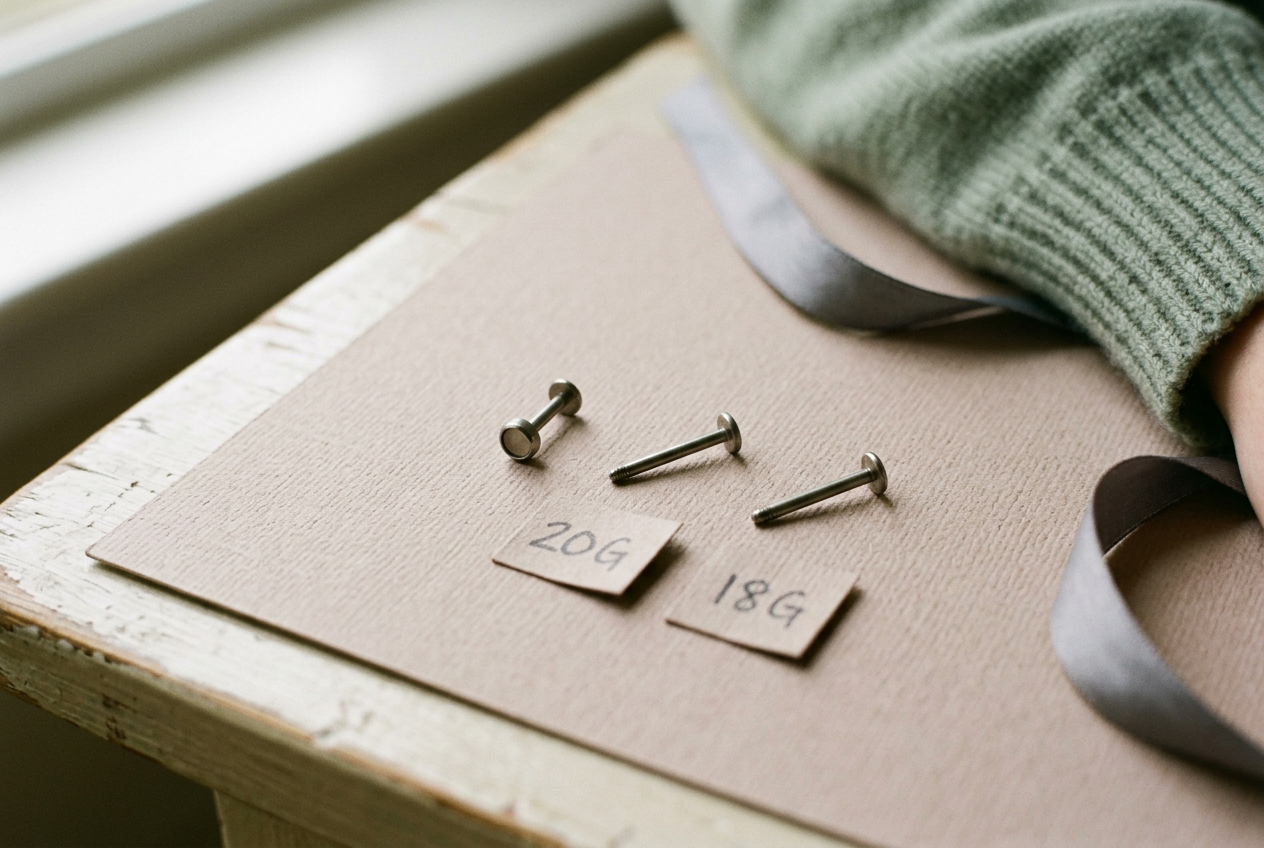
Gauge means post thickness. The numbering is counterintuitive: a higher gauge number indicates a thinner post. An 18-gauge post is approximately 1.0 millimeter thick, while a 20-gauge post is approximately 0.
8 millimeter thick.
The difference is only about two-tenths of a millimeter, but its direction matters. Moving from 18 gauge to 20 gauge means inserting a thinner post. Moving from 20 gauge to 18 gauge means asking the piercing to accommodate a thicker one.
That makes the basic answer clear. A true 20-gauge shaft should pass through a stable channel that currently accommodates 18-gauge jewelry, assuming the path is open and the post is smooth. The smaller post does not stretch the piercing.
A healed piercing, however, is not a rigid tube holding its original diameter forever. Tissue can settle around the jewelry worn most often, and a piercing left empty may tighten. A hole originally made at 18 gauge could therefore be narrower now, especially if it has held a fine fashion earring for a long period.
“Healed” describes the condition of the tissue, not a guaranteed internal measurement.
The shaft may not be the part that catches
Return to that 20-gauge titanium flat back. The straight middle of its post may measure correctly, yet the earring can still resist at the decorative end, a threaded section, a seam, or a tiny bend that is difficult to see without magnification.
An internally threaded post, meaning its screw threads sit inside the hollow shaft, should present a smoother exterior than an externally threaded design. A threadless post uses a slender insertion pin on the decorative end, which bends slightly to create tension inside the post. Neither system is automatically compatible across every maker, and a poorly seated or damaged component can leave an edge where the parts meet.
The entry angle matters too. Piercings do not always travel straight from the visible front mark to the obvious point behind the lobe, particularly when the original placement follows the ear’s anatomy. A post aimed a few degrees away from the existing channel may press into tissue and feel as though the hole is too small.
Post length creates another misleading failure. Wearable length is the straight section available between the decorative front and the backing. If that section is too short for the lobe, the post may enter the channel but fail to emerge far enough at the back to secure the disc. Swelling or temporary irritation makes the problem more pronounced.
Buying a thicker post will not fix it.
Then there is the label. Gauge charts are consistent about the usual 18-gauge and 20-gauge conversions, but product listings, marketplace descriptions and factory packaging are not immune to errors. Some fashion earrings are sold with approximate measurements rather than a piercing-specific gauge, while interchangeable ends may be described by the post system they fit rather than the thickness of the part entering the ear.
In other words, the 20-gauge flat back may be resisting for reasons unrelated to its advertised shaft diameter. The body supplies resistance, not a measurement.
Make one gentle fit check
Start with the jewelry already worn comfortably. Confirm its marked gauge if that information is available, and compare the new shaft with the old one under good light. A visibly wider new post contradicts the labels. A professional piercer can measure both pieces with calipers rather than guessing from a product photo.
Check the new earring for rough threading, a raised seam, dried residue or a bent shaft. The surface that passes through the piercing should feel smooth. Implant-grade titanium is a useful material for this comparison because reputable piercing jewelry is precisely finished and lightweight, though the material name alone does not guarantee accurate dimensions or good polishing.
With clean hands and no current tenderness, guide the post along the established angle without digging for an exit. Mild awareness of the jewelry is different from sharp pain or firm resistance. Stop at either one. Do not twist, repeatedly jab from both sides, or use the decorative front as a handle for applying more pressure.
That stop costs less than turning a routine earring change into several uncomfortable days. A piercer can inspect the channel, measure the post and determine whether an insertion guide is appropriate. They can also distinguish a short-post problem from a narrow-channel problem before selling another piece.
If the piercing is hot, increasingly swollen, bleeding, producing unusual discharge or otherwise concerning, leave the fitting experiment alone and seek appropriate professional care. This sizing walkthrough is not medical advice.
Gradual sizing applies in the opposite direction
The gradual-change question becomes relevant when a piercing currently holds 20-gauge jewelry and the intended replacement is 18 gauge. That replacement is thicker. Even a small numerical change asks more of the tissue than slipping a 20-gauge post into a genuinely 18-gauge channel.
For a fully healed, calm lobe piercing, a professional piercer may decide that the change is reasonable and fit the jewelry with suitable tools. The condition and location of the piercing matter more than a universal waiting period. Cartilage is less forgiving than soft lobe tissue, and a channel that has recently been sore is a poor candidate for experimentation.
Gradual does not mean pushing until discomfort fades. It means assessing the existing opening, choosing a modest size change and allowing the tissue to remain settled before another adjustment. If the goal is merely a flat back for sleeping, staying at 20 gauge may be the simpler alternative; there is no style prize for moving to 18 gauge when the current diameter is comfortable.
The tradeoff is compatibility. Many piercing-focused flat backs are offered in sturdier post sizes, while delicate fashion earrings often use thinner posts. An 18-gauge post may offer more options within some threadless or internally threaded systems, but ends and posts still need to be confirmed as compatible. Mixing components by appearance alone can produce a loose front or a seam that catches.
Buy the dimensions, not just the front
The decorative top gets the product photo. The post determines whether the earring works.
For the titanium flat back in this example, check four details before ordering: gauge, wearable length, backing diameter and closure system. Gauge controls thickness. Wearable length determines whether the post spans the tissue without pressing or leaving excessive room. The backing diameter affects how the disc feels against the ear, particularly on a pillow, while the closure system decides which ends can be used.
Material belongs in that check. Implant-grade titanium with a documented standard is typically the practical, lower-cost route for a precisely made flat back; solid gold raises the price, especially when the decorative end carries more metal or stones. Gold color alone is not a material specification. Plated fashion jewelry may be inexpensive, but its finish and underlying alloy can make it a poor choice for a post that stays in continuously.
The thinner 20-gauge option can suit a settled piercing and a light stud. The 18-gauge alternative offers a slightly more substantial post and may align with a wider piercing-jewelry system. Neither fixes incorrect length, a rough surface or pressure from a disc that is too tight against the lobe.
So return once more to the earring that stopped halfway. Its label says it should fit. Its behavior says not to continue. Keep the jewelry clean, bring the old and new pieces to a reputable piercer, and let an actual measurement settle the discrepancy.
Questions people ask
Will a 20-gauge earring fit an 18-gauge piercing?
A correctly sized 20-gauge post is about 0.8 millimeter thick, which is narrower than an 18-gauge post at about 1.0 millimeter. It should fit an open, stable 18-gauge channel.
Resistance can indicate narrowing, an incorrect angle, rough jewelry, insufficient post length or inaccurate labeling.
Can a healed piercing shrink to a smaller gauge?
Yes. Healed tissue can settle around thinner jewelry, and a piercing may tighten when left empty. Its original piercing gauge does not guarantee its present internal diameter. A professional piercer can inspect the channel and compare the old and new jewelry before recommending a size change.
Should
I use a taper to make an 18-gauge post fit?
Do not treat a taper as a way to overpower resistance at home. A professional piercer may use an insertion taper or guide after checking that the piercing is fully healed and suitable for the change. If your current jewelry is truly 18 gauge, a 20-gauge replacement should not require stretching.
What should I do if the new earring hurts or bleeds?
Stop the insertion rather than trying again from another angle. Pain or bleeding means the fitting attempt is irritating tissue, regardless of what the package says. Ask a professional piercer to assess the jewelry and channel; seek appropriate medical care for increasing heat, swelling, unusual discharge or other concerning symptoms.
One update a day
Today's fashion update, in your inbox
One fashion update each morning — no hype, no filler, just pieces worth wearing.