Your Threadless Earring Pin Needs Less Bend Than You Think
A slight curve creates the friction that holds a threadless end in place. More bend can weaken the pin, jam the connection, and make removal hurt.
October 13, 2026 · 7 min read
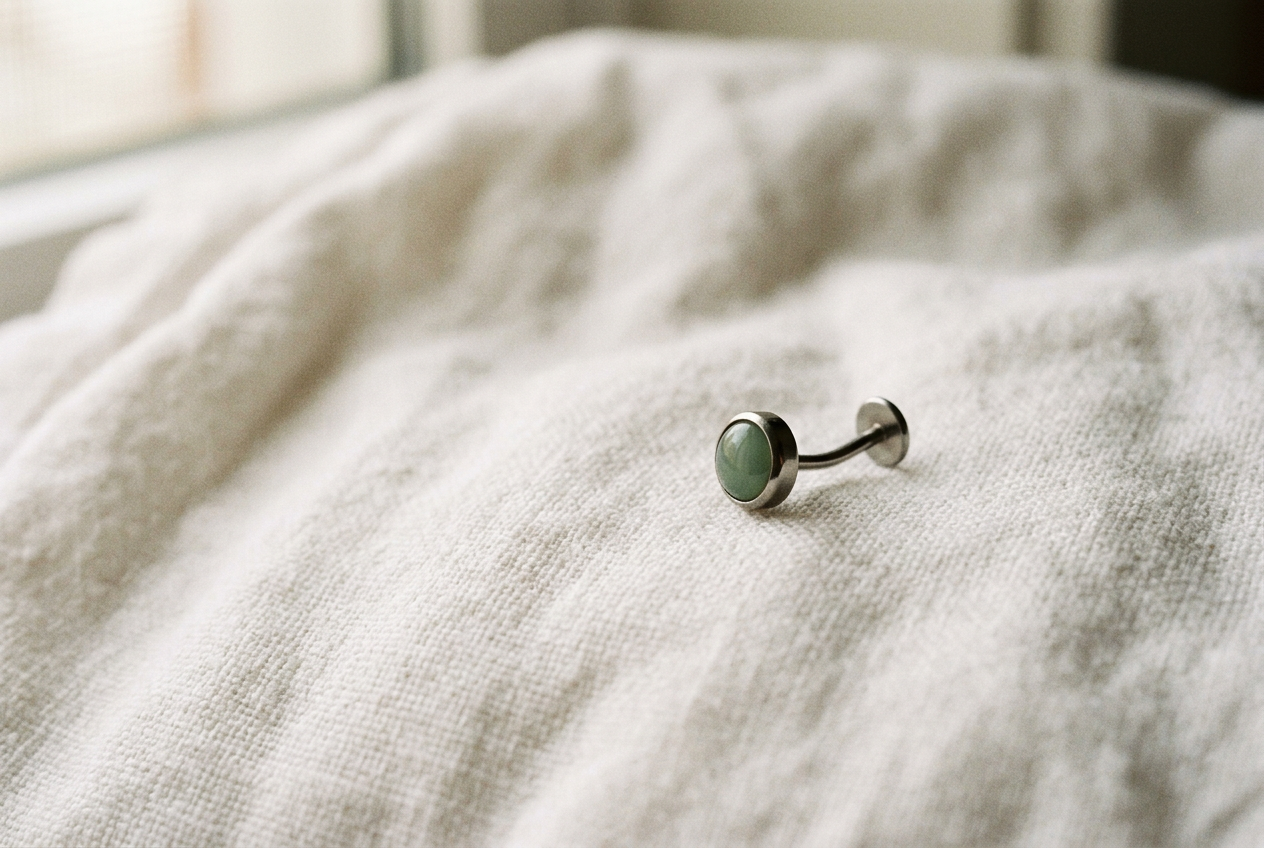
The working example here is a polished bezel end fitted into an implant-grade titanium flat-back labret, worn in a healed upper-lobe piercing. A flat-back earring means the post’s backing sits flush against the ear, while the threadless end is the decorative piece with a slender pin that presses into the hollow post.
This is unisex fitting advice. The mechanics do not change with styling, whether that small bezel sits alone or beside a heavier hoop in a stacked ear.
The pin looks too delicate to bend on purpose. That is the fit quirk. A threadless connection relies on friction created by a controlled curve in the pin, rather than screw threads or a butterfly backing, and the useful adjustment is usually much smaller than the bend people make when the end first feels loose.
What a secure bend looks and feels like
There is no useful universal angle to copy. Pin material, length and the internal dimensions of the post vary, so a dramatic bend that holds one combination may damage another. Brand instructions generally direct the wearer to insert the pin partway, create a slight bend, then press it fully into place.
On the titanium bezel example, the pin should still look nearly straight when viewed from the side. Its free end may sit subtly off the original line, but it should not have a corner, crease or hook. The better measurement is resistance: the pin enters the post easily at first, begins to grip as it travels inward, and finishes with the bezel sitting flush against the post opening.
It may not click. Threadless jewelry is a friction fit, and treating an audible snap as the goal can lead to excessive bending.
Removal supplies the second half of the test. Hold the flat disc and decorative end, then pull them directly apart with steady fingertip pressure. A secure end should not fall out during dressing or sleep, but it should release without pliers, a painful tug on the piercing or a prolonged twisting contest. If removal hurts the ear, take the jewelry out of the ear before making another adjustment, provided the piercing is healed and removal is already safe for it.
Make the adjustment off the ear
Wash and dry your hands, then work over a clean towel so the tiny bezel cannot bounce onto the floor. Check the pin under bright light. A smooth pin can be adjusted; a pin with a visible crease, rough spot or previous sharp kink should not be flexed again.
Hold the bezel by its sides rather than pressing on its stone or setting. Slide the pin roughly partway into the matching post, leaving enough of the pin outside to move the decorative end. With the post stabilized, press the bezel gently to one side against the post’s opening. That small movement puts a shallow curve in the exposed pin.
Pull the pieces apart and look again. The polished bezel’s pin should be only slightly offset. If the change is obvious, do not add more.
Now align the pin with the opening and press the end fully into the post. Test the connection over the towel. A first adjustment that remains a little loose is better than a large bend, because you can repeat the same partway-in motion once more; repeatedly straightening an overbent pin flexes the metal back and forth, which can weaken it at the bend.
Avoid pliers. Their jaws can score the pin, flatten a hollow post or apply force far beyond what the connection needs, and wrapping the jaws in cloth does not make that force easier to judge. Fingertip pressure is enough for an intact, compatible system.
Once the connection passes the off-ear test, separate it, place the post in the healed piercing and reinstall the bezel. Keep the flat disc still while pressing from the front. The end should meet the post without leaving a visible gap.
Loose does not always mean underbent
The crucial diagnosis comes before a second or third adjustment. If the bezel pin enters the titanium post and gains some resistance near the end, the system probably needs a modest tension change. If it slides through with virtually no resistance even after a slight bend, the post may be worn, widened or incompatible.
Gauge does not settle compatibility. Gauge means the thickness of the earring post, but two posts with the same outside gauge can have different internal openings, pin requirements or insertion depths. Some brands design their ends and posts to work across several sizes within their own system; that does not make every threadless end interchangeable across manufacturers.
A pin that will not start in the post is another mismatch signal. Do not narrow it with tools or force it into the opening. A pin that enters but stops before the bezel sits flush may be overbent, obstructed by residue, too long for that post or made for a different system.
Return to the bezel example. If its nearly straight pin grips one titanium post but drops out of another post labeled with the same gauge, bending the end harder treats the wrong component. Keep the end with the post in which it fits correctly, or replace the questionable post with one documented as compatible by the maker.
This matters when buying ends individually. A low-priced replacement post is not a bargain if its internal fit is uncertain, while a costly solid-gold decorative end is especially poor material for trial-and-error bending. Check the manufacturer’s compatibility guidance and keep the brand or system name with your order record.
The post fit can imitate a pin problem
A secure threadless end can still feel wrong in the ear. The post length, meaning the wearable distance between the flat disc and decorative end, must leave appropriate room for the tissue. A post that is too short creates pressure, tenderness and an end that appears difficult to remove; adding more pin tension makes that discomfort worse.
An excessively long post creates a different problem. The bezel leans away from the ear, catches on hair or clothing, and gets extra leverage whenever it is bumped, so a correctly tensioned connection can seem unreliable. A better-fitting post addresses the movement without asking the pin to hold against repeated side loads.
For the upper-lobe example, the polished bezel should rest level rather than sink into the skin, while the back disc should lie comfortably without pinching. If the disc presses after sleep or the front leaves a deep indentation, treat that as a sizing or irritation issue rather than proof that the threadless end needs another bend.
Know when to stop
Stop adjusting when the end stays seated during normal handling and comes apart with a deliberate pull. Extra tightness has no practical reward. It raises the chance of deforming the pin, damaging the hollow post or yanking an irritated ear during removal.
A visible crease is the clearest stopping point. So is a pin that has been bent, straightened and bent again, because another cycle asks a tiny section of metal to flex once more. Replace the end or have an experienced piercer inspect it rather than waiting for the pin to break inside the post.
Leave a fresh or healing piercing alone. Swelling, heat, persistent redness, bleeding, discharge, jewelry embedding into the skin or pain during light handling are not at-home tension tests. A reputable piercer can assess the jewelry fit and change a post with less movement to the channel; medical symptoms need an appropriate health professional.
The same caution applies when the jewelry will not separate with dry hands and moderate pressure. Clean nitrile or latex gloves can improve grip without increasing the pull, but tools and escalating force are the point to stop. Take the whole connection to a piercer or jeweler who works with threadless body jewelry.
Questions people ask
How far should I bend a threadless earring pin?
Bend it only enough to create progressive resistance as the pin enters the post. The pin should remain nearly straight, without a sharp corner or visible kink, and the decorative end should sit flush. If it needs force throughout insertion or hurts to remove, reduce the bend or have the fit checked.
Why does my threadless end keep falling out?
The pin may be too straight, but the post may also be worn or incompatible. Make one small adjustment and test it off the ear. If a subtle bend produces no grip, confirm that the end and post belong to compatible systems rather than continuing to bend the pin.
Can
I adjust a threadless end in a fresh piercing?
Do not use a healing piercing as the work surface. Extra movement can irritate the channel, while swelling may make a normal connection feel unusually tight. Ask the piercer who fitted the jewelry to check the tension and post length, particularly if the end is sinking, the disc is pressing or the area is painful.
Should a threadless earring click into place?
Not necessarily. Many secure threadless connections give firm, increasing resistance without an audible click. Judge the fit by whether the end sits flush, remains in place during normal wear and releases with controlled fingertip pressure; chasing a snap can leave the pin overbent and difficult to remove.
One update a day
Today's fashion update, in your inbox
One fashion update each morning — no hype, no filler, just pieces worth wearing.