Your Threadless Earring End Needs a Bend, but Only a Slight One
A tiny curve in the end’s pin creates the grip inside a threadless post. Here is how to test it, adjust it in small increments, and spot incompatible parts.
September 30, 2026 · 8 min read
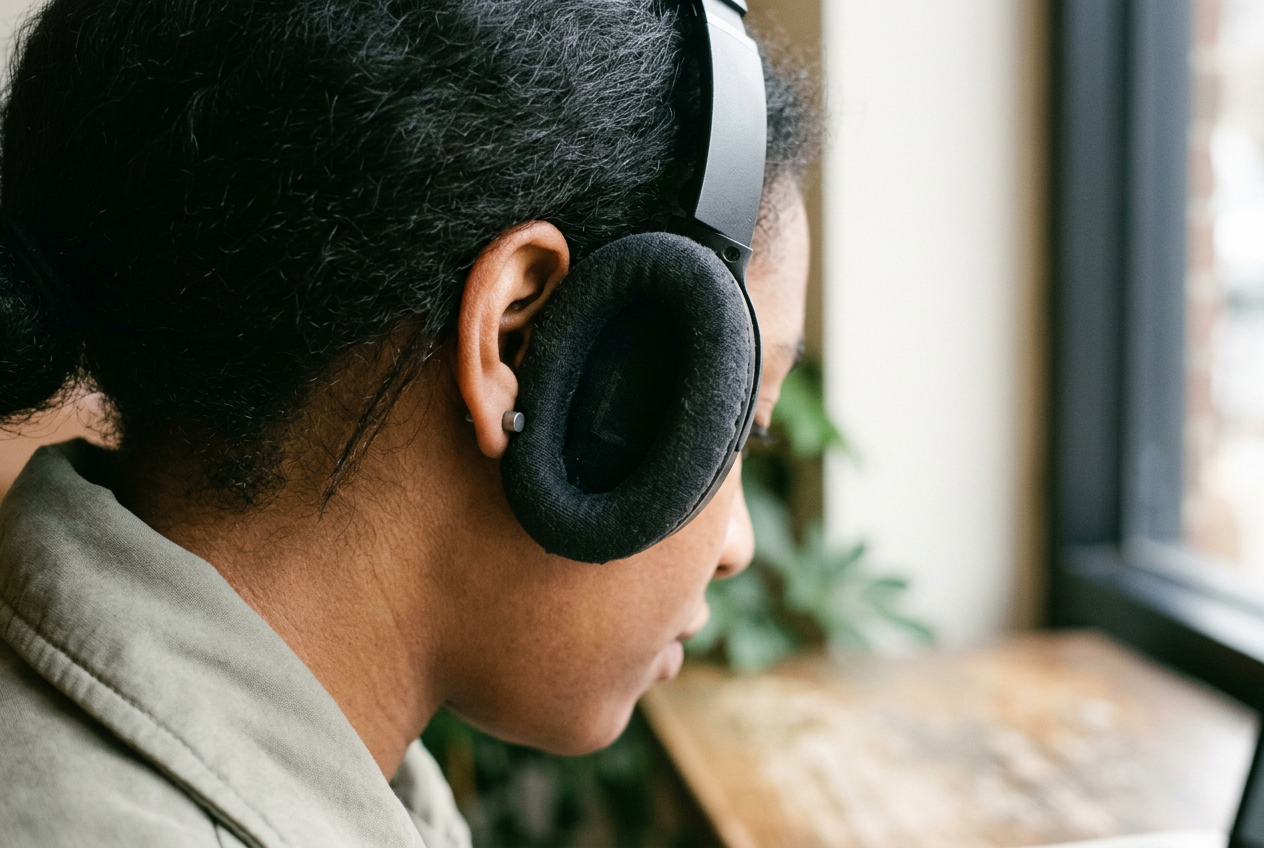
The working part is almost invisible: a fine metal pin with a shallow curve, tucked inside a hollow post. Too straight, and the decorative end can work loose against a towel, headphones, or a pillowcase. Too curved, and removing it becomes an uncomfortable tug.
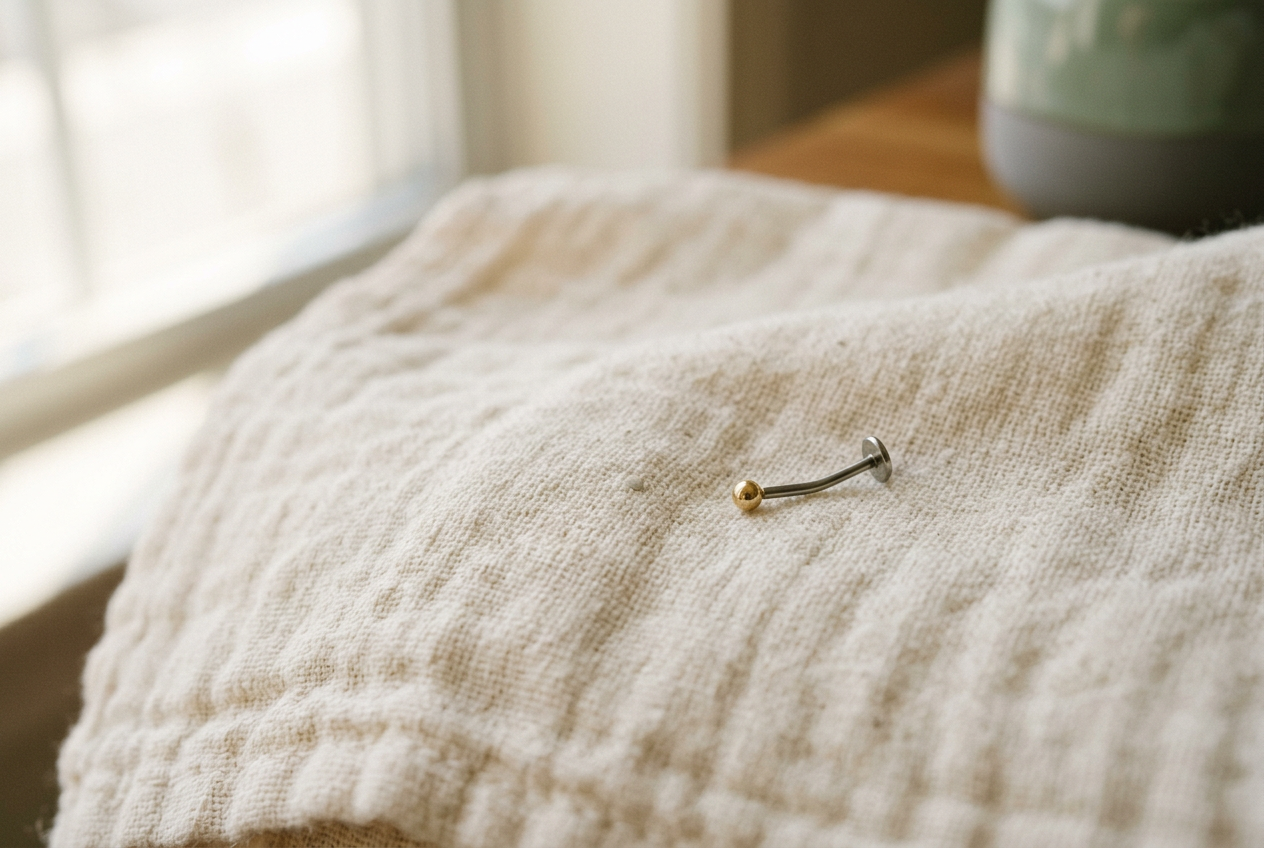
Our test piece was a tiny solid-gold bead end fitted to an implant-grade titanium flat-back post and worn in an upper-lobe piercing. A flat-back earring, meaning the post’s backing sits flush against the ear, is comfortable enough to forget about until its front disappears. After a week of overnight wear, the bead began pulling free with less pressure than it had needed at the start. The post itself remained secure.
That distinction matters. The removable front was losing tension. The entire earring was not unscrewing.
This is unisex advice because threadless jewelry uses the same friction-based mechanism regardless of who wears it or how the ear is styled. It applies to healed piercings. Leave jewelry in a fresh or irritated piercing alone and ask a reputable piercer to assess it.
The bend is the fastening mechanism
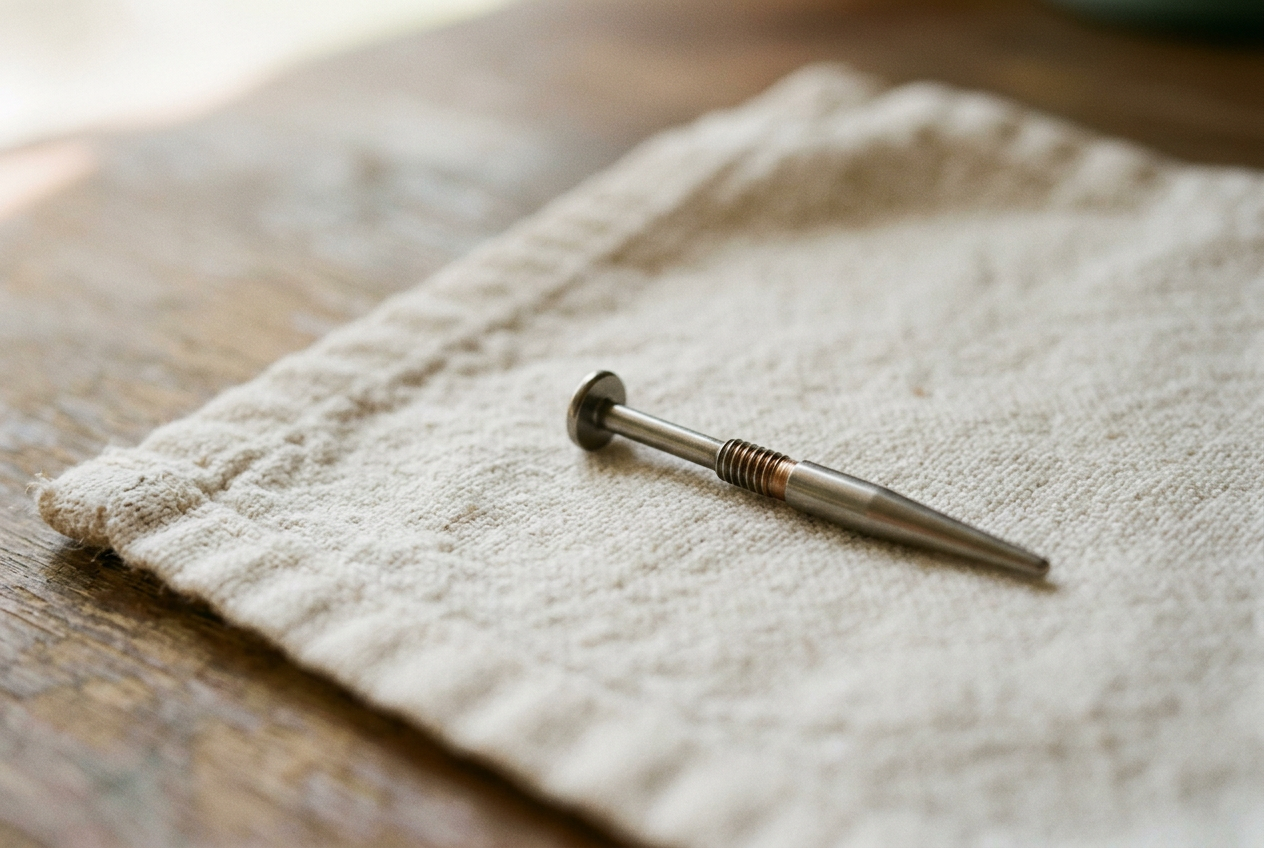
A threadless end, the decorative front that presses into the post without screw threads, carries a narrow insertion pin. Manufacturers design that pin to sit at a slight angle or curve once adjusted. Pushing it into the hollow post compresses the curve, which presses against the post’s inner wall and creates friction.
The bend should be subtle. On the gold bead from our test pair, it looked closer to a gentle deviation from straight than a visible kink. That was enough to produce resistance through the final part of insertion while still allowing the end to seat flush against the post.
A pin with too little bend may slide all the way in without a firm final press. It can also pull out with almost no resistance. Daily movement then does the rest: a close-fitting beanie catches the bead, hair winds behind it, or a pillowcase applies light sideways pressure several nights in a row.
More bend increases friction, but more is not automatically safer. An over-bent pin can scrape inside the post, stop before the end sits flush, or grip so tightly that removal requires force close to the piercing. Repeatedly bending the pin back and forth also stresses a very fine piece of metal. The useful range is narrow.
Check the fit before changing anything
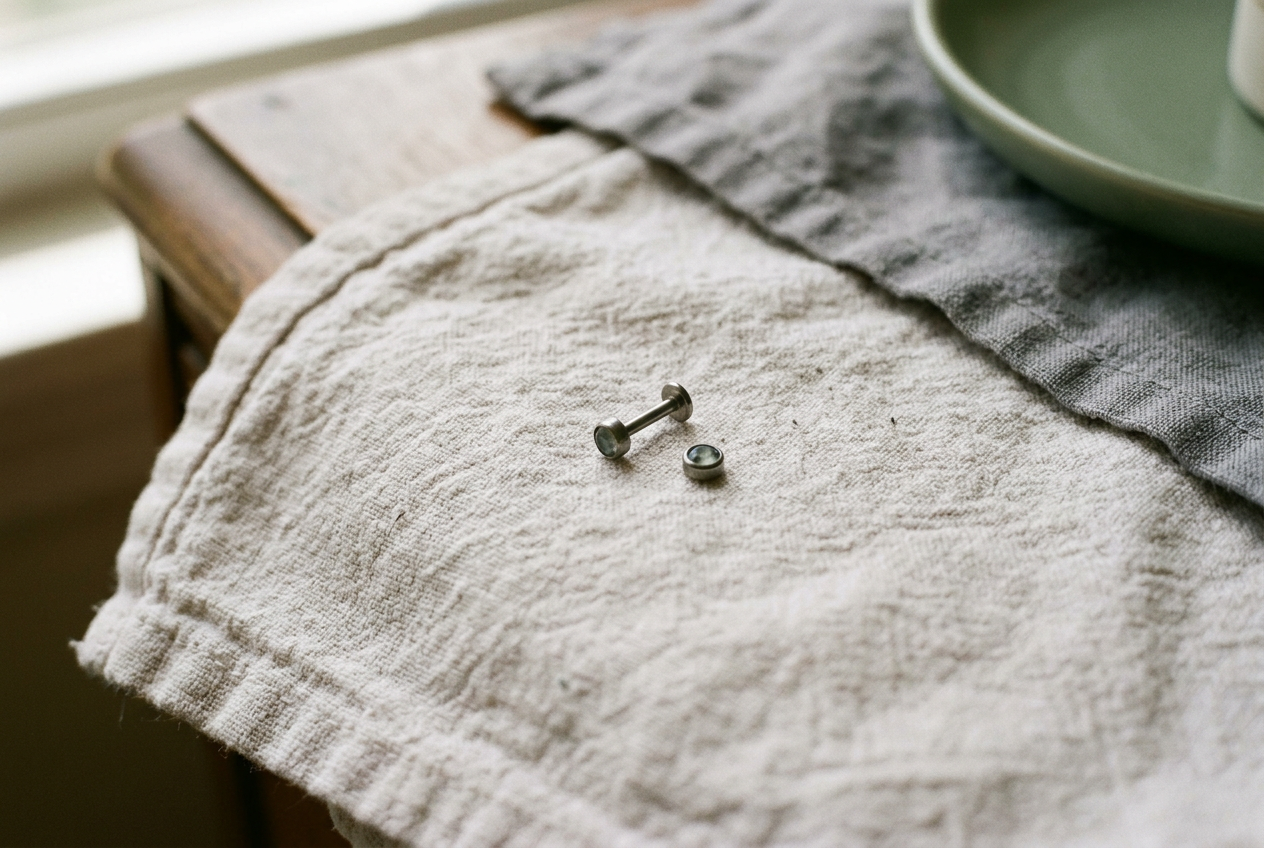
Work over a clean towel in bright light. The towel keeps the bead from bouncing away and gives small polished parts enough contrast to remain visible. Wash and dry your hands first; moisture and skin products make a tiny end harder to hold.
Remove the end by holding the post steady behind the ear and pulling the front straight outward with a slight twist. Do not wrench it sideways. If the jewelry will not release with controlled finger pressure, stop rather than recruiting pliers, which can crush the post opening or mark a gold end. A piercer can usually get a better grip without loading the piercing itself.
Once the pieces are apart, wipe them with a clean, lint-free cloth and inspect the pin. Look for a shallow curve. A sharp angle, rough spot, split, or loose connection where the pin meets the decorative end is not a tension adjustment project. Retire that end until a jeweler or piercer can examine it.
Next, insert only the tip of the pin into the titanium post. It should enter without grinding or shaving metal. Advance it gradually. The resistance should increase as the curved section enters, followed by a firm press that brings the bead flush to the post.
Our test bead failed this check in a specific way: it entered smoothly, but the final press had almost disappeared. It also came back out with a light pull. That combination pointed to insufficient tension rather than damage at the post opening.
Add tension without levering against the post
Manufacturer instructions for threadless jewelry commonly use the post as a guide for creating the pin’s slight bend. The safe version is controlled and incremental: insert the pin partway, support both pieces close to the connection, and apply the smallest sideways pressure needed to move the decorative end a fraction.
Do not insert the pin fully before bending it. A deeply inserted pin gives you more leverage against the mouth of the post, which is precisely where a hollow tube can become distorted. Keep the pin only partway in, and hold the post near its opening rather than by the flat disc at the far end.
For the gold bead and titanium post, one restrained adjustment restored a visible but shallow curve. The end was then removed, inspected, and tested again. That sequence takes longer than one decisive bend, but it limits the chance of turning a loose end into a stuck one.
Press the end straight into the post for the test fit. It should not drop into place, nor should it require tools or a hard squeeze. A useful fit gives steady resistance near the end of travel, seats with the decoration flush, and releases later with a supported twist and pull.
If the first adjustment does not add enough grip, repeat it once in another tiny increment. Stop when the end stays seated under a deliberate fingertip tug. Tug the jewelry from the front while supporting the back, rather than pulling the whole earring through the piercing.
If you overshoot, resist the urge to reverse the pin several times. One modest correction may be possible, but repeated flexing can weaken it. For a valuable solid-gold or gem-set end, professional adjustment costs less than replacing a broken pin or a lost front.
A mismatch feels different from low tension
Threadless describes the fastening style, not a promise that every end fits every post. Pin thickness, post opening, insertion depth, and manufacturing tolerances can vary, especially when parts come from different makers. The package may look interchangeable. The fit still needs checking.
A pin that is too thick tends to resist from the first millimeters of insertion, even before its curved section reaches the post. Do not force it. Forcing can score the pin, flare the post opening, or lodge the end before it sits flush.
A pin that is too thin may feel loose even after it has a clear, gentle bend. Adding more curve can disguise the mismatch for a while, but it concentrates pressure on a small section of the pin and may make insertion awkward. The better answer is a compatible end or post from the same system.
Insertion depth offers another clue. If the pin stops abruptly while a gap remains between the decoration and the post, it may be bottoming out, or the curve may be too severe. Remove it and compare the parts with the maker’s compatibility guidance. Never close the gap by squeezing harder against the ear.
A swap test is useful if you own another known-compatible threadless pair. Put the suspect gold bead into the other post, then test a secure end in the original titanium post. If several ends sit loosely in one post, the post opening may be worn or distorted. If only one end fails across compatible posts, its pin is the likely problem.
The post can be the damaged part
The thin wall at the post opening needs to remain round. Pliers, aggressive side-to-side bending, and forcing an oversized pin can turn that opening slightly oval, after which a previously secure end may no longer grip evenly.
Inspect the rim under bright light. A visible split, flattened edge, or oval opening means replacement is safer than further adjustment. Titanium posts are often less expensive than solid-gold or gem-set ends, so sacrificing the worn post is usually the sensible tradeoff. Do not keep bending a valuable end to compensate for a damaged tube.
The test pair returned to normal only after its pin received a minute increase in curve. It seated flush, resisted a supported fingertip pull, and still released without tools. Those are the useful checks. The bend itself does not need to look dramatic.
Keep the adjustment from becoming a weekly chore
Check the front whenever you handle the jewelry for cleaning, but avoid pulling it out only to confirm that it is still tight. Each removal creates another opportunity to bend the pin, drop the end, or contaminate a piece that is going back through the ear.
Hair products and skin oils can make the outside slippery, yet they do not correct or create mechanical tension inside the post. Dry the jewelry before judging its grip. If the same end repeatedly loosens after a proper adjustment, replace the questionable component rather than adding a larger bend every few days.
Storage matters once the pieces are separated. Keep the end in a small compartment where its pin cannot sit under heavier jewelry. A bent pin is functional; a crushed or sharply kinked pin is damaged.
Questions people ask
How much should a threadless earring pin bend?
The pin needs a shallow, smooth curve rather than a sharp angle. Judge it by fit: the end should meet increasing resistance as it enters, seat flush with firm finger pressure, and come out with a supported twist and pull. If tools seem necessary, the bend is too aggressive or the parts do not match.
Can
I use pliers to tighten a threadless earring end?
Avoid pliers on both the pin and the post. Their jaws can mark gold, flatten the hollow post opening, or create a sharp kink in the insertion pin. Use controlled finger pressure with the pin inserted only partway, or take valuable and stubborn jewelry to a piercer for adjustment.
Why does my threadless end fall out even after I bend it?
The end and post may be incompatible, or the post opening may be worn. Test the pieces against known-compatible jewelry if available. A pin that remains loose despite a visible gentle curve is more likely mismatched than under-bent, and adding more tension can make the pin harder to insert without producing a dependable fit.
Should
I adjust threadless jewelry in a fresh piercing?
No. Repeated handling can irritate the channel, and pulling against swelling may cause more trouble than the loose end itself. Keep pressure off the area and ask a reputable piercer to check the jewelry, its post length, and the end-to-post fit without removing it unnecessarily.
One update a day
Today's fashion update, in your inbox
One fashion update each morning — no hype, no filler, just pieces worth wearing.