Wide Platform Sandals Can Still Roll on Broken Sidewalks
A broad platform may look planted while insulating the foot from the pavement. Sole flare, flexibility and ankle restraint matter more than the silhouette suggests.
September 24, 2026 · 7 min read
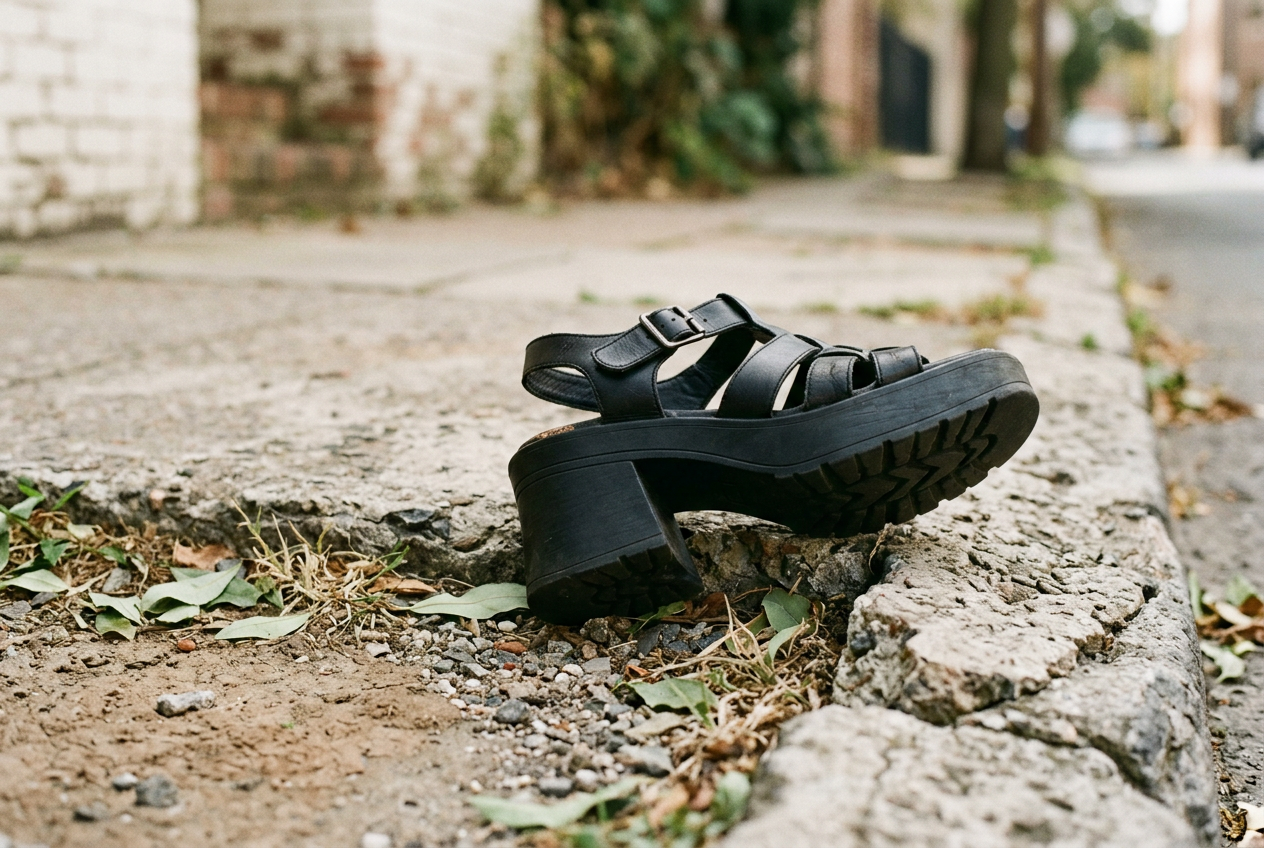
The useful test for a platform sandal is not standing squarely on a store floor. It is placing the shoe diagonally across a low curb or raised paving edge, transferring weight slowly, and noticing whether the sole communicates the change before the ankle has to rescue the situation.
That diagonal curb test is the concrete case throughout this analysis. It applies across wardrobes, so this is unisex advice, though people shopping between gendered size ranges should compare foot length and width rather than trusting the number printed on the box.
Platform sandals have become broader and more architectural, particularly in molded EVA, polyurethane foam and rubber-covered constructions. They often appear reassuringly substantial. Some are. Others create rollover, meaning the sole tips sideways around its outer edge faster than the wearer can correct, while looking as stable as a paving slab in the product photo.
The distinction appears on broken pavement, curb cuts and the shallow edge where one sidewalk panel has risen above another. A thin sandal lets the foot feel that change immediately, although it offers little protection from it. A thick platform can filter out the warning while increasing the distance the ankle travels if the shoe begins to tip. Comfort, as usual, has found paperwork.
Why apparent width is not enough
Start with the outsole, the layer that contacts the ground. A platform may look wide from above because the upper covers much of the foot, yet narrow underneath where the outsole curves inward. On the diagonal curb test, that hidden reduction determines how much material remains in contact with the pavement.
Look at the shoe from below or set it on a counter and inspect the footprint. The outsole should remain broad through the heel and forefoot rather than narrowing into a waist under the arch. A sharply pinched middle can make a chunky sandal easier to roll as weight moves from heel to toe, particularly when the raised edge meets the shoe between those two support zones.
The heel deserves extra suspicion. Fashion platforms sometimes carry their visual width high on the sidewall while the actual ground-contact area is smaller, rounded or beveled. A slight bevel can smooth a normal stride, but a heavily rounded heel reduces the stable base just where a wearer stepping off a curb expects support.
During the curb test, place only the outside half of the heel on the low edge. Do not drop full body weight onto it. If the sandal begins to rotate before pressure reaches the forefoot, its visible bulk is doing public relations rather than structural work.
Flare helps, until softness cancels it
Sole flare means the base projects outward beyond the upper, widening the shoe where it meets the ground. A modest flare at the heel and forefoot gives the sandal more resistance to sideways tipping, especially when a paving edge catches one side first.
The useful flare is underneath the foot, not merely a ledge molded around the upper sidewall. Press a thumb into the projecting edge. If it folds upward with little effort, that extra width may collapse under load, reducing its value on the diagonal curb test. Dense rubber usually holds an edge better than very soft foam, although it adds weight and may feel firmer during a full day of walking.
Molded EVA can work when the shape is broad and the compound has enough density to resist twisting. It can also feel wonderfully forgiving in the fitting room while allowing the heel edge to squash sideways on a sloped curb. Polyurethane foam tends to feel more substantial, but construction matters more than the material name printed in a description.
Check the outsole after a week of real wear if the return policy permits outdoor use, or inspect a display pair for compression. A platform that already leans outward at the heel, develops a crushed edge or shows uneven tread contact will not become more disciplined with time. Softness is not support wearing casual clothes.
Flexibility should happen in the right place
A platform needs some forefoot flexibility so the wearer can roll through a step, but it should not twist freely from heel to toe. Torsional flexibility, meaning how readily the sole rotates along its length, becomes a liability when one side lands higher than the other.
Hold the heel in one hand and the forefoot in the other. Apply gentle opposing pressure. The shoe should give a little near the ball of the foot while resisting a full spiral through the arch and heel. A platform that can be wrung like a damp cloth may follow every bump, yet it does not give the foot a reliable base from which to correct.
The opposite extreme is a rigid platform with no useful forefoot bend. On level ground it can feel steady. At the diagonal curb, however, the entire shoe may behave as one tall block, holding the foot above the surface while the outsole balances on a small contact point. The wearer receives little information until the block has started moving sideways.
A moderately flexible platform handles the compromise better. It bends where the toes need to leave the ground, keeps the heel relatively square, and lets enough pavement information reach the foot without transmitting every pebble as a personal complaint.
Height increases the cost of a small mistake
Platform height changes leverage. The farther the foot sits above the ground, the farther the ankle moves when the sole tips through the same angle, which turns a small surface change into a larger correction.
This does not make every tall platform unwalkable. Height becomes less troublesome when paired with a broad ground-contact area, controlled flexibility and a heel that sits inside the outsole perimeter rather than directly over its edge. A tall, narrow, soft platform combines the least helpful versions of all three decisions.
Pay attention to pitch as well. Pitch is the height difference between heel and forefoot. A level-looking platform can still lift the heel internally, shifting pressure forward and making the wearer meet a broken slab with less weight over the rear of the shoe. Product pages do not always show this clearly.
Set the pair side by side and look at the footbed rather than the exterior wall.
For regular commuting, a moderate platform generally demands fewer negotiations with storm drains, bus steps and pavement repairs. The tallest version may still suit short, controlled outings. It just should not be purchased under the impression that a wide silhouette has abolished gravity.
An ankle strap can restrain the wrong thing
Ankle restraint describes how effectively the upper keeps the heel and midfoot aligned over the sole. A backless slide offers little restraint, even when the front straps grip firmly, because the heel can travel sideways before the platform follows.
A slingback improves matters only if it stays below the ankle bone and holds tension while walking. Elastic that stretches generously may prevent the shoe from being lost altogether, which is a low but relevant standard, while doing little to stop the foot shifting toward the tipping edge.
The strongest arrangement for uneven pavement is usually a secure heel cup or back strap combined with an adjustable ankle strap and a forefoot band that does not let the toes slide forward. That construction can look more utilitarian than a clean two-band platform, but the diagonal curb test exposes the tradeoff quickly: the foot and sole either move together or begin separate projects.
Fit should feel contained, not cinched. If tightening the ankle strap is the only way to stop heel lift, the footbed may be too long, the upper too voluminous or the strap positioned poorly. Excess pressure over the instep can cause rubbing and numbness without adding meaningful stability.
Use the curb test before the return window closes
In a store, ask whether there is a low display edge or use the boundary of a firm entrance mat without blocking a walkway. At home, keep the outsole clean and use a stable board or very low threshold while holding a counter. This is a controlled fit check, not an invitation to recreate municipal neglect indoors.
Approach the edge at a shallow diagonal. Place the heel partly across it, transfer a little weight, then move through the forefoot. The sole should register the height change without snapping sideways, collapsing at the flared edge or allowing the heel to drift beyond the footbed.
Repeat the check with the other foot. Bodies and shoes are not perfectly symmetrical, and one ankle may expose a marginal design sooner. Walk away if the platform repeatedly surprises you. A sandal cannot be broken in until the sidewalk becomes level.
Price does not settle the issue. Expensive leather uppers, stitched welts and polished hardware can improve appearance, repairability and longevity while sitting on a platform whose shape remains poorly suited to broken pavement. At lower prices, molded one-piece construction may offer a broad, coherent base, though soft compounds can wear quickly at the outer heel. Spend for materials and finishing after the mechanics pass.
The best buy is the sandal that looks slightly less dramatic from the side but remains boring on the diagonal curb test. Look for real outsole width, restrained flare that does not buckle, forefoot bend without easy twisting, manageable height and straps that keep the heel centered. Stable-looking is styling. Stable under partial contact is construction.
Questions people ask
Are platform sandals safer than thin flat sandals on uneven pavement?
They can protect the sole of the foot from sharp texture and shallow debris, but height increases the ankle movement caused by a sideways tip. A broad, moderately flexible platform with secure straps may feel steadier than a flimsy flat; a tall foam slide with a rounded base may be harder to correct.
How can
I test platform sandals without wearing them outside?
Use a very low, stable edge at home while holding a counter, and keep the outsoles clean in case of return. Move across the edge diagonally with partial weight. Stop if the heel rotates abruptly, the flared edge folds upward or your foot slides toward the outside of the footbed.
Is a rigid platform more stable than a flexible one?
Only up to a point. The heel and arch should resist twisting, but the forefoot needs enough bend for a normal step and clearer feedback from the ground. A completely rigid platform can balance on a raised paving edge as one tall block, giving little warning before it tips.
Do ankle straps prevent platform sandals from rolling?
They reduce foot movement when they hold the heel and midfoot over the sole, but they cannot repair a narrow or collapsible base. A well-positioned back strap and adjustable ankle strap help most when the forefoot also stays centered and the strap tension remains firm during walking.
One update a day
Today's fashion update, in your inbox
One fashion update each morning — no hype, no filler, just pieces worth wearing.