Platform Sandals Fail on Sidewalks in Four Different Ways
A week in one rigid leather pair showed why platform height is a poor shortcut for judging stability. Sole flex, pitch, base width and strap placement matter more.
Women's · September 20, 2026 · 8 min read
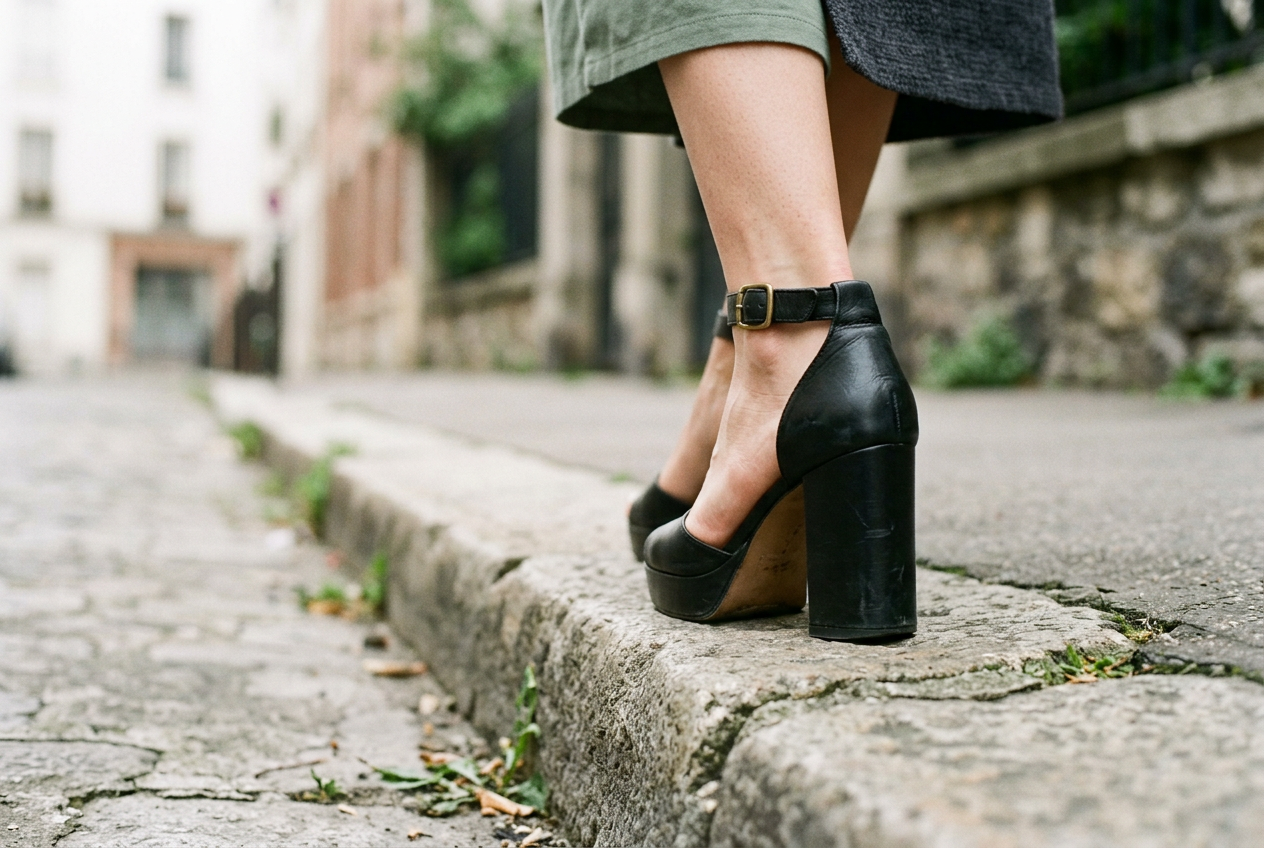
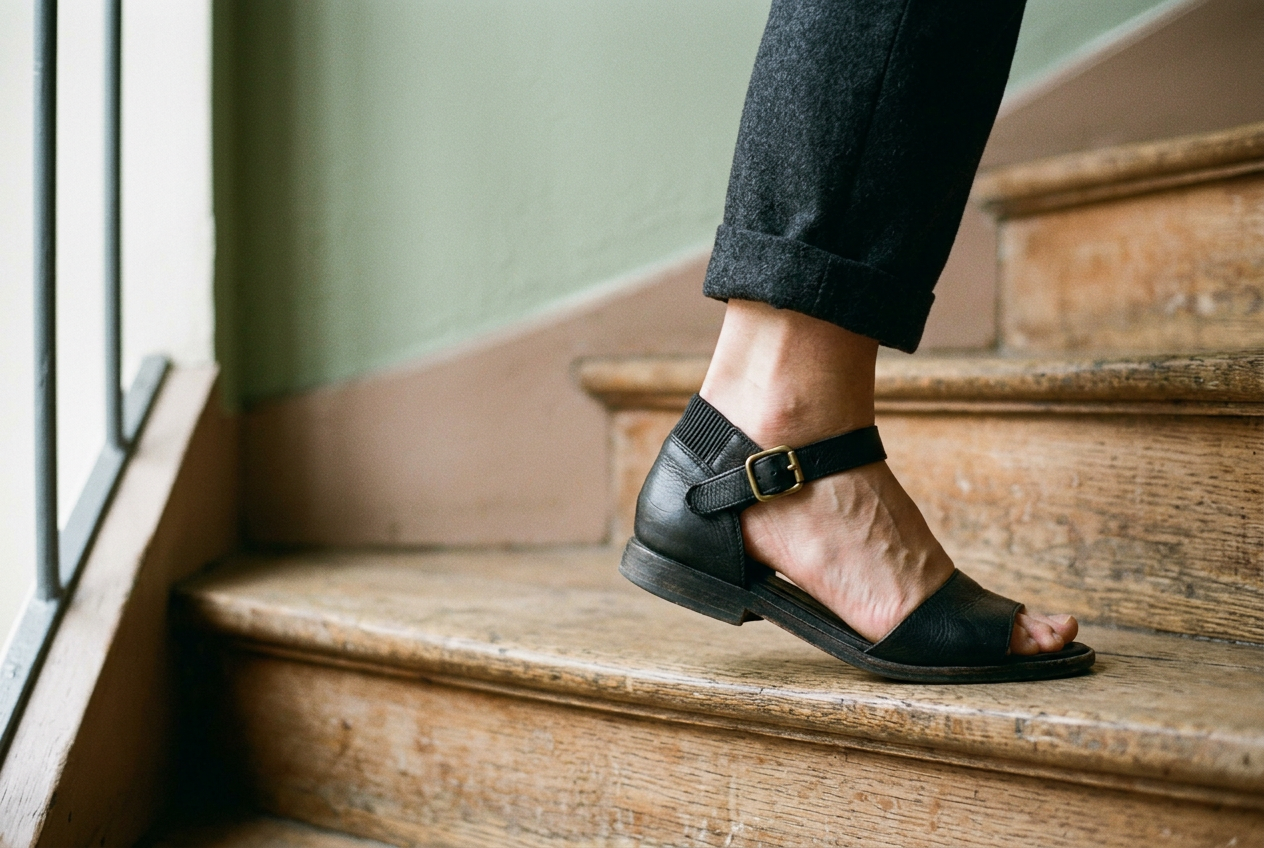
The pair that clarified this was a black leather platform sandal in my usual women’s size, with a rigid molded sole, rubber tread and an ankle strap threaded through a small metal buckle. It looked more precarious than several lower foam pairs. Over a week of ordinary wear, including cracked concrete, curb cuts and paving stones, it proved steadier in some places and considerably less forgiving in others.
The height was obvious. The useful information sat underneath it.
A platform increases the distance between your foot and the ground, but that measurement does not reveal whether the sole twists when one edge lands on broken pavement, whether the heel is meaningfully higher than the toe, or whether the upper lets your foot move while the shoe stays behind. Those are separate failures, and each feels unpleasant in its own way.
This is women’s footwear coverage, although the construction checks apply to any platform sandal. Women’s styles tend to make the tradeoffs especially visible because narrow ankle straps, sculpted soles and steep pitches often do more aesthetic work than stabilizing work.
The rigid platform was steadier until the ground tilted
The black test pair had strong torsional rigidity, meaning the sole resisted twisting when the front and back were turned in opposite directions. On small cracks, that stiffness helped. The platform crossed shallow gaps as one unit instead of bending into them, so my foot did not have to respond to every chip in the sidewalk.
That is the best case for a rigid platform. It can behave like a short bridge over minor damage, particularly when the outsole, the ground-facing layer of the shoe, has enough rubber to grip rather than skid. A flexible platform made from ethylene-vinyl acetate, or EVA, a lightweight foam, may feel softer in a fitting room yet fold around a raised paving edge once body weight lands off-center.
Rigid does not mean universally stable. When I placed only the outer edge of the black platform on a sloped curb cut, the sole could not adapt to the angle, and the entire shoe tipped before settling flat. The movement was brief, but it traveled directly to the ankle. A flexible sole would have conformed sooner, though an overly soft one could have compressed unevenly and produced its own wobble.
The useful middle ground is controlled forefoot flex. Hold the sandal at the heel and press the toe upward. It should bend near the ball of the foot, where a foot naturally bends, without folding through the middle. Then twist it gently.
A little movement is workable. If the platform wrings out like a foam beach slide, broken pavement will make the decisions.
My rigid pair passed the twist test and barely passed the bend test. It walked cleanly on level blocks, then slapped slightly on faster steps because the forefoot could not roll smoothly. Stability was acceptable. Grace remained off duty.
Pitch can make a moderate platform behave like a heel
Heel-to-toe pitch is the height difference between the heel and the forefoot. Two sandals can have equally tall heels, yet the one with more material under the toe places the foot at a flatter angle and usually demands less forward bracing.
The black pair looked high from the side, but much of that height continued under the forefoot. Its moderate pitch mattered on downhill pavement, where a steeper pair would have pushed my weight toward the front straps. On a curb descent, I could lower the platform without immediately sliding toward the toe opening.
Pitch is difficult to judge from a retailer’s heel-height measurement, which often tells you only how far the rear of the shoe sits above the floor. Look at the sandal in profile instead. Compare the thickness under the heel with the thickness under the ball of the foot. A large visual difference means the shoe will behave more like a conventional heel, even if the sole is marketed as a platform.
Fit changes the result. My toes reached the intended front edge without hanging over it, and the forefoot strap held the broad part of my foot rather than sitting across the toe joints. If a sandal runs long and the foot sits too far back, the toe of the platform can catch before the wearer expects it to; if it runs short, the platform stops protecting the toes from the pavement, which rather defeats one of its few civic services.
A flatter pitch is not a promise of comfort. The rigid test pair still lacked the rolling motion and underfoot cushioning of a sneaker, and the flat internal shape offered little contour through the arch. It was easier to balance than a steep platform. It was not secretly athletic equipment.
Base width matters at the waist, not just the heel
A chunky heel can create the impression of a broad, secure base while the center of the sole narrows sharply under the arch. That sculpted waist reduces the part of the shoe available to catch your weight during a sideways landing.
Turn the sandal over. The outsole should remain reasonably broad through the forefoot and heel, with no severe inward scoop between them. The black pair had a wide forefoot and a heel nearly as broad as my own, but its middle section narrowed enough that diagonal cracks exposed the limitation. When the front outside corner and rear inside corner landed at different heights, there was less sole in the middle to resist the roll.
Base flare also helps. A platform that widens slightly toward the ground gives the outsole a larger footprint than the footbed above it, while a platform that tapers inward creates the opposite arrangement. The latter can look lighter and more elegant. It also puts the widest part of the wearer over a smaller contact patch, which is poor geometry dressed for dinner.
Check the heel from behind while the sandal is on. The foot should sit centered, without the heel spilling over either side of the footbed. On my test pair, the rear alignment was good at the start of the week. Once the leather ankle strap softened, my heel began drifting toward the outside on slanted pavement, showing that a wide base cannot help much when the upper fails to keep the foot above it.
The ankle strap has to stop sideways travel
The black pair’s most important failure appeared after several wears. The leather strap relaxed enough that the original buckle hole no longer held my heel securely, and moving it one hole tighter made the strap press at the front of the ankle. Neither setting was ideal. The looser one was worse on broken pavement because the platform landed first and my foot followed a fraction later.
An ankle strap works best when it sits low enough to hold the heel back, rather than circling the narrowest part of the ankle as decoration. The forefoot matters too. A vamp, meaning the upper section across the front of the foot, should prevent sideways movement without crushing the toes. If the front is loose, tightening the ankle strap merely transfers all restraint to one narrow strip.
Try the sandal on and keep the heel planted while moving the knee gently from side to side. The platform should follow the foot at once. Visible delay, heel lift or a footbed sliding beneath the sole of the foot predicts more movement once dust, heat and softened leather enter the arrangement.
Elastic inserts can make a strap easier to buckle, but a long elastic section may stretch under sideways load. Thin straps are not automatically unsafe, although they concentrate pressure and leave less room for adjustment. Broad straps spread the work better, provided their edges do not cross a toe joint or cut beneath the ankle bone.
After the week, I would keep the black pair for mostly level routes and shorter outings, using the tighter buckle setting only when it did not rub. I would not pay extra for the same sole paired with a purely decorative ankle strap. Better leather and cleaner finishing can justify a contemporary price band, but the construction still has to hold the foot; expense does not widen the outsole.
The sidewalk stability checklist
Use the shop floor, a curb-sized fitting platform if available, and the following checks before keeping a pair:
- Bend the forefoot. The sole should flex near the ball of the foot, not collapse through the arch.
- Twist the platform. Mild resistance allows adaptation; effortless wringing suggests too much movement.
- Read the pitch in profile. More thickness under the toe reduces the effective heel angle.
- Inspect the whole footprint. Favor a broad heel, substantial midfoot and an outsole that does not taper inward at ground level.
- Test strap response. The sandal should move with the foot immediately during a gentle side-to-side knee shift.
- Walk down, not only across. A slight decline reveals forward sliding and toe gripping faster than a carpeted lap around the mirror.
A return policy is part of the purchase decision. Indoor testing can expose strap drift and sole slap, though it cannot reproduce loose gravel or a curb landing without also creating an awkward conversation with the retailer. Keep the outsole pristine until the fit is settled, and wear the pair on hard indoor flooring rather than judging it only on carpet.
Questions people ask
Are rigid or flexible platform sandals safer on uneven pavement?
Neither construction wins everywhere. A rigid platform bridges small cracks and resists twisting, but it can tip as one block on a slope; a flexible platform adapts to angles, though excessive softness may fold or compress under one side of the foot. Controlled forefoot flex with resistance through the middle is the practical compromise.
How can
I tell whether a platform sandal has a steep pitch?
View the shoe from the side and compare the sole thickness beneath the heel with the thickness beneath the ball of the foot. A large difference creates a steeper pitch and pushes more weight forward. Retailer heel-height figures alone do not show how much platform sits under the toe.
Do ankle straps make every platform sandal more stable?
Only when they hold the heel back and prevent sideways travel. A loose strap, a high decorative strap or an overly stretchy insert may allow the foot to move independently of the platform. Check that the shoe follows immediately when you shift your knee gently from side to side.
Should my toes reach the edge of a platform sandal?
They should sit close to the front without hanging over it or gripping to keep the shoe on. Too much empty platform can catch on curbs before expected, while too little leaves the toes exposed. The heel should also remain centered instead of spilling over the footbed during a side step.
One update a day
Today's fashion update, in your inbox
One fashion update each morning — no hype, no filler, just pieces worth wearing.