A Thick Platform Sandal Can Still Feel Like a Paving Slab
A tall sole may contain plenty of material and very little usable cushioning. The better test is how the sandal compresses, supports the foot and handles an uneven sidewalk.
Women's · September 15, 2026 · 7 min read
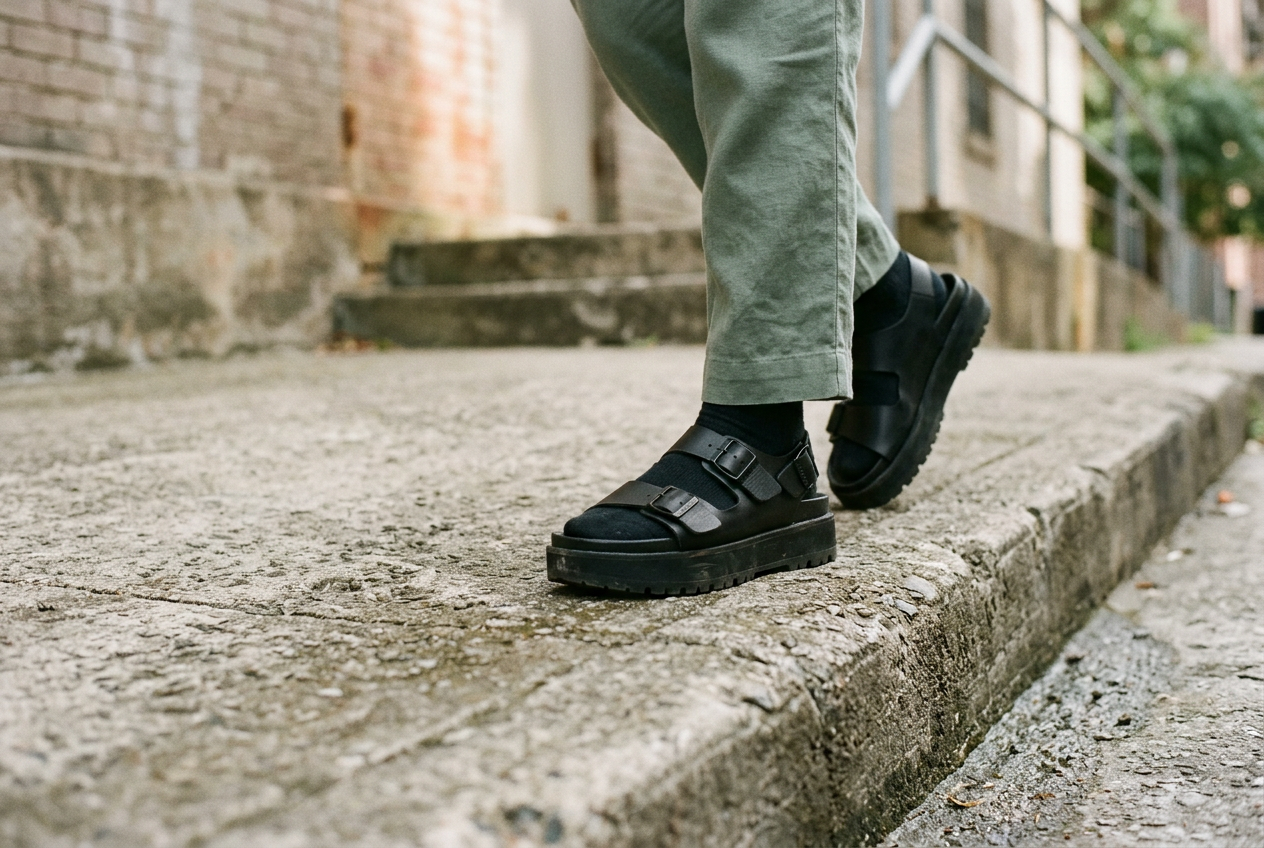
The black sandal looked equipped for a long day. Its one-piece molded ethylene-vinyl acetate sole, or EVA, a lightweight foam used in many casual shoes, was thick from toe to heel; two broad synthetic straps held the upper foot, and a shallow molded cup sat under the heel.
Over one week, I wore this women’s platform for short errands, a transit trip and a longer neighborhood loop that included cracked concrete, sloped driveways and the polished tile of a store. The height remained impressive. The comfort argument lasted about two blocks.
The problem was not that the sole lacked foam. The entire lower unit was foam. It was that very little of that foam compressed under normal walking pressure, while the nearly flat footbed gave the heel and arch few places to settle. My foot was standing on a light block rather than sinking into a supportive surface.
Elevated, yes. Pampered, no.
The visible sole is only the container
Sole thickness is often described as stack height, meaning the amount of material between the foot and the ground. More stack can isolate the foot from gravel, hot pavement and the hard edge of a curb, but the measurement says nothing about how the material behaves under body weight.
Usable compression is the amount the foam yields and rebounds while you walk. On the test pair, a firm thumb press left only a slight indentation, and loading the heel produced little additional movement. That firmness helped the platform keep its sculpted shape, yet it also meant the heel met nearly the same resistance on every step. The substantial side profile was mostly visual volume.
A softer platform is not automatically better. Foam that collapses deeply at the heel or outer edge can make a tall sandal feel vague, especially during turns, while very soft material may pack down with wear and leave the foot tilted inside the shoe. The useful middle ground is controlled give: enough movement to reduce the hard landing, followed by a quick return rather than a slow lean.
The easiest fitting-room check needs no equipment. Press firmly into the heel, then the forefoot. The material should yield in both areas without letting a finger approach the hard outsole beneath. Put the sandal on and shift your weight from heel to toe.
If the foam responds only when attacked by a thumb but remains inert underfoot, it is unlikely to become a cloud through positive thinking.
A flat top can make a tall sole feel harder
Footbed contour is the shape molded into the surface supporting the foot. The black pair had a visible heel rim, but the center remained broad and shallow, with little support under the arch and no raised area behind the toes. Once the straps relaxed slightly during the week, my foot moved forward on descents and sideways across sloped pavement.
That movement mattered more than a small amount of extra softness would have. Cushioning absorbs some impact; contour helps keep the foot placed over the sole, which becomes important when the platform lifts the body farther from the ground and gives each sideways wobble more leverage.
Look for a heel cup deep enough to locate the back of the foot without rubbing its edge. Under the arch, the rise should meet the foot rather than sitting too far forward, where it feels like a misplaced lump, or too far inward, where it can crowd the sole. A subtle toe bar, the raised ridge behind the toes, may reduce forward sliding in a sandal with limited strap adjustment, although it should not force the toes to grip.
Width also needs checking from above. On the test pair, the platform extended generously beyond the heel but narrowed through the midfoot, so the outer edge of my foot approached the rim even though the shoe looked broad on the shelf. Women’s platform sandals often gain visual width from flared sidewalls while offering less usable footbed space inside them. Trace the foot, not the silhouette.
Pitch changes the job your forefoot has to do
Heel-to-toe pitch is the vertical difference between the heel and forefoot inside the shoe. A platform can look level from the outside while placing the heel higher inside, or it can maintain nearly the same height throughout.
The black pair had a low pitch. That spared the forefoot the pressure of a steep wedge, but the rigid sole barely flexed where my toes bent, so each stride asked the whole sandal to roll forward as a unit. On smooth flooring this felt manageable. On rough concrete, the front edge occasionally met the ground before my foot had finished moving through the step, producing a small slap and a less small sense of irritation.
Some platforms use a rocker, a curved sole profile that helps the shoe roll from heel to toe. A well-placed rocker can compensate for limited flexibility, although the curve must begin near the wearer’s natural forefoot bend. If it starts too far forward, the sandal feels long and abrupt; if it begins too early, standing still can feel less settled.
Check pitch by viewing the footbed from the side rather than judging the outsole alone. Then walk at your normal speed. A steep rise may feel polished and secure for dinner but concentrate pressure under the ball of the foot during a commute, while a level platform may suit longer wear only if its sole flexes or rolls in the correct place.
The sidewalk test exposes the rigid block
Indoor carpet is generous to bad shoes. Tile reveals sound and grip, but an ordinary sidewalk shows whether a platform can manage changing angles without making the ankle supervise every step.
During the neighborhood loop, the black sandal stayed stable on level concrete because its base was broad and the firm EVA resisted collapse. On driveway aprons, where the pavement slopes sideways, the upper foot shifted while the platform remained almost level. The straps then had to stop that movement. Their foam backing prevented sharp rubbing, but the front strap pressed across the toes as the foot slid downhill.
The sole also had high torsional rigidity, meaning it resisted twisting from the heel to the forefoot. Some resistance supports a platform, yet this pair behaved as a single piece on broken pavement rather than allowing the front and back to adapt separately. The result was not dramatic instability. It was constant minor correction, which is how an apparently comfortable sandal becomes tiring without producing one obvious blister to blame.
A practical walk test should include a turn, a curb and a sloped section if the store permits it. Walk slowly once, then at commuting speed. The heel should remain centered, the toes should not clutch, and the outer edge should not tip before the foot changes direction. Listen as well.
A repeated slap often signals that the sole is too stiff, too long or poorly aligned with the wearer’s stride.
Stairs add another useful check. A thick forefoot can catch a step when going up, while a loose heel can lift during the descent. The test pair required deliberate toe clearance after several days, and deliberation is a poor comfort feature in footwear intended for ordinary life.
Better construction may look less impressive
I repeated the longer route in a lower sandal with a contoured cork-latex footbed and a thin rubber outsole. It had less material underfoot and a firmer first impression, but the heel sat deeper, the arch made contact, and the forefoot flexed closer to the toes. The thinner pair transmitted more of the pavement texture. It required less work to stay centered.
That is the central tradeoff. A tall, firm EVA platform can provide ground isolation, visual weight and decent stability on flat surfaces, especially when its base is broad. A thinner contoured sandal may feel less plush in the store yet work better over distance because the foot is supported and the sole cooperates with the stride.
Construction matters more than price category. Budget and mid-market platforms can use the same broad types of molded foam, while a higher price may pay for leather straps, hardware or a more elaborate shape without changing the compression beneath the heel. Paying more makes sense when it buys a better footbed, adjustable straps, a durable rubber contact layer or multiple foam densities. Extra inches alone are cheap theater for the feet, which have already attended enough.
After a week, the black pair remained useful for short, level outings and outfits that benefited from a substantial sole. I would not choose it for a day built around walking, and I would not expect break-in to change the basic mechanics. The straps softened. The platform did not.
Questions people ask
Are platform sandals more comfortable than flat sandals?
They can be, particularly when the platform contains responsive foam and shields the foot from hard or hot ground. Height alone does not settle it. A lower sandal with a contoured footbed, secure straps and correctly placed forefoot flex may remain comfortable longer than a thick platform made from rigid molded foam.
How can I test platform cushioning in a store?
Press the heel and forefoot, then wear both shoes and shift your weight through a full step. Walk on the hardest available surface, make a tight turn and try a slight slope or curb. The foam should yield without collapsing, while the heel and midfoot stay centered over the sole.
Should platform sandals bend at the toes?
Some forefoot flex is useful, but a thick platform may rely on a curved rocker instead. In either case, the shoe should move forward where your stride needs it to. If the sole stays flat until it slaps down, or bends through the middle rather than near the toes, keep looking.
Will a rigid platform soften after break-in?
Straps and footbed coverings may soften, and some foams compress with repeated wear, but a rigid one-piece sole rarely changes its basic flex pattern. Do not buy a platform that feels like a block while assuming several painful errands will turn it into a different shoe.
One update a day
Today's fashion update, in your inbox
One fashion update each morning — no hype, no filler, just pieces worth wearing.