The Boat Shoes Worth Buying Have Leather Uppers and Flat Soles
The revival has split into functional shoes and fashion props. A flexible leather upper, secure heel and siped rubber sole separate a useful pair from a short-lived interpretation.
August 30, 2026 · 7 min read
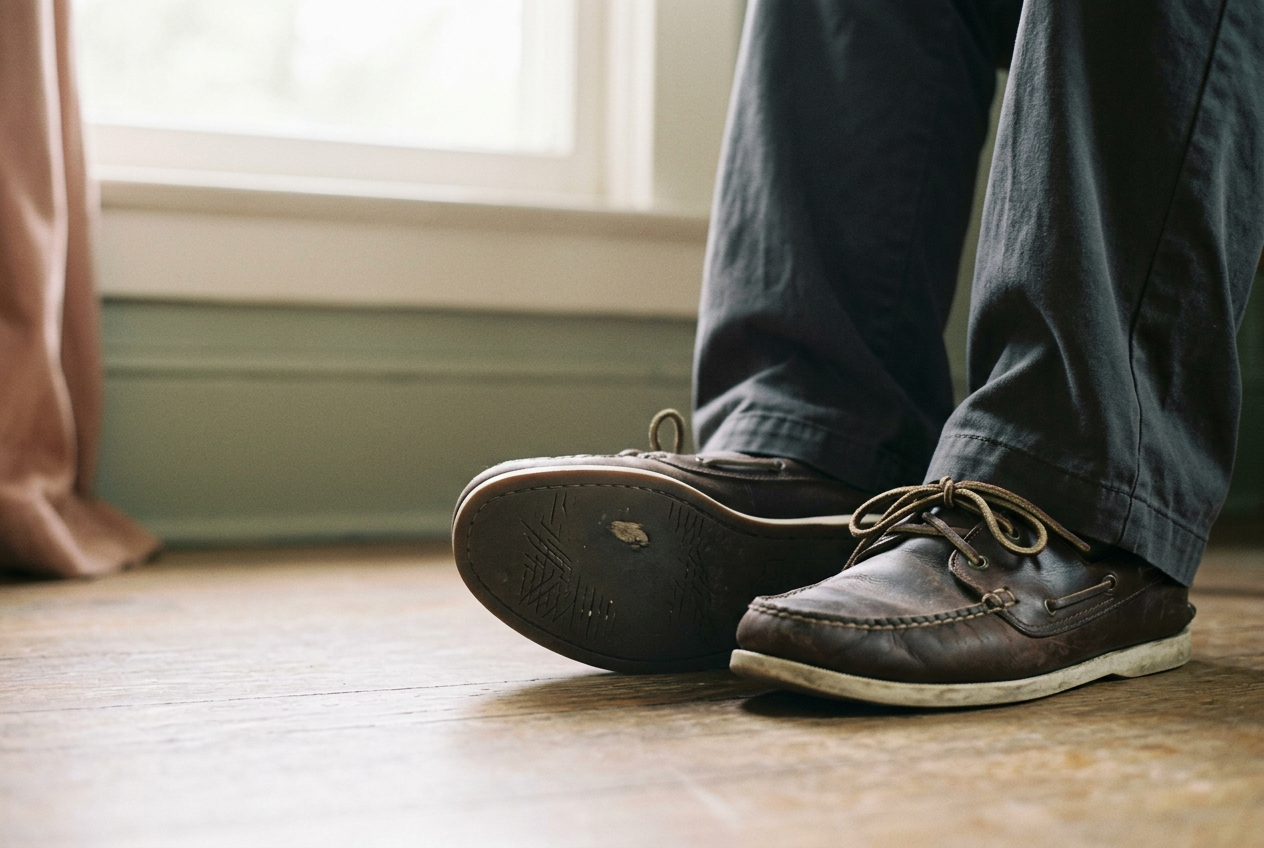
Take the standard leather Sperry Authentic Original 2-Eye, worn sockless with loose dark trousers, as the control sample. Sperry describes the model as having hand-sewn moccasin construction, rawhide laces running around the collar and a non-marking rubber outsole with its Wave-Siping pattern. None of those details makes the shoe immune to blisters, worn rubber or changing taste. Together, though, they explain why the original shape can outlast a preppy revival.
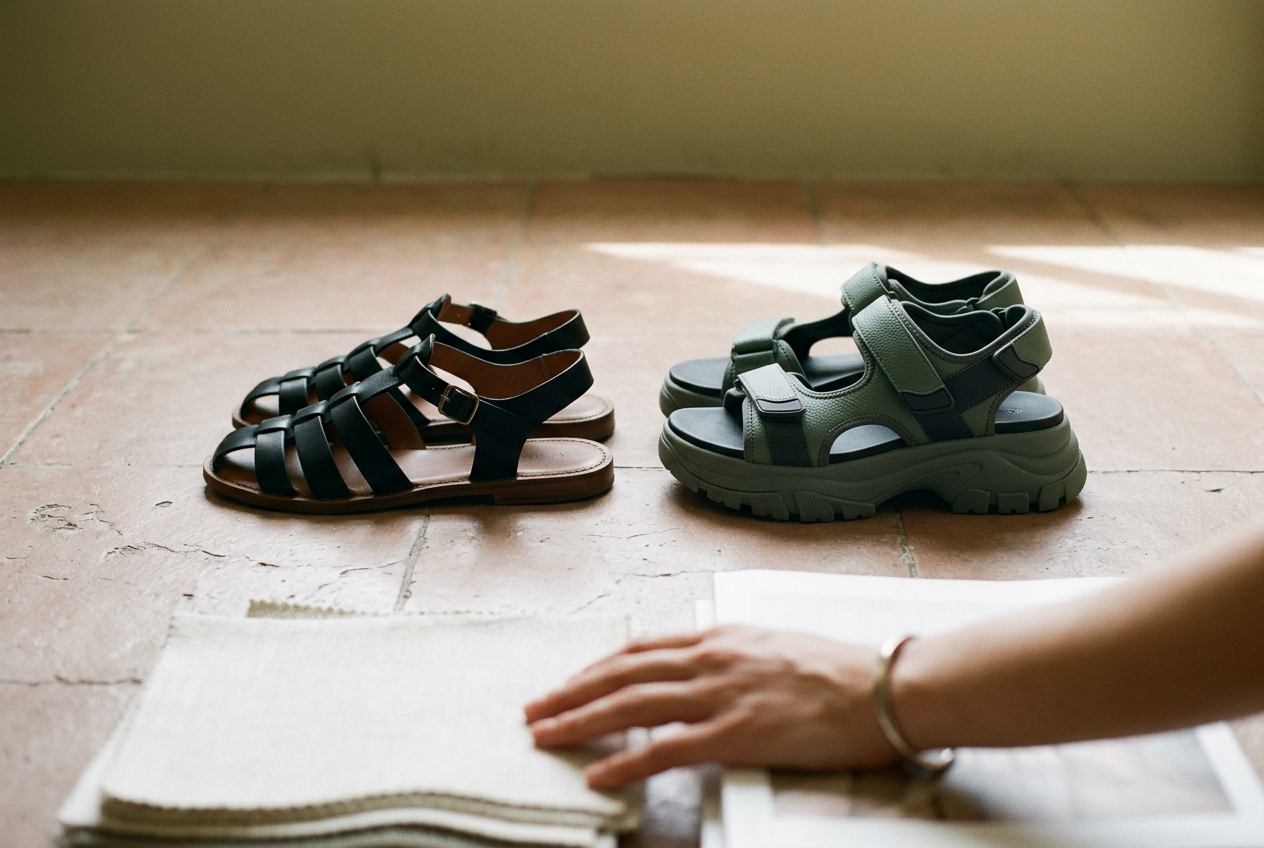
Recent interpretations often preserve the low topline and two eyelets while changing the mechanics underneath. Some use rigid synthetic uppers that look smooth on a product page but do not readily soften around the little toe. Others add thick platform or lugged soles, turning a low, flexible shoe into a heavier silhouette whose appeal rests on exaggeration. Those versions may be enjoyable for a season.
They are weaker purchases if the goal is a shoe that can move between trend cycles and remain comfortable enough for regular walking.
This is unisex coverage. The construction advice applies across wardrobes, although sizing labels and foot volume vary enough that the same nominal size can fit quite differently in men's, women's and unisex ranges.
The useful details are under the styling
Moccasin construction, meaning the upper leather is shaped around the foot and joined along the raised apron seam, is central to the boat shoe's flexible feel. On the Sperry pair, that seam is functional rather than a line stamped into a molded upper. The leather can bend with the forefoot, while the low structure keeps the shoe from feeling like a formal loafer.
The visible seam alone proves little. A fashion shoe can imitate the apron with decorative stitching while relying on a stiff, backed upper that creases sharply instead of conforming. Press the leather near the widest part of the forefoot. It should yield without feeling papery, and the lining or backing should not make the shoe spring immediately back into a rigid shell.
Full-grain and good-quality nubuck can show marks sooner than coated synthetic material, but they can also be cleaned, conditioned and allowed to develop a more even surface over time.
Underneath, siping means narrow cuts molded or sliced into rubber so the sole has more edges to meet a wet surface and channels through which some water can move. Sperry's Wave-Siping is the branded version on the Authentic Original. The pattern is shallow and relatively flat, which lets the shoe flex and keeps it visually quiet under straight trousers or jeans.
Siping is not a guarantee of safety. Grip changes with the rubber compound, the condition of the sole and the surface underfoot, while oil, algae and polished tile can defeat shoes marketed for wet conditions. “Non-marking” only describes the outsole's tendency not to leave dark streaks; it does not certify traction. A flat siped sole is still a more coherent feature on a boat shoe than decorative grooves pressed into hard plastic.
There is a tradeoff. Softer rubber tends to feel more compliant and grip better than a hard, glossy sole, but pavement wears it down. Once the cuts under the ball of the foot have become smooth, much of the functional advantage has gone even if the leather upper still looks presentable. That mismatch matters when judging both new and secondhand pairs.
Fit should be close, never cramped
The 360-degree lacing system, meaning the lace passes around the heel collar as well as across the tongue, is supposed to draw the upper closer to the foot. On the Sperry control pair, the rawhide lace can be adjusted through the side channels, although doing so takes more effort than tightening a sneaker. Rawhide also has less give than a woven lace and may loosen until it has been firmly knotted.
A boat shoe should hold the heel without pinching the forefoot. Unlined leather often relaxes across the width, but it does not gain meaningful length, so toes touching the front are a reason to change size rather than wait for a break-in. A slight heel movement can settle as the sole flexes. Repeated lifting that pulls the collar below the heel is a volume problem, and thicker socks may only hide it temporarily.
Sockless fitting needs extra attention because bare skin finds seams that socks cover. Walk on a hard floor long enough to feel the collar at the Achilles tendon and the apron seam near the little toe. If either spot is already hot in the store, softening the leather may not solve the underlying shape mismatch. A thin no-show sock is the practical alternative, provided its edge stays below the low topline and its heel grip does not bunch.
After the first week, inspect the flex point. Leather should develop rounded creasing where the toes bend; a deep white line on a synthetic coating, delamination near the seam or pressure that has not eased signals a material or fit failure. Also retighten the collar lace. The Authentic Original's construction permits a useful adjustment here, while a decorative lace stitched in place does not.
Size conversion deserves suspicion. A women's size converted mechanically from a men's listing may preserve length while leaving too much volume through the heel, and a nominally unisex pair may use one shape rather than a genuinely neutral fit. Use the brand's measurements as a starting point, then prioritize heel hold and toe clearance over the number printed inside.
Exaggeration carries the shortest shelf life
The fashion versions easiest to date are those that enlarge every recognizable boat-shoe signal at once: an oversized apron, a broad square toe and a thick lugged platform. Added depth can provide cushioning, but it also reduces the low, close-to-the-ground quality that allows the shoe to sit between a loafer and a casual deck shoe. If the sole barely bends at the ball, the upper must crease more sharply with each step.
Stiff synthetic uppers have a different problem. They can resist surface stains and may cost less, yet a nonporous finish often feels warmer without developing the fit of supple leather. Once the coating cracks, conditioner cannot restore it. A flexible synthetic version can still work for someone avoiding leather, but the test remains mechanical: bend the forefoot, check the seam backing and reject a collar that cuts into the heel.
The flatter Sperry shape is not immune to looking preppy. Styling determines how loudly that reference reads. With loose charcoal trousers that break lightly over the vamp, a dark brown pair functions much like a relaxed loafer, while washed straight-leg jeans expose enough of the low collar to keep the shoe distinct from a sneaker. The familiar polo-and-chino combination pushes the reference back toward costume, particularly when every element is crisp and nautical.
Visible socks change the mood but complicate proportion. A fine ribbed sock can connect the shoe to wider trousers in cooler weather; a bulky athletic sock crowds the low opening and may increase heel movement. Sockless wear remains convincing with shorts, although the sole needs enough cushioning for the amount of pavement planned. Traditional boat shoes are flexible, not inherently supportive.
Price follows construction more reliably than novelty
At the lower end, fashion-only versions can cost less than a mainstream sneaker, particularly during seasonal promotions. Established leather models from Sperry or Sebago generally sit around the price of a decent pair of sneakers, while hand-sewn shoes from specialist makers can move toward dress-shoe money. Price alone does not establish quality, but costly synthetic uppers and ornamental platform soles ask the buyer to fund the trend rather than the repairable part of the object.
Before paying more, examine how the outsole meets the upper and ask whether the maker or an independent cobbler can replace it. Some boat shoes can be resoled; others cannot be separated economically without damaging the upper. A stitched-looking edge may be decorative, so visible thread should not be treated as proof of repairability. The answer matters more than a heritage label if the rubber is likely to wear before the leather.
Secondhand pairs can be sensible because softened leather makes the material quality easier to judge, but a previous owner's foot shape may already be pressed into the upper and footbed. Request clear photographs of the sole under the forefoot, the inside heel and the apron stitching. Smooth siping, a collapsed heel counter or a dark, deep footbed impression can turn a modest resale price into poor value.
Return to the Sperry control pair. Its appeal is not that every detail is luxurious; it is that the leather upper, adjustable collar and flat rubber sole still agree about what the shoe is supposed to do. A buyer who likes that low shape and accepts limited arch support has a plausible long-term shoe. Someone seeking sneaker cushioning or a dramatic platform should buy for the present season and price the decision accordingly.
Questions people ask
Should boat shoes fit tightly at first?
They should feel close around the heel and midfoot, but toes should not touch the front and the widest part of the foot should not feel compressed. Leather may ease across the width after wear. It will not add useful length, and a painful apron seam is not a reasonable break-in requirement.
Can boat shoes be worn with socks?
Yes. Thin no-show socks reduce rubbing while preserving the sockless look, and fine visible socks can work with loose trousers in cooler weather. Thick athletic socks often crowd the shallow opening, alter heel hold and make a traditional flat-soled pair feel more like an undersized sneaker.
Are secondhand boat shoes worth buying?
They can be, especially when the leather remains supple and the sole is replaceable. Check that the siping is still visible under the forefoot, the heel lining has not worn through and the footbed is not deeply molded to another foot. Ask a cobbler about resoling before paying a premium for an older pair.
Are siped boat shoes safe on wet pavement?
Siping can improve contact by adding edges and channels to the rubber, but it does not make a worn sole slip-proof. Hard, polished rubber and smoothed-out cuts reduce the benefit. Treat wet tile, algae and oily surfaces cautiously, regardless of marine styling or a non-marking label.
One update a day
Today's fashion update, in your inbox
One fashion update each morning — no hype, no filler, just pieces worth wearing.