Size Jelly Slides for Your Afternoon Feet, Not Your Morning Feet
A molded plastic slide can look correct at breakfast and pinch by 4 p.m. Use this two-time fit check to judge vamp pressure, sidewalls, and heel position before keeping a pair.
August 12, 2026 · 8 min read
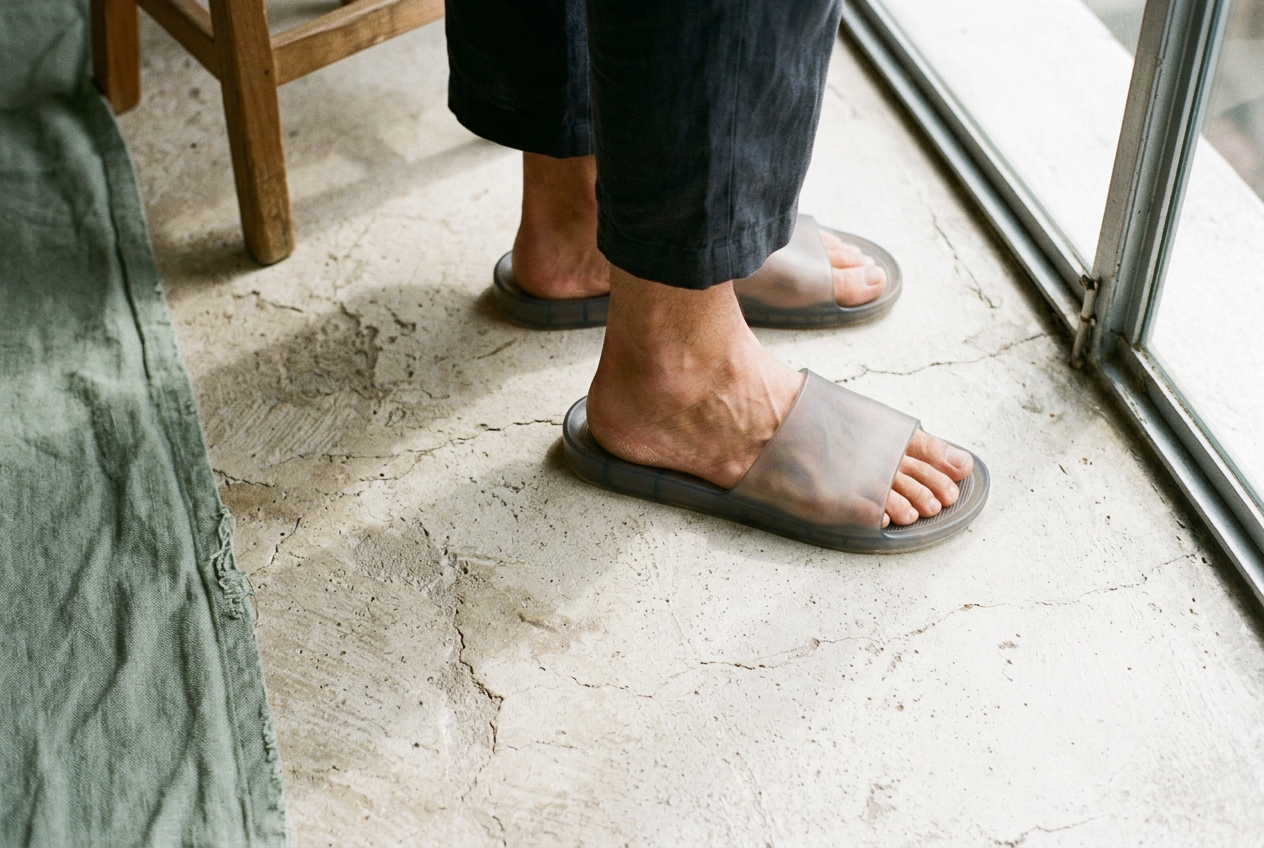
The pair under evaluation was a translucent, one-piece molded polyvinyl chloride slide. Polyvinyl chloride, usually shortened to PVC, is the firm plastic commonly associated with classic jelly shoes, although some current versions use other plastic or foam blends. Check the composition on the product page rather than trusting the word “jelly,” which now covers a fairly broad and occasionally unhelpful family.
I compared the size indicated by the maker’s foot-length chart with the next full size up, wearing both on bare feet in the morning and again after an ordinary afternoon of standing and walking. This is unisex fit advice: the relevant information is foot length, width, volume, and the slide’s internal shape, not the department where the retailer files it.
The chart size looked better in the morning. Its heel placement was neat, the toe did not project over the front, and the band held the foot without obvious movement. By late afternoon, the same pair pressed against the outside of the forefoot and left the heel sitting partly on the raised rear edge. The larger size cleared those pressure points but became loose enough in the morning that the foot traveled forward.
The useful result was not a winning size. It was evidence that the model’s fixed band was the wrong shape for this foot.
Why morning fit gives jelly slides an alibi
Bare feet commonly become fuller as heat, walking, and time upright accumulate. The amount varies, which is why a universal instruction to buy one size larger is too crude to be useful. A longer slide may provide more floor space without adding enough vertical room under the band, leaving the toes farther from the front while the same area of the foot remains compressed.
The vamp, meaning the upper band that crosses the foot, is molded at a fixed height and curve. Leather can ease around a pressure point as its fibers flex with wear. PVC may become warmer and more pliable on the foot, but it does not offer the same gradual, dependable accommodation, and heat-softened plastic can feel more forgiving without having solved the underlying mismatch.
That distinction matters with the test pair. During the first morning fitting, the band felt secure rather than tight. Later, once the foot filled more of the available space, the outside edge of the vamp became the problem; sizing up moved the heel and toes along a longer footbed, yet the larger pair still had a low band relative to its length.
Do not promote a morning pressure point to “break-in.” Plastic has heard this argument before and remains unmoved.
Read the sidewalls and heel together
The sidewall is the raised rim around the footbed. On a molded slide it can keep the foot centered, but it also becomes a hard boundary when the foot broadens or shifts sideways. Look for skin bulging over that edge, blanching where pressure makes the skin temporarily pale, or a ridge that remains after the slide comes off. None is improved by a flattering color.
Heel placement gives a second reading. Stand with weight distributed normally and check that the fleshy part of the heel rests inside the usable footbed rather than on its rear wall. A small margin is useful, particularly late in the day, but excessive empty space can allow the foot to drift forward and force the toes to grip while walking.
With the chart-size test pair, the afternoon heel did not hang off the back. It rode on the raised edge, which is subtler and still wrong. The larger pair placed the heel inside the boundary, although its extra length let the foot slide toward the toe whenever the band lost contact. One fault pinched.
The other made the wearer do unpaid stabilizing work.
Judge the vamp, sidewall, and heel as one system. If the heel sits correctly only when the band squeezes the forefoot, the model is too shallow. If a larger size releases the pressure but leaves the heel wandering, it is too long. Changing size cannot repair every shape mismatch.
Use the two-time sizing method
Start with the maker’s foot-length chart if one is available. Measure both feet while standing, use the longer measurement to choose the initial size, and treat that result as a fitting appointment rather than a verdict. Brand size labels are especially weak evidence when a molded slide comes only in full sizes.
First check: try the slides late in the day. Use bare feet after a normal stretch of walking or standing, not immediately after waking and not after engineering an endurance event for the benefit of online shopping. The goal is to fit the foot you routinely bring home in the afternoon.
Stand in both slides for a couple of minutes before walking. Sitting hides sidewall pressure and lets the foot shorten slightly, while standing spreads weight through the forefoot and shows whether the vamp has enough volume. The band should make contact without creating a hard line at either edge.
Second check: place the heel before judging length. Set the heel inside the rear boundary, then look at the front. Toes should remain on the footbed during a normal step, but a dramatic shelf of empty plastic is not useful clearance. It adds leverage and makes the slide feel more cumbersome without raising the vamp.
Pay attention to where the heel lands after several steps rather than repeatedly placing it by hand. The chart-size test pair passed while arranged neatly and failed once walking pushed the heel onto the rear rim. Shoes are allowed to look organized on the floor. Feet are less cooperative.
Third check: inspect both sidewalls under load. A foot may be wider on one side or fuller across one joint, so a centered heel does not guarantee equal clearance. Pressure from a smooth plastic wall can feel minor in a cool room and become abrasive once heat and moisture reduce the skin’s tolerance.
A faint touch is not automatically a failure. Continuous compression, visible spillover, or a sense that the foot is being funneled into position is. If sizing up removes sidewall contact but introduces substantial fore-and-aft movement, stop climbing the size chart and change models.
Fourth check: walk for at least ten minutes on a clean indoor surface. Use the time allowed by the retailer’s return policy without scuffing the sole. Listen for slapping, notice whether the toes curl to hold the slide, and check whether the heel repeatedly crosses a sidewall or rear edge.
Toe gripping is easy to miss because the slide does not technically fall off. It still increases effort, and it often means the band is too high, the footbed is too long, or both. The larger test pair produced this behavior in the morning, when the foot occupied less of the molded space.
Final check: repeat the fit the next morning. This is where an afternoon-only purchase can go wrong. A slide that feels pleasantly spacious at the end of the day may become unstable when the foot is cooler and less full, so wear it long enough to identify forward travel rather than rejecting every trace of looseness.
Keep the pair only if the late-day foot clears the sidewalls and rear edge while the morning foot can walk without gripping or sliding far forward. If neither adjacent size passes both sessions, the answer is a different vamp shape, not loyalty to the prettier pair.
What a week of wear did not fix
Across a week of repeated indoor checks, the smaller test pair became warmer and a little more pliable during wear, but the outside forefoot pressure returned late in the day. The larger pair remained loose in the morning. Neither changed enough to reverse the fitting result, which is the point of testing molded plastic without budgeting for imaginary leather behavior.
Material thickness and formulation affect flexibility, so not every jelly slide will feel as firm as this PVC pair. Softer thermoplastic or foam-blend slides can yield more underfoot, yet an unadjustable molded vamp still sets a limit on usable volume. Flexibility may reduce the harshness of contact. It does not create an adjustable opening.
Price is not a reliable escape route. More expensive molded slides may offer cleaner finishing, a better footbed, or a particular color and silhouette, but the band remains fixed unless the design includes a buckle, strap, elastic panel, or other adjustment. Paying more for the wrong geometry only gives the pressure point a nicer receipt.
The practical alternative is an adjustable slide with a shaped footbed, especially when morning-to-afternoon volume changes are enough to move the heel. A leather or textile upper may also accommodate the foot more gradually, although it brings different concerns around water and care. For the waterproof, wipe-clean appeal of a jelly, look for a model with a higher vamp opening and lower sidewalls rather than buying extra length by default.
The keep-or-return rule
Keep a jelly slide when the afternoon foot sits within every molded boundary and the morning foot remains secure without toe gripping. Return it when the late-day foot presses into the vamp or rides a sidewall, even if the pair looks sleek at breakfast.
For the translucent PVC test pair, the chart size failed the afternoon check and the larger size failed the morning one. The correct decision was to skip that shape. Sometimes sizing advice ends with no sale, which is cheaper than spending summer negotiating with a plastic band.
Questions people ask
Should
I size up in jelly slides if my feet swell?
Only if the larger size clears the vamp and sidewalls without letting your foot travel forward in the morning. Extra length does not guarantee extra height under a molded band, so compare adjacent sizes late in the day and reject both if neither keeps the heel stable.
Do
PVC jelly slides stretch after wearing them?
PVC can warm, flex, and feel softer during wear, but it should not be expected to stretch and conform like leather. A pressure point that returns each afternoon is a fit problem, even when the slide feels less rigid after several minutes on the foot.
How much room should be behind the heel in a slide?
Leave enough room for the heel to stay inside the usable footbed when walking, without buying so much length that the foot shoots forward. Judge the moving heel rather than the neatly positioned one, and avoid any fit that places weight directly on the raised rear wall.
When is the best time to try on jelly slides?
Try them first in the late afternoon after your normal amount of standing or walking, then repeat the test the next morning. The pair should contain the fuller foot without pressure and hold the smaller morning foot without slapping, gripping, or pronounced forward movement.
One update a day
Today's fashion update, in your inbox
One fashion update each morning — no hype, no filler, just pieces worth wearing.