Silver Bag Hardware Is Back. Don’t Rebuild Your Jewelry Box.
Cool metal hardware has moved back into view, especially on black and gray bags. Matching every clasp to your jewelry is optional; construction and finish matter more.
August 28, 2026 · 7 min read
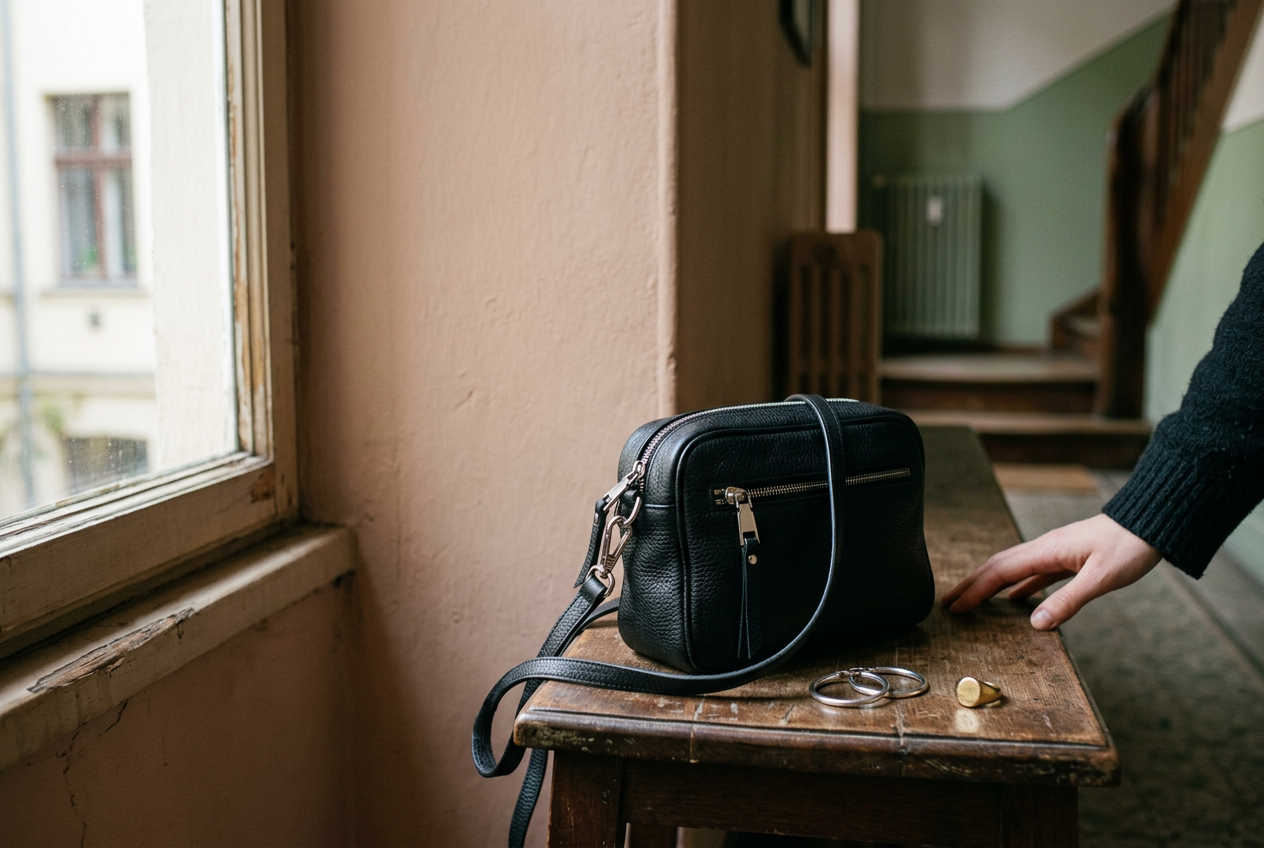
The quickest way to understand the shift is through one ordinary bag: a black pebbled-leather crossbody, meaning the hide has a raised grain pressed or tumbled into its surface, with two polished silver zipper pulls, small D-rings and a black webbing strap. Wear it with a charcoal coat, silver hoops and a gold signet ring, and nothing looks confused. Replace the hoops with a fine gold chain and add a wide gold buckle at the waist, however, and the bag starts to feel like the lone cool note in an otherwise warm arrangement.
That black crossbody is the test case for this analysis. Its silver hardware is visible, but it does not dominate the body of the bag. The advice is unisex because the mechanics do not change across wardrobes: metal reads according to how often it appears, how reflective it is and how much space it occupies.
Silver is visible again, not mandatory
Cool metal hardware has returned alongside the renewed interest in black, charcoal, icy gray and cooler brown accessories. The direction is visible across runway coverage, retailer assortments and secondhand listings, from polished silver clasps to darker gunmetal, a gray-black finish that has less contrast than bright chrome. It suits the cleaner, slightly industrial side of current bag design and works easily with the silver-tone watches, hoops and chain necklaces already in many wardrobes.
Gold has not disappeared. Warm hardware still sits naturally on tan leather, cream canvas and softer brown suede, while many heritage-style bags depend on brass or gold-tone locks for their familiar character. The change is one of visibility rather than replacement. A few seasons ago, shoppers looking at a black daily bag could reasonably expect a warm clasp to be the default; now silver, gunmetal and tonal black hardware are easier to find without moving into evening bags or overtly technical designs.
That distinction matters because hardware cycles faster than a well-made bag wears out. A leather crossbody may remain useful through several swings between cool and warm metal, so choosing the current leader can turn an intended long-term purchase into a dated-feeling object before the stitching or leather has failed. Silver looks current now. It is not new enough, or rare enough, to justify replacing a functional bag solely for its color.
Mixed metal works through repetition
The old instruction to match a bag clasp, belt buckle and every piece of jewelry treats metal as if it were a uniform. Real outfits contain watch cases, eyeglass hinges, coat snaps and shoe buckles, many of which were never selected as a coordinated set. The eye can tolerate variation. It looks for a pattern.
Repetition is the clearest method. Return to the black crossbody with polished silver pulls: silver hoops repeat the cool metal near the face, while the gold signet ring remains a smaller, isolated personal piece. The two silver points are separated across the outfit, which makes the choice look considered rather than accidental. A watch with a steel case could do the same job, although adding both hoops and a watch is unnecessary if the bag hardware is already prominent.
Finish matters nearly as much as color. Polished silver reflects hard white highlights, while brushed silver has fine directional texture and throws back less light. Pairing a mirror-bright bag clasp with matte oxidized jewelry can feel more disjointed than combining brushed silver hardware with softly finished gold. If metals share a similar level of shine, the eye reads them as related materials even when their colors differ.
Scale decides which metal leads. Two narrow zipper pulls are supporting details; a large sculptural lock, chain handle or broad buckle occupies enough space to set the direction for the outfit. With the test bag, the small D-rings do not require a jewelry change. If that same bag had a thick silver chain running from end to end, a wide gold belt would compete with it, and one of those pieces would need to become quieter.
The useful rule is uneven repetition. Let one metal appear twice and the other once, rather than distributing gold and silver in equal, highly visible blocks. Equal weight can look overworked because the outfit has two competing centers. A silver bag clasp, silver earrings and one gold ring are easier than a silver chain bag, large gold hoops, a silver watch and a broad gold buckle.
The hardware itself deserves inspection
Silver-tone describes color, not composition. Bag fittings may be made from steel, brass or zinc alloy and then plated, coated or polished; a product page that lists only silver-tone hardware has not told you what sits beneath the finish. This matters most at moving points, where a zipper pull rubs against its slider or a swivel clip rotates against a ring.
Look at the test bag’s two zipper pulls before considering whether they suit a necklace. They should lie flat without twisting, move without scraping and have enough thickness that they do not feel sharp at the edges. Open the bag several times in the store. A noisy pull is not automatically poor quality, but two loose metal pieces that knock together will continue to announce themselves during a commute.
Inspect the corners of the D-rings and the underside of the strap clips. Those contact points show finish wear first because metal rubs against metal, exposing a warmer base material on some plated pieces. Bright silver plating over brass can become conspicuous when yellow metal appears at the edges; antique brass tends to hide comparable wear more gently because variation is already part of its appearance.
Hardware also adds weight. A substantial chain may make a small bag feel expensive on the shelf, then press into the shoulder once the bag holds a phone, keys and a battery pack. A leather strap with two compact silver clips gives the cool-metal effect without turning the trim into the heaviest component. For a daily bag, that is often the better bargain.
None of this makes plated hardware inherently bad. It does mean the finish should not command an investment-level price without solid construction around it. Check whether the zipper tape is sewn straight, whether the lining pulls into the teeth and whether the strap attachment spreads weight across a reinforced section of leather. A fashionable clasp cannot compensate for a narrow tab that bends every time the bag is filled.
When hardware color should control the purchase
Hardware deserves veto power when it covers a large part of the bag. Chain straps, oversized locks and repeated studs behave more like jewelry than fastening equipment, so buying them in a metal you rarely wear creates a real styling constraint. The same applies to a daily bag worn close to the upper body, where its chain sits beside necklaces and earrings rather than down near the hip.
It can also control the decision when two bags are otherwise equivalent and one integrates more cleanly with your existing accessories. Lay out the jewelry worn during a normal week, not the pieces saved in boxes. If steel watches, silver hoops and cool-tone eyeglass frames dominate, silver hardware removes a small decision each morning. Someone who wears gold earrings every day can make the opposite choice without looking behind the trend.
Hardware should not control a purchase when it is limited to a zipper pull or small logo, particularly if the alternative bag has better leather, a smoother closure or a strap that adjusts to the right length. Our black crossbody falls into this category. Its silver details can be repeated with one small accessory, ignored under a coat or softened by choosing jewelry with a brushed finish. They are not worth sacrificing a comfortable strap for.
Color also ranks below repairability. Screwed-on hardware can sometimes be replaced more cleanly than fittings that are riveted through several layers, though any repair depends on access to compatible parts and the bag’s construction. A local leather repair shop can assess that before purchase if the bag is expensive enough to justify the time. On a lower-priced bag, replacing decorative hardware may approach the cost of finding a better-made alternative secondhand.
A shopping decision that can survive the swing
Photograph the bag from a few feet away before buying it. Product close-ups exaggerate clasps and zipper pulls, while mirrors show how much metal registers at normal viewing distance. If the hardware disappears into the overall shape, choose according to leather, capacity and strap comfort. If it remains the first detail you notice, treat it as part of your jewelry plan.
Then compare finishes rather than labels. Polished silver has the strongest contrast on black leather, brushed nickel feels quieter and gunmetal nearly recedes. Warm gold can be softened in the same way: pale brushed gold is less insistent than a glossy yellow clasp. Shoppers who mix metals frequently will get more flexibility from a low-shine finish than from either color at maximum brightness.
The renewed silver direction is useful because it has widened the choice. It does not need to become another matching obligation. On the black pebbled-leather crossbody, the practical priorities remain a zipper that runs cleanly, D-rings that do not abrade their finish immediately and a strap that stays comfortable when the bag is full. The silver pulls come after that.
Questions people ask
Does bag hardware have to match jewelry?
No. Matching is most useful when the hardware is large, reflective or close to the face. Small zipper pulls and strap rings can differ from your jewelry without looking accidental, especially when one metal repeats elsewhere through earrings, a watch or a belt buckle.
How do
I make silver and gold look intentional together?
Repeat one metal and let the other remain a smaller accent. Keep the finishes related as well: brushed silver sits more comfortably with soft gold than mirror-polished chrome does. Avoid giving two metals equal visual weight through competing chain straps, large earrings and broad buckles.
Is silver-tone hardware less durable than gold-tone hardware?
Color alone does not determine durability. Ask what the fitting is made from and inspect moving contact points, since plating often wears first around swivel clips, zipper sliders and ring corners. A brushed or antiqued finish may disguise wear better than a bright, uniform polish.
Should hardware color decide which daily bag I buy?
Only when it dominates the design or when two bags are equal in comfort and construction. For a bag with small fittings, prioritize strap comfort, closure quality and reinforced attachment points. One silver zipper pull is easier to style around than a strap that digs into your shoulder.
One update a day
Today's fashion update, in your inbox
One fashion update each morning — no hype, no filler, just pieces worth wearing.