East-West Bags Look Clean Until You Try the Zipper
The wider shoulder bag is replacing compact vertical shapes. Before buying one, test whether its long zipper, projecting ends and shallow interior can handle your real daily load.
August 10, 2026 · 8 min read
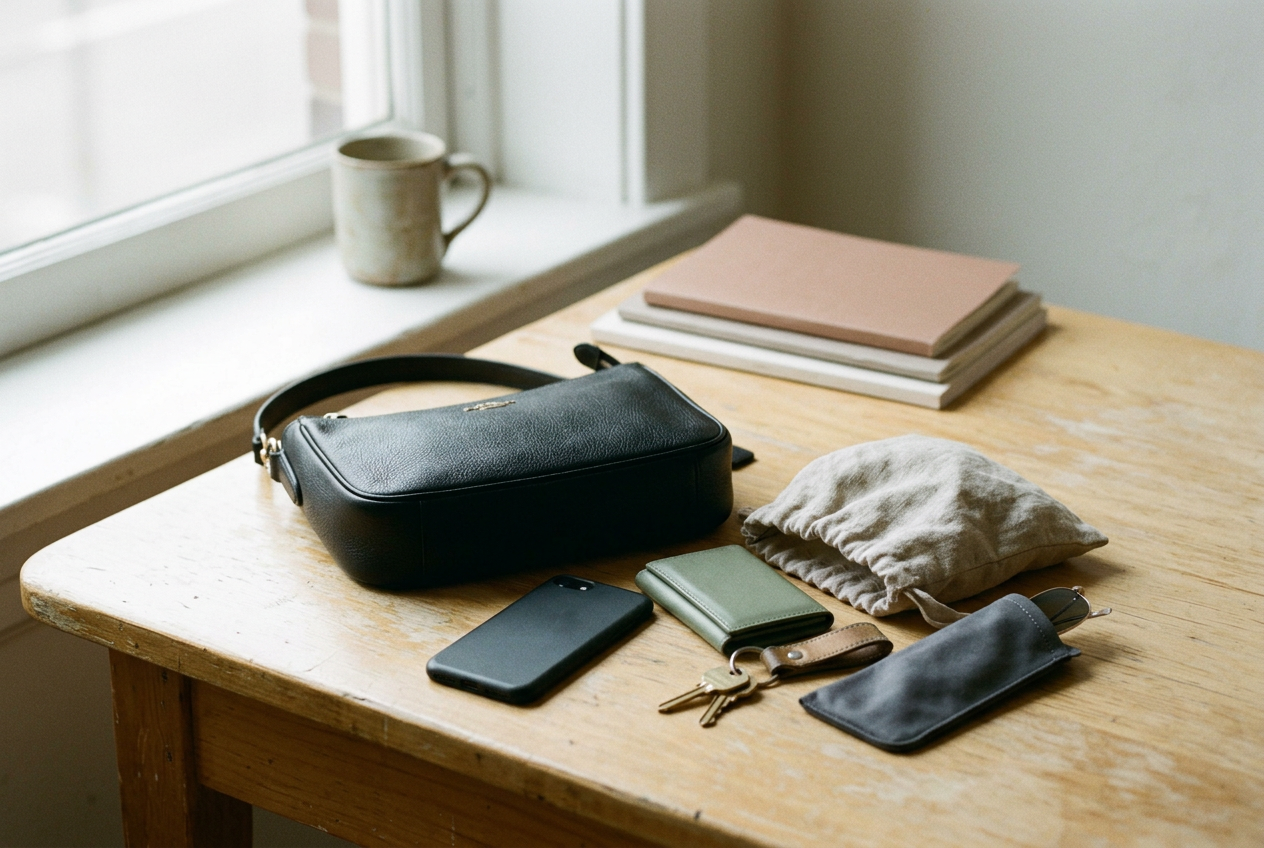
The useful definition is simple: an east-west bag is a horizontal bag whose width is more visually dominant than its height. The current versions stretch that proportion further, from elongated shoulder bags with softened corners to narrow leather rectangles that sit close under the arm.
The Coach Swing Zip makes a useful case study. It is a long, zip-top shoulder bag in glovetanned leather, with two fixed straps, a structured base and a comparatively shallow body. Its clean line explains the appeal of the trend, while its proportions expose the questions a product image cannot settle.
This is unisex coverage because the carrying mechanics apply across wardrobes, although strap length, coat bulk and what each person carries will change the result. The test is not whether the Swing Zip looks polished empty. It does. The test is whether this shape remains easy to use after a phone, sunglasses case, wallet, keys and small personal items begin competing for horizontal space.
Why the silhouette is widening
The east-west bag offers a sharp change after seasons of compact crossbodies, crescent bags and tall bucket shapes. Its long top edge echoes the width of the torso, and the shallow profile can look calmer against a jacket or plain knit because less of the bag hangs below the waist.
That visual order has moved through luxury and contemporary accessories, with elongated designs such as Alaïa’s Le Teckel making the proportion especially easy to recognize. The high street translation tends to simplify the idea into a zip-top rectangle, often in smooth leather, coated material or a synthetic alternative with minimal hardware.
Width is doing most of the styling work. A black east-west bag can make a familiar white shirt and straight trouser combination feel more current without adding color or decoration, which is why the shape has more practical reach than a novelty finish. Yet the same width that looks composed in a mirror can become troublesome in motion, particularly when the bag projects behind the elbow or places frequently used items at opposite ends.
The Swing Zip sits near the wearable middle of this trend rather than at its most exaggerated edge. That makes it a better test than a runway-length bag. If a moderately wide version conflicts with your carry habits, a longer and narrower one is unlikely to improve matters.
The zipper test starts before anything goes inside
A long zipper creates a generous-looking opening, but zipper length and useful access are not identical. Fixed shoulder straps can fall across the opening, while a bag held tight beneath the arm gives the zipper pull little room to travel. Smooth studio images usually show the top unobstructed. Daily use rarely does.
Try the zipper while the bag is on your shoulder, using the hand on the same side and then the opposite hand. The first attempt checks whether the pull is easy to locate without looking. The second reveals whether you must twist the bag around your torso or lift your elbow high enough to disturb a coat, headphones or a cup in the other hand.
The Coach case study matters here because its two straps frame a long top opening. That construction can feel secure and traditional, but one strap may fold inward while the other sits against the body, narrowing the path to the contents. Leather also changes the equation: glovetanned leather can soften with use, which may make the opening more pliable while allowing the upper edge to collapse around the zipper.
Run this test with the bag carrying its expected load. An empty sample can be held steady with two fingers; a loaded one pulls downward while the zipper requires sideways force. If the teeth catch near a corner or the pull needs two hands, access will not improve during a rushed commute.
A double zipper can reduce the distance the pull must travel, although it adds hardware and does not correct a narrow opening. An open-top east-west tote gives faster access but loses the security many people want on public transit. The alternative is often a shorter bowling-style bag whose zipper curves around the upper corners, creating more vertical room for the hand.
Elbow clearance is the fitting issue stores overlook
Bag fit is usually discussed through strap drop, meaning the vertical distance between the top of the strap and the top of the bag. East-west shapes add another measurement: how far the bag extends in front of and behind the wearer’s arm.
Put on the coat or jacket you wear most often, then allow both arms to hang naturally. Walk, reach for a door and sit in a chair with arms. A wide bag that rests neatly against a sleeveless top may be pushed outward by a puffer or tailored sleeve, making one end catch the elbow with each stride.
The rear corner deserves particular attention. When a bag extends behind the arm, it can knock against a chair, brush another passenger or rotate toward the back as the wearer walks. Short handles keep the Swing Zip high and visually tidy, but they also place its long body close to the elbow’s working space. A longer strap would lower that collision point, at the cost of changing the deliberate underarm profile.
Body scale alone does not decide whether the shape works. A petite wearer may be comfortable with a wide bag if the straps position it below the elbow, while a taller wearer in a thick overcoat may find the same width restrictive. Shoulder slope matters too. Fixed straps that stay put on a square shoulder can slide down a sloped one, and the leverage of a long bag makes that movement more noticeable.
Do not judge this while standing still. Five minutes of indoor walking, including one staircase and a seated zipper attempt, will reveal more than a mirror photograph.
A shallow bag distributes weight sideways
The broad base of an east-west bag can spread small objects rather than stacking them, which sounds helpful. It is, until the objects migrate.
Keys and a compact charger tend to settle at the lowest points. If the base remains flat, they may slide toward opposite ends and make the bag feel uneven, even though its total weight has not changed. The wearer then shortens one strap or hooks an elbow around the bag to stabilize it, trading balanced carrying for tension at the shoulder.
Internal pockets help only when they match the load. The Swing Zip has an internal zip pocket, useful for thin items that need containment, but a pocket cannot organize every bulky object without pulling one wall inward. A small pouch can stop loose items traveling across the base, although the pouch itself may create a single dense weight that makes one section sag.
Material determines how visibly this happens. Firm leather and reinforced synthetic materials preserve the horizontal outline but can make the corners press against the body. Soft leather is usually more forgiving under the arm, yet it may hammock between the contents, with the zipper line dipping toward the heaviest object. Unlined suede can grip items and reduce sliding, though it is less forgiving of spills and requires more attention in wet weather.
The quickest weight test takes one hand. Pack the bag, lift it by the center of both straps and watch whether either end drops. Then shift the phone from one end to the other. If that small change rotates the bag, the long footprint is amplifying an ordinary imbalance.
The bulge test is the deciding one
East-west bags favor objects that are slim and moderately long. A phone, cardholder and soft glasses sleeve can lie across the base without disturbing the walls. Hard cases, cylindrical bottles and thick folded sunglasses ask the shallow body to expand forward instead.
That expansion is the failure most likely to alter the bag’s intended look. A deep tote can absorb a bulky glasses case vertically. In a shallow east-west bag, the same case may press against the front panel, lift the zipper line or force a wallet into one corner. The bag still closes, but its clean rectangle becomes a series of local bumps.
The gusset, the side panel that gives a bag depth, should open without pulling the zipper into a wave. Check both ends after packing. If the gusset is already fully extended and the front panel feels taut, there is no useful reserve for a receipt, gloves or a small purchase later in the day.
For the Coach Swing Zip, the sensible load is flatter than the bag’s outer dimensions might suggest: a phone, compact wallet, keys in the internal pocket, a soft pouch and slim sunglasses protection. A rigid glasses case plus a larger power bank changes the proposition. Someone who carries both every day should test those exact objects rather than accepting a retailer’s broad description of capacity.
This is also where price matters. At the contemporary designer level, buyers are paying several times the cost of a basic high-street bag for leather, finish and a recognizable shape. If the required workaround is replacing a protective glasses case, downsizing a wallet and leaving a water bottle behind, the bag is not an everyday purchase for that person. It is a light-carry accessory.
A structured bowling bag is the stronger alternative for bulky essentials because it keeps some horizontal presence while adding height and a more accommodating opening. A compact north-south crossbody, meaning a bag taller than it is wide, takes up less elbow space and stacks objects more efficiently, though it lacks the crisp lateral line driving this micro-trend.
The east-west bag works best when the contents already suit it. The Swing Zip remains persuasive for a slim daily load and less persuasive as a substitute for a small tote. That is not a flaw hidden by styling. It is the shape’s central tradeoff.
Questions people ask
What should fit in an everyday east-west bag?
Start with the items you refuse to leave home without, not a generic packing list. A phone, compact wallet, keys, soft pouch and slim glasses sleeve usually suit the horizontal footprint; rigid cases, bottles and thick power banks are more likely to push the front panel outward or distort the zipper.
Are east-west bags comfortable under the arm?
They can be, provided the rear corner clears the elbow and the straps remain stable over your usual outerwear. Test the bag while walking and sitting in a coat. A soft body may feel gentler, while a firm structured end can repeatedly knock the upper arm even when the strap drop looks correct.
Do wide bags make it harder to find small items?
A shallow interior can make contents visible, but small objects may travel to the far ends as the bag tilts. One fitted pocket or a light pouch helps. Avoid filling the bag with several organizers, since their combined bulk can create the same bulging that the horizontal silhouette is supposed to avoid.
Will the east-west bag trend last?
The proportion has enough restraint to outlive its most exaggerated versions, especially in plain leather with limited hardware. Very long, narrow bags may date sooner because their silhouette carries the trend more loudly. For longevity, choose a width that clears your elbow and a depth that accommodates your real glasses case without strain.
One update a day
Today's fashion update, in your inbox
One fashion update each morning — no hype, no filler, just pieces worth wearing.