Peep-Toe Shoes Are Back. The Toe Opening Still Decides the Fit.
The revived peep-toe looks cleaner than its 2000s predecessor, but a smaller opening does not guarantee comfort. Foot migration and hosiery still expose weak construction.
Women's · September 21, 2026 · 8 min read
The peep-toe pump is visible again, but the useful change is smaller than the visual one. Recent runway coverage and retailer new-arrival pages show fewer heavy platform soles and more slingbacks, low-vamp pumps and restrained oval openings, often with pointed or softly squared toe boxes. The shoe looks leaner. Its internal mechanics remain familiar.
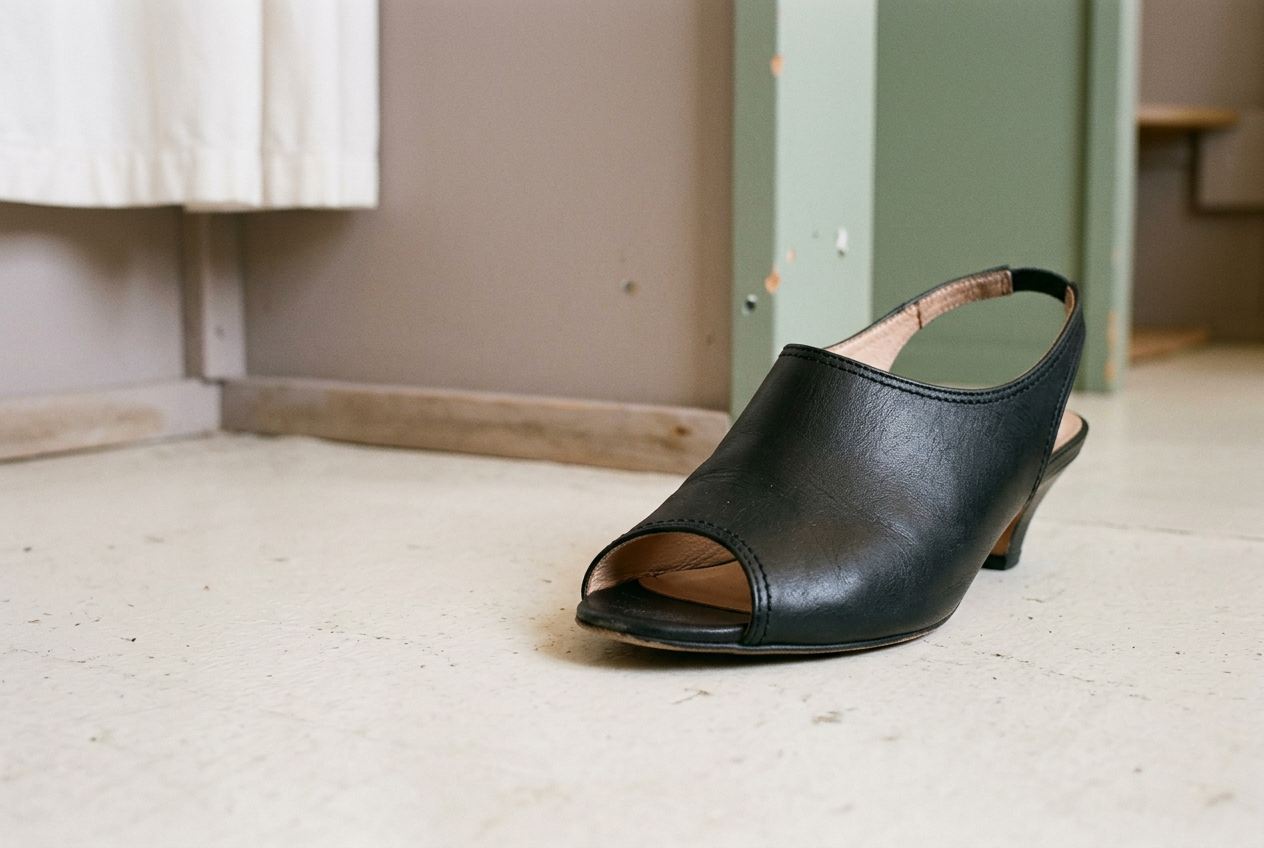
For this women’s fit assessment, the anchor was a black leather slingback pump with a medium block heel, a lightly padded leather-lined forefoot and an oval opening wide enough to show the two central toes. It represents the most persuasive current version: polished enough for an office, less formal than a closed pump and free of the thick platform that made older peep-toes look dated before they wore out.
The first standing fit was convincing. The opening showed toenail rather than toe joints, the leather edge lay flat, and the slingback kept the heel from lifting. Walking changed the verdict. As the foot moved forward on the pitched sole, the second toe reached the opening first and pressed against its lower edge, while the big toe shifted partly out of view.
That small migration, rather than the heel height itself, became the test.
The opening is part of the sizing system
A peep-toe opening is not a decorative cutout. It acts as a stop point for the forefoot, which means its width, depth and position can make a correctly sized shoe feel short.
A narrow opening usually looks current because it reveals less foot and preserves the outline of a closed pump. It can also pinch the two toes that happen to sit beneath it. A wide opening releases pressure, but more of the forefoot may push through as the wearer walks, particularly when the lining becomes warm or the insole is smooth. Older platform peep-toes often failed this way: the shoe had enough overall volume, yet the toes advanced until the edge cut across skin.
Toe shape matters too. A Greek foot, meaning the second toe is longer than the big toe, may meet the edge of a centered oval opening even when the shoe has adequate length. A wider forefoot can spread beneath the vamp, which is the upper section covering the front of the foot, and force more toe through the gap. Sizing up may move the edge away from the toes, but it also loosens the heel and increases forward sliding.
That is why the usual advice to take a larger size can make this particular shoe worse.
On the black slingback, extra length would not have solved the pressure point. The heel strap was already secure without digging in, and there was enough room behind the longest toe while standing. The failure appeared only under movement, when the slope of the shoe transferred weight toward the opening.
Foot migration is the old problem in a cleaner shoe
Foot migration is the forward movement of the foot inside a shoe during wear. Some movement is normal in heels, but peep-toes expose it early because the front edge provides an obvious contact point.
Heel pitch, the angle created by the height difference between heel and forefoot, contributes more than the labeled heel height alone. A moderate heel without a front platform can place the foot at a steeper angle than a taller-looking shoe with a raised forefoot. A slippery lining adds momentum. So does a slingback that looks neat but stretches or slips lower on the heel after several minutes.
The black test pair felt stable during a short indoor fitting, then became less settled as warmth reduced friction between the foot and leather lining. The block heel remained steady. The forefoot did not. Pressure gathered beneath the ball of the foot, and the toes moved forward each time the heel rose from the floor.
By the end of the wear period, the lower edge of the opening had left a visible indentation without breaking the skin.
This is the practical distinction between a peep-toe that needs breaking in and one that is built around the wrong foot. Leather may soften across the vamp. It will not move the opening, reduce the pitch or shorten a longer second toe. If the edge catches a toenail or presses one toe during a store walk, wear is unlikely to correct the geometry.
A grippy forefoot pad can limit movement, though it also reduces internal volume and may push the top of the toes against the upper. Gel pads are thicker and can become warm. A thin suede-textured insert takes up less space, but adhesive placement matters because a pad set too far back creates a ridge under the arch-facing side of the ball. These are adjustments for a nearly right shoe, not repairs for a poor opening.
Hosiery exposes the compromise
The return of the peep-toe has coincided with continued interest in sheer tights and visible socks, yet the combinations do not always cooperate at close range. Standard tights often place a toe seam directly across or just behind the opening. Inside the black slingback, that seam moved toward the second toe as the foot advanced, adding a narrow line of pressure exactly where the leather edge already touched.
Sheer tights without a reinforced toe make the cleanest visual match, provided the seam can sit beneath the toes rather than across the opening. They are also vulnerable to abrasion from a raw or stiff edge. Check the inside of the cutout with a fingertip. A folded and stitched leather edge should feel smooth; exposed synthetic backing, dried adhesive or a raised join can snag hosiery before it becomes uncomfortable against bare skin.
Opaque tights are less discreet. The peep opening interrupts the shoe’s line with a small patch of fabric, and a reinforced toe can resemble a darker band. That may be intentional with a contrasting tight, but it will not mimic the bare-toe styling shown in most product images. Toe-free tights remove the seam from view, though the front band must sit far enough behind the opening that it does not creep forward.
Socks ask more of the shoe’s volume. A fine ribbed sock can work in a roomy peep-toe clog or a low-heeled sandal-pump hybrid, but the same sock inside a fitted leather pump crowds the toe box and increases pressure at the cutout. The current slim silhouette leaves less spare space than a platform peep-toe, which makes hosiery compatibility something to test rather than assume.
The material can hide or sharpen the flaw
Soft leather is the most forgiving upper for this shape because it can ease across the forefoot without turning the cutout into a rigid frame. The opening still needs reinforcement. If it is too soft, repeated flexing can distort the oval and expose more toe over time; if it is heavily bound, the edge may resist stretching and press like a narrow strap.
Patent leather holds a precise shape but tends to feel firmer around the opening. Synthetic patent can be less accommodating again, especially where the cut edge contains several bonded layers. Mesh reduces upper pressure, although the foot may still slide against a smooth insole, and the contrast between an open toe and a translucent upper can make hosiery seams more visible.
The black slingback’s leather upper gave slightly across the widest part of the forefoot, which improved side pressure but did not change the contact at the second toe. This was useful evidence. The material was doing what leather buyers pay for; the pattern remained wrong for that foot.
Current prices range from synthetic high-street pairs costing less than a typical leather sneaker to designer leather versions priced at several times that amount. Paying more may buy finer leather, a covered seam and a better-balanced heel. It does not guarantee that the opening matches the wearer’s toe line. For a micro-trend with unresolved fit mechanics, the sensible investment threshold is lower than it would be for a closed pump that can take more hosiery and more weather.
A fitting-room test that reveals the problem
Try the shoes at the end of the day, when feet are less likely to be at their smallest, and bring the hosiery intended for them. Stand long enough for the foot to settle before judging the amount of toe on show. A good opening should reveal a deliberate section of the toes without allowing the joints to bulge through.
Then walk on a firm surface and turn several times. Watch whether the second toe advances, whether the big toe disappears to one side of the opening, and whether the slingback drops lower on the heel. Remove the shoe and look for a concentrated red line. General pressure may ease as leather softens; a line that matches the cutout identifies a fixed edge.
Finally, place the shoe on a flat surface and inspect the interior. A slick forefoot, steep pitch and lightly secured heel can combine into more migration than any one feature suggests. The black slingback passed the finish test and the standing test, but not the walking test. Its updated silhouette was real.
Its practical improvement was not.
Questions people ask
Should peep-toe shoes show more than two toes?
There is no required number, but the opening should look centered and remain stable while walking. If toe joints emerge, one toe bears the edge or the visible arrangement changes with every step, the foot is migrating too far forward or the cutout does not match the toe line.
Should I size up in peep-toe pumps?
Only if the shoe is short overall and the heel still stays secure. Sizing up to escape pressure at the opening often creates extra movement at the back, which lets the foot slide forward and restores the same pressure. Test another toe shape or a lower pitch before adding length.
Can I wear peep-toe shoes with tights?
Yes, although sheer tights with a discreet toe seam work more cleanly than pairs with a dark reinforced toe. Wear the intended tights during the fitting and check whether the seam moves into the opening. A rough cutout edge can snag fine hosiery even when it feels tolerable against skin.
Are current peep-toes more comfortable than older platform pairs?
They are usually visually lighter, but comfort depends on pitch, lining grip and opening placement rather than the absence of a platform. A current leather slingback can still push the second toe into the cutout. If that happens during the fitting-room walk, leave that pair rather than budgeting for inserts.
One update a day
Today's fashion update, in your inbox
One fashion update each morning — no hype, no filler, just pieces worth wearing.