Peep-Toe Shoes Are Back. The Opening Decides If They Walk.
The revival looks convincing in photos. On foot, a narrow opening, tapered toe box and sliding heel can turn a polished shoe into a pedicure-dependent pinch point.
Women's · September 6, 2026 · 7 min read
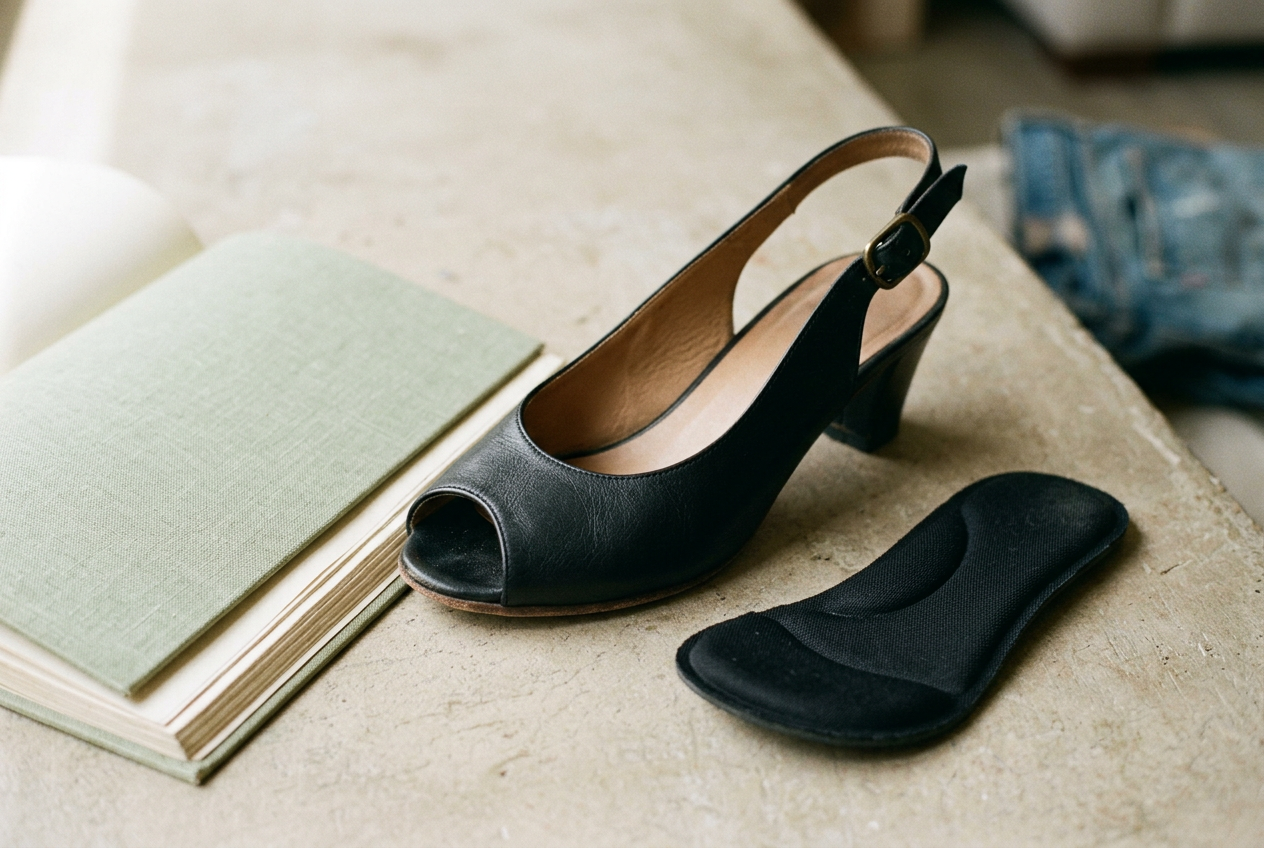
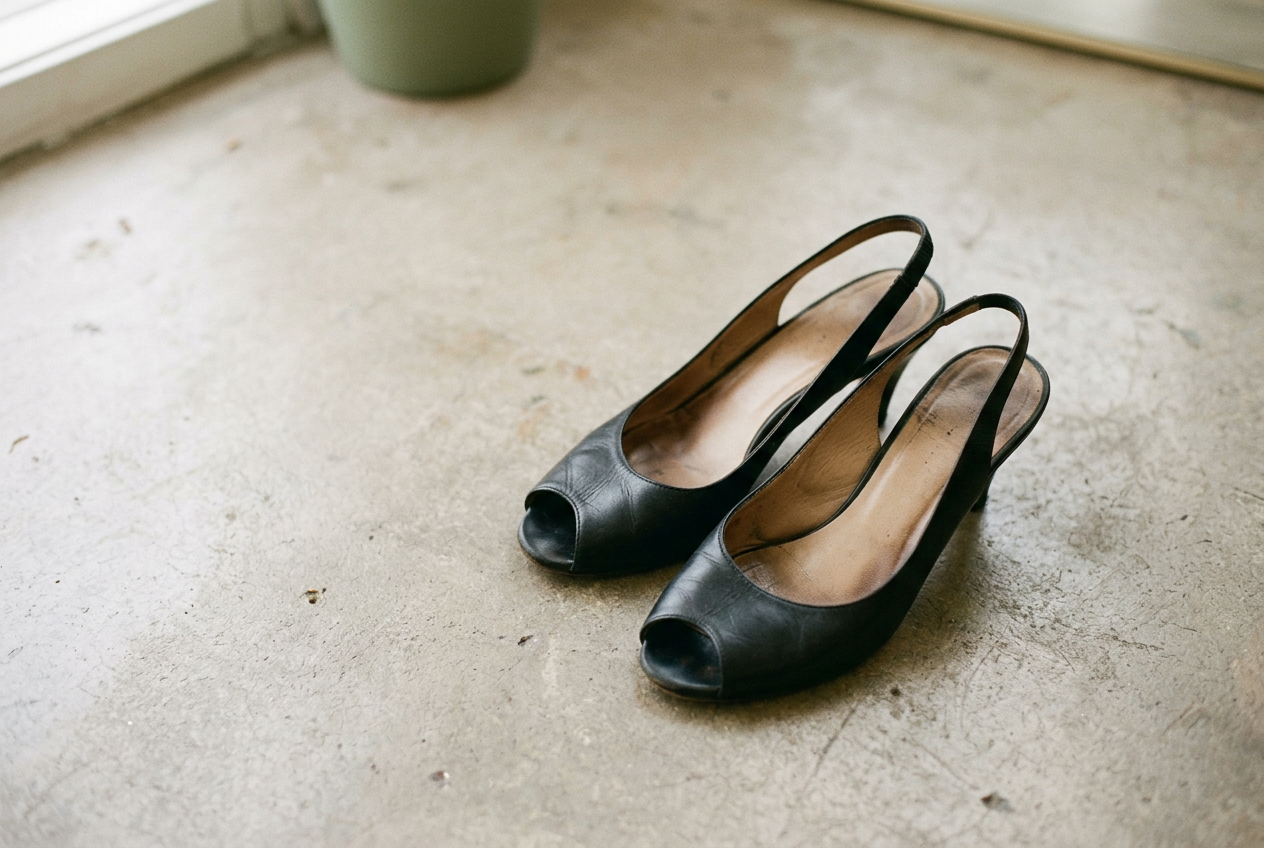
The pair that clarified the problem was a secondhand black leather slingback with a low, narrow heel, an almond-shaped front and an oval opening that looked restrained when the shoe was empty. I wore it for three outings over one week: first indoors, then for a short walk and dinner, and finally for an afternoon that required more standing than expected.
Its leather upper softened a little. The fit did not improve.
The opening framed one big toe neatly while allowing the smaller toes to press against the concealed edges, and each downhill step sent the foot farther forward until the oval behaved less like a window and more like a rigid collar. By the third wear, a thin forefoot pad had reduced the slide, but it also lifted the toes closer to the upper and increased pressure across the widest part of the foot.
That small failure contains most of the useful information about the peep-toe revival. The silhouette is back in women's footwear, from fashion-led high-street pairs to leather slingbacks priced around the territory of good sneakers and designer versions costing far more, but the retail translation remains uneven because a peep toe asks one opening to manage fit, ventilation and display at once.
The hole is part of the fit
A peep toe is not merely a closed shoe with material removed. Opening width changes which toes bear pressure, while opening depth controls how much of the foot appears as it moves forward. An opening can look modest in a still image and expose much more after ten minutes of walking.
The black evaluation pair had a vertical oval opening narrower than the widest part of the big toenail. That created a tidy, almost 1940s effect at rest. Under load, the big toe advanced into the opening, the skin above it met the finished leather edge and the second toe remained trapped behind the upper. A rounded opening wide enough to reveal part of the second toe would have looked less demure, but it would also have distributed pressure more evenly.
Look closely at how the edge is finished. A folded leather edge, where the upper material turns inward rather than ending in a raw cut, can feel smooth at first yet become bulky around a small opening. Piping adds another raised seam. Thin, unpadded synthetic uppers may avoid that bulk, although a sharp cut edge can rub once heat and moisture increase friction.
Soft suede usually yields more readily around the toes, but it can lose the crisp opening shape that makes the shoe appealing. Patent leather gives the strongest graphic outline and the least forgiveness. Mesh changes the equation because the forefoot can expand through the upper, though the peep opening may then become mostly decorative rather than a meaningful source of space.
Toe-box taper matters before toe exposure
The toe box is the front chamber that holds the toes, and its visible length can disguise how quickly it narrows inside. A long pointed peep toe may provide less usable width than a shorter almond shape because the toes meet the taper well before reaching the opening.
This is where buying a larger size often fails. Added length gives the foot more room to slide, yet the widest part of the foot may still sit behind the widest part of the shoe. The big toe then travels toward the opening while the smaller toes crowd sideways. What feels like a size problem is often a shape mismatch.
On the black slingback, the upper began narrowing just ahead of the ball of the foot. My toes could lie flat while seated, which initially suggested an acceptable fit, but standing spread the forefoot enough to bring the fourth and fifth toes into contact with the sides. The exposed big toe looked comfortable. The hidden toes were doing the work.
A useful fitting check takes less than a minute. Stand with full weight on both feet, then rise onto the balls of the feet as if taking a step. The toes should not bunch, the opening edge should not press a pale line into the skin, and more than one toe should not suddenly emerge unless the design clearly intends a broad opening. Repeat on a slight decline if the store has a ramp; level carpet conceals slide.
Foot slide turns a peep into a clamp
Peep-toe mules and slingbacks have less structure holding the rear foot than a pump with a full heel counter, meaning the firm section around the back of a shoe. That missing structure matters. If the heel lifts or the slingback stretches, the forefoot must stop the body from moving through the shoe.
The evaluation pair used a thin elastic insert beside the buckle. It made the strap easier to fasten, then lengthened under tension while walking. The change was small, but a few millimeters at the heel translated into noticeable pressure at the opening. Tightening the buckle reduced movement and left the strap pressing into the back of the ankle.
Insoles deserve equal attention. Smooth leather linings can become slippery with heat, while glossy synthetic footbeds encourage movement even before perspiration enters the picture. A lightly textured lining or suede forefoot section offers more grip. A full cushion may feel luxurious in the box but compress during wear, creating extra volume and more room to move.
A forefoot pad helped the black pair because it sat behind the ball of the foot and slowed forward travel. Placement mattered more than thickness. Set too far forward, it occupied toe space; set too far back, it formed a ridge under the arch. Adhesive pads also turn a returnable shoe into a committed purchase, so test with a removable pad before peeling any backing.
This is the fit quirk to prioritize over pedicure anxiety. Chipped polish is visible. Repeated impact against a small opening hurts.
The pedicure requirement is partly a design choice
The revival has been styled around a controlled glimpse of toe, often with sheer hosiery, a tonal pedicure or a bare nail. That presentation favors narrow openings and elongated uppers because they photograph as closed shoes with a precise interruption, rather than as sandals.
Real feet make the effect less predictable. Toe length varies, the second toe may lead, and feet swell through a warm day. A tiny oval can expose one nail on one foot and a different amount on the other. Dark polish emphasizes the outline; bare or sheer color reduces contrast, but neither changes where the leather presses.
There is also no rule that every peep toe needs a fresh salon pedicure. Trimmed nails and moisturized skin are enough for wear. Still, anyone who dislikes monitoring polish may find the design more demanding than a closed slingback, particularly when the opening isolates one nail rather than showing the front of the foot as a sandal does.
The styling-led versions are easiest with clothes that acknowledge their slightly formal line: fluid trousers ending above the vamp, a straight skirt, or jeans with enough hem clearance to keep the slingback visible. A long trouser hem can catch under the heel, while a cropped, very wide leg may make a dainty opening feel incidental. The strongest outfit does not need to repeat the retro reference elsewhere.
Retail has revived the look faster than the engineering
Current product imagery across runway coverage and mainstream retail shows the idea spreading through slingbacks, mules and low pumps. The practical improvements are less consistent. Many fashion-led pairs retain narrow openings, smooth insoles and tapered fronts because those details preserve the sleek silhouette driving the revival.
At the lower end of the market, synthetic uppers keep the outline sharp and the price accessible, but they may offer little molding around the forefoot. Mid-priced leather can soften with wear, provided the opening is not reinforced so heavily that the edge remains fixed. A designer price does not solve a mismatch between foot shape and last, the solid form around which a shoe is made.
For now, the most walkable interpretation is less photogenic than the micro-trend’s purest version. It has a wider, horizontally oriented opening, a rounded or gently squared toe box, a grippy lining and either a secure ankle strap or enough coverage over the instep to stop forward movement. It may show two toes. It may read closer to a sandal.
That tradeoff leaves the revival in an unsettled place. The peep toe has moved beyond runway novelty, but many available pairs still prioritize the framed-toe image over an hour of ordinary walking. I would buy a soft leather version with a stable low heel and broad opening if it passed the rise-up test. I would not pay designer money for the black slingback’s narrow oval, however elegant it looked beside the box.
Questions people ask
How should a peep-toe shoe fit at the opening?
The edge should not press into the top or sides of the visible toe when you stand, rise onto the ball of the foot or walk downhill. A little movement is normal, but the opening should not become the main brake stopping your foot from sliding forward.
Should I size up in peep-toe shoes?
Not automatically. Extra length can increase forward slide without adding width where the toe box begins to taper. Try your usual size first, then judge whether the widest part of your foot aligns with the widest part of the shoe; a different shape or wider fitting is often better than a longer shoe.
Can a forefoot pad make peep-toe heels more comfortable?
A thin, removable pad can reduce slide when placed just behind the ball of the foot. It cannot fix a narrow opening or sharply tapered toe box, and a thick pad may lift the toes into the upper. Test placement without adhesive before changing a pair you might return.
Do peep-toe shoes require a pedicure?
No, although a small opening draws attention to whatever portion of the nail it frames. Bare or sheer-polished nails make uneven exposure less obvious. Fit still comes first: if keeping the toe neatly positioned requires gripping inside the shoe, choose a broader opening or a closed-toe slingback instead.
One update a day
Today's fashion update, in your inbox
One fashion update each morning — no hype, no filler, just pieces worth wearing.