Nickel-Free Earrings Can Still Have a Mystery Clasp
The decorative front is only one part of an earring. Check the hook, connecting ring, solder point and detachable back before trusting a nickel-free label.
September 4, 2026 · 7 min read

The clear back is smaller than a lentil. The gold-tone hook looks like one continuous wire, but a tiny connecting loop interrupts it just above the charm. At the base of the hook, a darkened joint suggests another material entered the assembly.
Keep that ordinary gold-tone crescent drop earring in view. Its decorative front is brass with a plated finish, its curved ear wire passes through the piercing, a jump ring connects the two pieces, and a detachable back keeps the hook from slipping out. It is one earring with at least four material questions.
That distinction matters across women's and men's wardrobes, and the guidance here is genuinely unisex. Skin does not care whether a drop earring came from the women's accessories page, the men's jewelry edit or an ungendered collection.
The label may describe less than the earring
“Nickel-free” looks conclusive in a product title. On a detailed materials page, however, the phrase may sit beside the decorative component while the ear wire is listed separately as stainless steel, the back is called silicone without its internal structure being disclosed, and the jump ring is not mentioned at all.
The problem is not that every mixed-metal earring contains an unsuitable part. The problem is that a shopper cannot evaluate an unnamed one.
“Hypoallergenic” also needs supporting detail. It is a broad marketing description, not the name of a metal, and it cannot tell you whether the post is implant-grade titanium, an unspecified steel or plated brass. A strong product page names the base material and identifies where it appears. Better documentation also states whether the claim covers the complete earring rather than only the part intended to sit at the front of the lobe.
Return to the crescent pair. “Nickel-free brass charm” answers one question. It says nothing about the wire inside the piercing, which is the component that deserves the closest scrutiny, or the small ring that can swing against the lobe and side of the neck.
Follow the earring from front to back
Start with contact, not appearance. A polished crescent may seem like the obvious concern because it has the largest surface, yet the hook sits inside the piercing for hours, while the back can press against the rear of the lobe when headphones, a scarf or a phone shifts the earring.
The front may be solid metal, plated metal, enamel over metal, resin or glass mounted in a metal setting. Plating, meaning a thin surface layer applied over another metal, can reduce direct contact while intact, but wear at an edge or high point may expose the base underneath. “14k gold plated” therefore identifies a finish. It does not identify the whole earring.
Next is the post or ear wire. On the crescent drop, this is a fishhook, meaning a curved wire that threads through the piercing rather than locking with a hinged clasp. Look for a named metal here. Implant-grade titanium accompanied by a recognized grade such as ASTM F136 or ASTM F67 is more useful information than “titanium tone,” which describes color, or “titanium steel,” a retail phrase that may refer to stainless steel rather than titanium.
Stainless steel is not one uniform recipe. Some grades contain nickel within the alloy, and a shopper cannot infer composition or nickel release from the words “surgical steel” alone. If steel has worked for you before, that history may inform your decision, but the label still needs to identify the hook rather than letting you assume it matches the charm.
Then inspect the jump ring, the small split loop that connects the hook to the drop. It moves. That movement brings its cut edges and surface against neighboring parts, so plating can wear differently there than on a smooth pendant. Product photography may reveal the ring, but a photograph cannot establish its alloy.
Finally, check the joint. Solder is a metal alloy melted to join components, and its composition can differ from both pieces it connects. On a stud, the relevant spot may be where the post meets the decorative front. On the crescent hook, it could appear near a formed detail or attached finding.
A brand that says “brass and titanium” should still explain whether the titanium is the entire wearable hook and whether solder sits near the piercing.
A component-by-component label checklist
Use the product page, materials guide and care page together. If the information conflicts, the most flattering phrase should not win.
Decorative front: Find the base metal first, then the finish. “Gold tone,” “silver tone” and “rhodium color” are appearances, not compositions. For plated brass, ask whether the nickel-free claim covers the brass alloy and any barrier layer beneath the visible plating. If the charm rests against your lobe, treat it as a contact component even when the brand calls it decorative.
Post, hook or hinged wire: This part passes through the piercing. The useful label reads like “ASTM F136 titanium post” or “solid 14k yellow gold ear wire,” with enough precision to distinguish the wearable component from the front. Solid gold is an alloy rather than pure gold at common jewelry karats, so shoppers with a known sensitivity should look for disclosure about that alloy instead of relying on karat alone.
Jump rings and connector loops: Search for “findings,” the jewelry term for functional components such as rings, clasps and pins. A listing that names a titanium hook and brass pendant but leaves the connector unlisted has a gap. Ask whether every connector is nickel-free and whether it uses the same metal as the hook. Do not assume matching color means matching composition.
Soldered or welded joints: Look closely at where a stud post meets its front and where hardware joins a hoop. Welding joins the parent metals through heat or pressure, while soldering adds a joining alloy; product pages rarely show enough detail to tell which method was used. The practical question for the brand is whether any added joining material contains nickel or can touch the ear.
Detachable backs: “Silicone back” can mean a back made entirely from flexible material, or a silicone-covered back with a metal core. A butterfly back, meaning the small metal clutch with two curled wings, may also arrive as a separate component sourced from a different supplier. Ask for its material by name. Replacing an unknown back with a documented compatible one is reasonable, but it does not fix an unknown hook or solder joint.
Coatings and plating: Confirm what lies beneath the surface and whether the nickel-free statement applies after normal finish wear. Care instructions that prohibit water, fragrance and friction tell you the surface needs protection; they do not reveal what becomes exposed if that surface thins. Everyday earrings take more contact than occasion pieces, particularly around moving rings and backs.
Save the answer. A screenshot of the product page or a written customer-service reply gives you a record of what the brand disclosed when you bought the pair, which is useful if the listing later changes or the package arrives with a different style of back.
Better construction can be quieter
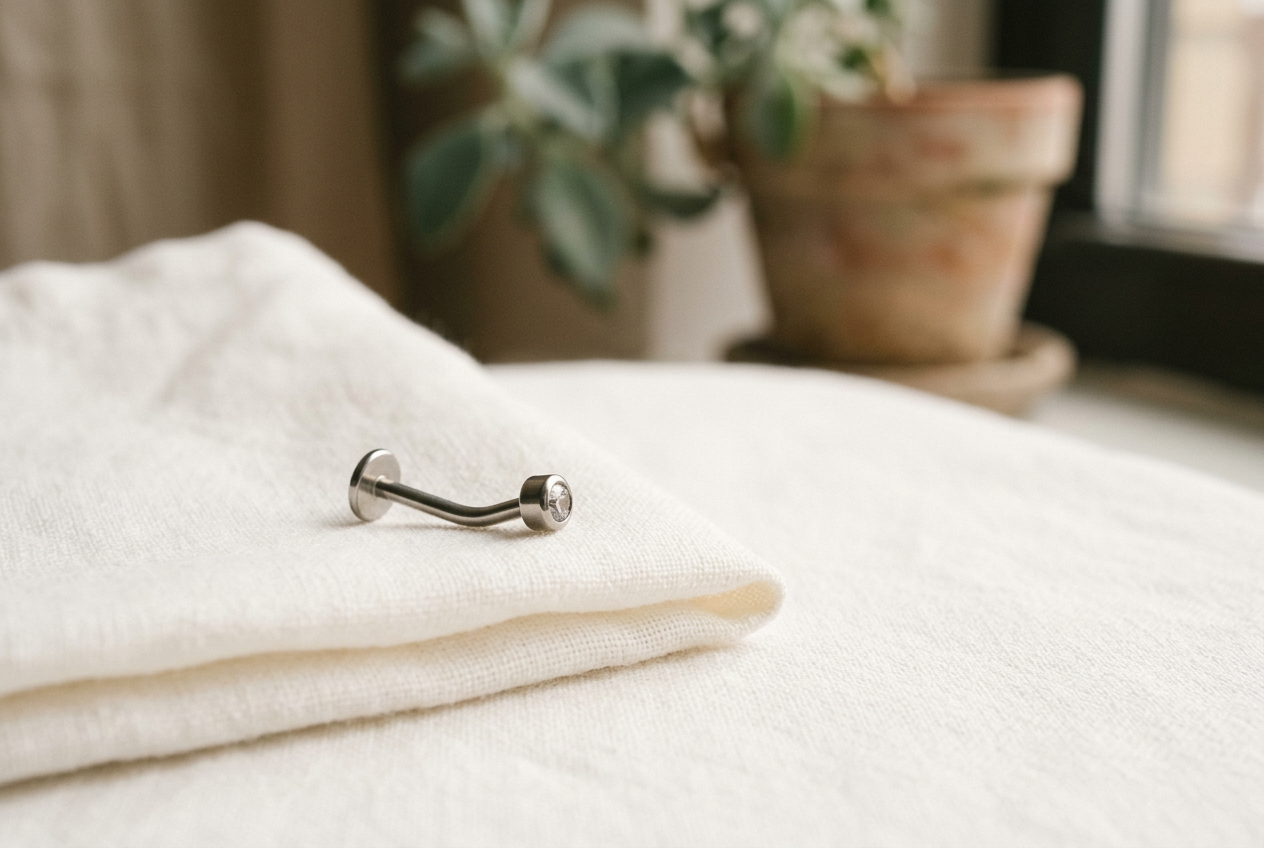
The easiest earring to verify is often the less elaborate one. A single-piece niobium or documented titanium ear wire carrying a glass bead has fewer unknown junctions than the crescent pair, where plated brass, a connector, a joint and a separate back all need checking. Fewer parts do not guarantee suitability, but they reduce the number of unanswered questions.
There is a design tradeoff. Mixed materials let brands use a light, resilient wire at the piercing while keeping a larger decorative front affordable, colorful or easy to cast. That can be sensible construction when every component is disclosed. It becomes a poor buy when the only precise material description belongs to the part least likely to enter the piercing.
Price is not proof. Fine jewelry can still use a different alloy in a spring, solder seam or replacement back, while a modest pair with a plain titanium hook may offer clearer documentation. Paying more is worthwhile for material traceability and durable construction. Paying more for an unsupported “hypoallergenic” badge is not.
The decision point is one missing part
For the crescent drop, the shopping decision turns on the little loop and clear back. If the brand confirms that the nickel-free claim covers the brass front, hook, jump ring, joining material and complete back, the label has done useful work. If it identifies only the charm and ear wire, the pair remains partly unknown.
That does not mean conducting a home wear test until your ear reacts. It means skipping a pair whose construction cannot be verified, choosing a simpler assembly, or replacing only a detachable component after confirming that the rest of the earring is documented and compatible.
The quickest pre-check takes less than a minute: enlarge the side and rear product photos, count every visible component, then match each one to a named material in the listing. One unexplained ring is enough to pause the purchase.
Questions people ask
Is nickel-free the same as hypoallergenic?
No. Nickel-free addresses nickel, although the scope of that claim may be unclear unless the brand says it covers the complete earring. Hypoallergenic is broader and less specific. It does not name the metal or guarantee that every wearer will tolerate the piece, so look for component-level materials alongside the claim.
Can a stainless steel hook still contain nickel?
Yes, some stainless steel alloys contain nickel, while their composition and nickel release vary by grade and manufacture. “Stainless steel” or “surgical steel” alone may not give a nickel-sensitive shopper enough information. Ask for the grade and confirmation that the nickel-free statement applies specifically to the post or hook.
Does swapping the earring back make the pair safer to assess?
It removes one unknown only. Replacing an unlisted butterfly or metal-core silicone back with a documented compatible back can improve the material record, but the hook, jump ring, decorative front and solder remain unchanged. Check those components before treating a replacement back as a complete fix.
What should
I do if a brand cannot identify the jump ring?
Skip the pair if avoiding nickel is a firm requirement. A connector can touch the lobe, and matching plating does not prove it shares the hook's metal. Choose an earring with fewer components or a listing that names the hook, connectors, joints and back without requiring you to fill in the blanks.
One update a day
Today's fashion update, in your inbox
One fashion update each morning — no hype, no filler, just pieces worth wearing.