Long Shorts Work Better When the Leg Opening Gets Wider
Bermuda-length shorts are replacing shorter cuts, but extra length can interfere with the knee. Hem position, leg opening and fabric matter more than the inseam alone.
November 12, 2026 · 7 min read
The useful shift is not that shorts have become longer. It is that the successful versions have been recut for length, rather than extended from a familiar short-short block.
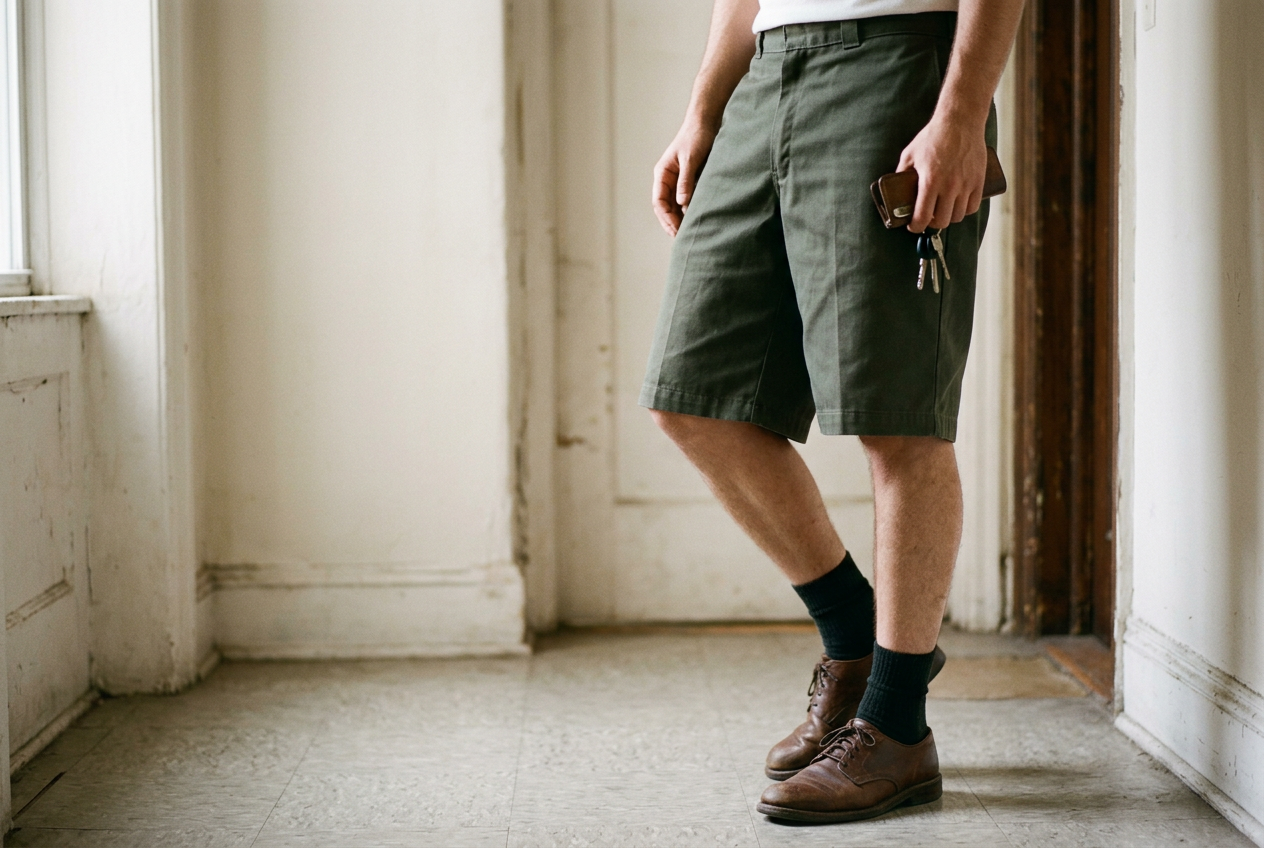
For a concrete reference, consider Dickies’ 13-inch Loose Fit Multi-Use Pocket Work Shorts. The brand describes a polyester-cotton twill shell with a roomy seat and thigh, and the inseam, meaning the seam from the crotch to the hem, places the short around the knee on many wearers. It is not the answer for every wardrobe. It is a good control garment because its length, width and workwear stiffness make the mechanics visible.
This is unisex fit guidance. The same relationship between knee and hem applies across wardrobes, although a pattern drafted for men may carry more room through the seat and a straighter hip line than one drafted for women. Shop by the garment measurements and intended position on the waist, not the department label alone.
The longer hem has changed shape
Shorter inseams are not disappearing, especially in running shorts, fitted denim and high-cut vacation styles. They are fading as the automatic choice for a polished summer outfit. Public runway imagery, retailer edits and street-style reporting have instead emphasized tailored Bermudas, long denim cutoffs and work shorts that finish from just above the kneecap to just below it.
That range sounds narrow. On the body, it is not. A hem two inches above the kneecap leaves the knee free and reads as an elongated short; a hem across the center of the kneecap can catch during a high step; a hem below it starts behaving like a cropped trouser and needs enough width to clear the joint.
The Dickies pair works from the opposite direction of a slim tailored Bermuda. Its generous thigh gives the long inseam somewhere to go, while the firm twill holds the leg away from the body. Copy only its length in a narrower pattern and the result changes: the fabric presses into the front of the thigh, the hem grips as the knee lifts, and the waistband may pull down or rotate.
The knee is the fitting point
Start with the hem while standing, then ignore the mirror for a moment. Sit, climb one stair and take a long step. A well-placed long short should move over or around the knee without asking the waistband to compensate.
The most troublesome position is directly across the widest part of the kneecap. A soft knit may tolerate it, but dense denim, coated cotton and crisp suiting can form a hard horizontal edge. Moving the hem slightly higher often restores movement without sacrificing the long silhouette. Moving it lower can also work, provided the leg opening expands enough to surround the knee rather than press against it.
Body proportions alter where a listed inseam lands. Rise, the distance from the crotch seam to the waistband, changes the starting point: a dropped-crotch short can have a long inseam yet finish unexpectedly low, while a high-rise pattern may place the same nominal inseam higher on the leg. Compare the finished outseam and rise when shopping online, then locate that total length against your own side seam.
This is where buying “the longer version” of a favorite short tends to fail. If the brand adds hem length but leaves the thigh and opening nearly unchanged, a cut that felt clean at mid-thigh may become restrictive near the knee.
Leg opening matters more than the size label
A long short needs ease, meaning extra garment room beyond the body measurement, at the lower thigh. Pinch the fabric at the side of the leg while standing. There should be enough room to lift the knee without the cloth pulling flat across the front, although an oversized handful is not required unless the intended shape is deliberately wide.
The side view tells more than the front. If the hem swings behind the calf but catches over the front of the thigh, the pattern may be too straight for the wearer’s leg shape. Sizing up can release the thigh, yet it may also enlarge the waist and lower the crotch, which adds bulk without putting width where it is needed. A wider-leg cut in the correct waist size is usually the cleaner answer.
Return to the Dickies reference. The loose seat and thigh are functional parts of its 13-inch length, not incidental workwear details. The pair may look broad beside a narrow Bermuda on a hanger, but that width is what allows the stiff cloth to clear the knee. Someone with a fuller thigh may still need more opening, while a wearer with a straighter leg may find that the same short stands away from the body and looks boxier than intended.
For a closer silhouette, look for a small side vent, a short opening in the hem seam that lets the leg separate during movement. It can rescue a softly tailored short. It will not fix a thigh that is tight several inches above the hem.
Fabric decides whether width falls or stands
Long linen shorts and long work shorts can share measurements and produce different outlines. Washed linen collapses toward the leg, develops creases quickly and opens easily during a stride. Polyester-cotton work twill resists that collapse, so it needs more room to move and tends to preserve a straighter, more architectural shape through repeated wear.
Rigid denim is less forgiving. At knee length, a heavy denim cutoff can push into the back of the leg when seated and flare outward when standing, especially if the hem is doubled or thickly stitched. A lighter denim, an open raw edge or a wider leg reduces that pressure. Stretch denim can improve the first fitting-room step, but a narrow hem may still cling around the knee after the fabric warms and relaxes.
Tailored wool blends and fluid synthetics occupy another category. They can hang cleanly with less visible volume, although a full lining may cancel some of that advantage by adding friction and structure. Check whether the lining stops above the hem and whether both layers move when the knee lifts. A beautiful outer fabric cannot compensate for a tight lining.
The Dickies twill sets a useful boundary: if a similarly stiff Bermuda is substantially narrower through the lower thigh, expect less stride. If it is wider, expect the hem to stand away from the leg. Neither result is inherently wrong, but the tradeoff should be visible before purchase.
Preserve proportion without exposing more leg
Long shorts shift the visual break downward, which can make the torso look longer or the lower leg look shorter. The common response is to add height with a shoe. That works, but it is not the only adjustment.
A waistband visible at the natural waist gives the garment a clear starting point. Tucking or shortening the top by a modest amount can restore that line without turning the outfit into a cropped-top formula. With a lower-slung work short, a top that ends near the waistband usually looks more deliberate than a long shirt that covers the pockets and leaves only the widest part of the short visible.
Footwear changes the lower edge. A slim loafer, low-profile sneaker or spare sandal leaves more ankle exposed, while a tall boot or bulky running shoe adds another visual block below the knee. The latter pairing can still work, particularly with wide work shorts, but it produces a heavier silhouette rather than correcting one.
Do not force the Dickies pair to imitate soft tailoring. Its firm twill, practical pockets and broad leg make sense with an equally direct shoe and a top that does not obscure the waistband. A drapey Bermuda can take a finer shoe because the fabric already narrows visually as it falls.
A fitting-room test worth the extra minute
Set the waistband where you will wear it, fasten any belt, and place a phone or wallet in the pocket. Pocket weight can pull a loose short lower, shifting the hem onto the knee. Walk at your normal pace, sit fully rather than perching, then raise one knee as though stepping onto a bus.
Watch three points. The waistband should remain close to its starting position. The front crease should not pull diagonally from crotch to outer thigh. The hem should clear the knee without turning upward and staying there.
If all three fail, a larger size is unlikely to solve the pattern.
Alteration has limits. Shortening a pair can move a troublesome hem above the joint, though it may remove a vent or disturb the intended pocket-to-hem proportion. Letting out the leg opening depends on available seam allowance, the spare fabric folded inside a seam, and mass-market shorts often provide little. Paying to reconstruct both side seams rarely makes sense for an ordinary high-street pair; choose a wider pattern instead.
Long shorts earn their place when the cut accounts for the joint inside them. The Dickies 13-inch short demonstrates one workable equation: firm fabric, substantial length and enough lower-thigh room to move. A softer tailored version can use less visible width. A narrow, rigid version remains the difficult one, however persuasive it looks while the wearer is standing still.
Questions people ask
Where should Bermuda shorts hit the knee?
A hem just above the kneecap is the easiest position for unrestricted movement. A hem below the knee can also work when the leg opening is wide enough to clear the joint. The least forgiving point is directly across the kneecap, particularly in rigid denim, dense twill or a thick folded hem.
Should
I size up in long shorts for more thigh room?
Only if the waist and rise also improve. Sizing up often lowers the crotch and enlarges the waistband without adding enough width at the lower thigh. Compare garment measurements or try a wide-leg pattern in your regular waist size; that places the extra room closer to the area that needs it.
Which fabrics are easiest to walk in?
Washed linen, light cotton and fluid suiting usually move well when the cut includes moderate ease. Firm work twill and rigid denim need a wider opening because they resist folding around the knee. Stretch helps across the thigh, but it does not prevent a narrow hem from catching during a long stride.
Can a tailor fix Bermuda shorts that restrict movement?
Shortening can move the hem away from the knee, and a tailor may enlarge the opening if the side seams contain enough spare fabric. Adding useful width through the whole lower thigh is more involved and may cost more than replacing a standard retail pair. Check the inside seam allowance before booking the alteration.
One update a day
Today's fashion update, in your inbox
One fashion update each morning — no hype, no filler, just pieces worth wearing.