Long Shorts Are Replacing Miniskirts, but the Rise Decides It
The newest long shorts sit close to the knee without behaving like office Bermudas. Rise, hem placement and leg width determine whether the proportion works with tops you already own.
Women's · August 10, 2026 · 8 min read
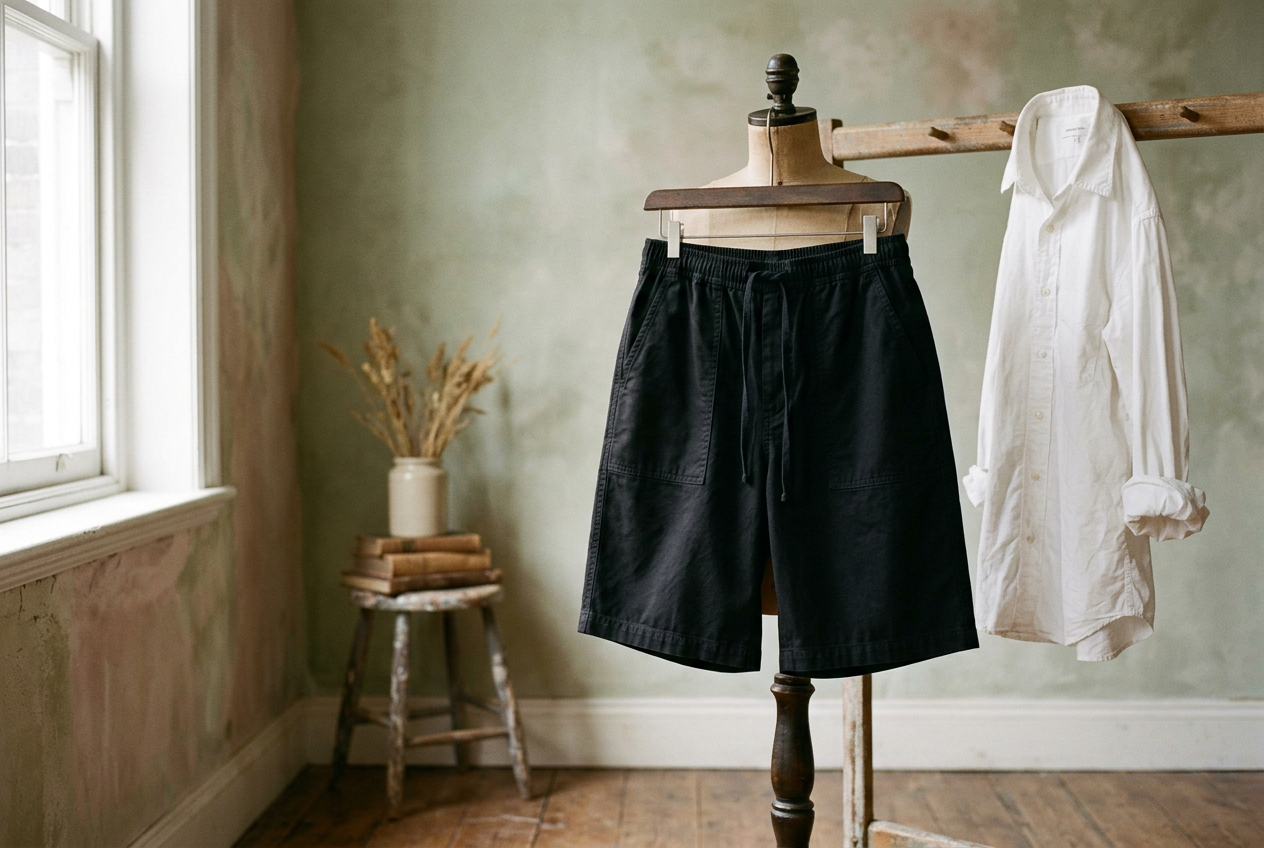
The useful fitting-room case is a pair of black cotton-twill shorts with a high waistband, a wide straight leg and a hem that clears the kneecap by about two fingers. With a fitted tank tucked in, the waistband is visible and the shorts read as a deliberate, elongated shape. Cover that waistband with an untucked poplin shirt, however, and the same pair starts drifting toward office Bermuda territory.
That change is the point. Long shorts are not new, and neither is the Bermuda short, but the current proportion depends less on the category name than on the relationship between waistband, knee and visible leg. A pair can look current on a hanger yet lose its distinction once the rise disappears beneath a top.
This is women’s coverage, with women’s sizing and common womenswear pattern shapes in mind. The proportion checks still matter more than the size printed on the label.
The knee is a reference point, not a rule
Start with the hem while standing normally, without pulling the shorts higher or smoothing the fabric into place. The sharpest version ends just above the kneecap, close enough to interrupt the thigh but not so low that the hem rests against the widest part of the upper calf. This is what separates the shape from an ordinary loose short.
A hem several inches above the knee can still work, although it may read as a conventional tailored short rather than the newer, longer silhouette. Once the fabric covers the knee, the category becomes less stable. A narrow leg begins to resemble a pedal pusher, while a very wide leg can behave like a short culotte. Neither is wrong.
They are different purchases and will ask for different shoes.
Use the black twill pair as a test. Its two-finger clearance leaves a narrow strip of lower thigh visible, giving the knee enough room to bend without catching the hem. When seated, the shorts move upward but still cover most of the thigh. A pair that looks knee-length only while standing may become much shorter at a desk or on public transit, especially if the fabric is crisp and the leg opening is narrow.
The reverse failure is fabric pooling directly on the kneecap. Stiff denim and dense twill can press into the leg there, creating a horizontal ledge each time the knee bends. A slightly shorter hem is often more comfortable than sizing up, which adds volume at the seat without moving the hem very far.
Rise controls whether the length looks intentional
Rise means the distance from the crotch seam to the waistband. On long shorts, it determines how much of the body appears to belong to the torso and how much belongs to the leg, so it can make the same knee-level hem feel directional, conventional or awkwardly in between.
A high rise gives the long leg somewhere to begin. With the waistband near the natural waist, the black twill pair creates a long line from waist to hem even though little upper leg is exposed. That is why a tucked tank, short knit or shirt ending at the waistband makes the shape feel distinct from office shorts.
A mid-rise version can be easier to wear if high waistbands press when sitting, but it needs closer attention at the crotch. Too little rise combined with a long, wide leg can make the shorts appear to hang from the hips, with excess fabric forming diagonal folds between the fly and front pockets. That is a fit problem, not proof that the wearer lacks the right body for the trend.
Check the side seam after sitting for a minute. If the waistband stays level and the front falls cleanly when you stand, the rise is probably doing its job. If the waistband pulls downward at the back or the crotch seam feels tight, try another cut before trying another size. Sizing up may release the crotch, but it can also move the pockets outward and leave the waist loose.
Low-rise long shorts are the hardest version to evaluate. They can look pointedly current when cut with a flat front and enough structure to stay on the hip, yet they also reduce the visible distance between waistband and hem. I would not buy that version merely to update existing tops. It is a more specific styling proposition, particularly if most of your shirts finish below the hip bone.
Leg width separates shorts from cropped trousers
The current wide leg should fall away from the thigh rather than trace it. Look at the fabric below the fullest part of the seat: it should drop with some air around the leg, but it should not flare so aggressively that each side forms a triangle.
This is where office Bermudas often diverge. Their leg may taper toward the knee, particularly in stretch suiting, which keeps the outline neat under a blazer but makes the shorts feel like shortened work trousers. Current long shorts more often hold their width through the hem. The difference is small on a product page and obvious in motion.
The black twill test pair passes because its side seams appear nearly vertical and the hem does not grip when seated. A wider version would need softer fabric to avoid standing away from the body. A narrower version could still work, though it would depend more heavily on a high rise and an exposed waistband to prevent the office association.
Cropped trousers announce themselves below the knee. Once a tailored hem moves onto the calf, shoe choice begins managing the remaining gap, and the garment keeps more of a trouser’s vertical line. Long shorts leave the knee visible or nearly visible, which creates a clearer break before the lower leg.
Existing tops are the practical test
Before buying, identify where your most-worn summer tops end. A long short with a high rise does little for a wardrobe of hip-length T-shirts unless you enjoy tucking, knotting or altering them. The waistband does not need to remain fully exposed, but a top ending near it preserves the intended proportion.
Try the shorts with the least accommodating top you expect to wear. For the black twill pair, that is an oversized white shirt. Worn loose at full length, the shirt covers most of the shorts and leaves a narrow strip of fabric above the knee, which looks accidental. Opening the lower buttons and making a restrained front tuck restores the waistband without compressing the shirt into a bulky knot.
A boxy top can also work when its hem stops at the high hip. The small gap between top and waistband is not essential; what matters is that the shirt does not divide the shorts halfway between waist and knee. Close-fitting bodysuits make the proportion easy, although they also expose waistband gaping and front-pocket flare that a shirt would hide.
Blazers require more judgment. If the blazer and shorts share fabric and color, the result can read as an intentional short suit. A generic office blazer added to cotton twill often pulls the outfit backward toward business casual, particularly with a tapered leg. That may be useful rather than fashionable.
The distinction depends on where you need to wear the clothes.
Fabric decides whether the width collapses or holds
Cotton twill gives the shape definition and handles repeat wear, but a dense weave may crease across the lap and feel warm. Linen blends soften the line and suit heat better, though loose linen can widen at the seat during the day. Wool-blend suiting drapes cleanly and makes sense for work, which is precisely why it can resemble a traditional Bermuda.
Check fiber content before paying trouser-level money. Polyester can improve crease recovery, but a high proportion in a substantial fabric may trap heat. Elastane helps a close waistband recover after sitting; it cannot correct a rise that is too short.
The inside also matters. A clean waistband facing, meaning the fabric that finishes and supports the waistband from within, helps the top edge stay flat. Pocket bags should not extend so low that their outlines show near the hem. On light colors, that construction detail can decide whether the shorts look polished or unfinished.
The buy-or-skip check
Buy the long shorts if the waistband sits where your tops naturally finish, the hem stays clear of the kneecap when walking, and the leg hangs without gripping the thigh. Hemming is a reasonable alteration when the rise and seat already fit; rebuilding the rise is not.
Skip them if every workable outfit requires a new cropped top, or if the only available pair is a narrow stretch-suiting Bermuda being presented under a fresher name. The black cotton-twill pair earns its place only if the visible high rise and straight, open leg add a proportion that a miniskirt or cropped trouser cannot already supply.
Questions people ask
How long should long shorts be?
A useful starting point is a hem just above the kneecap, leaving enough clearance for the knee to bend without catching the fabric. Check the length while seated as well as standing. If the hem covers the knee, assess whether the garment now behaves more like a culotte or pedal pusher.
Are long shorts flattering on shorter legs?
They can be, particularly when the rise is high enough to establish a visible waist and the leg remains straight rather than heavily flared. A top ending near the waistband keeps the shorts from consuming the torso. Hem placement matters more than height alone, so pin the hem temporarily before rejecting the shape.
What shoes work with knee-length shorts?
Shoes that leave the ankle visually clear make the proportion easiest to read, including slim sneakers, low-profile sandals and loafers with a lower vamp. Chunkier shoes can work, but they add weight below an already strong horizontal hem. Try the exact shoes during the fitting rather than planning to solve the balance later.
Can office Bermuda shorts look current?
Yes, if the rise sits cleanly, the hem approaches the knee and the leg does not taper too tightly. Expose at least part of the waistband or pair them with a top ending at the high hip. If stretch suiting grips the thigh and narrows at the hem, treat them as work shorts rather than forcing a trend update.
One update a day
Today's fashion update, in your inbox
One fashion update each morning — no hype, no filler, just pieces worth wearing.