A Short Curved Hem Makes No-Tuck Outfits Work in Humidity
A hip-length woven top, curved hem, and high-rise trousers create shape without packing damp fabric into a waistband. The same formula needs more room when the top is knitted.
August 10, 2026 · 7 min read
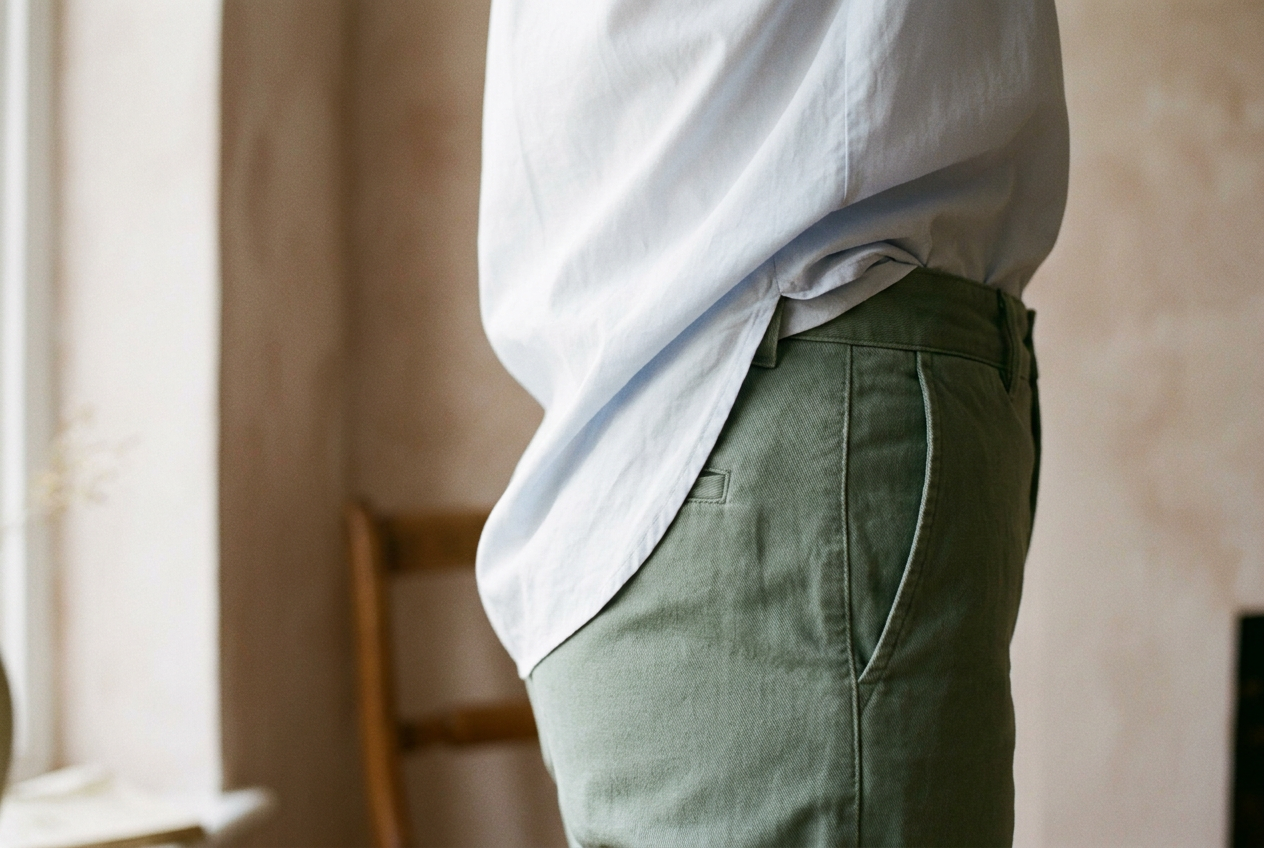
The outfit I kept returning to during this evaluation was a washed cotton-poplin shirt with an open collar, a curved hem, and short side vents, worn loose over high-rise, wide-leg cotton-twill trousers. Poplin is a tightly woven fabric with a smooth surface, so it holds a line without feeling as heavy as denim or substantial oxford cloth.
Nothing went into the waistband. That matters on a humid day, when a tucked shirt adds another damp layer around the middle and often has to be reset after sitting. The definition came from the shirt ending at the high hip, the curved hem exposing a little more trouser at the sides, and the waistband sitting high enough to keep the visible proportions deliberate.
This is unisex advice. The useful measurements depend on torso length, hip shape, and where a trouser waistband sits rather than the gender printed on a department sign, though people with a fuller bust or seat may need extra front or back length to make the same hem look level.
The waistband still does work
A no-tuck outfit can look undefined when the top covers too much of the trousers, particularly if its hem cuts across the widest part of the hip. The answer is not a tighter top. It is a shorter visual block.
Start with the rise, meaning the distance from the crotch seam to the top of the waistband. A high rise gives the eye a longer run of trouser below the shirt, even though the waistband remains covered, while a low rise places more fabric over the abdomen and can make a loose top appear longer than it is.
On the anchor outfit, the shirt hem landed around the upper third of the fly when viewed from the front. It covered the waistband during normal movement but left enough trouser visible to establish a waist-to-leg proportion. A top that reaches the bottom of the fly changes the effect: the torso block grows, the leg line starts lower, and the outfit begins to depend on a narrow pant or exposed ankle for definition.
The best target is relative rather than fixed. With the trousers on, let the top fall naturally and check where its center front meets the fly. Around the upper third is a useful starting point. Then raise both arms and sit down.
The waistband should stay covered if that matters to you, but the hem should not collapse into the lap.
A curved hem creates the opening
The pale-blue poplin shirt worked because its center front was slightly longer than its sides. A curved hem breaks up the horizontal line that a square, untucked shirt can draw across the body, and it reveals narrow sections of trouser without exposing the waistband.
Side vents, which are short openings at the side seams, do a similar job. They let the front and back panels move separately when the wearer sits or walks, reducing the chance that the entire shirt will ride upward over the hips. For straighter bodies, a shallow curve may provide enough movement. A fuller hip or seat generally benefits from a deeper vent, more circumference, or a back hem cut a little longer than the front.
Hem shape cannot rescue the wrong length. Long shirttails may curl inward after sitting, while exaggerated high-low hems can gather behind the body and hold moisture against the lower back. The useful version is restrained: short enough to clear the lap, long enough to overlap the waistband, and open enough at the side seam to release rather than grip.
Woven fabric recovered after sitting
The cotton-poplin shirt wrinkled across the lower back after sitting, but the fabric dropped away from the body once I stood and walked. Its wrinkles remained visible, especially near the side vents, yet the hem returned to roughly the same position without needing to be pulled down.
That recovery is the main reason to choose a woven top for this formula. Woven fabric has less natural stretch than jersey, so a loose cut tends to bridge over the body instead of following every damp area. Garment ease, the room in a garment beyond the body’s measurement, matters here: the shirt needs enough ease through the chest and hip to move without borrowing space from its vents.
Use a pinch test in the fitting room. With the shirt buttoned, pinch the fabric at each side of the torso. There should be enough room to lift the cloth away without pulling the placket out of line. Then sit.
If the lowest button strains, the side seam swings forward, or the back hem climbs onto the waistband, the shirt needs more room through that specific area, even when the shoulders already fit.
Linen and linen blends can work, though they hold sharper sitting creases and may feel rougher once salt from perspiration dries. A lightweight viscose woven drapes closer to the body and can show dampness sooner. Crisp synthetics often release wrinkles, but a dense weave may retain heat; a fabric that feels cool for thirty seconds in an air-conditioned fitting room still deserves a close look at its opacity and airflow.
The knit needed a different fit
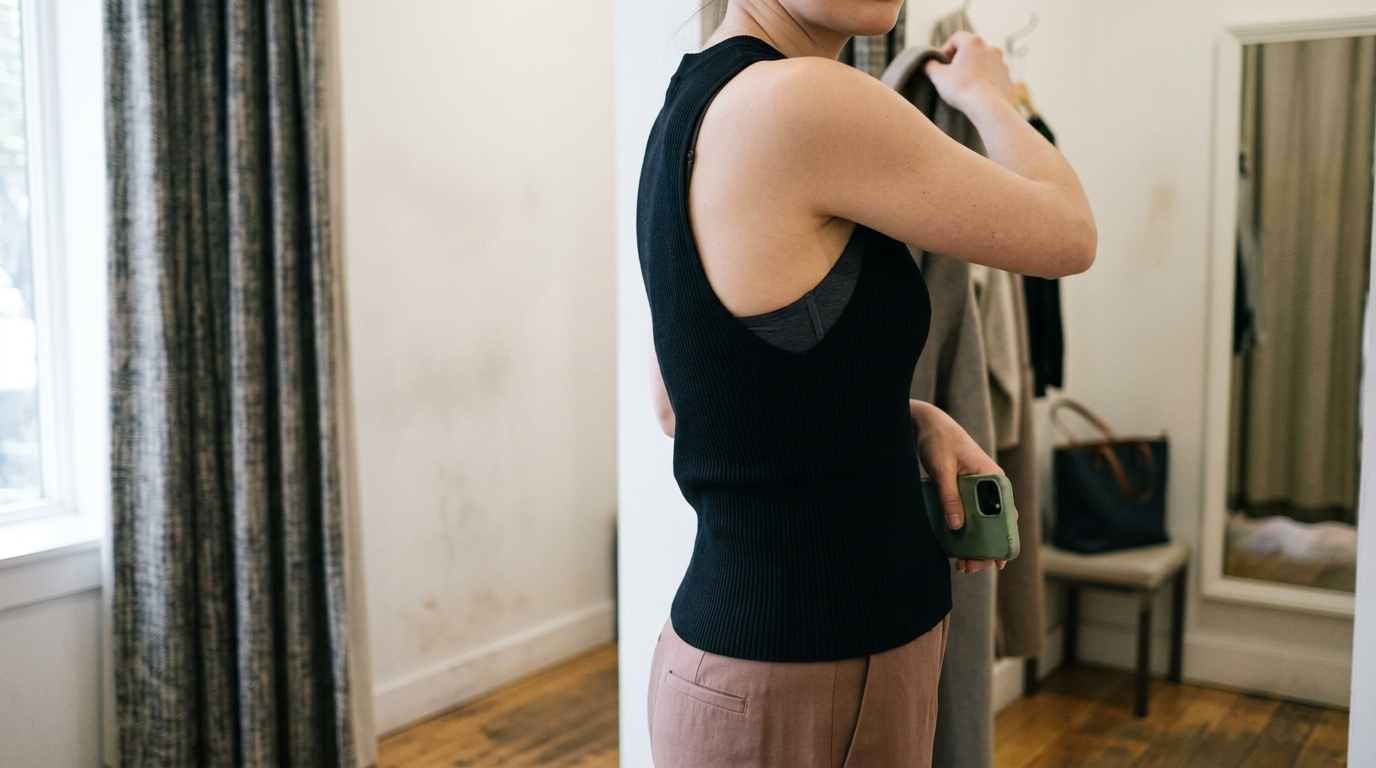
I compared the poplin shirt with a cotton-blend rib-knit top of similar visual length. Rib knit has raised vertical channels that allow the fabric to stretch and contract. It looked neat while standing, but after sitting it caught at the waistband and stayed there, leaving a soft roll of fabric above the trousers when I stood.
Walking released some of that bunching. It did not release the cling across the lower back.
The problem was not knit fabric alone. The rib top had less ease and a straight hem, so it stretched over the body, met the waistband, and had no side opening through which to settle. Pulling it down restored the original line for a few minutes, but that defeats the low-maintenance point of a no-tuck outfit.
A knit can still carry the formula if it skims rather than stretches. Look for a firm jersey or compact knit that springs back when released, with a hem that sits above the widest part of the hip. A boxier cut helps, as do side vents. Very soft modal-rich jersey feels cool at first touch but may reveal every place where perspiration holds it to the skin; a dry-feeling cotton knit is less fluid, though it can become heavy when wet.
Do not size up without checking the shoulder and armhole. Extra width can improve airflow, but a dropped armhole may expose more at the side or bunch under the arm, and excess shoulder width can make the whole top appear longer. Compare the next size, then judge the hem and armhole rather than trusting the label.
Run the sit-and-walk test
Try the complete outfit, including the trousers, because top length means little without the actual rise underneath. Sit in a firm chair for several minutes with both feet on the floor. A deep sofa creates a harsher fold at the waist and is worth testing later, but the chair gives a repeatable first check.
Stand without adjusting the top. Look at the center front, side seams, and lower back. Fabric that remains folded on top of the waistband is likely to need repeated handling during the day; fabric that hangs unevenly may be catching on a pocket, belt loop, or fuller part of the hip.
Next, walk around long enough for the trouser legs and shirt hem to move normally. The anchor poplin shirt dropped back into place during this stage, while the rib knit remained attached at the lower back. That difference was more useful than either garment’s first impression in the mirror, since humidity amplifies any tendency to catch or cling.
Finish by lifting a bag as you would during a commute. Crossbody straps can pin a loose woven shirt against the torso, and backpacks press moisture into both woven and knit fabrics. If the outfit only works without the bag you use every day, it is not ready.
What is worth buying
Start with the trousers you already own. A higher rise may solve the proportion problem without requiring a new top, especially if an existing shirt can be shortened or given side vents by a tailor. Hem alteration is a more focused expense than replacing an otherwise good cotton shirt, though a large curved hem cannot always be shortened without changing its shape.
When shopping, prioritize hem position before color or collar. The most useful top overlaps the waistband through movement, clears the lap while seated, and releases after walking. The pale-blue poplin shirt met those conditions even with visible creasing, which was a better trade than the smoother-looking rib knit that needed to be pulled down.
Skip a top if it only looks balanced with a front tuck. That styling move may be useful in cooler weather, but it leaves the original humidity problem untouched.
Questions people ask
Can this formula work with low-rise trousers?
It can, but the top usually needs to be shorter because a low waistband leaves less trouser visible below the hem. Check coverage while seated and with arms raised. If a short top feels too exposed, a mid- or high-rise trouser will make the formula easier to maintain.
How do
I know whether an untucked shirt is too long?
Put it on with the intended trousers and check the fly. A center-front hem extending toward the bottom of the fly will often shorten the visible leg line and fold into the lap. Around the upper portion of the fly is a stronger starting point, provided the waistband stays covered during movement.
Are knit tops always worse in humid weather?
No. Compact jersey and firm cotton knits can work when they have enough ease, recover after stretching, and end above the widest part of the hip. Soft, close-fitting rib or modal-rich jersey is more likely to catch at the waistband and remain attached to damp skin after sitting.
What if the shirt clings only at the lower back?
Check the back length, hip room, and bag before replacing it. A longer back hem may be catching on the waistband, while a backpack can press any fabric into perspiration. Side vents or a slightly roomier cut may release better without changing the shoulder fit.
One update a day
Today's fashion update, in your inbox
One fashion update each morning — no hype, no filler, just pieces worth wearing.