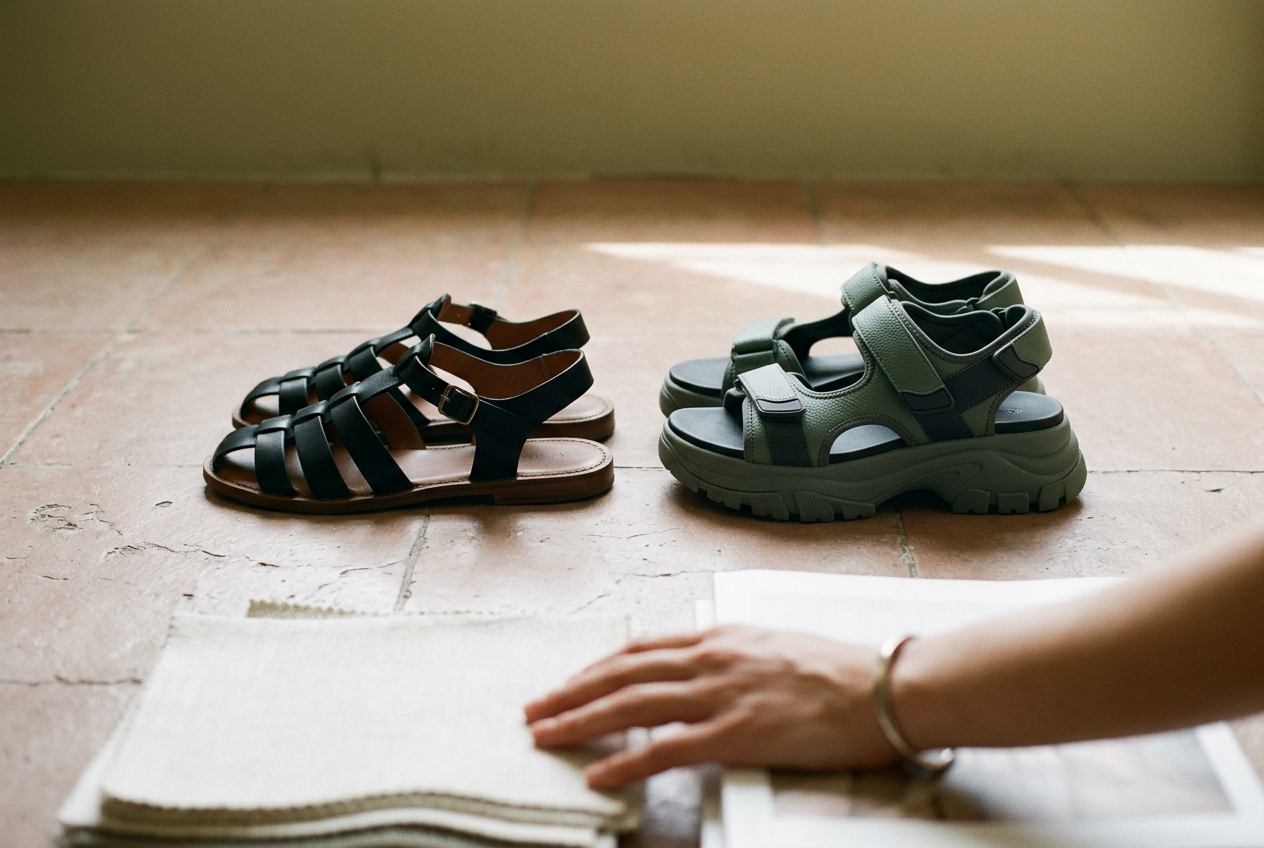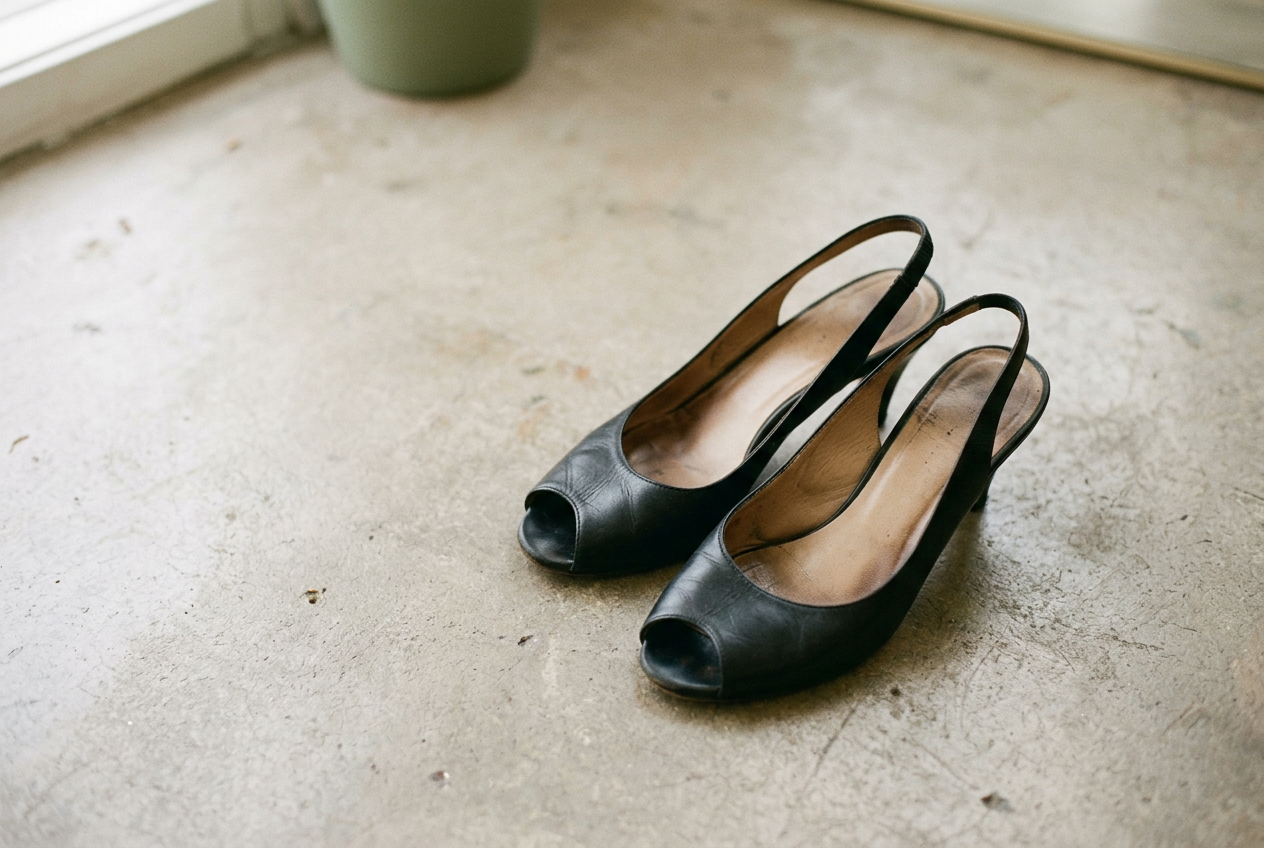
Fisherman Sandals Cover More Than Ballet Flats. They Feel Heavier.
A caged upper adds airflow and some protection, while a firmer sole can make long walks easier. The tradeoff is visual weight, plus fit trouble at the instep.
August 30, 2026 · 7 min read
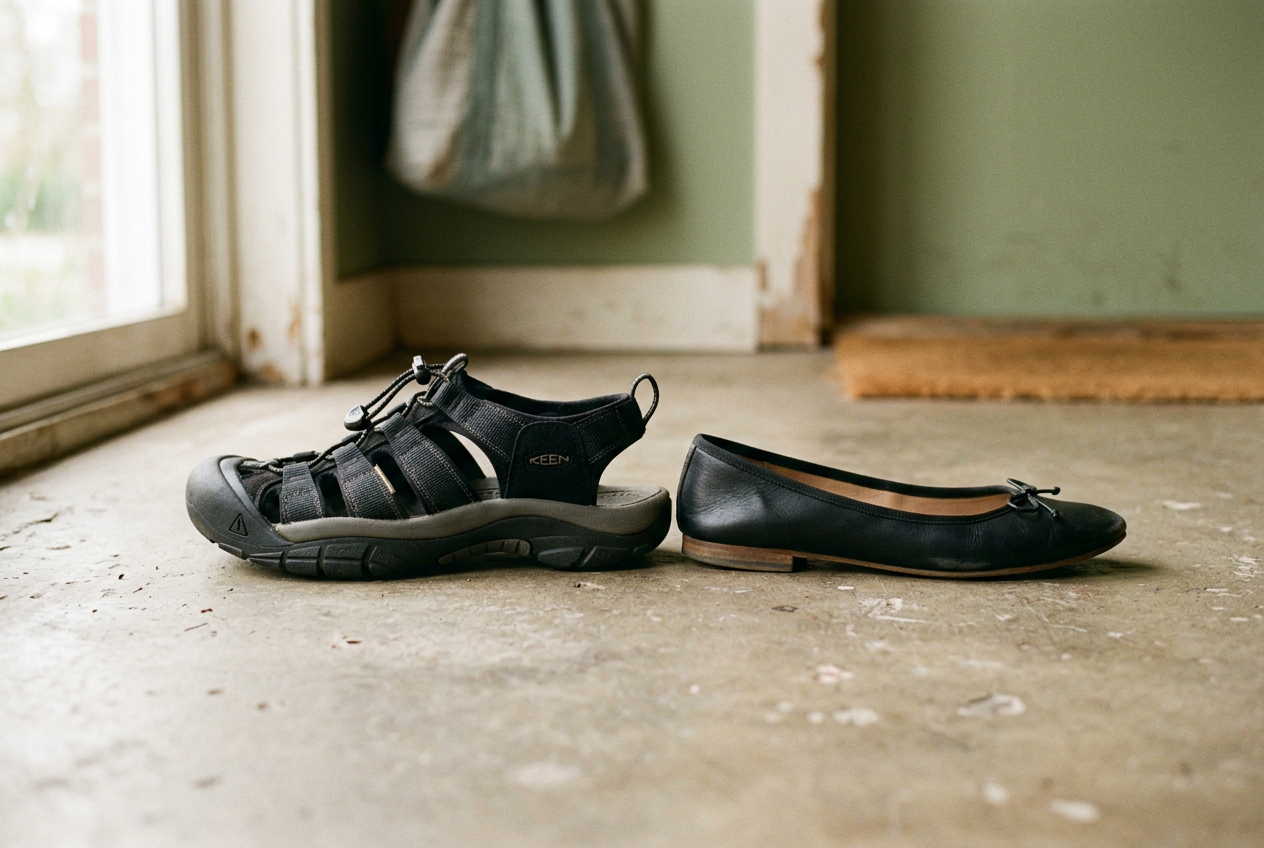
The useful comparison starts with a shoe that takes the fisherman idea literally. Keen’s Newport H2 has a woven polyester-webbing upper, an enclosed rubber toe bumper, a bungee-style drawcord and a substantial rubber outsole. It looks closer to outdoor equipment than to the slim leather versions now appearing beside loafers and ballet flats, but that clarity makes it a good test case: every functional promise of the silhouette is visible.
Put it next to a conventional ballet flat with a low-cut upper, thin sole and little internal structure, and the gap is immediate. The Newport H2 covers more of the foot, allows air through its side openings and puts more material between the wearer and the ground. It also occupies far more space in an outfit. That last point matters because many fashion-led fisherman sandals borrow the cage without reproducing the protective toe or supportive sole.
This is unisex advice, although shoppers may encounter separate women’s and men’s size runs. Judge the internal length and width rather than assuming the label determines the fit; the key pressure points, particularly across the instep and around the little toe, do not change with the department where the shoe is sold.
The toe is covered, but protection varies
A ballet flat leaves the top of the foot open and usually ends in a soft, shallow toe box, meaning the space surrounding the toes. That construction keeps the shoe discreet, yet it offers little reassurance on crowded public transit, gravel paths or a day involving more standing than expected. Thin leather can also show the outline of toes and nails, especially when the flat is short.
The Newport H2 takes the opposite position. Its molded rubber bumper wraps around the front, while the webbing sits behind it rather than asking leather to absorb every scuff. That design can protect against a chair leg or loose stone better than a ballet flat, though it is still a sandal with open sections and should not be treated like workplace safety footwear.
A leather fisherman sandal may be less convincing. On many fashion versions, broad interlaced straps meet over the toes but leave small openings between them, and the front edge is leather rather than reinforced rubber. The cage reduces exposure and disguises unpolished nails, but it cannot stop grit entering from the side. If toe protection is the reason for buying, press the front of the shoe and inspect how far the outsole rises.
A soft woven upper is coverage, not armor.
There is another fit consequence. A short ballet flat can pinch all five toes at once; a short fisherman sandal may instead place one strap directly over a toe joint, creating a concentrated pressure point that becomes more noticeable as feet swell. Leave enough length for the toes to sit behind the front edge without gripping, then walk downhill or on a ramp if the store permits it. Forward movement is where an apparently generous cage reveals itself as too short.
Airflow comes through openings, not materials
Fisherman sandals look ventilated because the upper has gaps. In warm weather that can help, particularly across the forefoot, but the material touching the skin still determines how the shoe feels after several hours.
The polyester webbing on the Newport H2 does not behave like lined leather. It can be washed, does not need polishing and is intended to tolerate water, although a wet foot can still slide inside any sandal and damp straps may rub. The rubber toe bumper also reduces airflow at the very front. This is a shoe for heat, splashes and uneven ground rather than the barely-there sensation of an open slide.
Leather city versions exchange some of that utility for polish. Unlined leather may soften around the foot, yet exposed strap edges can feel sharp before they relax; synthetic leather may stay stiffer and trap more heat where broad bands overlap. A smooth lining is worth checking because it covers seams, but lining every strap also adds another layer against the skin. Run a finger along the underside, especially where two pieces cross.
A ridge felt by hand rarely disappears once body heat and distance enter the equation.
Compared with a ballet flat, the fisherman sandal allows more moving air across the sides while holding more of the upper foot. The flat exposes a larger uninterrupted area, but its closed toe can become warm and its topline may trap sweat around the toes. Neither design guarantees a cool foot. Mesh ballet flats will usually feel airier; an open-toe sandal will ventilate more directly.
The sole may be the real reason to switch
The strongest practical case for fisherman sandals sits below the cage. Many versions use a thicker rubber outsole and a defined footbed, the shaped surface under the foot, rather than the thin flexible base common to ballet flats. That extra depth can soften hard pavement and reduce the feeling of every seam in the sidewalk.
The Newport H2 pushes this advantage far beyond the fashion norm with a contoured interior and a treaded rubber sole. It is the reference pair again because it shows what “practical” can mean when the structure is doing real work, not merely lifting the foot on a flat platform. The drawback is bulk. Its tread, bumper and webbing make a ballet flat look almost weightless by comparison, both on the foot and under a trouser hem.
Do not use sole thickness as a shortcut for comfort. A stiff platform can resist bending without supporting the arch, and an overly soft foam footbed may compress while leaving the foot unstable. Hold the heel and forefoot, then bend the shoe. It should flex near the ball of the foot rather than fold through the middle; twisting resistance can also help the shoe feel less flimsy, although people who prefer very flexible footwear may find that structure restrictive.
The heel needs attention too. Ballet flats often fail by slipping at the back, which encourages toe gripping and adhesive heel pads. Fisherman sandals usually secure the foot with an ankle or heel strap, but a loose cage can still let the foot travel forward. On the Newport H2, the drawcord adjusts across the upper rather than relying on a single buckle hole.
A leather pair with one ankle strap offers less tuning, so the cage itself must fit closely without pressing the instep.
For long city days, that secure hold and firmer sole can fill a real wardrobe gap between a flat and a sneaker. For short trips, desk-based days or indoor events, the extra structure may solve a problem the wearer does not have.
The silhouette changes the outfit
A ballet flat follows the line of the foot and tends to recede beneath full-length trousers. A fisherman sandal interrupts that line with horizontal and diagonal straps, then often adds a welt, the strip joining the upper to the sole, or a raised edge around the footbed. Even a refined leather pair reads more assertively.
This is helpful with clothes that need grounding. Straight jeans ending above the ankle, relaxed linen trousers and substantial cotton skirts can absorb the cage without making the shoe look accidental. The same sandal under a very fine slip dress or narrow cropped pants can appear heavy, particularly when the sole is black and thick. Matching the sandal roughly to skin tone reduces contrast, while matching it to a belt or bag makes the weight look deliberate.
The Newport H2 sets the outer limit. It works with cargo pants, shorts, technical fabrics and loose denim because those clothes share its practical language. It does not replace a ballet flat for a quiet office outfit or an evening dress unless the contrast is the entire styling decision. A slim leather fisherman sandal in brown, burgundy or black travels further, especially when the outsole stays close to the upper in color and the hardware is restrained.
Socks widen the season but change the proposition. A fine ribbed sock prevents some strap friction and makes the cage visible, which can work with pleated trousers or a longer skirt. It also removes much of the airflow advantage. If socks are essential for comfort from the first wear, the sandal may be too loose, too abrasive or unnecessary beside a loafer.
Decide whether there is a gap to fill
Price follows construction more reliably than trend status. Synthetic high-street pairs can cost less than a decent sneaker, leather versions often occupy the same broad territory as well-made flats, and designer pairs rise well beyond that without guaranteeing a better footbed. Spend first on smooth strap edges, secure fastening and a sole that bends in the right place. Decorative weaving comes later.
Choose a fisherman sandal over a ballet flat when the day includes sustained walking, warm weather and places where an exposed foot feels inconvenient. Look for a raised or reinforced front, enough outsole under the heel and an upper that can be adjusted as the foot swells. If the intended use is mostly restaurants, offices and short paved journeys, a flexible ballet flat may remain easier to style and pack.
The Newport H2 clarifies the choice because it cannot pretend to be both. It delivers the protection, grip and hold that make the fisherman construction useful, then asks the outfit to accommodate its volume. A delicate leather cage may be more versatile, but once the toe reinforcement, adjustable hold and structured sole disappear, much of the practical distinction disappears with them.
That leaves the trend in a plausible but unsettled place. Fisherman sandals can replace ballet flats for people whose flats feel too exposed or insubstantial. For anyone who already owns a supportive walking sandal and a polished flat, the new pair may duplicate both while performing neither job as cleanly.
Questions people ask
Are fisherman sandals more comfortable than ballet flats?
They can be when the sole is structured, the heel stays secure and the straps do not press across the instep. A thin fashion fisherman sandal offers no automatic advantage. Check where the shoe flexes, whether the foot slides forward and whether strap edges become noticeable during a brisk indoor walk.
Do fisherman sandals protect your toes?
A model with a molded bumper, such as the Keen Newport H2, provides more everyday protection than a soft ballet flat. Leather cages mainly provide coverage. Openings still admit grit, and neither design should be confused with protective footwear intended for hazardous work.
Can fisherman sandals replace ballet flats at the office?
Slim leather versions can work in offices where sandals are accepted, especially with full-length trousers, structured skirts or simple dresses. Thick tread, outdoor webbing and exposed socks read more casual. Workplace rules and the visual weight of the sole matter more than the fisherman label itself.
Should fisherman sandals fit tightly across the top?
They should hold the foot without leaving strap marks or pressing when the toes flex. Try them later in the day if possible, when feet may be fuller, and make sure each toe sits behind the front edge. A loose ankle strap cannot correct a cage that is too wide or too short.
One update a day
Today's fashion update, in your inbox
One fashion update each morning — no hype, no filler, just pieces worth wearing.