Drop-Waist Dresses Hit Stores. Check the Torso First.
A lowered seam can look clean standing up and turn restrictive in a chair. Torso length, hip ease and seam construction matter more than the size on the tag.
Women's · August 10, 2026 · 7 min read
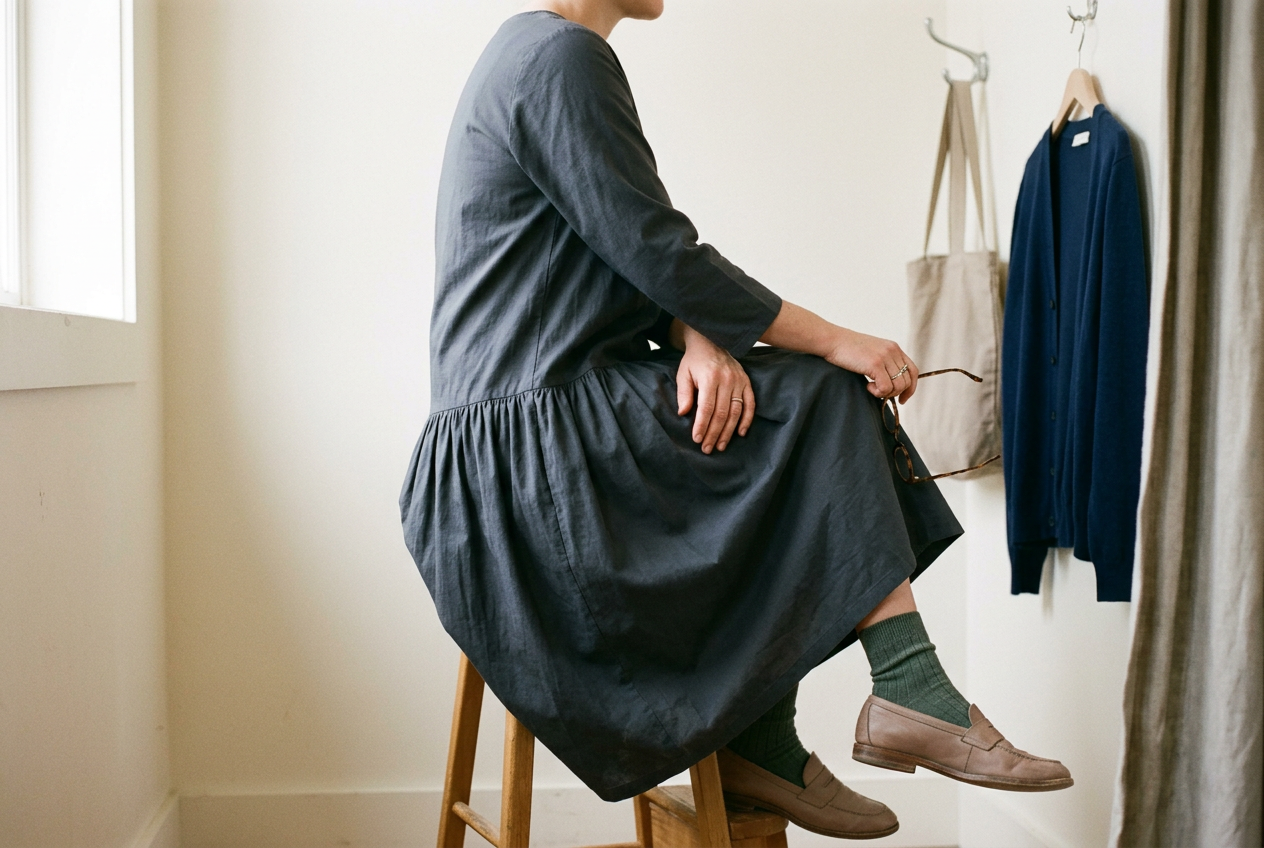
Drop-waist dresses are no longer only a runway styling proposition. The silhouette, which joins the bodice to the skirt below the body’s natural waist, is appearing in wearable cotton poplin, linen blends, fluid viscose and knit constructions rather than only in embellished evening pieces.
That translation matters because an ordinary dress has to survive an ordinary chair. This is women’s coverage, and the fitting issue is more precise than whether a lowered waist flatters a particular body type: two shoppers with the same bust and hip measurements can get different results when their shoulder-to-waist lengths differ.
Keep one concrete version in view: a sleeveless cotton-poplin dress with a fitted bodice, a fixed dropped seam, a side zipper and a gathered skirt. It is the sort of straightforward store dress that makes the trend seem easy. Its woven fabric has little stretch, however, and its seam cannot move when the wearer bends, so the torso fit decides whether it feels relaxed or faintly harnessed.
The seam has to meet your torso
The natural waist, meaning the point where the torso creases when you bend sideways, is only the starting landmark. A true drop-waist seam sits below it, but “below” is not a universal position: the same garment seam might land just under the waist on a long torso and near the upper hip on a short one.
That difference changes the line of the whole dress. If the cotton-poplin test dress is too short through the bodice, its seam will hover closer to the natural waist than intended, while the upper body may pull vertically from shoulder to waist. Going up a size can add width without adding enough length, leaving a roomier armhole and the same misplaced seam.
When the bodice is too long, the seam can settle on the widest part of the upper hip. The gathered skirt then begins where the body already needs room, which may create horizontal drag lines, make the zipper buckle or cause the bodice to ride upward until it finds a narrower point. That movement is useful evidence. A seam that repeatedly relocates itself is not sitting where the pattern expects it to sit.
A product page may give dress length without giving bodice length. Dress length is not enough. If garment measurements are available, compare the distance from the top of the shoulder to the dropped seam with the same route on your body, following the front rather than pulling the tape straight through the air. The goal is not to match your natural-waist measurement; it is to learn how far below that point the seam will fall.
Hip ease becomes the hidden measurement
Ease is the difference between the body measurement and the garment measurement. A drop-waist dress needs usable ease where its bodice ends, and that location may be closer to the high hip than the waist measurement listed in a standard size chart.
On the fixed-seam cotton-poplin dress, pinch the fabric at both sides while standing naturally. There should be enough spare cloth for the seam to remain level without digging in, but an oversized bodice is not an automatic cure because excess fabric can collapse over the seam and change the intended long, clean line.
Look closely at the back. Horizontal pulls above the seam suggest that the bodice needs more width or length, while a seam that curves upward at center back may be meeting more shape than the pattern allowed. Pockets can complicate this reading: when side-seam pockets begin near the dropped join, their bags add another layer exactly where the garment is already negotiating the hip.
The gathered skirt also needs somewhere to go. Dense gathers attached to a firm band occupy more space than soft pleats in viscose, and crisp poplin holds that volume away from the body rather than falling down it. This is a construction choice, not a styling failure.
Fixed and elasticized waists fail differently
A fixed dropped seam gives the clearest version of the silhouette. It can also be unforgiving. A side zipper helps the dress pass over the bust and hip, but once closed, neither zipper nor seam supplies stretch; if the bodice is marginally short, raising an arm or reaching forward can pull the entire skirt upward.
Check the seam allowance through the fabric if possible. A generous allowance may let a skilled alterations professional lower or release part of the join, though changing a gathered seam can require redistributing the skirt fullness and moving a zipper. On an inexpensive everyday dress, that work may cost enough to make returning it the more sensible decision.
Elasticized constructions offer movement, yet they are not free of fit problems. A casing, meaning a fabric channel containing elastic, can expand as the wearer sits, while shirring, meaning rows of elastic stitching, spreads the tension across a wider area. Both are more tolerant of measurement changes than the fixed seam on the poplin dress.
They also migrate. If elastic is tighter than the garment’s intended hip position can comfortably support, it will climb toward the natural waist, taking the skirt with it and shortening the bodice visually. A style that only looks drop-waisted after it has been pulled down by hand is unlikely to stay that way through a day of movement.
Knitted dresses occupy a middle ground. The fabric may stretch even when the seam itself does not, so inspect the join rather than assuming the whole dress will yield. A firm strip of elastic or stabilizing tape sewn into a knit seam can still create a narrow pressure point.
The chair test tells the truth
Standing in front of a mirror shows proportion. Sitting shows fit.
In the cotton-poplin test dress, sit fully back in a firm chair rather than balancing on the edge. The hip expands and the front torso shortens as the body folds; if the lowered seam has enough ease and lands above the main bend, it should remain quiet. If it cuts across the lap, shifts upward or presses into the lower abdomen, walking around the fitting room will not reveal the same problem.
Stay seated long enough for the fabric to stop settling, then lean forward as if reaching for a bag. Watch the zipper and armholes. A zipper that bows outward, a neckline that pulls toward the throat or armholes that bite can all trace back to insufficient torso length, even when the dress looked roomy at first glance.
Lining changes the result. A viscose outer layer may appear fluid while a narrower polyester lining catches at the hip, and the wearer feels the restriction from inside before it becomes visible outside. Test the complete garment, not the drape of the shell.
A fitting-room decision in five minutes
Start by finding your natural waist, then note where the dress seam lands without tugging it into position. A useful drop should read as intentional while leaving the seam above or clear of the point where your body bends most sharply when seated.
Next, smooth the bodice once and stop adjusting it. Walk, raise one arm and sit. If the cotton-poplin dress keeps climbing until its seam reaches your waist, the pattern and your torso are negotiating for different positions; a larger size may help only when width, rather than length, is causing the movement.
Check the skirt after sitting. Permanent-looking horizontal creases directly above the join, pocket openings pulled apart or a center-back zipper under tension are stronger reasons to skip the dress than a mirror impression that the silhouette feels unfamiliar. New proportions can become familiar. Restricted movement rarely does.
Material should guide the threshold. Crisp cotton and linen blends need more accurate placement because they resist stretching and preserve every pull line, whereas fluid viscose may tolerate extra fullness but can reveal strain through puckered stitching. Elasticized versions buy more comfort at the cost of a less stable seam position.
The alternative is not necessarily another size. A dress with a higher waist seam, a loose shift without a horizontal join or a dropped-waist style cut with a straighter bodice may preserve the elongated effect without fixing a rigid band around the high hip. That distinction is worth making before paying for alterations.
The trend appeal comes second
The lowered waist changes familiar proportions: it lengthens the visual torso and delays the skirt’s volume. Whether that looks current next season is less knowable than whether the seam fits now, and the retail versions that last in a wardrobe will probably be the quieter ones whose construction lets the wearer sit without rearranging the dress.
I remain undecided on the fixed cotton-poplin version. When its shoulder-to-seam length matches the wearer, the shape is precise and useful; when it misses, the dress demands too much monitoring for an everyday garment. The chair test is the dividing line.
Questions people ask
Where should a drop-waist dress seam sit?
It should sit below your natural waist at the position intended by the pattern, while staying clear of a point that pinches or folds sharply when you sit. The exact distance varies by garment and torso length. A level seam that remains in place during movement matters more than a fixed rule measured in inches.
Should I size up in a drop-waist dress?
Size up when the bodice lacks width at the bust or high hip and the next size improves those points without making the shoulders and armholes sloppy. If the seam sits too high because the bodice is too short, a larger size may add width but little useful length. Compare garment measurements when the retailer supplies them.
Are elasticized drop waists more comfortable?
They usually allow more expansion while sitting than a fixed woven seam, but tight elastic can climb toward the natural waist and erase the dropped effect. Wear the dress for several minutes without pulling the seam down. If it migrates repeatedly, the comfort comes with a silhouette that will not stay put.
Can a tailor fix a drop-waist seam that sits badly?
Sometimes, if the garment has enough seam allowance and the zipper, lining and skirt gathering can be adjusted. Moving the join is more involved than taking in a side seam, particularly on a fixed cotton-poplin dress. Ask for an assessment before buying when alterations would determine whether the dress is wearable.
One update a day
Today's fashion update, in your inbox
One fashion update each morning — no hype, no filler, just pieces worth wearing.