Cream Sneakers Hide Wear Better, but the Sole Color Matters
White sneakers are losing ground to cream, gum and muted gray. The useful upgrade is a sole and upper combination that ages quietly rather than advertising every scuff.
October 18, 2026 · 7 min read
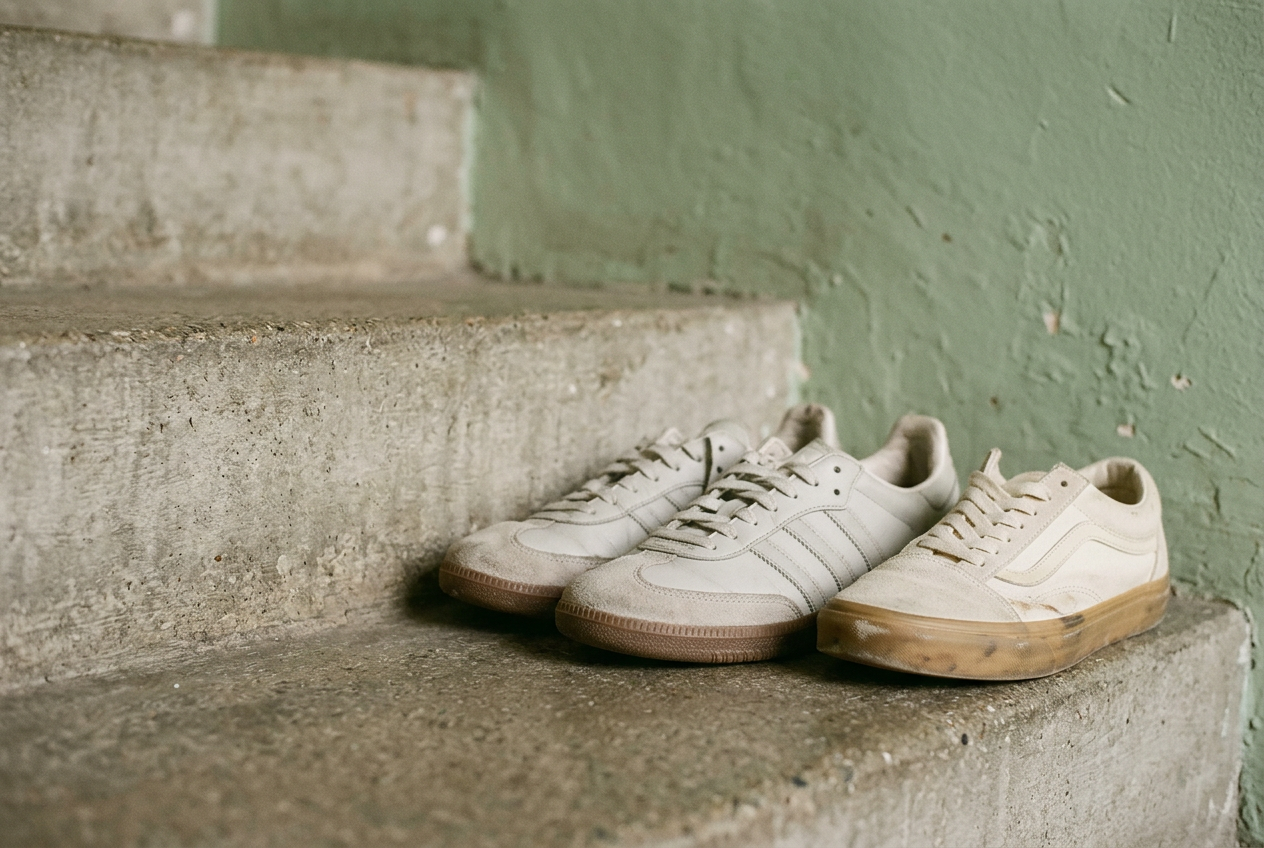
The adidas Samba OG in Cloud White, Core Black and Clear Granite is a useful control pair for this shift. Its leather upper is still recognizably white, but the gray suede toe and translucent brown gum outsole, meaning the rubber layer that meets the ground, interrupt the blankness. It does not look vintage-treated. It looks less vulnerable.
That distinction now runs through sneaker assortments well beyond the Samba. Cream has moved from a niche alternative to a recurring base color, while muted gray has returned through technical runners and retro running shapes from New Balance, ASICS and Nike. Gum soles, once strongly associated with indoor soccer shoes and skate styles, increasingly sit under lifestyle sneakers whose white-soled versions remain available beside them.
This is unisex coverage because the color and wear calculations apply across wardrobes, even when individual brands divide the same sneaker into men's and women's sizing. Check the size conversion rather than assuming two similarly named colorways fit differently.
The white sneaker is being edited, not erased
Optic white still has a job. Against dark trousers, a white sneaker makes a clean visual stop; with a minimal suit or a long skirt, it can look more deliberate than beige. Bright white also shows the intended shape of a simple court shoe clearly, especially when the upper and sole share one color.
Its problem is maintenance. A white rubber sidewall records black transfer marks quickly, while white mesh can hold gray road dust below the surface, where a wipe cannot reach it. Smooth leather is easier to clean, although repeated scrubbing can dull a coated finish and force dirt into the stitching. The shoe may remain structurally sound long after it has lost the crispness that justified buying white.
Softer neutrals reduce that gap between new and used. Cream leather makes small gray marks less abrupt, and a gum sole does not develop the dingy yellow cast that can appear on white rubber because brown was already part of the design. Muted gray mesh handles dust well, though pale gray suede can darken permanently if it meets oily pavement or a poorly aimed drop of salad dressing.
The Samba control pair shows why the transition feels gradual. Its white leather keeps the familiar clean-sneaker effect, while the gray suede absorbs the visual disturbance at the toe, where footwear tends to collect abrasion. The gum outsole then places a darker line against the ground. Nothing is artificially scraped, stained or yellowed, yet the shoe asks less of its owner than an all-white leather Samba with white sidewalls would.
The sole decides whether a neutral sneaker ages well
An upper can be beautifully judged and still sit on the wrong sole. Cream leather over bright white rubber creates a two-tone contrast that looks fresh in the box, but the sole soon becomes the maintenance point; once it turns gray at the edge, the upper may appear yellower by comparison. It is better than total white for hiding creases, not necessarily for hiding use.
Cream over medium gum is the most forgiving general combination. Choose gum with a brown or honey cast rather than very pale translucent rubber, which can show embedded dirt and uneven discoloration. Gum is not maintenance-free: its edge can collect dark marks, and some formulas become smoother with wear, reducing traction on wet polished floors. The benefit is visual tolerance, not immunity.
Gray over gray works especially well on layered running shoes. Mesh, synthetic overlays and suede panels catch light differently, so a range of related grays keeps the construction visible without placing every mark against a spotless ground. A mid-gray rubber edge usually conceals city dust better than white or near-black, since black soles can show pale dried mud and sidewalk residue with surprising clarity.
The harder combination is cream over a pre-yellowed or distressed sole. Some finishes imitate oxidation, the color change that occurs as materials age, even when the shoe is new. That can spare the owner from guarding the first mark, but it also locks the sneaker to a deliberate vintage effect. If the upper is cracked, roughened or unevenly stained at the factory, ordinary grime has nowhere visually quiet to go.
The result may look more costume-like as it wears, not less.
Return to the Samba: its gum outsole succeeds because the upper is not pretending to be old. The suede toe has texture, but the leather remains smooth and the black stripes stay sharp. One aging cue is enough.
Assortments give a clearer signal than resale asking prices
Brand and retailer grids now make the color change easy to see. Retro runners appear in stone, silver-gray and off-white combinations, while terrace shoes, the low-profile sneakers derived from soccer styles, often pair cream leather or suede with gum. Even where a model's best-known version remains white, adjacent colorways soften the base rather than replacing the silhouette.
That is evidence of supply and merchandising, not proof that shoppers have abandoned optic white. Retailers can place multiple neutral colorways online because brands are testing nearby shades, because seasonal palettes favor them, or because the same model needs enough variation to remain visible. A crowded beige search page reveals commitment from sellers. It does not reveal which shade customers kept after trying it at home.
Secondhand marketplaces require even more restraint. An asking price is what a seller hopes to receive, not a completed transaction. Visible sold listings are more useful, particularly when the same model, size range and condition can be compared, but sneaker resale pages often mix new pairs with worn ones and standard releases with scarce collaborations. Cream shoes may also look better in listing photographs after moderate wear, which could help them sell without producing a premium.
The practical signal is liquidity rather than hype: whether ordinary neutral colorways appear repeatedly among completed sales without needing to be unworn. That pattern can support the case that buyers accept visible use on cream, gray and gum combinations. It still cannot isolate color from model popularity, size or price. The Samba sells as a Samba before it sells as an argument for gum rubber.
For now, current assortments make the stronger case. Secondhand pages suggest that softer neutrals remain presentable after wear, but they do not establish a clean transfer of demand away from white.
Match the material to the dirt you encounter
For a mostly paved commute, cream smooth leather with a gum sole is the low-effort choice. Wipe the upper with a damp cloth, then use a separate cloth on the sole edge so that dark rubber residue does not move onto the leather. Avoid soaking the suede toe on a shoe like the Samba; brush it dry once dirt has dried, using strokes in one direction to lift the nap, which is the raised surface of the suede.
For frequent rain, muted gray synthetic mesh and gray rubber make more sense than cream suede. Mesh can still trap fine dirt, but an evenly gray upper is less likely to display a tide mark after drying. Check the care instructions before washing. Glued sneakers can distort or separate under machine heat, and aggressive detergent may leave pale residue inside darker mesh.
Cream canvas is less forgiving than its color suggests. It absorbs spills, develops darker flex lines and can dry unevenly after spot cleaning. Anyone choosing it for easy wear should accept occasional full-upper cleaning and enough drying time to preserve the shape. Cream leather costs more in many comparable models, but it usually asks for less labor.
Gray suede sits between those options. It masks dry dust well and looks richer than gray mesh, yet water can flatten its texture and oil is difficult to remove without changing the color. A protective spray may help, provided it is suitable for suede and tested on a hidden area first, but it does not turn suede into rain footwear.
The buy is narrower than the trend
A softer neutral is worth buying when it replaces a white sneaker that spends too much time being cleaned or left unworn. Look for a cream or mid-gray upper, a sole edge darker than the upper, and no factory distressing. The best version should look finished on day one while leaving room for ordinary wear.
Skip a duplicate purchase if a white leather pair already works for your routine. Gum does not improve cushioning, fit or durability by itself, and a fashionable color combination cannot rescue a narrow toe box or a flat removable sockliner. Try the shoe with the socks you use most, then check whether the heel lifts and whether the forefoot creases painfully across the toes.
The Samba control pair lands in the middle. Its gray toe and gum sole conceal the first stage of wear, but the white leather still needs attention, and the low-profile shape offers less underfoot cushioning than a modern running-derived sneaker. It is a good demonstration of the color shift, not a universal answer.
Questions people ask
Do cream sneakers stay cleaner than white sneakers?
They do not stay cleaner, but moderate dust and small scuffs create less contrast against cream. Smooth cream leather is the easiest version to maintain; cream canvas and suede can absorb stains that wiping will not remove, so the material matters as much as the color.
Which sneaker sole color hides wear best?
Medium gum and mid-gray sole edges usually hide routine pavement dust better than bright white, very pale translucent rubber or solid black. Gum can still show dark transfer marks, while black reveals dried pale dirt. A sole slightly darker than the upper tends to age most quietly.
Are gray sneakers more versatile than white sneakers?
Gray works well with denim, black trousers and other muted colors, and it demands less visual upkeep than optic white. White still creates a sharper contrast with tailoring and dark hems. Choose gray for frequent casual wear; keep white when the clean break is part of the outfit.
Do neutral sneakers hold their resale value better?
Color alone does not establish resale value. Model demand, size, condition and scarcity can outweigh the difference between white and cream. Softer neutrals may photograph more favorably after wear, but compare completed sales for the exact model rather than relying on asking prices or broad color trends.
One update a day
Today's fashion update, in your inbox
One fashion update each morning — no hype, no filler, just pieces worth wearing.