Cork Sandals Get Dark. Too Much Sealant Makes Them Worse.
Exposed cork absorbs summer wear, and its color records the evidence. A thin edge seal can help, but a thick coat may leave a ridge that rubs.
October 22, 2026 · 8 min read
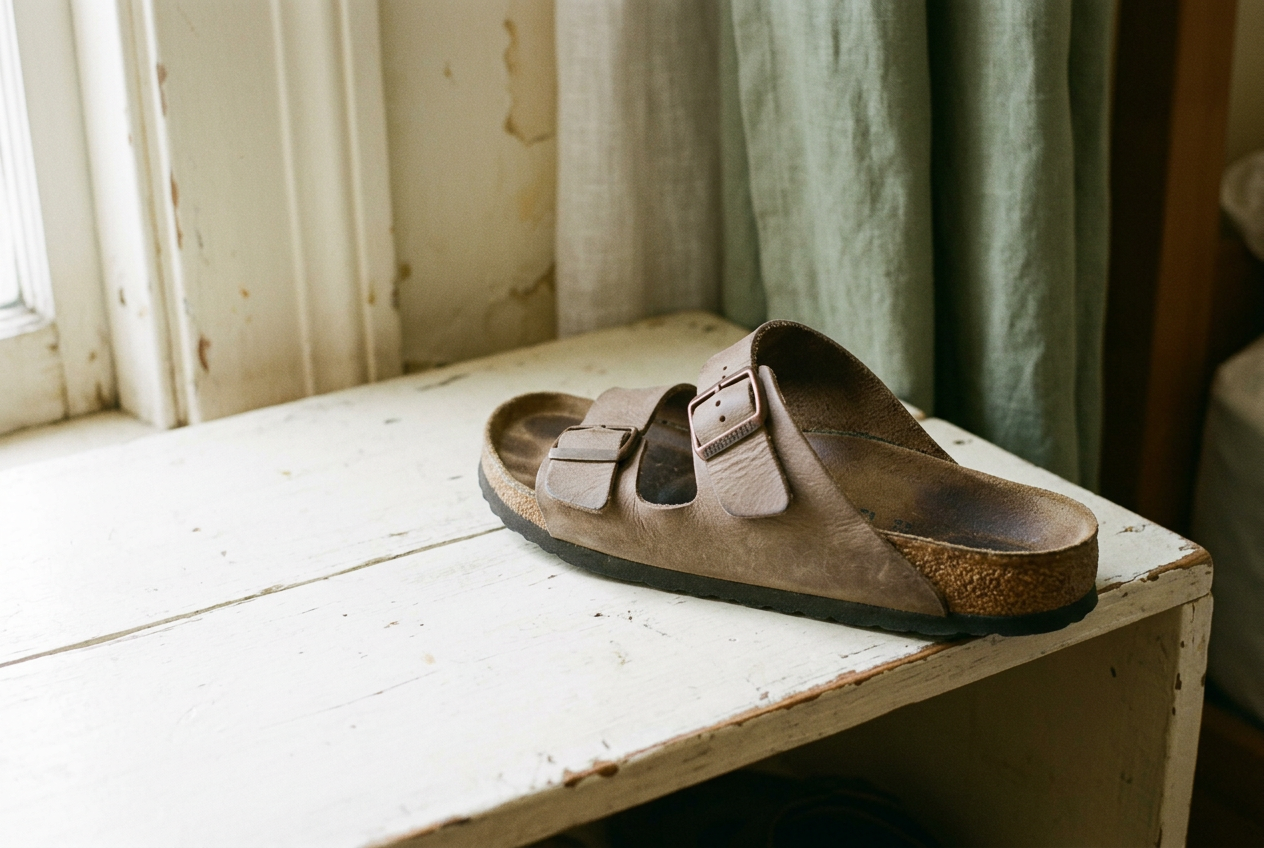
The working pair for this guide is a Birkenstock Arizona with a suede-lined cork-latex footbed, worn barefoot for ordinary hot-weather walking. It is a useful case because the construction leaves a broad strip of cork visible around the side, right where splashed water and damp fingers tend to find it.
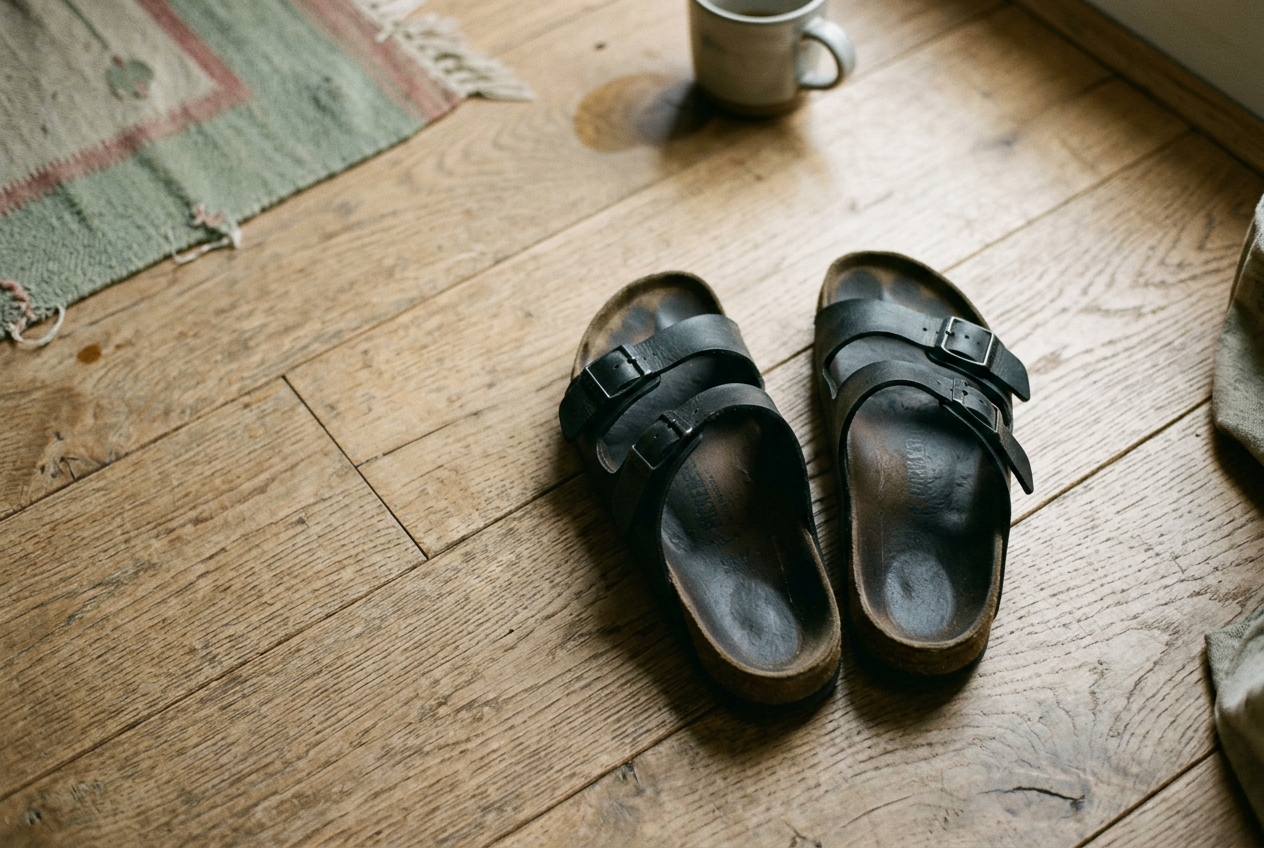
After summer wear, the first change is usually visual. The pale cork edge becomes patchy and deeper brown, while the suede under the heel and forefoot takes on darker prints from perspiration and skin oil. The sandal has not necessarily failed. It has started keeping records.
This is unisex footwear advice. The same material behavior applies across men’s and women’s sizing, though fit affects where the evidence appears: a heel sitting against the raised rim concentrates moisture there, while a foot sliding forward can polish and darken the toe area faster.
The cork is exposed, but the foot usually sits on suede
A molded cork-latex footbed is ground cork bound with latex and shaped into the sandal’s supportive base. On the Arizona, a suede liner covers the top, with jute layers and cork-latex below it; the visible brown band around the perimeter is the exposed edge that needs occasional sealing.
That distinction matters. Sweat lands mainly on the suede, not directly on the cork, although moisture can migrate through the liner or enter around the perimeter. Rain, sink splashes, wet grass, and an enthusiastic hose are more direct routes into the exposed edge.
Cork is cellular and somewhat porous. An intact factory finish slows moisture entry, but repeated flexing and abrasion wear that surface down, particularly near the ball of the foot and heel where the sandal bends or knocks against pavement. Once the edge looks dry and matte rather than lightly finished, it takes up water more readily.
The suede develops its own darkening. Perspiration contains water and salts, while skin contributes oil; together they flatten the nap, meaning the fine raised fibers on suede, and produce the familiar footprint. Cleaning can remove loose grime and reduce odor, but it cannot promise a return to the untouched beige that existed in the box. Anyone selling that expectation is selling a second disappointment with the first sandal.
Darkening is not the same as damage
On the Arizona I evaluated, the most obvious change was a darker heel cup and a less even cork edge. The footbed still felt firm, the edge did not crumble under a fingertip, and no gap had opened between the cork and outsole. Those are cosmetic changes, not a repair emergency.
Damage looks different. Cork that feels rough and sheds small pieces, a perimeter with visible cracks, or layers beginning to separate deserves attention. Sealant may slow further exposure when the cork is merely dry, but it will not rebuild missing material or close a structural split. A shoe repair shop is the sensible next stop when the edge is already breaking away.
Water can also alter the sandal without producing instant drama. A soaked footbed may feel stiff after drying, suede can turn coarse, and adhesives may be stressed by repeated saturation, which is why Birkenstock’s public care guidance advises against immersing its shoes and against drying them in direct heat. Cork sandals tolerate feet. They are less keen on becoming boats.
Color alone remains a poor test. Look at texture and adhesion instead. If the edge is darker but smooth and stable, let it be darker.
Seal the edge, not the whole footbed
Cork sealant is a flexible coating intended to reduce moisture loss and water penetration at the exposed cork edge. Birkenstock sells a Cork Sealer and advises applying it when the cork’s surface no longer appears shiny; comparable cork-footbed brands may give their own product instructions, which should take priority if the materials differ.
The useful word is thin.
Start with sandals that are dry and free of loose grit. Brush the exposed cork gently with a dry, soft brush or wipe it with a barely damp cloth, avoiding saturation, then wait until no cool or damp patches remain. Open the straps so the full perimeter is visible and place the pair on a level surface.
Apply a narrow coat to exposed cork only, using the applicator supplied with the product or a small brush reserved for this job. Keep it off the suede liner, leather uppers, outsole, and hardware. The goal is an even film that follows the existing edge, not a new architectural feature.
Pay particular attention near the heel cup and toe rim, where sealant can creep onto the top edge. If a wet bead gathers there, remove the excess before it dries. Let the coating cure according to the product label before wearing the sandals; a surface that feels tacky is still busy and should not be introduced to dust, socks, or feet.
Do not substitute household varnish, wood glue, or a rigid craft coating. A sandal footbed flexes while walking, and a product designed for furniture may crack, discolor, or become harder than the cork beneath it.
More sealant is not more protection
Overapplication creates the care problem people notice with their skin rather than their eyes. Several coats, or one heavy coat that pools along the upper perimeter, can dry into a hard ridge beside the heel or forefoot. That edge may press or rub precisely where the molded footbed is supposed to cradle the foot.
The Arizona makes this risk easy to understand because its raised rim sits close to the skin. A smooth, thinly sealed vertical edge stays out of the conversation, while a glossy lip at the top can catch the heel during each step. Warm skin and a slightly damp foot make the disagreement louder.
A thick layer may also obscure the cork’s condition. When the coating chips, the exposed spots take moisture differently from the heavily covered areas, and adding another coat without removing loose material builds more unevenness. Sealant is maintenance, not armor.
If a dried ridge has formed, stop wearing the sandal as soon as it begins rubbing. Do not attack the area with a power sander or cut toward the suede with a blade. A shoe repairer can reduce an uneven coating with better control, particularly when the ridge sits against leather or the footbed has already begun separating. The cheaper choice is still the first thin coat.
Dry a wet cork sandal without cooking it
Take the sandals off rather than walking them dry. Continued flexing loads the cork and adhesive while both are damp, and the wet suede will keep dragging against the same areas of skin.
Blot surface water with an absorbent cloth. Do not scrub the suede, because wet fibers mark easily and aggressive rubbing can leave a polished patch. Unfasten adjustable straps to improve airflow, then set the sandals flat in a ventilated room away from direct sun, radiators, hair dryers, and the heat trapped inside a parked car.
Heat is tempting because it produces fast surface dryness, but fast is not the same as evenly dry. High temperatures can stress adhesive, stiffen leather, and dry the exposed cork unevenly, while the lower layers may still hold moisture. Leave the pair alone until the footbed no longer feels cool or damp, including at the heel cup and under the straps.
Do not apply cork sealant while moisture remains inside the edge. The coating can trap dampness, and its appearance will not tell you whether the deeper footbed has dried. Once the pair is dry, inspect the edge for roughness or loss of finish; reseal only if the cork needs it, not because rain occurred.
For storage, choose a dry shelf with airflow rather than a sealed plastic bin in a humid closet. Keep the sandals flat, buckle the straps loosely enough to preserve their shape, and clear away grit before it settles into the suede. A breathable shoe bag can limit dust during the off-season, but the pair must be dry before it goes in.
Decide whether the patina bothers you before buying
Exposed cork is a poor choice for anyone who wants a pale, uniform footbed after a summer of barefoot wear. The material’s appeal is its shaped support and repairable construction in models where replacement soles or footbeds are available, not an ability to remain visually untouched by human feet.
A synthetic molded footbed is the easier alternative for pool edges, frequent downpours, and trips where the sandals will be rinsed. It may wipe clean faster, although it can feel hotter or slicker with sweat and will not reproduce the same cork-footbed feel. For regular dry-weather walking, the Arizona’s exposed edge is manageable if its changing color does not register as a defect.
The practical buying check happens at the heel. Stand with your weight centered and confirm that the foot sits inside the raised rim rather than on top of it, since pressure against that border becomes less charming after the skin warms. Leave enough room for the toes to spread without gripping, and adjust the straps so the foot is held without being pinned to the suede.
Then accept the maintenance bargain: air-dry after wet wear, inspect the cork edge rather than sealing on a schedule, and use less product than the urge to be thorough suggests.
Questions people ask
Can sweat ruin a cork footbed?
Ordinary perspiration usually darkens the suede liner before it causes structural trouble. Repeated saturation, poor drying, or a worn exposed edge raises the risk of stiffness, odor, crumbling, and separation. Let the sandals dry between wears and judge the cork by its texture and stability, not by whether it remains pale.
Should
I seal a new pair of cork sandals immediately?
Usually not if the exposed cork still has an even factory finish. Birkenstock advises using cork sealer when the edge no longer looks shiny. Follow the maker’s instructions for another brand, since applying unnecessary coats can build a hard perimeter instead of improving useful protection.
Can dark cork or a dark footprint be made light again?
Cleaning may lift surface dirt and brushing may raise flattened suede, but neither step guarantees the original color. Sweat, oil, water, and wear can change the material permanently. Avoid aggressive cleaners or soaking in pursuit of beige; a cosmetically darker, stable footbed is preferable to a pale one damaged by treatment.
How long should wet cork sandals dry before I wear them?
Drying time depends on how wet the footbed became and on room conditions, so the clock is less useful than touch. Wait until the suede, heel cup, exposed edge, and areas beneath the straps feel dry rather than cool or damp. Keep the pair away from direct heat while waiting.
One update a day
Today's fashion update, in your inbox
One fashion update each morning — no hype, no filler, just pieces worth wearing.