Clear Jelly Sandals Look Worn First, but Heat Is Complicated
Clear PVC exposes haze and scratches that opaque jelly sandals can conceal. Neither finish guarantees a cooler foot, and some ugly marks are cosmetic rather than structural.
September 21, 2026 · 7 min read
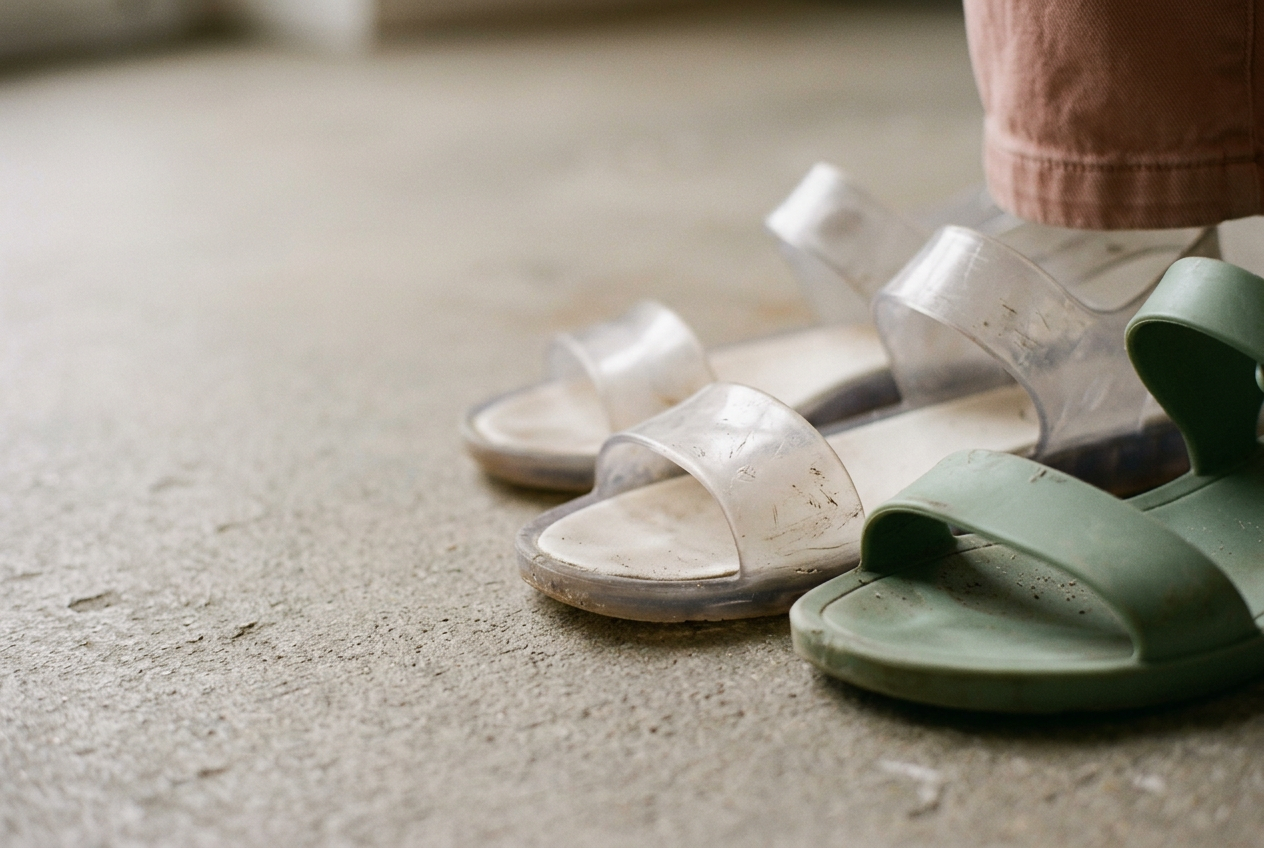
The revealing test case is a clear jelly sandal with a cloudy line across the forefoot strap after a hot day. It can look doomed under indoor lighting, especially next to an opaque version whose matching strap still appears uniform, but appearance alone does not tell us whether either shoe has weakened.
Jelly sandals are commonly molded from PVC, or polyvinyl chloride, softened with additives so the finished shoe bends rather than behaving like plumbing. Exact formulas vary, and brands do not always publish the proportion or identity of those additives. That limits any sweeping claim about clear and opaque PVC, even when two shoes look nearly identical on a product page.
The useful verdict is narrower. Clear jelly footwear tends to show cosmetic aging sooner because scratches, trapped grime, stress marks, and changes in transparency remain visible through the material. Opaque PVC can conceal much of the same surface wear, particularly in pale or mottled colors, although dark glossy finishes make dust and pale scratches rather obvious.
Neither result proves that the shoe has failed.
The fair way to compare two jelly sandals
A meaningful side-by-side comparison requires more than one clear shoe and one colored shoe. The sandals need the same upper coverage, strap thickness, sole shape, finish, and fit, preferably from the same product line, because a wide molded strap creates a different foot climate from two thin straps regardless of color.
Both pairs then need comparable use: the same route, similar direct-sun exposure, bare feet, and enough alternating wear that weather does not decide the result. A black opaque slide worn at midday cannot be fairly compared with a clear fisherman sandal worn after dinner. That would test the clock and the pattern more than the PVC.
Fit matters throughout. A jelly upper that presses firmly across the forefoot creates more contact, traps more sweat, and rubs the same point repeatedly; the looser comparison shoe may feel cooler even if its material reaches a similar temperature. This advice is unisex because PVC behaves the same across wardrobes, but buyers should follow foot measurements rather than gender labels when a molded style is offered in different size runs.
For the cloudy clear strap, the first useful check is location. A hazy patch exactly where the sandal bends or presses against a toe is probably wear-related. General milkiness across the whole upper, including untouched sections, points toward a material or storage change rather than ordinary friction.
Clear PVC shows the paperwork
Transparency makes small damage easy to inspect and difficult to ignore. Fine scratches scatter light, which reduces clarity without cutting deeply into the strap, while grime around molded edges can make the whole shoe seem gray. The clear sandal looks older first because it presents the evidence from every angle.
Stress whitening, meaning a pale mark created where plastic has been repeatedly bent or strained, often appears near a flex point or buckle opening. A narrow white line that remains flexible and does not grow during wear is usually a cosmetic warning rather than an immediate retirement notice. A line that opens into a crack, feels sharp when the strap bends, or lengthens from an attachment point is structural damage.
Opaque PVC edits this view. Pigment can disguise interior haze and minor stress marks, so the shoe keeps its color while wear accumulates underneath; that is cosmetically convenient, though it makes inspection more dependent on touch. Bend the strap gently under good light and check the edges, molded junctions, and areas around hardware instead of trusting the uninterrupted color.
Surface finish also changes the result. Matte opaque jelly hides fingerprints and shallow scuffs better than glossy PVC, whereas a highly polished black or saturated sandal can show pale abrasion with surprising enthusiasm. Clear is not always the messiest-looking option. It is merely less able to keep a secret.
Transparency does not settle the heat question
A dark pigment may absorb more solar energy than a pale or clear formulation, but visible color does not disclose the full recipe. Fillers, stabilizers, surface finish, material thickness, and the amount of foot covered can all change how a sandal heats and how quickly that heat reaches skin.
Clear PVC also introduces a separate comfort problem: moisture remains visible. Sweat trapped beneath a broad transparent strap can look dramatic, although the same dampness may be present beneath an opaque upper. The practical concern is not the view. Wet skin slides and softens, making pressure points more likely to rub.
Direct sun can warm any jelly sandal enough to become unpleasant, especially when it has been left on pavement, beside a pool, or inside a parked car. Brand care guidance for PVC footwear commonly warns against high heat, prolonged direct sunlight, or harsh cleaners, and those cautions deserve more weight than a marketing color name. Heat can soften the shoe temporarily, alter fit, and encourage deformation if the sandal is stored under pressure while warm.
During wear, compare skin contact rather than touching the exposed top of each strap. A black upper may feel hotter to a hand while the clear shoe still creates more discomfort because it fits tightly and vents poorly. The better summer choice is usually the sandal with less continuous coverage, enough room for the foot to swell, and no hard molded ridge over a joint.
That cloudy clear strap remains useful here. If it becomes clearer after washing and drying, the culprit was probably residue or moisture. If haze stays at the bend but the strap returns to its original shape after cooling, the change is mostly cosmetic. If the upper remains stretched, warped, or unusually soft once it has cooled, heat has affected function.
Scuffs need sorting, not panic
Start with water, a soft cloth, and the care instructions supplied for the shoe. Dirt can sit inside scratches and exaggerate them, particularly on clear PVC, but aggressive rubbing may replace one dirty mark with a wider dull patch. Solvents, alcohol-heavy cleaners, abrasive powders, and improvised polishing compounds can alter the finish or interact with additives, so this is not the moment for household chemistry.
After cleaning, run a fingertip across the mark. A scuff that changes the shine without catching the nail is surface wear. A groove with a raised edge has removed or displaced material, although it may remain wearable if it sits away from a high-stress junction. Any split near a strap anchor deserves attention because each step loads that area.
Tackiness is another category. Plasticizer migration, meaning softened additives moving toward the PVC surface, can leave an older shoe sticky or oily even after gentle cleaning. Persistent tackiness, a strong new odor, or residue that quickly returns suggests material degradation rather than the honorable acquisition of character. Retire the shoe if the upper also feels weaker, stretches unpredictably, or starts separating from the sole.
Opaque color can delay the visual diagnosis, which is why a tidy-looking pair still needs a bend and touch check at the start of warm weather. Clear PVC may offend sooner, but it gives the owner more information.
The buying decision
Choose clear jelly sandals if the transparent look matters enough to accept visible condensation, grime at the edges, and fine scratches. Inspect molded joins before wearing, avoid a fit that compresses the forefoot, and expect the finish to lose some showroom clarity before the shoe loses function.
Choose opaque PVC when cosmetic longevity matters more than easy inspection. Mid-tone, matte, or lightly textured finishes are usually more forgiving than either crystal-clear plastic or very dark gloss, though construction still outranks color. A narrow strap that cuts across a joint will remain irritating in the most strategic shade available.
Price does not resolve the chemistry unless the brand provides useful material and care information. Designer pricing can buy a distinctive mold, hardware, or finish, but it does not make PVC immune to heat, abrasion, or aging. Check whether the product page names the material, gives storage instructions, and explains cleaning; a vague “jelly” label tells the foot very little.
The cloudy forefoot strap, then, is not automatically a failed strap. Its verdict depends on whether it still flexes evenly, returns to shape, and stays intact at the sole. Clear PVC loses the beauty contest earlier. Opaque PVC may only postpone the inspection.
Questions people ask
Do clear jelly sandals get hotter than opaque ones?
Not by default. Dark pigments can absorb more solar energy, but thickness, additives, foot coverage, ventilation, and fit also influence how hot a sandal feels. A broad clear strap may feel worse than a narrow opaque one because it traps moisture and maintains more skin contact.
Does cloudy
PVC mean a jelly sandal is breaking down?
Clouding can come from surface scratches, residue, moisture, or stress at a flex point. It becomes more concerning when the area also cracks, stays deformed after cooling, turns persistently sticky, or feels weaker than the surrounding material.
Can scuffs be removed from clear jelly shoes?
Surface dirt may come away with water, a soft cloth, and the brand’s approved care method, but scratches within the finish usually remain visible. Avoid solvents and abrasive polishing methods, which can spread dullness or change the PVC surface.
Which color of jelly sandal looks new longest?
An opaque mid-tone with a matte or lightly textured finish generally disguises dust and shallow abrasion better than clear PVC or dark high gloss. It still needs inspection at strap anchors and flex points, since hidden wear does not become harmless wear.
One update a day
Today's fashion update, in your inbox
One fashion update each morning — no hype, no filler, just pieces worth wearing.