Boat Shoes Are Back, but Check the Sole Before You Buy
The revived boat shoe has moved beyond prep styling. Razor-cut rubber, an unlined upper and adjustable lacing tell you whether a pair can handle damp walking or is mainly there for the shape.
September 13, 2026 · 7 min read
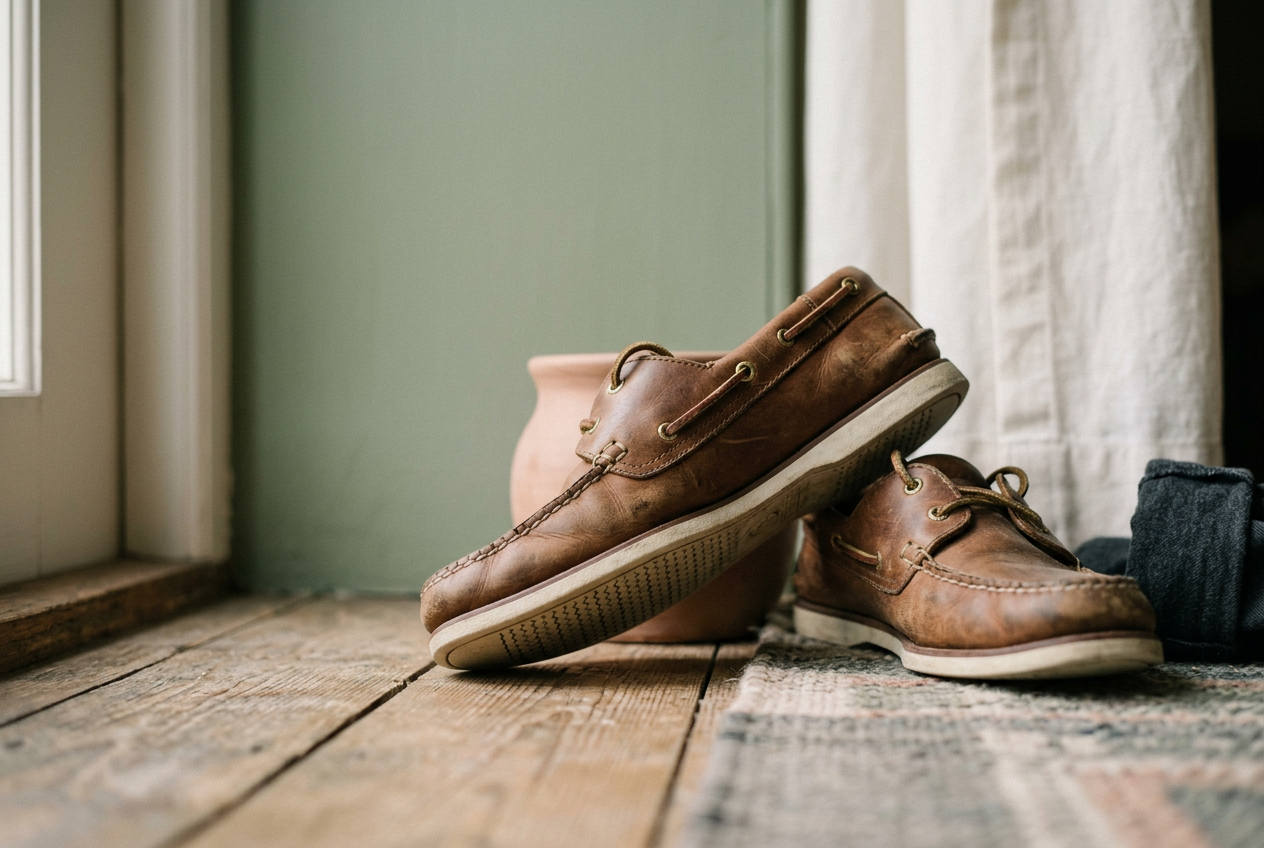
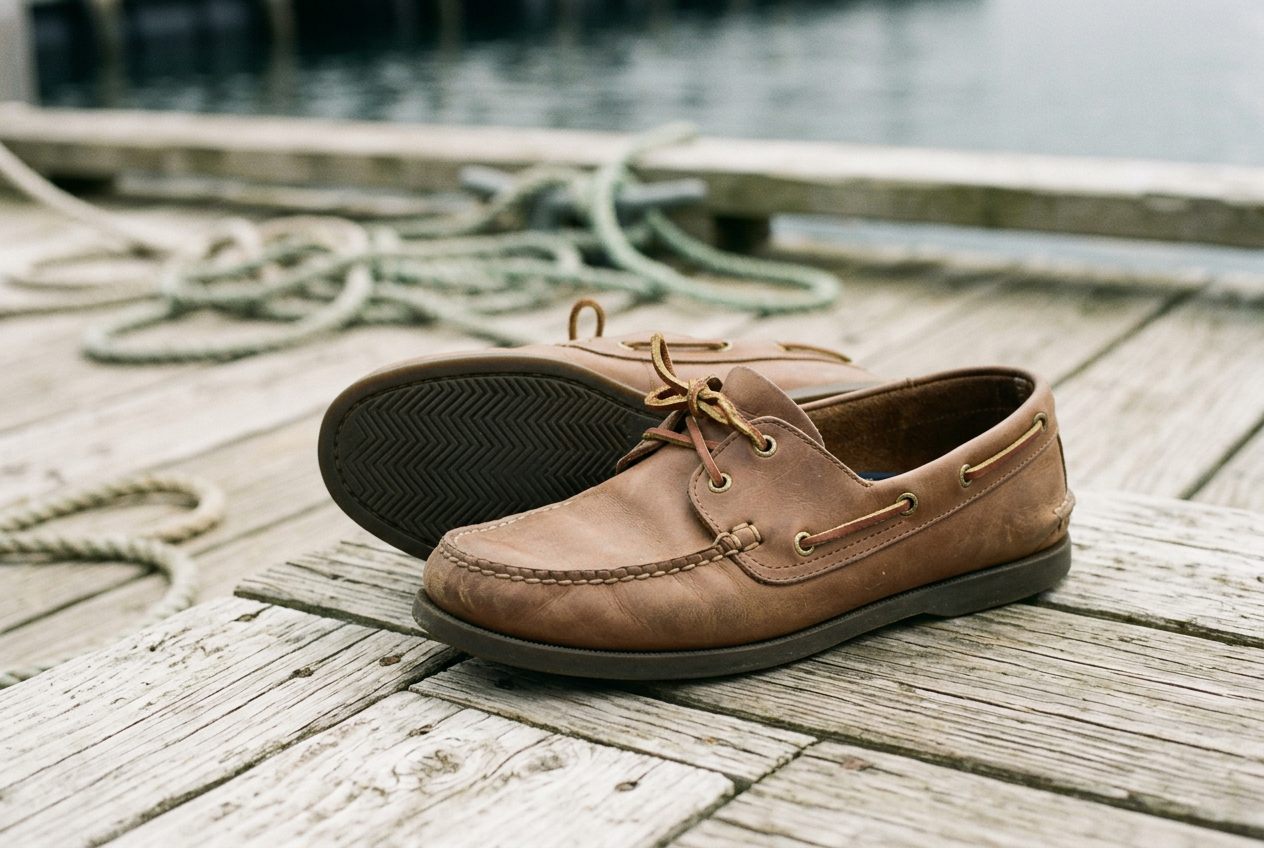
The useful test for this revival is the Sperry Authentic Original 2-Eye, the familiar low leather shoe with rawhide lacing around the collar and the brand’s Wave-Siping underfoot. Wear that shape sockless with loose dark trousers and a plain knit, and it no longer reads as a costume from the yacht club. Put a thin fashion sole under the same upper, however, and the practical case changes.
This is unisex advice, even though boat shoes are often split into women’s and men’s size runs. The construction questions stay the same across wardrobes: whether the rubber has functional cuts, whether the upper is lined, whether the collar can be adjusted and whether the shoe is expected to tolerate more than a dry walk to dinner.
The sole is the first dividing line
Siping means narrow cuts made across a rubber outsole so that its surface can flex and create more gripping edges on a wet, hard surface. Sperry calls its version Wave-Siping, while Sebago describes the Portland Docksides outsole as non-slip, non-marking and siped. Those claims give a shopper something more useful than a photograph of a wavy tread.
Look closely at the product description before enlarging the outsole image. A molded zigzag pattern can resemble siping while remaining a shallow decorative texture, and a page that says only “rubber sole” or “textured outsole” has not promised wet-surface performance. That pair may still be comfortable on dry sidewalks. It should be bought as a loafer-like fashion shoe, not as deck-derived footwear.
The distinction matters because the revived silhouette is appearing with several sole treatments. Some retain a low white rubber deck sole. Others use chunky lugged rubber, meaning an outsole built with raised blocks for traction, which makes the shoe heavier and more outdoors-oriented. Thin, nearly flat soles preserve the neat profile seen under wide pants, but they leave less material between the foot and the pavement and may offer little grip once the ground is damp.
Return to the Authentic Original 2-Eye. Its named siping and non-marking rubber are evidence of a functional lineage, but they do not turn an open, low-cut leather shoe into rain footwear. Water can enter around the topline, through the tongue opening and around hand-sewn seams. Siping helps where rubber meets a smooth wet surface; it does not keep socks dry, clear deep puddles or provide the bite of a lug sole on mud.
That limit is easy to miss. Boat shoes were designed around wet decks, a specific surface problem, while current pairs are more likely to meet polished station floors, slick restaurant entrances and hot pavement. A properly siped sole has a plausible advantage in the first two places. Cushioning and sole thickness matter more in the third.
Unlined leather changes the first week
An unlined upper, meaning there is no separate fabric or leather layer behind the outer leather, can feel direct and supple against the foot. It also reveals seams and edges that a lining would cover. This is part of the appeal of traditional moccasin construction, where leather wraps under and around the foot before being joined at the top, but it makes the sockless try-on more important.
Brand documentation should say “unlined” plainly. Do not infer it from “hand-sewn,” “moccasin” or “premium leather,” since a hand-sewn shoe can still have a lining, a padded collar or a fabric-backed section. A leather sock lining refers to the surface under the foot, not necessarily the inside of the upper. Those details are often blurred in retail copy, although they behave differently in wear.
Unlined full-grain leather, the outer layer of hide with its natural grain retained, tends to soften and shape around the foot. The tradeoff is less structure. The quarters may relax, the heel can become easier to lift out of, and a pale unlined interior may transfer color or leave leather residue on a bare foot when damp. None of that makes it defective.
It does mean that buying a loose pair in expectation of comfort is usually the wrong move.
A lined boat shoe feels more finished on day one and may hold its outline longer, especially when the lining covers rough seam allowances. It can also retain more heat. Synthetic lining is the detail to inspect if the plan is repeated sockless wear, since softness at the fitting bench says little about how the material will feel after perspiration and a long walk.
The Sperry case is useful here because the recognizable rawhide lacing and low collar can distract from what the product page does not say. Check the exact version rather than assuming every Authentic Original is built identically; materials, footbeds and lining details can vary across editions. The name establishes the shape. The specification establishes the shoe.
The collar lace can correct only so much
Traditional 360-degree lacing runs around the heel and sides before tying over the tongue. It can draw the topline closer and reduce mild heel movement, which is valuable in a low shoe worn without socks. It cannot make a wide forefoot narrow, add volume over a low instep or rescue a pair that is a half size too long.
Fit the shoe with the sock setup intended for regular wear. For sockless use, the heel should stay mostly seated during an ordinary stride, while the toes need enough room to lie flat without pressing the stitched apron at the front. A small amount of movement can settle as the leather bends. Repeated heel lift from the first steps is more likely to worsen as an unlined upper softens.
Width deserves more attention than the size number. The moccasin shape often looks broad at the toe, yet the lacing and side walls can press across a high instep, while a narrow heel may still slip. Where a brand offers widths, use them rather than sizing down to force the heel into place. Shortening the shoe can put toes against the front without fixing the volume mismatch behind them.
For the Authentic Original 2-Eye worn with loose trousers, the best fit is close enough to keep the heel in place without cinching the rawhide lace into the foot. If the knot must be hauled tight, the clean styling line is already hiding a fit problem. A thin no-show sock can reduce friction, but it also changes volume and may show above the low sides.
Read the product page in the right order
Start at the outsole description. Look for “siped,” “razor-cut” or a named wet-grip construction, then check whether the rubber is described as non-marking. Non-marking refers to the sole’s tendency not to leave dark streaks on a floor; it is not a grip rating, though the two claims often appear together on deck-oriented shoes.
Move to the upper. The useful words are the leather type, lining material and any explicit statement that the shoe is unlined. “Leather” alone leaves open whether the surface is full-grain, corrected or coated, while “vegan leather” may refer to several synthetic constructions whose heat, creasing and water behavior differ. If the page gives no further detail, price should not be treated as proof of quality.
Then inspect the footbed. A removable cushioned insert is easier to dry or replace, though it may make the shoe feel more sneaker-like and can crowd a high-volume foot. A thin fixed leather footbed preserves the traditional feel but offers less shock absorption for a day on concrete. The low profile that looks right under a long trouser hem is also the reason some versions feel flat after several hours.
This order separates the functional shoe from the decorative look-alike without pretending that the functional one is always preferable. A dry-weather buyer who wants the outline under a skirt or washed jeans may be better served by a softer, lighter fashion version, especially if it costs below the usual price of a good leather sneaker. Someone expecting regular damp walks should budget around good-sneaker territory or above and demand clear material claims in return.
I would skip the premium if a costly pair lists only a leather upper and rubber outsole. The extra money may be paying for finishing, branding or a particular color, but the documentation has not made a practical case for grip or long wear.
The styling shift favors quieter leather
The fading part of boat-shoe styling is the full prep package. The shape looks newer with long, fluid trousers, straight jeans that fall onto the vamp or shorts and a restrained shirt, particularly when the leather is dark brown, oxblood or weathered tan rather than sharply contrasted with bright laces.
That does not require disguising the shoe. The stitched apron and collar lace remain visible, but the rest of the outfit can avoid repeating every nautical cue. The Authentic Original 2-Eye works as the anchor because its sole stays low and its upper has enough detail to register beneath a wider hem. A chunky lugged version changes the balance and asks for heavier fabric.
Care still decides whether the relaxed effect looks considered. Let damp leather air-dry away from direct heat, follow the maker’s cleaner and conditioner guidance, and loosen the laces enough to open the shoe rather than crushing the heel counter underfoot. Conditioning may darken some leather, so test a concealed area first. Siped rubber also needs its narrow cuts cleared of packed dirt before those edges can do useful work.
Whether the boat shoe survives beyond this cycle is less certain. The functional version has reasons to remain in a wardrobe; the decorative one depends more heavily on the silhouette staying current.
Questions people ask
Are siped boat shoes safe in heavy rain?
Siping can improve contact on a damp, smooth surface, but a low leather upper remains open around the foot and may admit water through seams. For heavy rain, choose footwear with a water-resistant upper, a more protective tongue and deeper tread rather than relying on a deck sole.
Should boat shoes fit tightly at first?
They should feel close through the heel and sides, especially if the upper is unlined, but toes should not touch the front or curl under the stitched vamp. Leather may soften with wear; length does not change. Persistent heel lift or instep pressure points to the wrong size, width or volume.
Can boat shoes be worn for all-day walking?
Some can, although a thin deck sole and fixed leather footbed may feel flat on concrete. Check for cushioning, enough forefoot room and a heel that stays seated. If the day involves several miles, a supportive sneaker or a boat-shoe hybrid with a thicker midsole is the more dependable choice.
How can I spot a decorative boat shoe?
Read the specification rather than judging the upper. A decorative version may have the collar lace and stitched apron but list only a generic rubber or synthetic outsole, with no siping or wet-grip claim. Treat it as a dry-weather styling shoe unless the brand documents more.
One update a day
Today's fashion update, in your inbox
One fashion update each morning — no hype, no filler, just pieces worth wearing.