Before Blaming the Nose Pads, Check the Sunglasses Bridge
A sliding frame often has a bridge or balance problem that cleaner nose pads cannot fix. These checks separate an adjustable fit quirk from a pair worth returning.
October 26, 2026 · 7 min read
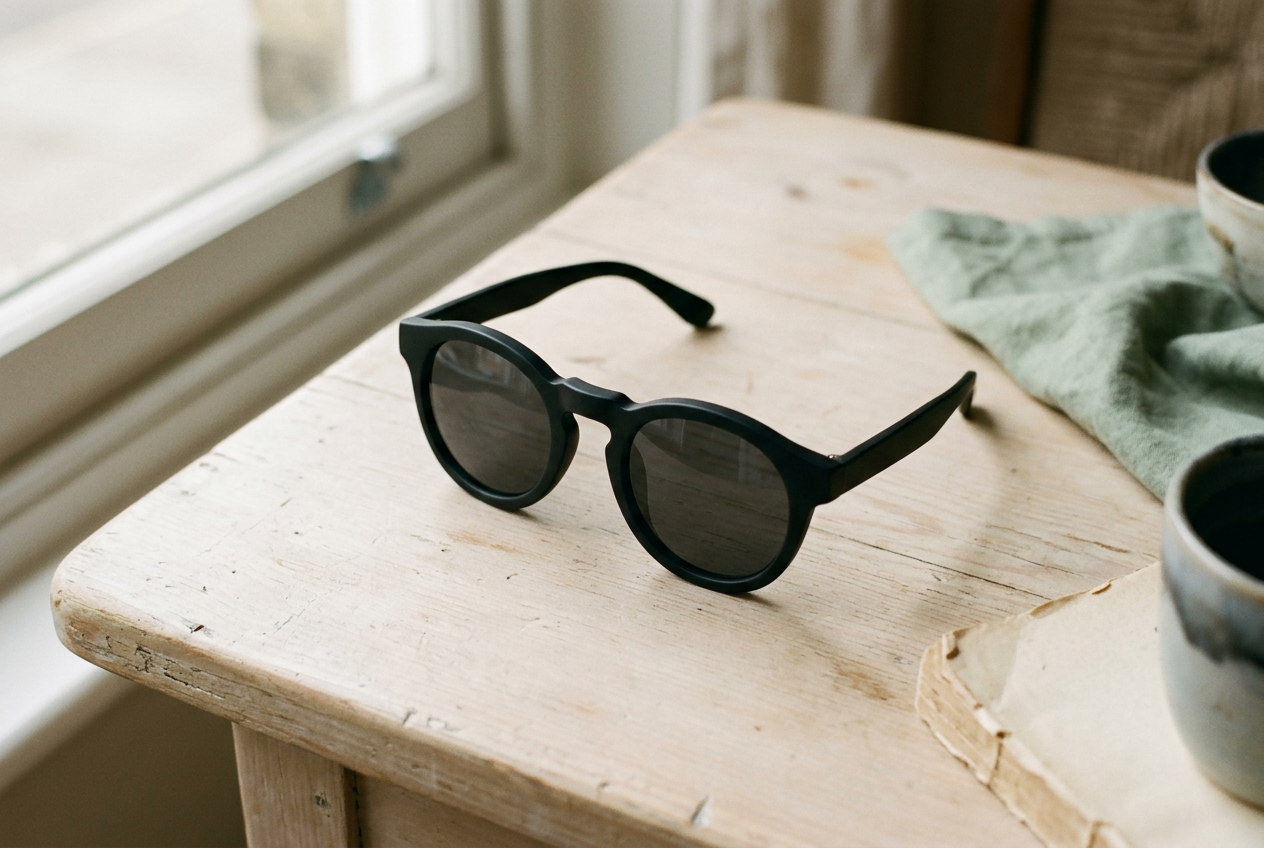
The test pair was a thick black acetate frame with oversized gray lenses and molded nose rests. It looked secure when first pressed into place. Within ten minutes, the top rim dropped toward my eyelashes; looking down at a phone sent it farther. After a week, wiping the nose rests had made the frame cleaner, but no more stable.
That distinction matters. Oil and sunscreen can reduce grip, yet a frame that needs freshly scrubbed skin to stay up is usually exposing a fit problem. In this case, the bridge, meaning the section of frame that sits across the nose, was making contact only near its upper edge. The lower portion barely touched.
The glasses were balancing on a narrow point instead of distributing their weight.
The following checks apply across wardrobes and face shapes, so this is unisex fit advice. The useful measurement is not whether a frame is labeled men's or women's. It is whether its geometry matches the wearer.
Start with bridge contact
Clean the bridge and nose rests with lukewarm water and a small amount of mild dish soap, keeping any product recommended against by the frame maker away from coated lenses. Dry them with a clean microfiber cloth. This removes the easiest variable without pretending that oil caused every slip.
Put the sunglasses on without pushing them up afterward. Face a mirror and look at where the bridge meets the nose. A well-matched acetate bridge should touch along enough of its inner surface to spread the load, with no obvious daylight at the lower edges and no single pressure point at the top.
The black acetate pair showed a visible gap below the contact point. Pressing it higher disguised the gap for a minute, but the weight of the lenses returned the frame to the same low position. That repeatable resting place is more informative than the position achieved with a fingertip.
Next, look down over a bed or folded towel for 20 to 30 seconds. A tiny settling movement is normal. A frame that travels until the lashes, cheeks, or lower nose stop it is not being held adequately at the bridge and ears. Do the check before skin becomes sweaty, then repeat after a short walk.
Heat can reveal marginal fit, but it should not create a completely different resting position.
Bridge width numbers printed inside a temple do not settle the issue. That figure describes the distance between the lenses at a specified point, while the bridge's shape, depth, and angle determine where it touches an individual nose. Two frames marked with the same bridge width can sit differently.
Acetate and metal fail differently
On acetate sunglasses, the nose rests are usually part of the frame. They cannot be pinched inward like separate metal pads. An optician may adjust the frame's overall alignment and temples, but a bridge that is plainly too wide remains a poor candidate for rescue.
Adhesive silicone pads can fill a small gap and raise the frame. They also change lens height, collect skin oil, and eventually need replacement. I would use them to refine a near fit or keep a final-sale frame wearable, not to justify an expensive pair that slips immediately.
Metal frames offer more room to intervene because their nose pads sit on small adjustable arms. An optician can alter pad spacing and angle so both pads contact the nose evenly. That helps when one pad floats or the frame sits slightly low. It will not correct a frame front that is much too wide, badly curved for the face, or too heavy to remain comfortable.
Do not bend pad arms repeatedly at home. Thin metal can distort or break, and uneven pads can leave the frame tilted even after the original slipping improves.
Check the frame from above
Frame curvature is the amount the front wraps around the face. With the sunglasses on, use a second mirror or a phone photo taken from above to see whether the temples, meaning the arms that run toward the ears, leave the hinges in a reasonably direct line.
If the frame front is too flat or narrow for the head, the temples may flare sharply outward. That loaded position can push the glasses forward, especially when the arms press at the sides before reaching the ears. More grip is not always better. Pressure placed in the wrong spot becomes a slow eject button.
The black acetate pair was wide enough at the hinges, so its temples did not splay. That ruled out one common explanation and returned attention to the bridge. On a different frame, visible flaring plus pressure near the temples would point toward a width or curvature mismatch, even if the nose contact looked acceptable.
Also check whether one lens sits closer to the cheek than the other. Asymmetry can come from a twisted frame or uneven temple angle rather than bridge width. Place the open glasses on a level surface only if the frame shape allows it without pressing the lenses; if one temple tip floats noticeably, an optician should inspect the alignment.
Temple tension should hold, not squeeze
The bend behind the ear supplies part of the frame's hold. It should begin near the ear rather than well before it, and both sides should feel similar. A temple that barely reaches the ear cannot anchor the frame. One that clamps the head may drive it forward.
Slide one fingertip between a temple and the side of the head. Mild contact is expected. A deep pressure line, headache, or immediate spring outward when the frame comes off suggests excessive tension, while a large gap and no contact near the ear suggest too little.
Metal temples can often be adjusted at the bend. Acetate needs controlled heat and an experienced hand, since overheating can dull, warp, or crack the material. A hair dryer is a poor substitute for a fitting appointment. The work itself may take only a few minutes, but ask whether adjustments are included with the purchase before assuming they are free.
Let lens weight break the tie
Oversized lenses put more mass in front of the hinges. Glass lenses generally weigh more than comparable plastic ones, while thick rims, decorative hardware, and a low center of gravity can add to the forward pull. Polarization alone does not tell you whether a lens will feel heavy.
Hold the frame lightly at the bridge, then at the temple tips. This is not a precise measurement; it reveals whether the front feels conspicuously heavy relative to the arms. The black acetate pair was front-weighted enough that its incomplete bridge contact became obvious as soon as I relaxed my grip.
Weight is a tradeoff rather than an automatic defect. A substantial frame can stay put when its bridge spreads the load and its temples anchor behind the ears. If the same pair leaves a concentrated red mark, needs constant pushing, or becomes uncomfortable during an ordinary walk, the fit is asking skin friction to compensate for poor balance.
Decide between adjustment and return
Book an optician adjustment when the bridge contact is close, the frame width looks right, and the fault appears limited to uneven metal pads, a crooked front, or a temple bend that misses the ear. Bring the frame in clean and describe when it moves. Looking down, walking, and warm weather provide more useful clues than saying it feels loose.
Return or exchange an acetate pair when the molded bridge has a clear gap, the frame settles to the same low point after every push, or the temples flare because the front is too narrow. A radically different bridge shape is a better alternative than layers of adhesive padding.
For the black acetate pair, the repeatable lower resting point made the decision. The bridge mismatch was larger than a temple adjustment could offset, and adding silicone pads would have altered the lens position while turning a new purchase into an ongoing maintenance job. It went back.
Questions people ask
Why do my sunglasses slide even when the nose pads are clean?
Clean pads cannot compensate for incomplete bridge contact, outward-splayed temples, or a front-heavy frame. Put the glasses on without pushing them into position and note where they settle. If they repeatedly drop to the same point, the frame geometry is directing the movement.
Can an optician fix sunglasses that keep sliding down?
Often, if the problem is uneven metal nose pads, frame alignment, or the bend behind the ears. An optician has less room to change a molded acetate bridge that is too wide or the wrong shape. In that case, an exchange usually preserves comfort better than a forced adjustment.
Do heavier sunglasses always slide more?
No. Lens and frame weight become a problem when the bridge and temples fail to distribute it. A heavier pair with broad, even bridge contact may stay stable, while a lighter frame can slide if it touches at one narrow point or has loose temple bends.
Are stick-on nose pads worth using on acetate frames?
They can refine a small fit gap, raise the frame slightly, or make a final-sale pair usable. They are less convincing on a new frame with an obvious bridge mismatch because they collect oil, require replacement, and change where the lenses sit. Test them only if that maintenance tradeoff feels reasonable.
One update a day
Today's fashion update, in your inbox
One fashion update each morning — no hype, no filler, just pieces worth wearing.