Beach Grit Can Scratch Mirrored Sunglasses Before You Wipe
Salt crystals and sunscreen turn a quick lens wipe into an abrasive one. Rinse first, wash oily marks with the right soap, and know when a scratch warrants new lenses.
October 21, 2026 · 8 min read
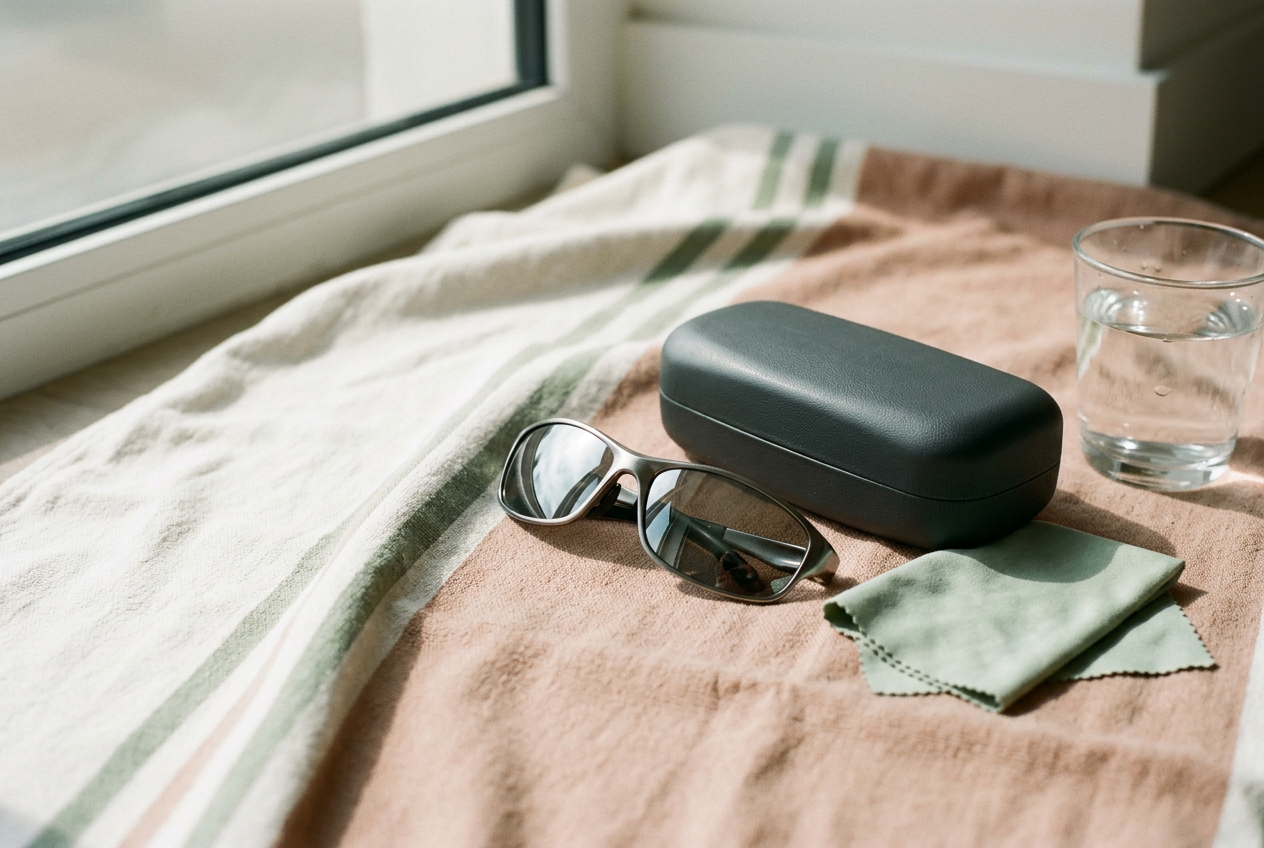
A silver mirror lens often shows beach damage as tiny pinpoints, a dull patch or one bright scratch across an otherwise even finish. The usual culprit is not the swim itself. It is the wipe afterward, when salt crystals and sand are still sitting on the surface.
Consider the pair this guide follows: silver-mirrored polycarbonate wraparound sunglasses worn into knee-deep surf, then pushed back into place with sunscreen-coated fingers. Polycarbonate is a light, impact-resistant lens material, but it still relies on surface treatments for scratch resistance and appearance. Those treatments cannot make trapped grit harmless.
This is unisex care advice. Coatings respond to salt, oil and friction in the same way regardless of the frame shape or the wardrobe around it.
What the beach is doing to the lens
A mirror coating is the reflective layer that gives a lens its metallic face and reduces some visible light before it enters the lens. Depending on the construction, that layer may sit within a protected coating stack rather than being fully exposed, but abrasion can still mark the outer surface and change how evenly the mirror looks.
Anti-reflective coating, meaning a thin treatment that reduces reflected light, is often applied to the back surface of sunglass lenses so light does not bounce from behind the wearer into the eye. Some lenses also have water- or oil-repellent topcoats. Polarization is different: a polarized filter controls glare from horizontal surfaces such as water and roads, and it may be laminated inside the lens rather than applied as an exposed finish.
Salt water dries into angular crystals. Sand adds harder mineral particles. If either remains on the lens, a T-shirt or dry microfiber cloth can drag it across the coating under fingertip pressure. Sunscreen creates another problem because its oily base smears, holds particles in place and transfers easily from the nose bridge or fingers.
The silver wraparound pair now has two kinds of soil: loose grit that must be floated away and greasy residue that needs a mild surfactant, an ingredient that helps water lift oil. Treating both with repeated dry polishing is how a five-second cleanup becomes permanent damage.
Rinse before the cloth touches anything
Start by washing sunscreen and sand from your hands. Hold the sunglasses under a gentle stream of lukewarm fresh water, with the lenses angled downward so loosened particles leave the surface instead of collecting along the lower rim. Rinse the front, back, nose pads and frame channels.
Do not use a high-pressure spray. It is unnecessary, and frames with delicate trim, loose lens edges or aging adhesive deserve less force. Avoid hot water as well; excessive heat can stress some coatings and distort certain plastic frames.
If no faucet is available, pour clean bottled water over the glasses rather than dipping them into a communal rinse bucket. A light mist is less useful because it may wet the salt without carrying it away. The goal is flow. For the silver wraparound pair, that means enough water to remove the visible grains lodged beside the nose pads before any rubbing begins.
Never rinse with more seawater. It may move sand, but it leaves another layer of salt behind.
Brand instructions should take priority when they are more restrictive. Public care guidance from Costa and Maui Jim describes washing with fresh water and mild liquid dish soap, while Oakley directs owners toward its Microclear bag and approved cleaning products for its lenses. Prescription lenses, vintage coatings and specialty sport lenses may have their own limits, so check the maker’s care page before using a household cleaner.
Lift sunscreen without scouring the finish
After rinsing, put a small drop of mild, lotion-free liquid dish soap onto wet fingertips and dilute it with water. Choose a basic formula without abrasive particles or added moisturizers, which can leave another film. Do not apply concentrated soap to a dry lens.
Move the pads of your fingers lightly across both sides of each wet lens, then around the bridge and temples where sunscreen gathers. Fingertips are useful here because they let you feel a remaining grain before pressing it into the surface. Fingernails are not cleaning tools.
Rinse until the water runs clear and no slippery residue remains. Check the lens at an angle rather than scrubbing at every water spot. If an oily fingerprint survives, repeat the wet wash once. More pressure is not the answer.
This step takes a few minutes, including washing your hands and rinsing the frame. That is longer than breathing on the lenses and using a shirt hem, but it is cheaper than replacement lenses, especially when the sunglasses are prescription or the mirrored color is central to the frame’s design.
Sunscreen can also cloud rubber nose pads and collect in the seam between a lens and a full-rim frame. A wet fingertip can clean accessible edges. Do not force fabric, a pin or a fingernail into the lens channel, where pressure may chip a coating edge or shift the lens.
Dry with a cloth that has not been to the beach
Shake off excess water, then use a clean optical microfiber cloth. Blot first. Once the lens is visibly free of particles, wipe with light pressure to remove the remaining droplets.
The cloth matters as much as the technique. A microfiber square carried loose in a beach bag may contain sand, while one used repeatedly on sunscreen eventually spreads oil rather than absorbing it. Keep the cloth inside a closed pouch or hard case. Wash it according to its care instructions, without fabric softener, and let it dry where it cannot pick up grit.
A soft cotton shirt feels smooth against skin but its fibers can hold dust, salt and laundry residue. Facial tissues and paper towels may contain comparatively rough fibers or additives. They are poor substitutes for clean optical microfiber, particularly on a mirror finish that reveals every uneven mark.
Set the silver wraparound pair lens-side up while it finishes drying. Better still, put it in a ventilated hard case once both the frame and cloth are dry. A wet cloth sealed against the lenses only transfers residue back to the surface.
Skip cleaners with uncertain ingredients
Window cleaner, acetone and other household solvents do not belong on coated sunglasses. Ammonia and strong solvents can harm some lens materials, frame finishes or coatings, and an unlabeled multipurpose spray gives the wearer no useful way to judge compatibility.
Pre-moistened lens wipes need the same scrutiny. A wipe sold for coated eyewear and permitted by the sunglass maker can be convenient away from a sink, but it cannot safely carry away a visible layer of beach grit. Rinse first. Wipes made for phones, counters or household glass are not interchangeable with optical products.
Spit is also a bad cleaner. It does not provide enough liquid to flush particles away, and the resulting damp rub still presses grit across the lens. Breathing on the surface has the same mechanical flaw.
Do not try toothpaste, baking soda or a scratch-polishing compound. Abrasives may make a scratch look softer by removing material around it, but that also alters the coating and can change the optical surface. A mirror layer cannot be restored evenly with home polishing.
Keep the next beach day from repeating the damage
Apply sunscreen before handling the sunglasses, then wash or wipe your hands before putting the frame on. If sunscreen transfers from the cheeks or nose during wear, rinse the glasses at the next practical opportunity rather than polishing the mark while sand is present.
A hard case protects the lenses from towels, keys and grains trapped in a tote. Place the sunglasses in it only when reasonably dry, and do not leave the case in a hot parked car. Heat can distort plastic frames and contribute to coating stress.
For regular swimming, consider eyewear whose maker specifically addresses saltwater use and replacement parts. Fashion sunglasses can survive an occasional splash with prompt rinsing, but a delicate mirror finish is a poor match for repeated surf wear if every small surface mark will bother you. The practical alternative is a less precious sport pair with replaceable lenses, while the polished frame stays on shore.
Decide whether a scratch is cosmetic or optical
A few pinpoints in the mirror finish may be cosmetic if they sit outside the main viewing area and do not create visible flare. They can look obvious to someone facing you while having little effect from behind the lens. There is no safe home method for filling them back in.
A scratch matters more when it crosses the center of vision, scatters bright light or produces a persistent hazy patch. Clean the lenses properly, then compare them one at a time while looking at an ordinary high-contrast edge in stable light. Do not test them by staring toward the sun. If the affected lens makes the edge look distorted, creates distracting glare or causes repeated eye strain, stop wearing the pair for driving and ask an optician about replacement lenses.
Look beyond single scratches. Crazing, meaning a network of fine cracks in a coating, can create an all-over haze that cleaning will not remove. Peeling, bubbling or separation near the lens edge points to coating or laminated-layer failure rather than dirt. A chipped or cracked lens warrants replacement because its structure has been compromised.
For the silver wraparound pair, one faint mark near the far temple may be an appearance decision. A bright line through the pupil area is a functional one. Replacement lenses preserve a frame that still fits, while inexpensive nonprescription sunglasses may cost less to replace as a complete pair; either way, polishing away the coating is not a repair.
Questions people ask
Can I use dish soap on mirrored sunglasses?
A small amount of mild, lotion-free liquid dish soap is suitable for many coated lenses when diluted on wet fingertips, followed by a full fresh-water rinse. Check the maker’s instructions first because some brands specify an approved cleaning solution, particularly for proprietary mirror finishes or specialty lenses.
Are alcohol lens wipes safe for coated sunglasses?
Only use wipes labeled for coated optical lenses and allowed by the manufacturer. Even a compatible wipe should not be rubbed over visible sand or dried salt, because the trapped particles can abrade the surface. Rinse the sunglasses first whenever fresh water is available.
Can a scratched mirror coating be repaired?
Home polishing cannot rebuild a mirror coating. Abrasive pastes remove more material and may leave a larger dull patch or alter the lens surface. If the frame is worth keeping, ask the manufacturer or an optical shop whether matching replacement lenses are available.
When should I replace scratched sunglass lenses?
Replace or professionally assess lenses when scratches cross the central viewing area, create glare or distortion, or sit alongside cracks, peeling or widespread haze. Small peripheral marks may remain cosmetic, but a damaged lens should not be trusted for driving if the view changes when each eye is checked separately.
One update a day
Today's fashion update, in your inbox
One fashion update each morning — no hype, no filler, just pieces worth wearing.