Barrel-Leg Jeans Last Only If the Curve Survives Resale
Barrel jeans now turn up often enough secondhand to buy selectively. The best used pairs retain their tapered hem, need no major shortening and work with shoes already in your closet.
Women's · October 2, 2026 · 7 min read
The useful test is a secondhand pair of Citizens of Humanity Horseshoe jeans, one of the recognizable references for the current shape. Versions of the style use non-stretch cotton denim, with substantial volume through the leg and a narrower opening near the ankle. It is exaggerated enough to expose every secondhand risk: an altered hem can flatten the curve, the wrong inseam can bunch above a shoe, and a listing photographed only from the front can make an ordinary oversized jean look convincing.
This is women’s coverage, although the construction checks apply to any curved denim pattern. Women’s resale sizing adds its own complication because tagged waist sizes, body measurements and the waistband measured flat may not agree, particularly after rigid cotton denim has been worn and washed.
The hem carries more of the trend than it appears
A barrel leg is a jean cut that widens away from the body before narrowing again toward the hem. Some brands create that line through a strongly curved outseam, meaning the seam running down the outside of the leg; others distribute the shaping between both leg seams or add darts near the knee. The precise method matters less than the result. Laid flat, a true barrel cut should show a deliberate arc rather than two nearly parallel edges.
That is the first distinction to make in a resale listing. An oversized straight jean can look rounded while someone is standing with one knee bent, especially if the denim pools over a sneaker. Ask for a flat photograph of one leg, front and back, with the waistband and hem visible. On the Horseshoe jeans, the lower leg should visibly return inward.
If the hem is almost as wide as the broadest part of the leg, the pair may be a wide or straight cut carrying a searchable trend label.
The hem opening also decides how the volume reads in motion. A narrower opening holds the fabric away from the calf and produces the bowed outline; a broad opening lets the leg fall vertically, which is easier to style but no longer gives the same silhouette. Measurements help here, though a single hem measurement means little without the width at the knee. Compare the two on the same laid-flat leg.
Rigid denim sharpens this evidence. A 100% cotton pair usually keeps its intended architecture better than a soft, highly elastic jean, but it may also retain creases at the hip and knee from its previous owner. Those creases are not automatically damage. They can, however, pull the curve forward or make one leg hang differently if the original wearer’s proportions were far from yours.
Shortening can remove the reason to buy the jean
Barrel jeans are difficult to alter well because length and taper are linked. If a tailor cuts several inches from the bottom, the new hem may land higher on the leg where the pattern is wider. Reattaching the original hem, a common denim alteration that preserves the factory-washed edge, does not restore the missing taper.
The Horseshoe pair makes the tradeoff plain. Its ankle area is not an incidental finish added below the shape; it completes the shape. A buyer who needs substantial shortening may end up paying for a second alteration to narrow the lower leg, and that can shift the side seams or create a sudden pinch rather than a gradual curve. Tailoring is possible.
It is no longer an uncomplicated used-jeans bargain.
Look closely at the listing photographs for a factory hem with consistent fading and stitching. A cut edge, unusually fresh thread or a thick ridge just above the hem can indicate alteration. Ask for the inseam, measured from the crotch seam to the bottom edge, rather than relying on words such as cropped or ankle length. Those terms describe where the jeans landed on somebody else.
Waist alterations deserve similar scrutiny. Taking in the center back can help a gaping waistband, but a large adjustment may pull the back pockets closer together and alter the seat. Letting out rigid jeans is limited by the fabric hidden inside the seams. If the waistband measurement is wrong and the seller does not accept returns, the curved leg is beside the point.
This makes the best secondhand candidate slightly boring on paper: the waist already fits, the rise suits you, and the inseam needs no more than a minor correction. The visual drama should come from the pattern, not from a tailoring plan.
Existing shoes set the useful life
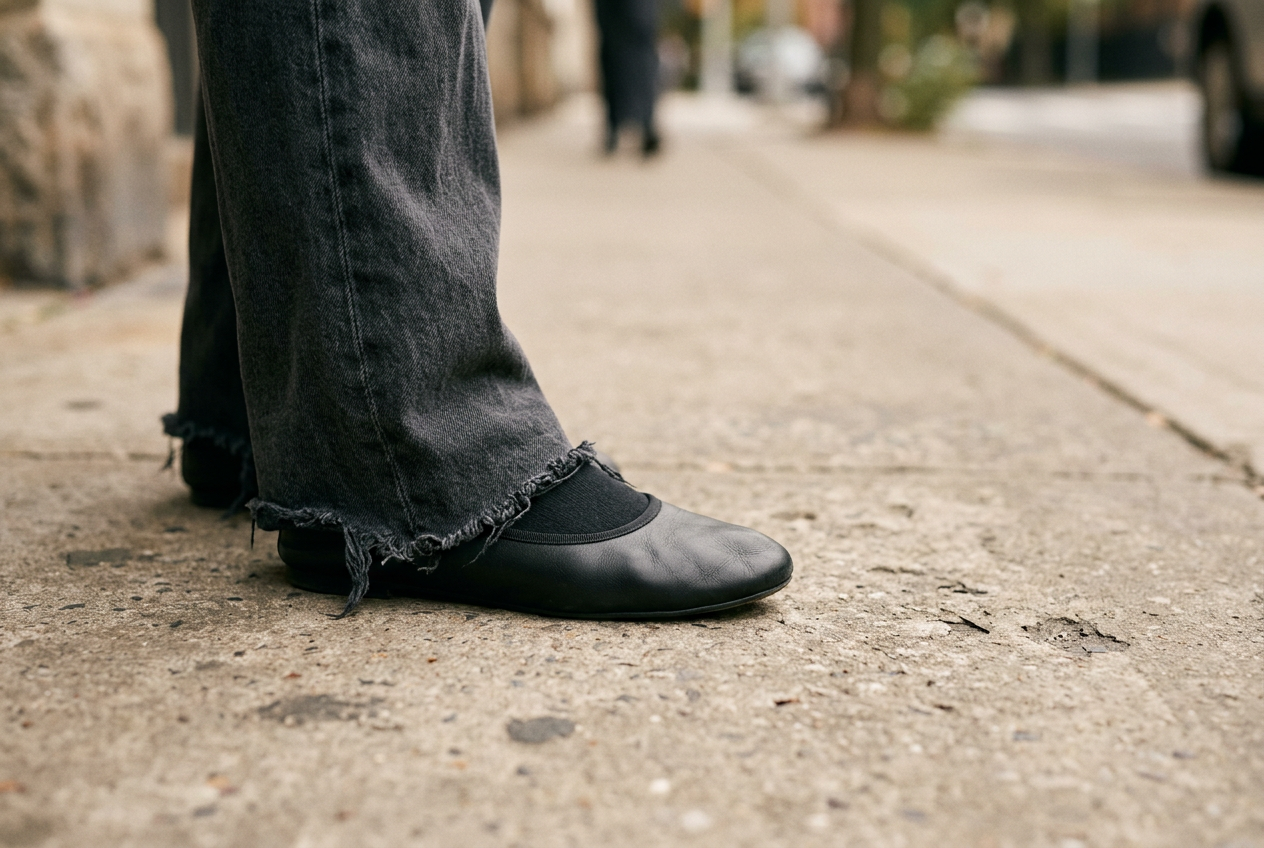
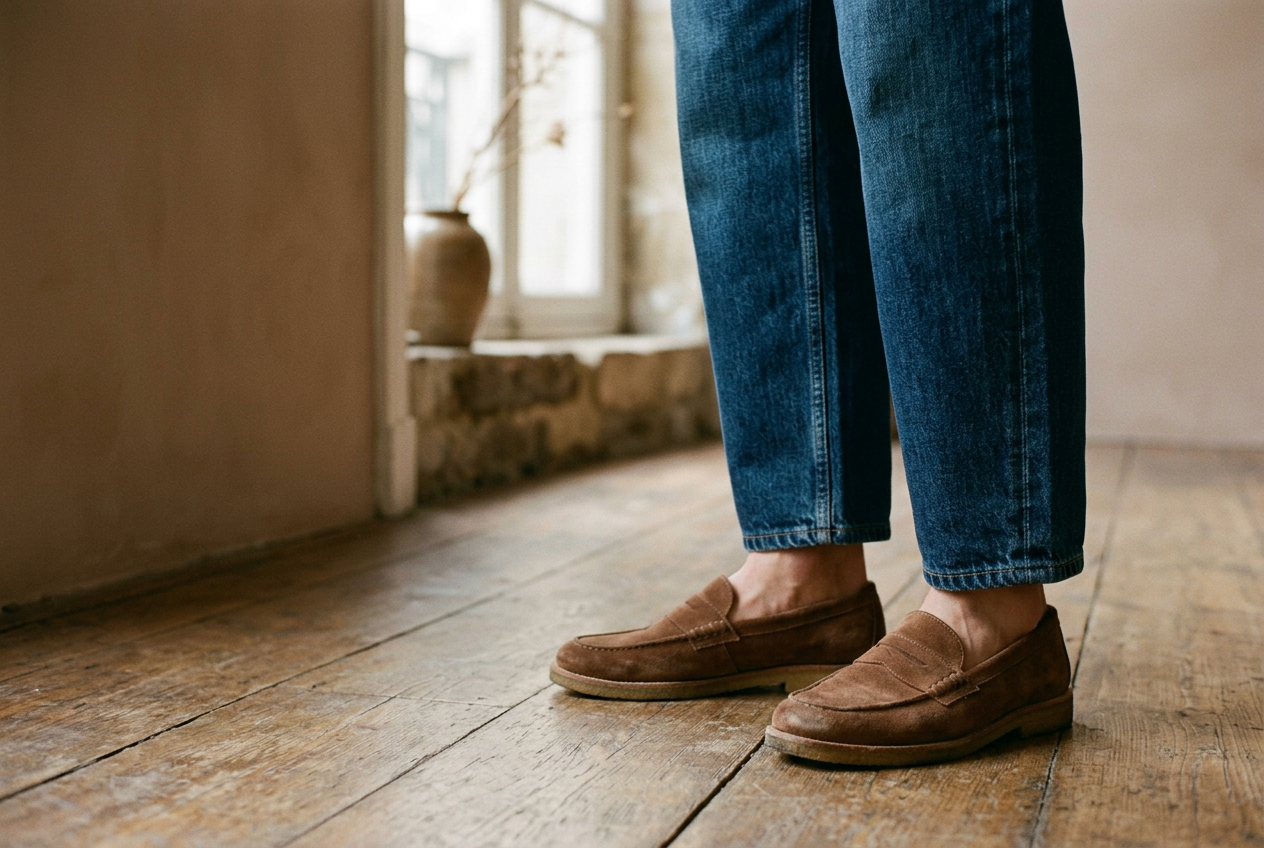
A barrel jean can survive a shift in trend language if it works with shoes you wear repeatedly. The critical relationship is between the hem opening and the shoe’s upper, the part covering the top of the foot. A cropped, tapered hem leaves a clean interval above a low-profile loafer or slim sneaker. It can also sit neatly over an ankle boot when the opening clears the boot shaft rather than catching halfway down it.
Trouble begins when both pieces demand the same space. A bulky running shoe may push the hem outward and shorten the leg visually, while a wide boot shaft can trap the jean so that the carefully cut curve collapses into folds. Neither combination is forbidden, but it changes the reason for owning the silhouette. If most of your footwear has thick soles, padded collars or broad shafts, take those shoes to a fitting or reproduce their dimensions against the seller’s measurements.
Heel height matters less than hem clearance. A small heel can lengthen the line, yet it will not correct a hem that catches on the shoe. The Horseshoe pair is most persuasive as a resale purchase when its lower leg hangs freely with at least two established pairs in the wardrobe. Requiring a new shoe category to make used jeans function turns one speculative purchase into two.
There is also a seasonal limit. Cropped rigid denim exposes the ankle in cold weather, while a longer barrel leg can drag at the back once the fabric softens. A pair that works only with bare ankles and one delicate shoe may still be enjoyable, but its useful life will be measured in outfits rather than years.
Resale volume is a filter, not proof of longevity
More barrel jeans are appearing across general resale platforms because more brands have made them. Availability gives buyers leverage: there is little reason to accept a missing care label, vague measurements or an altered hem when another listing may be clearer. It does not prove that every pair retains value. A crowded search can reflect broad adoption, wardrobe turnover or sellers attaching a popular phrase to unrelated cuts.
Search by the manufacturer’s style name when possible, then compare active listings with sold results on platforms that show them. Repeated availability across sizes is more useful than one unusually expensive listing. Price should track evidence. The upper end of a secondhand range makes sense only for a documented style in strong denim with original hems and complete measurements; a generic pair with uncertain alterations belongs at the low end, regardless of how confidently the title says barrel.
Material affects that judgment. Dense cotton denim can develop attractive fading and still hold the leg shape, provided the inner thighs and pocket corners remain sound. Lightweight stretch denim may feel easier immediately, but repeated wear can relax the knees and turn a controlled curve into general bagginess. Request a care-label photograph to confirm fiber content, then inspect high-friction areas rather than treating softness as a benefit by itself.
Barrel-leg jeans probably have secondhand staying power as a recognizable alternative to straight and wide legs, but the most extreme versions remain dependent on exact length. I would buy the used Horseshoe pair if its hem were original, its flat measurements matched a jean I already owned, and two regular shoes cleared the opening. I would leave it if shortening reached into the taper. At that point, an intentionally wide straight jean is the more durable choice.
Questions people ask
How can
I tell whether used jeans are truly barrel leg?
Ask for a flat photograph showing the whole leg and compare the knee width with the hem opening. A true barrel cut widens through the leg and then returns inward; an oversized straight jean usually keeps more parallel side seams and relies on pooling or a bent-leg pose to suggest curvature.
Can barrel-leg jeans be shortened?
Yes, but substantial shortening can remove the tapered section that completes the silhouette. An original-hem alteration preserves the factory edge, not the original opening width. If several inches must come off, ask a denim tailor whether the lower leg also needs reshaping before committing to the pair.
Should barrel jeans fit tightly at the waist?
The waistband should feel secure without pulling the pockets or forcing the front rise upward. Rigid cotton may relax modestly with wear, but it will not reliably solve a major sizing error. Use the seller’s flat waistband and rise measurements, then compare them with jeans you already wear.
Which shoes work best with secondhand barrel jeans?
Start with shoes whose uppers do not catch the tapered hem, such as low-profile sneakers, loafers or close-fitting ankle boots. The strongest used purchase works with at least two pairs already in rotation. If the jean requires a new shoe shape before the leg hangs correctly, its practical value drops.
One update a day
Today's fashion update, in your inbox
One fashion update each morning — no hype, no filler, just pieces worth wearing.