An Insertion Taper Makes Flat Back Changes Easier, With Limits
A slim guide pin fixes the hardest part of a flat back change: finding the piercing from behind. It only works when its gauge and connection match the post.
October 8, 2026 · 8 min read
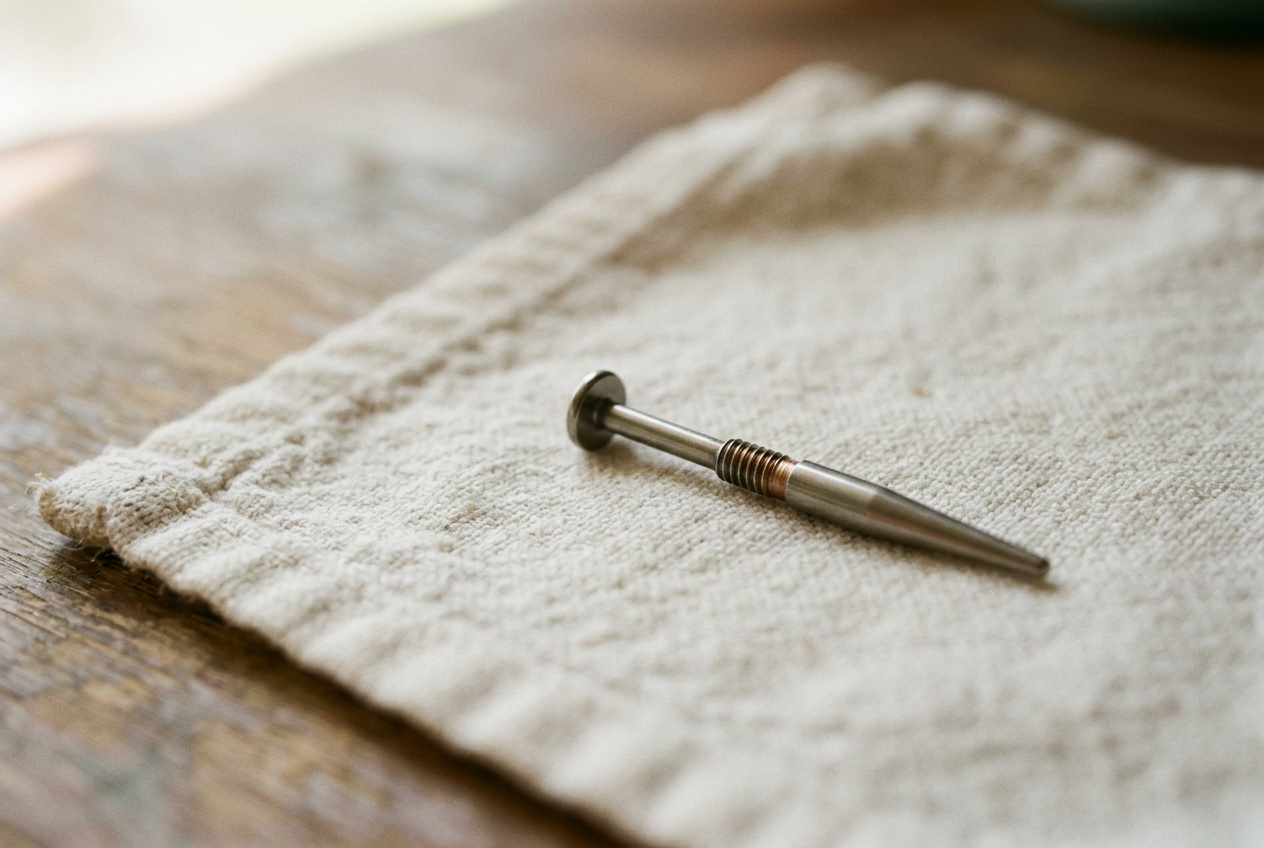
The useful part is barely wider than a needle. An insertion taper is a smooth guide pin that passes through a piercing and connects to a jewelry post, letting the post follow the established channel instead of searching for it from behind.
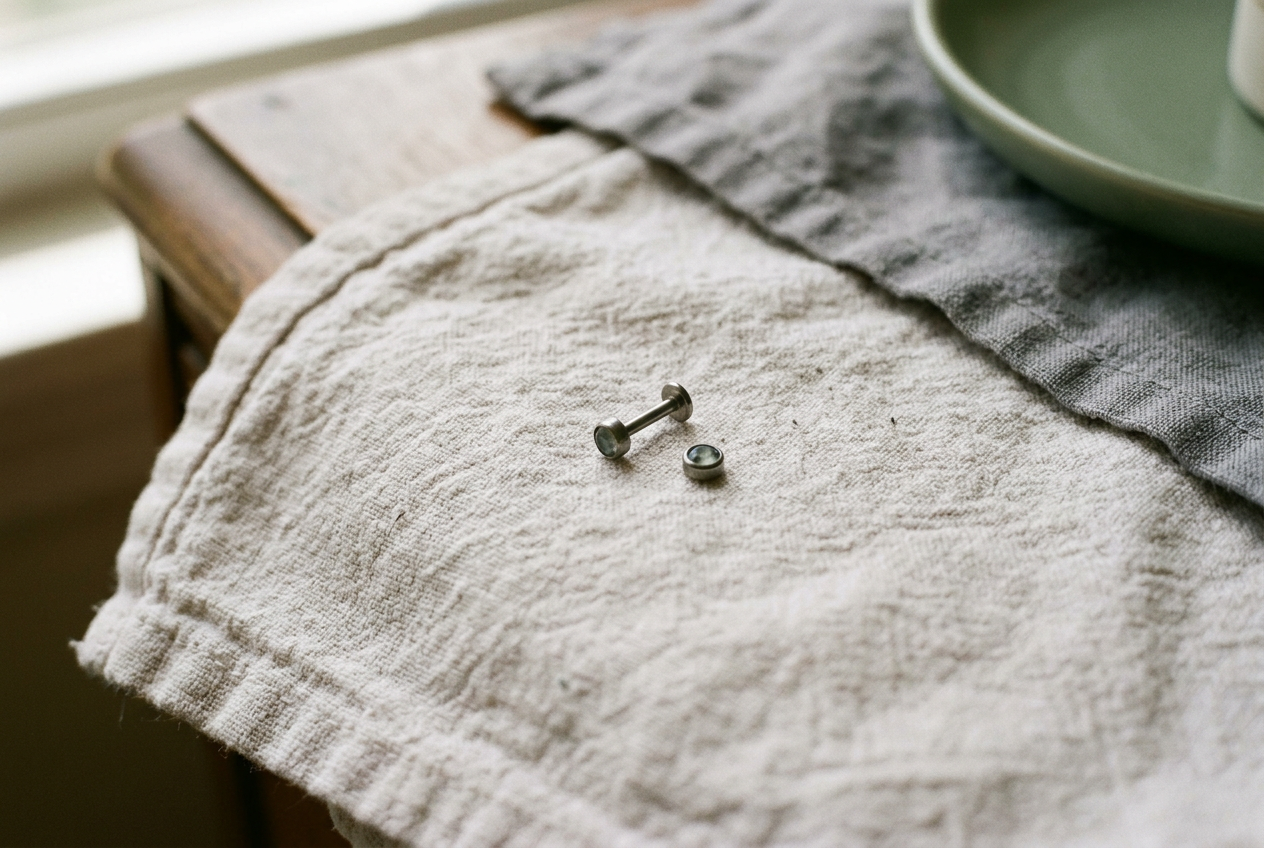
I tested the method with one stubborn everyday earring: an 18-gauge implant-grade titanium flat back, meaning the post’s backing sits flush against the ear, with a snug 6 mm post and a small polished disk at the front. It lives in a fully healed upper-lobe piercing. The short post is comfortable for sleeping, but there is little length to grip during a change.
That fit quirk matters. Without a guide, the post repeatedly touched the back of the ear beside the opening, while the fingers holding it blocked the clearest view. With a matching 18-gauge threadless taper passed through from the front, the post had a direct route. The change became less fiddly, though not entirely hands-free.
The mechanics are unisex. Ear anatomy, post length and jewelry construction determine the fit, not the section of a store where the earring was sold.
What the taper changed
A taper solves alignment. It does not make an unsuitable post fit, open a shrinking piercing safely or correct an irritated channel.
For the titanium labret, the polished guide entered from the visible front opening and emerged behind the ear. Its narrow connector slipped into the hollow end of the post. I then guided the taper back toward the front, allowing the 6 mm post to follow it through the channel from rear to front. Once the post was seated, the taper pulled free and the decorative disk went back in.
This was easier than trying to aim the flat back from behind because the taper preserved the route through the piercing. It also kept the short post under control. The tradeoff is another small object to clean, store and match correctly, and a taper is poor value if every flat back in your jewelry box uses a different gauge or attachment system.
The tool sits in the small-accessory price category rather than the fine-jewelry one, but the exact purchase still needs scrutiny. A cheap taper with a rough seam, damaged finish or vague sizing is not a bargain. The surface that passes through the piercing should be smooth, and the seller should identify both its gauge and intended connection.
Gauge and connection must agree
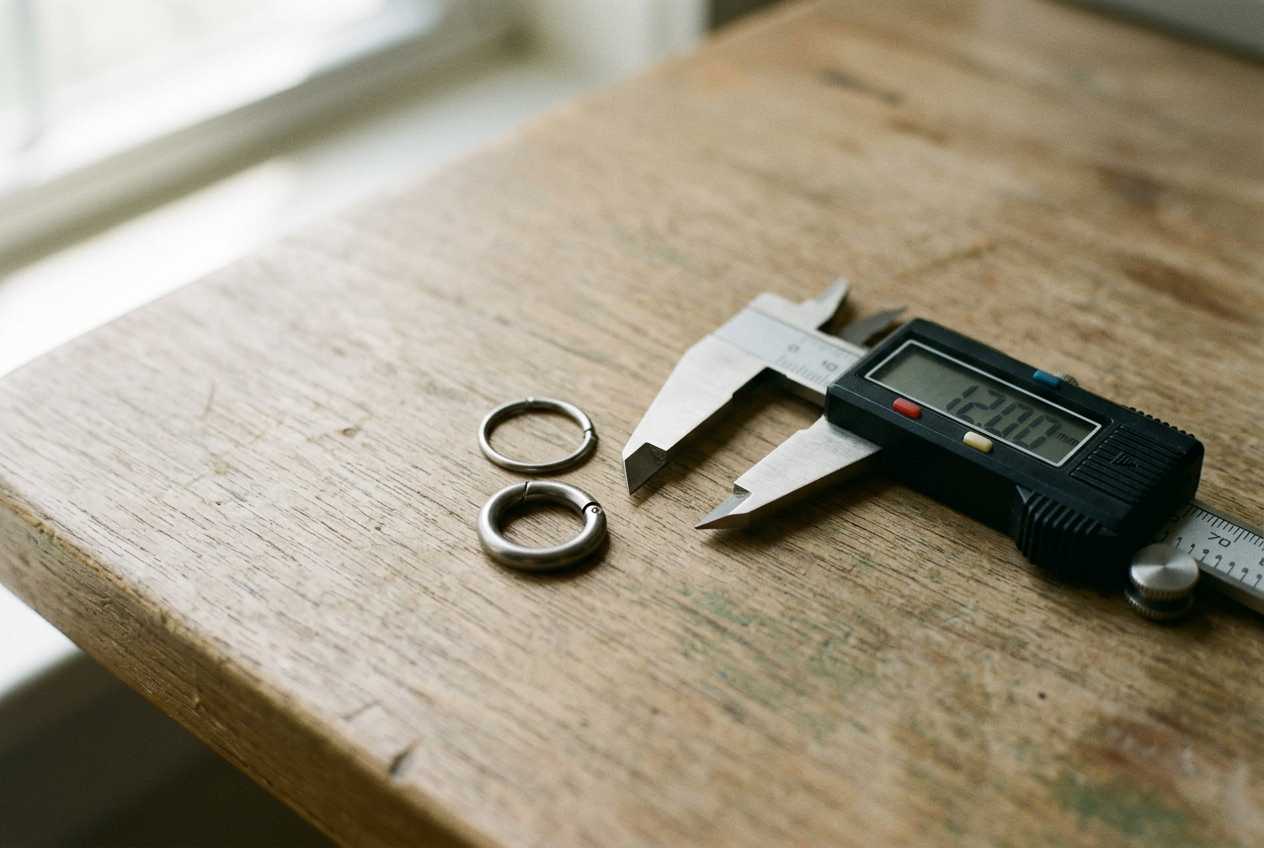
Gauge measures post thickness, with a smaller gauge number indicating a thicker post. The reference labret is 18 gauge, about 1 mm thick, so I used an 18-gauge taper. A 16-gauge tool is thicker and should not be pushed through an 18-gauge piercing merely because the difference looks small.
The taper also has to connect to the post. My labret was threadless, meaning a slightly bent pin on the decorative end locks into a hollow post by tension. A threadless insertion taper uses a compatible pin-like end that fits into that hollow opening; the fit should be secure enough to guide the post, but it should not require twisting or heavy pressure.
Internally threaded jewelry, where the screw threads sit inside the post, needs a taper with the corresponding threaded tip. Thread diameter can vary even when the jewelry gauge matches, so an 18-gauge label alone does not guarantee compatibility. Confirm the connection specification with the jewelry or taper seller rather than testing several threaded tips against the post.
Externally threaded jewelry leaves screw ridges exposed on the outside of the post. Those ridges can scrape tissue as they pass through, and many guide systems are not designed to mate with them. If that is what you own, a piercer can assess the jewelry and suggest a smoother replacement rather than improvising a connection.
Post length remains separate from gauge. The 6 mm titanium post sat close enough to the back of my ear that its low profile felt good overnight, yet that same close fit reduced working room during installation. If the disk presses into the skin after insertion, the problem is likely post length or swelling, not a missing taper.
How to use one on a healed piercing
Set up over a clean towel on a stable surface, not over a sink. Wash and dry your hands, clean the jewelry according to its maker’s directions, and inspect the taper under bright light for residue, scratches or a bent connector. Disposable gloves can improve grip, but putting on gloves does not turn a home setup sterile.
Remove the decorative end from the existing flat back while holding the rear disk steady. Threadless ends pull out with a controlled straight motion; threaded ends unscrew. If the jewelry will not separate without hard twisting, stop before tools slip against the ear.
Pass the correct taper through the established piercing from the front, following the angle the jewelry already takes. Lobes are not always pierced perpendicular to the skin, and forcing the pin straight back when the channel angles slightly can make a smooth opening feel blocked. A tiny amount of sterile, water-based lubricant intended for piercing use may reduce drag if its directions permit it.
At the rear of the ear, connect the labret post to the taper. Check the join with your fingertips. A visible step, loose wobble or connector that only enters partway indicates a mismatch; pulling that joint through tissue risks snagging the channel or losing the post midway.
Guide the taper forward until the labret’s flat disk reaches the back of the ear. Keep the movement slow and aligned rather than using the taper as a lever. On the 6 mm labret, the flat disk stopped neatly against the rear of the lobe, which confirmed the post had traveled fully through.
Disconnect and remove the taper, then install the front end. A threadless decorative pin needs the slight bend specified by its maker to create tension, while internally threaded jewelry should be tightened with clean fingers until secure, without wrenching it down. Check later that the end remains seated.
Cleaning is not sterilization
A home wash can remove oils and visible debris. It cannot reproduce professional sterilization, which uses validated equipment such as an autoclave to destroy microorganisms under controlled conditions.
Follow the taper manufacturer’s cleaning instructions and avoid harsh household chemicals on the piercing. Alcohol and hydrogen peroxide can irritate tissue, while contact lens solution is not a substitute for sterile saline labeled for wound washing. Do not share an insertion taper between people.
This home method belongs on a calm, fully healed piercing. Fresh, sore, swollen, bleeding or persistently crusting piercings should be left to a reputable professional piercer, who can use sterile tools and assess whether the jewelry size is contributing to the problem.
Resistance is the stop signal
Normal guidance feels like light, steady contact. Sharp pain, increasing pressure, bleeding or a firm catch is different. Stop, back out gently if that can be done without force, and do not use the taper to push through what feels like closed tissue.
Resistance can come from the wrong angle, a gauge mismatch, an uneven connection or a piercing that has narrowed. None improves with a harder shove. A taper sold for insertion may resemble a stretching taper, but using it to enlarge a piercing changes the task and the risk; that is a conversation for a professional piercer.
The 18-gauge titanium labret passed smoothly only when the taper followed its existing angle. That was the clearest limit of the tool. It guided a compatible post through an open channel. It did not create permission to override the ear.
The buying decision
An insertion taper is worth considering if you regularly remove short flat backs, keep the same gauge and connection style, and struggle to locate the opening from behind. It is especially useful for snug sleep-friendly posts like the 6 mm labret, where comfort on the pillow comes at the cost of finger room during a change.
Skip it if your jewelry changes rarely, your piercing is not settled or you cannot verify the tool’s dimensions. A professional jewelry change costs more time and usually more money than using a tool already at home, but it also brings sterile equipment, better visibility and an experienced read on resistance. For a difficult angle or irritated ear, that trade is sensible.
Questions people ask
Can
I use any insertion taper with an 18-gauge flat back?
No. The taper must match the 18-gauge post and its connection style, either threadless or internally threaded, and threaded pieces may require a particular thread size. Check the specifications for both items. A connector that wobbles, catches or only partly engages should not be pulled through the piercing.
Can an insertion taper reopen a partly closed piercing?
It should not be used for that at home. A taper can guide jewelry through an open, healed channel, but resistance may mean the channel has narrowed or the angle is wrong. Stop rather than pushing through tissue, especially if there is pain or bleeding, and ask a reputable piercer to assess it.
How do
I know when to stop during a flat back change?
Stop for sharp pain, firm resistance, bleeding, swelling or a connection that feels uneven. Light contact can occur as the taper follows the channel, but the tool should not need force. If backing it out is also painful or difficult, leave the area alone and consult a professional piercer.
Is a taper necessary for every flat back earring?
No. Longer posts in easy-to-reach lobe piercings may be straightforward to insert by hand. The tool earns its place with short posts, rear-to-front insertion and repeated alignment trouble, provided your jewelry shares compatible sizing. The snug 6 mm labret benefited because its comfort-focused length left almost nothing to hold.
One update a day
Today's fashion update, in your inbox
One fashion update each morning — no hype, no filler, just pieces worth wearing.