Test a Sleeveless Armhole Before Your Bra Shows
A sleeveless top can pass in front of the mirror and fail as soon as you reach. This fitting-room sequence finds bra exposure, side gaping, and stretched edges before you buy.
Women's · September 25, 2026 · 8 min read
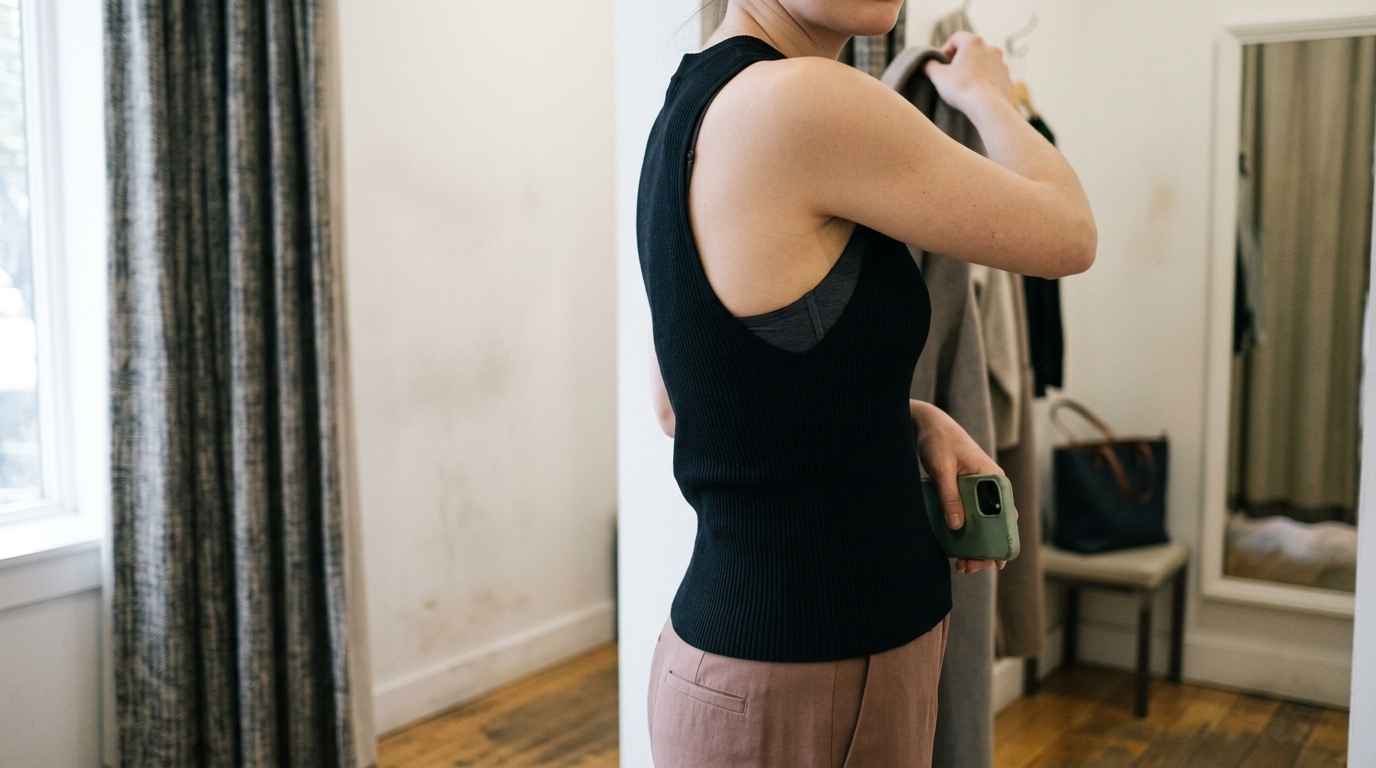
A black cotton-elastane rib-knit shell made the problem clear. Standing straight in a fitting-room mirror, its bound armholes looked neat and the side seam sat where it should. One reach toward an imaginary high shelf exposed the side of a smooth-cup underwire bra; sitting released an even larger gap between the armhole and the ribs.
The top was close-fitting through the waist, so sizing down would have traded exposure for pulling. The useful question was whether the gap came from an oversized opening, a stretched edge, or a mismatch between the top and the bra. Each failure can look similar at rest, but they call for different decisions.
This is women's fit coverage because the test focuses on conventional bra placement and bust shaping. The same movement sequence can reveal armhole problems in other wardrobes, though the alteration choices may differ without a shaped bust.
Start with the bra you plan to wear
An armhole is the finished opening where the sleeve would join the bodice. Its coverage depends on the depth under the arm, the width across the upper chest and back, and the way the garment accommodates the bust.
Wear the kind of bra the top is meant to work with. A smooth T-shirt bra gives a clear reference because its cup edge and side wing are easy to see, while a sports bra or longline bralette may conceal an opening that will expose an everyday bra later. Adjust the straps and settle the band before judging the top. A band that has ridden upward creates its own false exposure.
Then smooth the garment once and leave it alone. Repeatedly tugging the armhole upward only proves that it can be repositioned, not that it will stay covered through a normal day.
Look at the black rib-knit shell from the front and side. Its binding, meaning the narrow strip that finishes the raw armhole edge, should lie flat without rolling toward the body or flaring away from it. Note where the underarm edge meets the bra. Coverage that already depends on perfect posture rarely improves in motion.
Use the reach, sit, and turn sequence
The full test takes less than two minutes and works best with a side mirror or a phone recording placed around chest height. Keep the top untucked at first so the hem can move naturally.
Start with the reach. Raise one arm as if taking a glass from a high cabinet, lower it, then reach forward as if pulling open a heavy door. Do not hold the hem down. Watch whether the armhole returns to its original position and whether the bra cup, side wing, or band appears only during the reach or remains visible afterward.
On the black shell, the edge stayed smooth as the arm rose, but the opening exposed a broad section of the bra side. That points toward an armhole cut too low or too wide rather than binding that has lost recovery. The garment did not pucker. It merely uncovered more than it had while the arm was down.
Sit next, preferably on a firm chair or fitting-room bench, without leaning against the back. Let the rib cage soften, place both feet on the floor, and bend forward far enough to reach a bag near your feet. A fitted bodice changes shape when the torso shortens, and excess length above the bust can push outward at the armhole even when the standing view seems controlled.
A small opening that appears only in the bent position may be acceptable for a loose woven shell, especially if the fabric falls back when you sit upright. A stiff triangular gap that remains beside the bust signals excess length or inadequate shaping. The black shell opened away from the ribs, then settled only after the hem was pulled down. Tucking it into high-rise trousers made this worse because the waistband held the lower body in place while the upper section shifted.
Finish by turning your torso toward the mirror while keeping your hips mostly forward, then rotate the other way and reach one arm across the body. This loads the front and back armholes differently. Exposure at the back usually points to an opening that is too wide across the shoulder blade or a bra band sitting higher than the garment edge; a gap concentrated at the front often tracks back to bust volume, bust position, or extra length between shoulder and underarm.
The top should recover after each movement without a hand adjustment. A narrow flash of skin can be a deliberate cut. A cup edge that repeatedly appears is a compatibility problem, even if the product photograph showed the garment sitting flat.
Read the edge before blaming the size
An oversized armhole usually has a calm edge. It lies flat against the garment, keeps its shape through movement, and still reveals the bra because the opening was cut lower or farther inward than the wearer needs. Sizing down may shrink the opening, but it also reduces room at the bust and waist. If horizontal drag lines appear from the bust toward the side seam, the smaller size has not solved the fit.
Stretched binding behaves differently. It may ripple, curl, or stand away from the body before movement begins, and a light pull along the edge leaves it slow to recover. Rib knit is vulnerable when the binding is longer than the opening or was stretched during sewing. Hanging the top from a narrow hanger can add strain over time, but a new garment with a visibly wavy edge has a construction problem already.
Bra incompatibility is the cleanest diagnosis. The top remains close to the body and its edge recovers, yet the bra sits outside the available coverage. A full-coverage cup may rise too high near the underarm, a wide side wing may extend above a low-cut opening, or a strap may sit farther outward than the shoulder allows. Trying a plunge or demi bra can confirm the conflict, but buying a special bra makes sense only if the top earns that extra condition.
Pin the gap before paying for an alteration
A tailor can correct some armhole gaping, but the fitting-room pin test shows whether the correction will distort the bust. Use clips or safety pins only with permission, and place a layer of fabric between the pin and your skin.
For a gap concentrated near the front armhole, pinch a small wedge of fabric with its narrow end pointing toward the bust. This imitates an armhole dart, a sewn fold that removes excess fabric and directs shaping toward the fullest part of the bust. If the edge lies flat while the bust stays smooth, the alteration is plausible, though the finished top will gain a visible seam unless the excess can be eased into replacement binding.
Release that pinch and fold a little length out at the shoulder seam. This can help when the entire upper bodice is too long, but it also raises the underarm, neckline, and hem. On the black shell, the armhole improved while the neckline moved uncomfortably high, so a shoulder adjustment was the wrong repair.
Pinning the side seam is useful only when the garment has extra circumference from underarm through waist. If the waist already fits, removing fabric at the upper side seam can pull the bust outward, shift the seam toward the front, and create diagonal wrinkles. A tailor may add shaping instead, but a low armhole cannot always be made higher without inserting a gusset, meaning an added fabric panel. Matching the original rib knit and binding can make that repair more trouble than the top warrants.
Stretched binding is often the best alteration candidate when the body of the garment fits. A tailor can remove the old finish and apply a shorter binding with enough recovery to hold the opening close. The tradeoff is visible: replacement knit, thread, and stitch density may not match the factory finish, particularly on washed colors or fine ribs.
Make the keep-or-return call
Keep the top when the intended bra stays covered through the sequence, the edge returns after each movement, and any small gap can be pinned out without tightening the bust or moving the neckline into an awkward position.
Return it when coverage requires constant tugging, when the binding is already rippled, or when the only proposed fix is taking in a side seam that currently hangs straight. The black rib-knit shell went back. Its stable edge showed that the opening itself was too low, while both the shoulder and side-seam pin tests created new problems.
A better alternative was the same general silhouette with a higher underarm and enough bust shaping to keep that edge against the ribs. The distinction is small on a hanger. It is obvious after one reach.
Questions people ask
How much bra exposure is acceptable in a sleeveless top?
That depends on the design, but the exposure should look intentional and remain consistent in motion. A bra cup or side wing that appears only after reaching, then stays visible until the top is adjusted, signals unstable coverage rather than a deliberate low-cut armhole.
Can a tailor make an armhole smaller?
A tailor may shorten stretched binding, add an armhole dart, lift the shoulder, or insert a gusset. The right option depends on where the excess sits. Raising the shoulder changes the neckline and hem, while taking in the side seam can distort a bust that already fits.
Will sizing down fix armhole gaping?
Only when the whole upper body is too large. If the smaller size creates pulling across the bust, presses into the underarm, or twists the side seam forward, it has replaced one fit problem with another. Judge the bust and waist before using size as the repair.
Should
I test a sleeveless top with a different bra?
Try the bra type you expect to wear most often, then use one alternative to identify a placement conflict. If only a specialized low-side or narrow-strap bra works, count that restriction as part of the garment's cost and decide whether the top is worth planning around.
One update a day
Today's fashion update, in your inbox
One fashion update each morning — no hype, no filler, just pieces worth wearing.