Tailored Bermudas and Sport Shorts Need Different Shoes
Knee-length shorts are moving in two directions: trouser-like Bermudas and roomy sport pairs. Their rise, hem width, and fabric behavior call for different styling.
Women's · October 17, 2026 · 8 min read
The useful change in long shorts is not their length. Both main versions hover around the knee, and both have appeared often enough to feel familiar. The split is in structure: one branch borrows its waistband, crease, and controlled volume from trousers, while the other takes an elastic waist and mobile fabric from basketball or running gear.
Treating these as a single long-shorts trend explains why some outfits look deliberate and others seem stuck between office clothes and gym kit. The same loafer that steadies a tailored Bermuda can look undersized beneath a wide mesh short. A close-fitting tank that clarifies the volume of nylon may expose more waistband than a pleated trouser short wants.
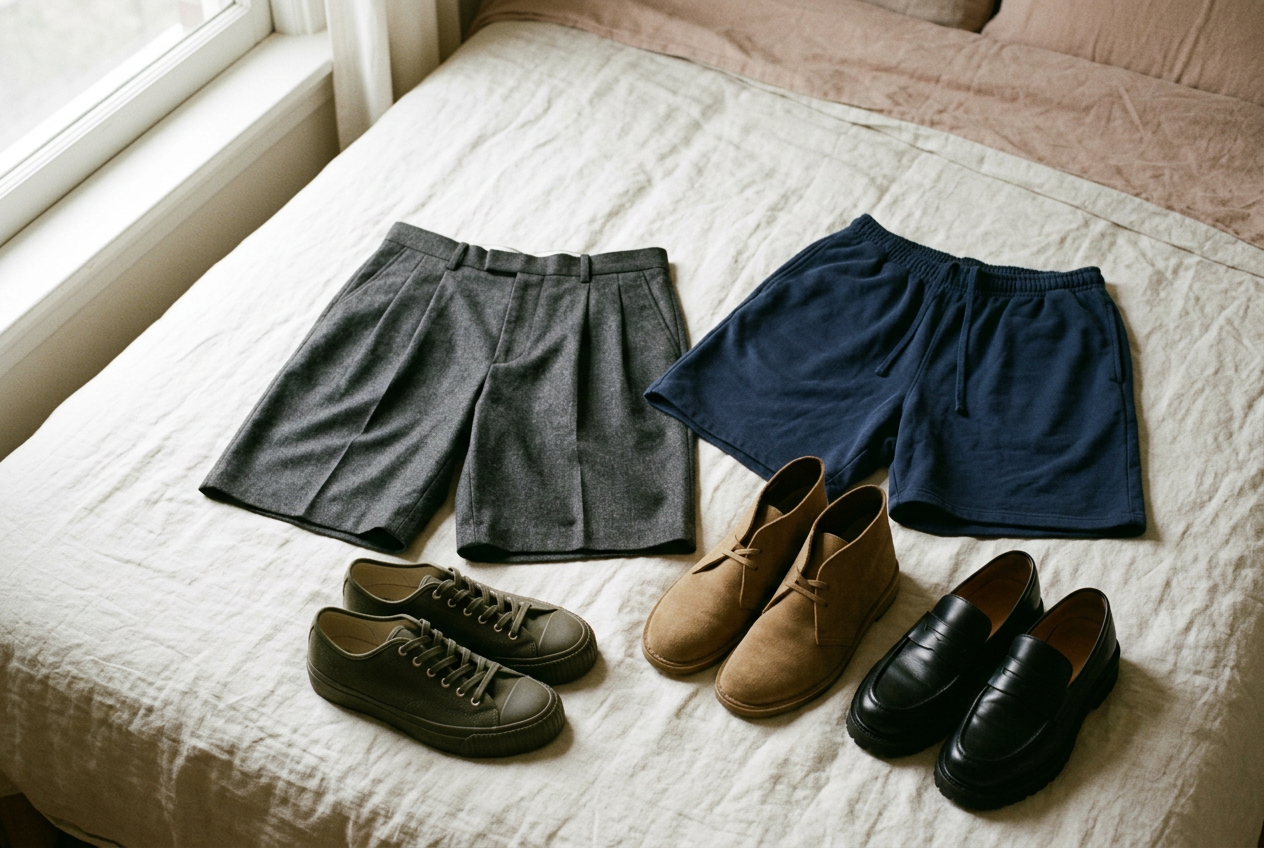
Keep one concrete garment in view: a charcoal wool-blend Bermuda with a high waistband, front pleats, a pressed crease, and a hem landing just above the kneecap. It is the useful test case because every styling decision has to preserve its trouser logic. Put that pair beside a loose navy sport short with an elastic waist and a flexible, unpressed leg, and the shared length stops being meaningful.
This analysis covers women's shorts, where differences in hip shaping and waist placement can make two nominally similar sizes sit at entirely different heights.
Rise decides where the outfit starts
Rise means the distance from the crotch seam to the waistband. On the charcoal Bermuda, a high rise places the visual center of the outfit near the natural waist, which makes a tucked shirt, waist-length knit, or cropped jacket feel connected to the garment rather than laid over it.
That relationship is easily lost. A top ending several inches below the waistband covers the narrowest point, then stops near the upper section of the pleats, where the shorts are beginning to widen. The result can look bulky even if both pieces fit. Tucking the same top restores the line, although a full tuck may add too much fabric under a close waistband; a shorter top that meets the waistband is cleaner and more comfortable.
Sport shorts behave differently because their elastic waist usually tolerates movement and a less exact position. Some settle at the natural waist, while others slip toward the hips as the wearer walks, particularly when a phone weighs down one pocket. A fitted top that ends around the waistband makes that looseness legible. An oversized T-shirt can also work, but it needs enough length to overlap the shorts decisively while leaving some hem visible.
The awkward length is the one that stops at the fullest part of the hip and divides the volume into two competing blocks.
A drawcord does not turn a low-sitting sport short into a high-rise pair. Pulling it tighter often gathers the waistband without lifting the crotch, so the fabric bunches at the stomach and remains dropped below. If a high waist is important, check the rise measurement rather than relying on elastic.
Hem width separates tailoring from athletic volume
Hem sweep is the full circumference around the leg opening. It matters more than the word “Bermuda,” which retailers use for close, straight shorts as well as pairs wide enough to resemble a divided skirt.
The charcoal Bermuda needs controlled clearance around the thigh. Its pleats should open when sitting and fall back into place when standing; if they remain pulled apart, the shorts are too tight through the hip or upper thigh, even when the waistband closes. Going up a size and adjusting the waist is often better than accepting permanently splayed pleats.
Too much hem width creates another problem. A stiff cotton twill can hold away from the leg like a tube, making a knee-length cut feel heavy. Wool blends and fluid suiting fabrics usually fall closer once the pleat releases, so they can carry a wider opening without producing the same rigid outline. That is drape, meaning the way fabric hangs and collapses under its own weight.
Loose sport shorts are supposed to maintain air around the leg. Their width allows a stride without asking the fabric to stretch, and a curved side opening may expose more thigh in motion than the front view suggests. This is why checking the hem while seated matters: a pair that looks near-knee in a mirror can ride much higher once the lightweight fabric folds.
The middle ground is currently the least convincing option. A semi-tailored short with an elasticized back, narrow leg, and technical synthetic fabric may sound versatile, yet it can lose the clean waistband of a Bermuda without gaining the easy volume of a sport pair. Unless that hybrid solves a real dress-code or comfort problem, it is not worth paying trouser-level money for it.
Fabric tells the shoes what to do
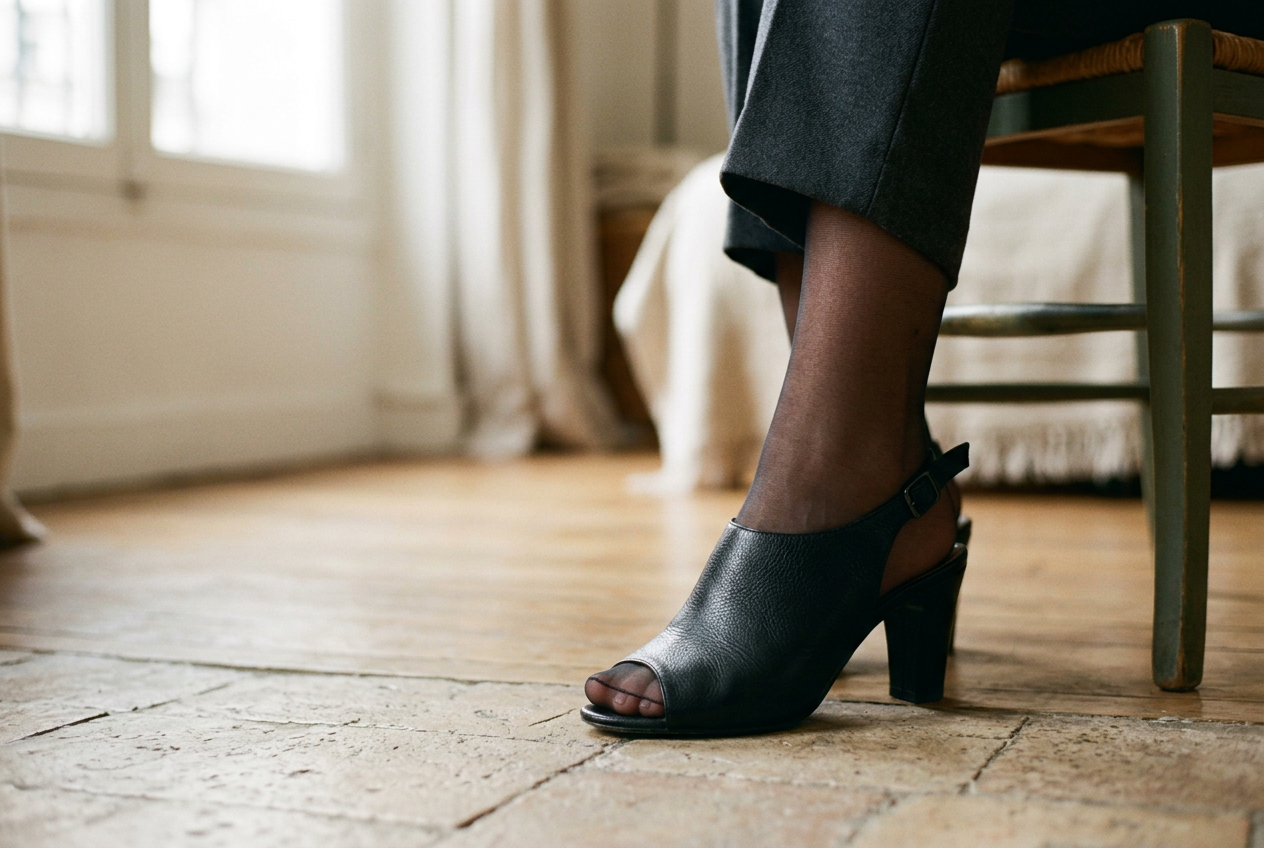
The charcoal wool-blend pair has visual weight even if the cloth itself is light. A pressed crease, stable waistband, and matte surface ask for a shoe with a defined shape. A loafer works because its upper has enough coverage to answer the tailoring, while a low-profile sneaker relaxes the shorts without denying their structure. A slingback or slim sandal can do the same job through a clear toe shape and secure heel.
Shoe proportion is less about formal versus casual than the amount of sole and upper visible below the hem. With a straight Bermuda ending near the knee, a very bulky sneaker can compress the exposed lower leg, particularly when the sock adds another horizontal line. If the substantial shoe is nonnegotiable, exposing the waistband with a shorter top shifts some visual weight upward. Bare ankle or a low sock also leaves a pause between hem and shoe.
A loose sport short can support a broader sneaker because the hem already occupies more horizontal space. A technical sandal works for the same reason, provided its straps and sole have enough presence. Slim flip-flops create a sharper contrast; they are strongest when the fabric is fluid and the ankle remains bare, rather than when stiff mesh forms a wide box above a nearly invisible sole.
Fabric behavior can overrule all of this. Lightweight nylon often balloons in wind and clings after sitting, while polyester mesh holds a recognizable athletic texture but may catch on rough surfaces. Tricot, a knit fabric with a smooth face, tends to move more fluidly and can look less like team uniform. None should be pressed into a false crease.
Wash them cool according to the care label and let the fabric resume its intended shape.
The tailored pair asks for more maintenance. A wool blend may need airing, spot cleaning, and occasional steaming, while linen blends wrinkle quickly around the lap. Cotton twill can usually tolerate more frequent washing but may lose its crease and fade at folded edges. The charcoal Bermuda only earns a higher price if the waistband stays flat, the pleats align, and there is enough seam allowance for minor tailoring.
Otherwise, a simpler flat-front short is the better buy.
Top length should confirm the category
With the charcoal pair, the most reliable formula is a top that either meets the waistband or goes fully inside it. A fine knit ending at the high rise preserves the long vertical line of the crease. A button-front shirt can work untucked when its hem is short and fairly straight, but a long curved shirttail covers the shorts' construction and leaves only two tailored legs visible below.
A blazer needs similar discipline. If it ends close to the short hem, the outfit can become a near-suit with very little leg separating the layers; that proportion may be intentional, though it is harder to wear with a heavy shoe. A waist-length jacket gives the Bermuda more room and makes the high rise useful.
For the navy sport short, a compact tank or close T-shirt establishes contrast without trying to make the shorts polished. The alternate formula is a genuinely oversized top with a dropped shoulder and enough length to read as chosen. A moderately loose, hip-length tee is less useful because it repeats the width of the shorts and stops before the outfit gains a clear long line.
This is also where pockets affect fit. Tailored side pockets should lie flat; if they flare, the hip needs more room or the pocket bag is being pulled by the waistband. Sport pockets can protrude because the shell is light, but a phone may drag one side lower. A zipped pocket or small crossbody bag is a practical alternative when the waistband cannot support that weight.
The buying decision is two decisions
Choose the tailored branch if the charcoal Bermuda makes sense with clothes already in the closet: compact knits, shirts that tuck without bunching, loafers, or a slim sneaker. Check the pleats from the side, sit before deciding, and look for a hem that clears the kneecap without gripping the thigh. Budget for pressing or occasional alterations in the same way you would with casual trousers.
Choose the sport branch if movement, easy washing, and generous pockets matter more than a fixed waistline. Bend and sit in the fitting room, then notice whether the hem exposes more leg than expected and whether the lining catches. Premium pricing is difficult to justify unless the fabric breathes well, the pocket construction controls weight, or the waistband remains comfortable after adjustment.
There is no need to choose a winning silhouette. The tailored Bermuda is more demanding but integrates with structured clothes; the sport short is easier until its volume meets an equally loose top and an undersized shoe. What is fading is the assumption that knee length supplies enough information. It does not.
Questions people ask
Where should tailored Bermuda shorts end?
A hem just above or around the kneecap usually keeps the trouser line visible without gripping the joint. The exact point matters less than movement: sit down and check that the shorts do not pull tightly across the thigh or force the pleats to remain open when you stand.
What shoes work with loose sport shorts?
Broad sneakers and technical sandals can balance a wide hem, while slim flip-flops work best with fluid fabric and a clearly exposed ankle. If the shoe looks too small beneath the shorts, reduce the top's volume or choose footwear with a more substantial sole.
Should a top cover the waistband of long shorts?
With high-rise tailored Bermudas, show the waistband or tuck the top so the pleats and waist placement remain clear. Loose sport shorts permit more overlap, but the top should either finish near the waistband or extend well past the hip rather than stopping at its widest point.
Are tailored Bermuda shorts worth altering?
Minor waist adjustment can be worthwhile when the shorts fit through the hip, the pleats close properly, and the fabric has enough structure to hold a crease. Alteration is less sensible when the leg is already narrow or the waistband twists, since those problems point to the wrong cut rather than one correctable measurement.
One update a day
Today's fashion update, in your inbox
One fashion update each morning — no hype, no filler, just pieces worth wearing.