Long Shorts Need the Right Hem Width to Avoid Office Uniform
Long shorts are taking over some of the miniskirt’s work. The useful distinction is not knee length alone, but how straight, A-line and wide hems interact with the leg and the shoe.
Women's · October 12, 2026 · 7 min read
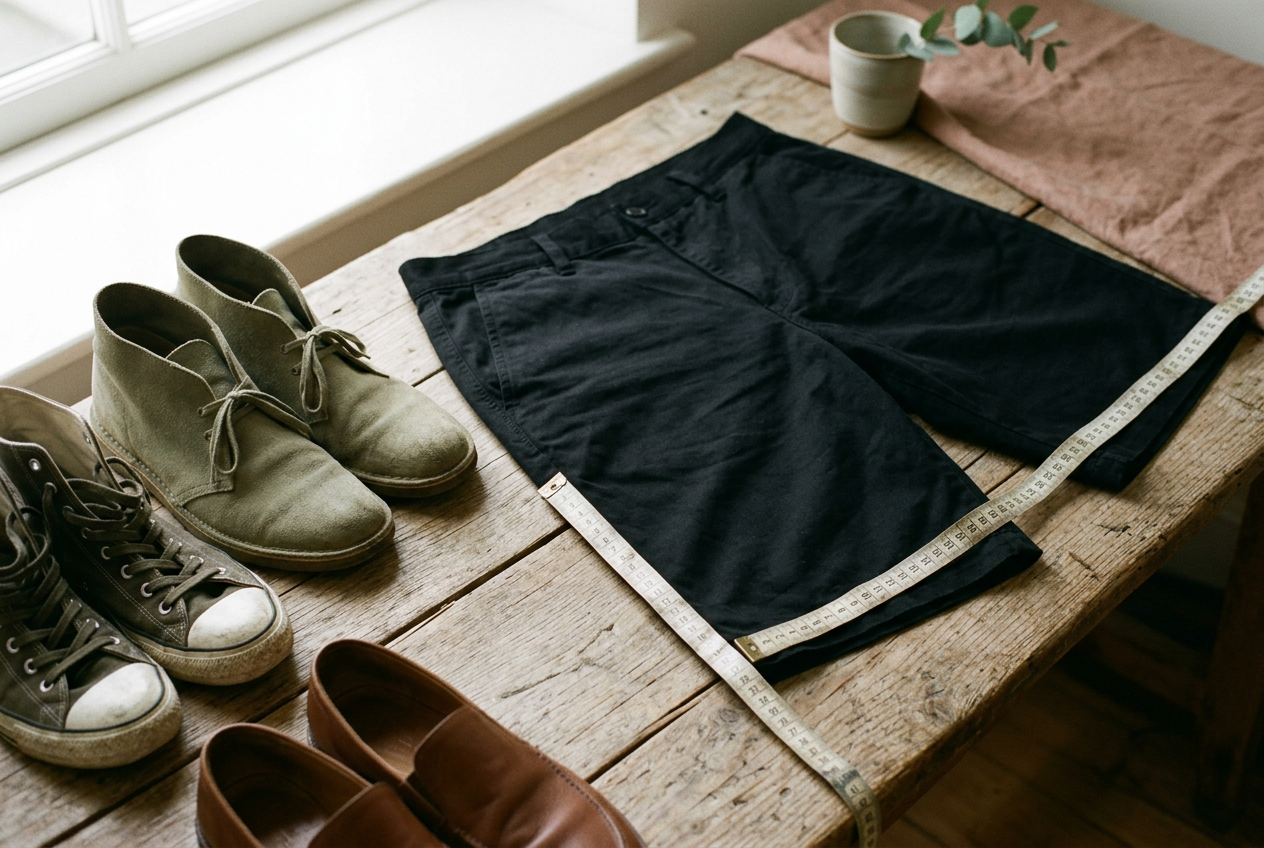
The pair that clarified this for me was black cotton twill, with an 11-inch inseam and a 13.5-inch hem opening measured flat. The inseam, measured from the crotch seam to the bottom edge, put the shorts just above my kneecap. That sounded right.
The trouble was the nearly straight leg: with a tucked shirt and loafers, the shorts read less like a deliberate alternative to a miniskirt and more like part of a warm-weather uniform.
Changing the top did little. Changing the shoe helped, but the decisive adjustment was at the hem. Once the side seams were temporarily pinned to suggest a modest A-line, the whole outfit loosened visually, even though the length stayed the same. A hem opening, meaning the width across the bottom of one leg when the garment lies flat, can alter the message more than another inch of inseam.
This is women’s coverage, and the sizing discussion follows women’s ready-to-wear conventions. The method still matters more than the number on the label: compare where the hem lands on your leg, how much space surrounds it, and whether the shoe repeats or counters that width.
The shift is from exposed leg to shaped volume
The current long-short silhouette is doing some of the work a miniskirt has done in recent seasons. It gives a compact top somewhere substantial to land, leaves shoes fully visible and creates contrast with fitted knits, small cardigans or abbreviated jackets. Public runway coverage and retailer assortments have shown more knee-near shorts across denim, cotton twill, linen blends and trouser fabrics, but the useful change is not that one approved length has replaced another.
What is fading is the assumption that a short bottom must expose most of the thigh to feel fashion-led. What is rising is controlled volume lower on the leg.
That control matters. Traditional Bermuda shorts often borrow trouser details such as pressed creases, welt pockets and matching belts. Add a narrow hem, crisp poplin shirt and polished loafer, and those cues accumulate. None is wrong, but together they can look corporate even when the individual pieces are current.
A wider hem interrupts that reading because it creates visible air around the thigh instead of tracing a straight trouser line toward the knee.
Straight long shorts need deliberate ease
A straight leg has side seams that fall with little flare from hip to hem. It is the easiest version to find in denim and cotton twill, and the easiest to misjudge on a hanger, where clean vertical lines look sharper than they may feel on the body.
Start with the hem rather than the waistband. Sit down, cross one leg and walk a flight of stairs if the fitting room permits. The bottom edge should not grip the thigh or climb several inches and stay there. On the black twill test pair, the 13.
5-inch flat opening looked roomy while standing, yet it caught at the back of the thigh in motion; the dense fabric had little drape, so every point of contact remained visible.
A straight pair works best when there is a clear sliver of space around the leg and the hem ends above the widest part of the knee. If it lands directly across the kneecap, the fabric may buckle when walking. If it ends higher, around the lower third of the thigh, a close but non-clinging opening can look intentional, especially with a flat sandal or narrow sneaker.
The tradeoff is precision. Straight shorts are neat, but they offer less tolerance for a strong thigh, a stiff material or sizing between brands. Going up one size may solve the hem while creating excess at the waist. In that case, budget for a waistband alteration or leave the pair behind; taking in a waist is routine, while adding useful width at a hem usually requires seam allowance the garment may not have.
A-line shorts make knee-near lengths easier
An A-line shape widens gradually from the hip toward the hem. This is the most direct answer when long shorts feel too much like office trousers, because the flare separates the bottom edge from the leg without requiring an oversized waist or a very fluid fabric.
Look at the side seam. It should travel outward in a clean line rather than bulging at the upper thigh and dropping straight afterward. A front pleat can create extra room, though stitched-down pleats sometimes release at exactly the fullest point of the body and add volume there. An unpleated cotton pair, or a linen blend with enough weight to avoid collapsing between the legs, is often easier to assess.
Inseam proportion changes the effect. A hem a few fingers above the kneecap can take a visible flare without resembling a skirt, while an A-line pair that ends at mid-knee may need softer fabric so the corners do not stand away from the body. The black twill pair improved when pinned only slightly wider. More flare made the stiff cloth kick outward, which traded corporate severity for another fit problem.
Shoes can stay light here. A slim retro sneaker, low-profile sandal or pointed flat leaves enough visual space between the broadening hem and the ground. Chunky loafers can work, but they make the outfit heavier and bring back some of the uniform effect the A-line was meant to interrupt.
Wide-leg shorts rely on movement
Wide-leg long shorts carry substantial volume from the upper thigh down, rather than adding flare only near the hem. In soft wool, viscose blends or fluid linen, they can move like a divided skirt. In heavy denim, the same pattern becomes architectural and may hold a fixed shape around the legs.
The fit check belongs at the crotch as much as the hem. Extra width does not compensate for a rise that pulls forward or a crotch seam that sits too low, since either problem makes the legs swing awkwardly when walking. Check the back view for fabric folding inward beneath the seat. That fold often signals a mismatch in rise or seat shape, not a need to size down everywhere.
Longer proportions usually suit this cut because the volume has room to fall. Near-knee wide shorts also tolerate a more substantial shoe: a fisherman sandal, rounded sneaker or boot with a close shaft can ground the fabric. A tiny ballet flat creates a more pronounced contrast, which may be exactly the point, though it can make stiff wide-leg shorts appear even broader.
This is the silhouette least likely to read corporate, but it asks the most from the material. Thin fabric can catch between the thighs, crease sharply and turn semi-sheer in daylight. Dense fabric can feel warm and occupy more physical space when seated. Paying trouser-level money makes sense only when the cloth hangs cleanly and the waistband remains stable; width alone is not evidence of better construction.
Let the shoe confirm the fit decision
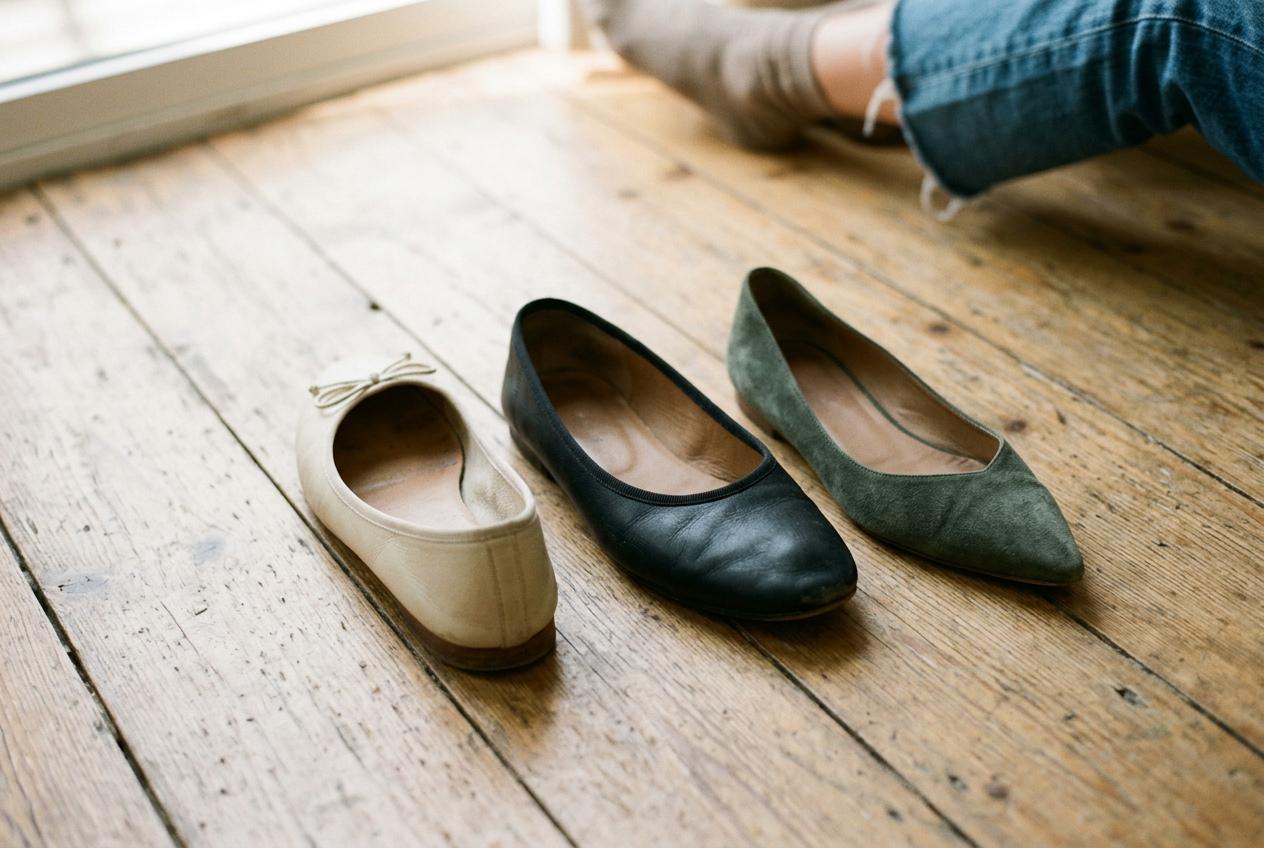
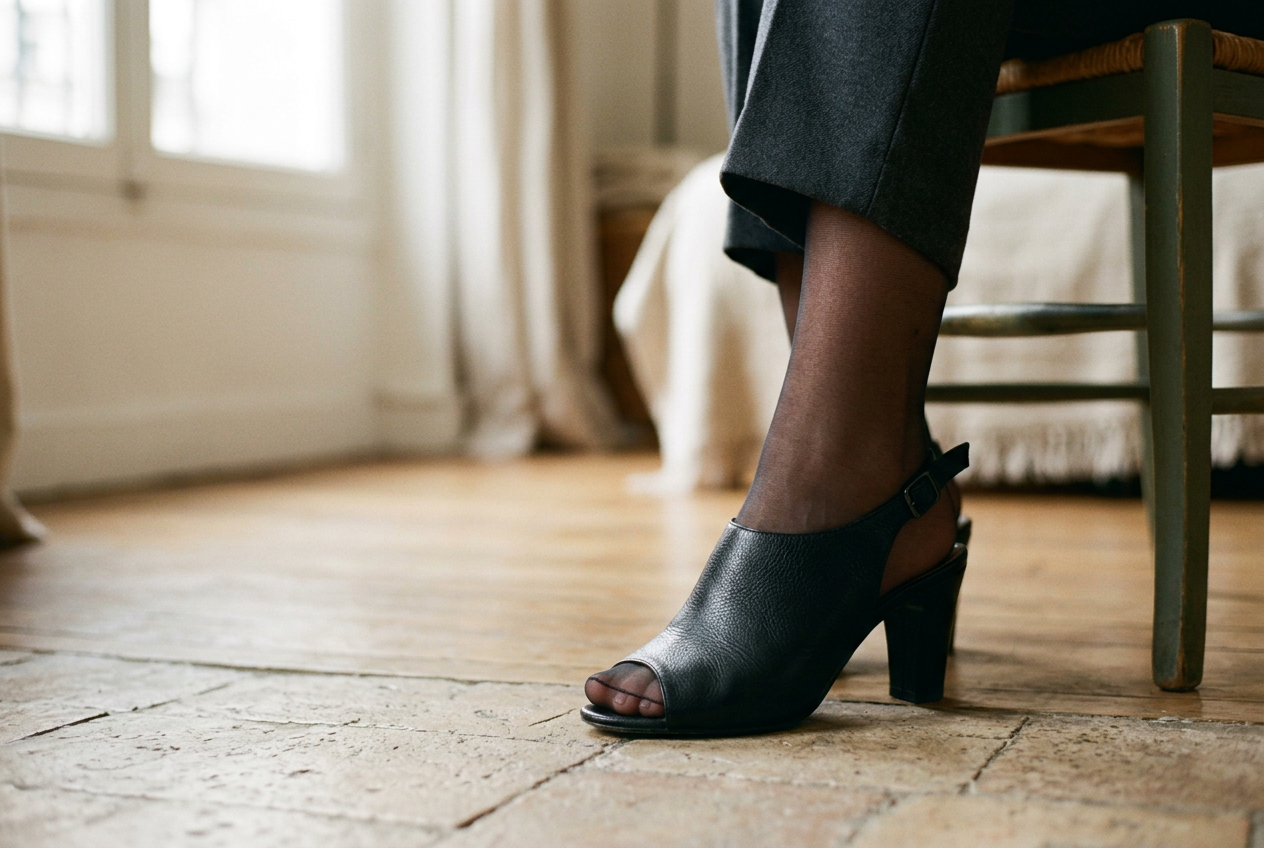
Shoes cannot rescue shorts that pinch, but they can clarify an otherwise sound proportion. With straight long shorts, expose some of the foot or choose a streamlined upper so the outfit does not become one continuous column. On the black twill pair, loafers plus socks reinforced every tailored cue. Bare ankles and a thin-soled sneaker made the same narrow hem feel less formal, although the catching at the thigh remained.
A-line shorts already create space, so the shoe can either continue that lightness or oppose it. Flat thong sandals and mesh flats keep the lower half open. A lugged loafer adds weight and may look purposeful with a fitted knit, but it is not a neutral choice.
Wide-leg shorts can absorb more shoe. Their larger hem opening makes a rounded toe or thicker sole look proportionate, especially when the inseam reaches the top of the knee. Watch the gap between hem and shoe: a high boot shaft that disappears under the shorts can make them resemble cropped trousers, while a visible strip of leg preserves the short silhouette.
Use the fitting room to compare shape, not labels
Take a tape measure if shopping across brands. Record the inseam and flat hem opening of a pair you already like, then compare both numbers with the garment listing or the item in front of you. The relationship matters more than either measurement alone. Two pairs with identical 11-inch inseams can look unrelated when one hugs the lower thigh and the other stands several inches away.
Wear or bring the shoe category you expect to use most. Then test the shorts with an untucked top before adding a belt or blazer, since styling can disguise a poor line long enough to get through a fitting-room mirror. If the garment needs a pressed crease, structured jacket and exact shoe to make sense, it may be too narrowly corporate for a casual wardrobe.
Fabric deserves one final check. Cotton twill softens but rarely gains dramatic drape; rigid denim may relax at the waist while keeping a firm hem. Linen wrinkles and opens visually, which can make a straight cut seem less severe. Wool blends often hang best but may require dry cleaning, raising the cost beyond the purchase price.
The black cotton pair survived a week of outfit testing without losing its shape, which confirmed both its strength and its limitation: the hem would not relax into a better line.
Questions people ask
How long should long shorts be?
Use the knee as a reference rather than chasing one inseam number. Straight shorts usually move more cleanly when the hem clears the kneecap, while soft wide-leg pairs can reach the top or middle of it. Your rise and thigh length change where the same published inseam lands, so measure a garment, not only your body.
How wide should the hem opening be?
There should be visible ease around the leg when standing and enough room that the hem does not catch after sitting. A straight cut needs a smaller gap than an A-line or wide-leg shape, but no single measurement fits every size. Compare the flat opening with a pair you own, then test stairs and a chair.
Which shoes keep long shorts from looking corporate?
Low-profile sneakers, slim sandals and mesh or pointed flats reduce the office cues of straight or A-line shorts. Wide-leg pairs can support fisherman sandals, rounded sneakers or close-shaft boots. If you prefer loafers, skip the matching belt and pressed shirt at first, then add tailored elements one at a time while checking the full-length mirror.
One update a day
Today's fashion update, in your inbox
One fashion update each morning — no hype, no filler, just pieces worth wearing.