Slouchy Bags Hold More. They Also Lose Everything.
Soft suede and leather shoulder bags are displacing rigid minis. The extra room helps, but base support, pocketing and what you carry determine whether the shape survives.
Women's · September 18, 2026 · 8 min read
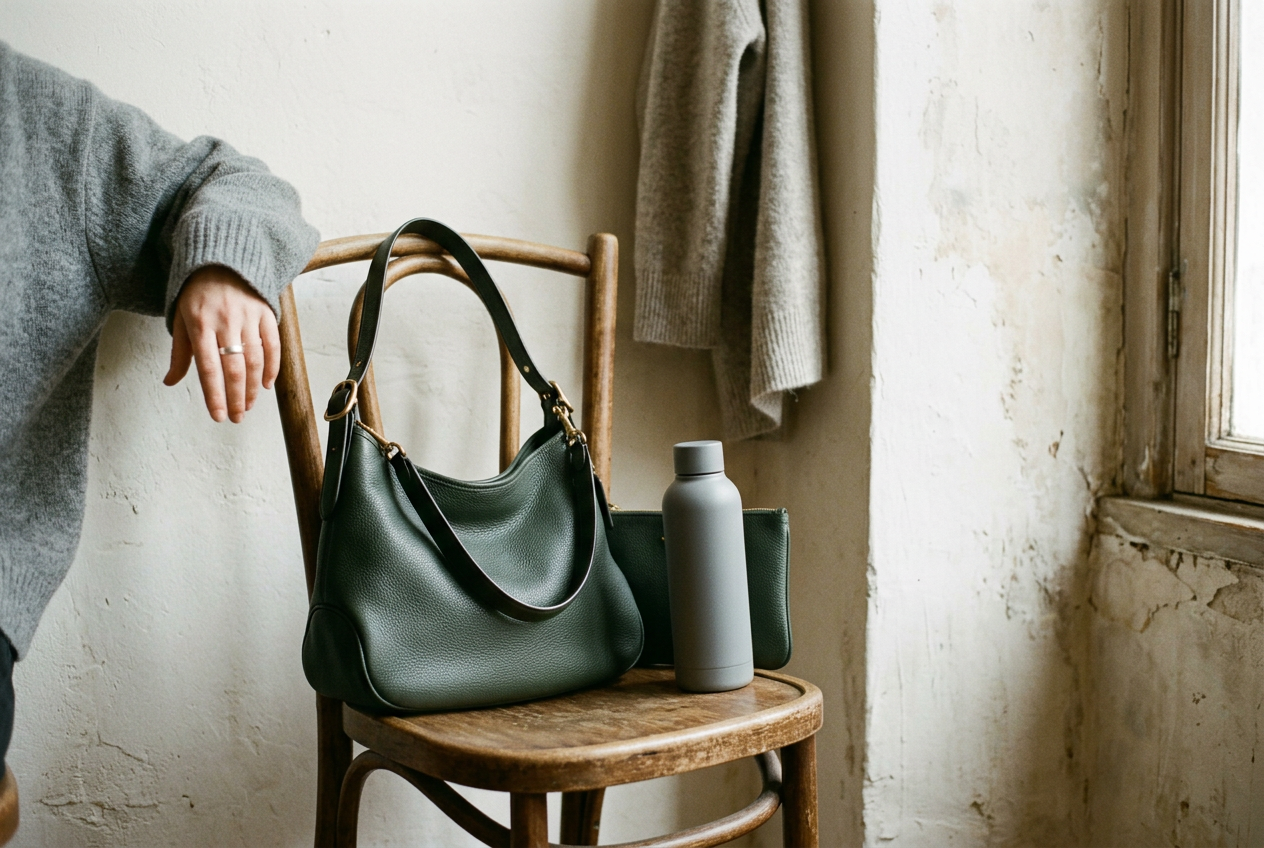
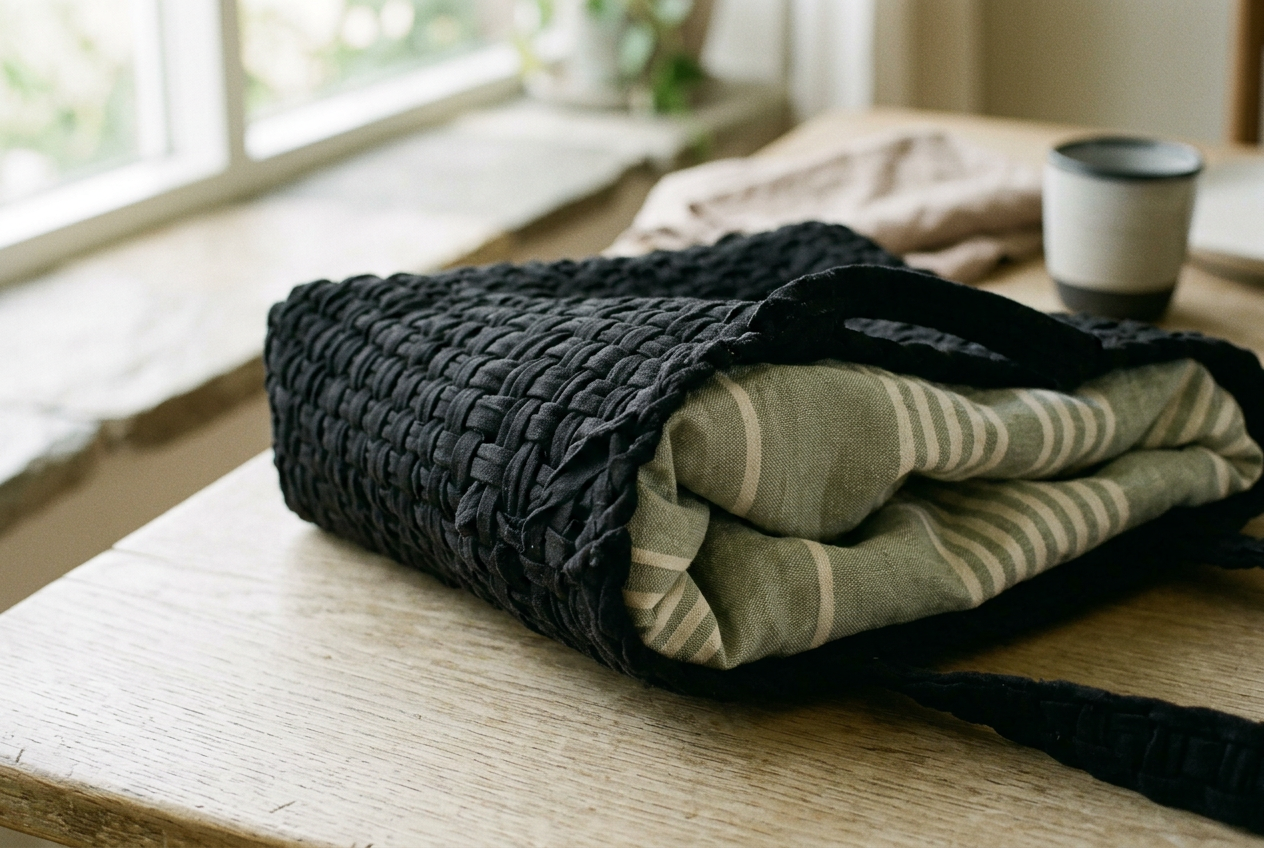
The Coach Brooklyn Shoulder Bag 28 makes the change unusually easy to see. It is a soft, vertical shoulder bag in natural grain leather, cut to tuck under the arm with little of the hardware or rigid framing that defined compact top-handle bags and boxy minis. Coach gives it a magnetic snap closure and an interior snap pocket. The rest is open space.
That open space is the attraction. A Brooklyn 28 can accept the ordinary things a mini bag edits out, including a folded scarf or small water bottle, while its curved upper edge sits close to the body rather than projecting like a hard case. Yet the same construction leaves the wearer responsible for creating order and, to some extent, the silhouette itself.
This is women's coverage, although several of the construction decisions apply to any soft shoulder bag. The useful distinction is not large versus small. It is whether the bag controls its contents, or the contents control the bag.
The new volume is soft, not merely bigger
Retail assortments have been moving away from compact bags built around a fixed rectangle. In their place are shoulder bags, east-west shapes and bucket-like totes in suede or supple leather, with brands including Coach, Madewell and Mango offering accessible versions of a silhouette also visible at luxury labels such as Khaite and The Row.
The important change sits inside the material. A structured mini usually relies on firm leather, reinforcement between the outer material and lining, or both. Interfacing, meaning a hidden layer that stiffens the bag, helps the sides remain upright even when the compartment is empty. Corners stay legible.
The base resists bowing. A phone placed vertically is less likely to pull one wall out of line.
A slouchy bag gives up much of that control. Natural grain leather softens at flex points, while suede has a raised surface called a pile that makes color look deeper but also shows rubbing and directional marks. Neither material automatically produces collapse; thickness, lining and reinforcement matter. Still, the current look depends on some yielding, especially around the opening and upper sides.
The Brooklyn 28 illustrates the middle position. Its leather body is relaxed, but the base has enough depth to make the bag more usable than a flat pouch. Once carried, however, a dense object settles low and creates a visible pull. The bag looks best when the load is broad and moderately light, not concentrated into one charger, one bottle and a fistful of loose cosmetics.
Base support decides whether slouch looks intentional
Set an empty soft bag on a counter. If the bottom immediately folds into a ridge, daily contents will exaggerate that fold. If it stays broadly level while the upper body relaxes, the bag has a better chance of looking slouched rather than misshapen.
The relevant construction detail is the base panel. A separate base with a defined seam usually spreads weight more evenly than two soft sides joined along a narrow bottom edge. A gusset, meaning the side or bottom panel that creates depth, also gives objects somewhere to sit without forcing the front and back apart. Neither feature needs to make the bag rigid.
It merely establishes a floor.
Press the base gently between two fingers when shopping. A thin, fully pliable bottom will conform to every hard object inside it; a lightly reinforced one should bend without creasing sharply. Protective feet can reduce surface contact, but they do not prove that a base is supported. On very soft leather, feet may pull against the material or sit at odd angles once the center sags.
A removable base shaper, a flat insert placed inside the bottom, can correct mild bowing. It also changes the design. The bag will sit wider, lose some of its drape and gain a hard edge that may show through fine suede or thin leather. Choose an insert slightly smaller than the internal base rather than forcing one into the corners, and cover any rough perimeter that could abrade an unlined interior.
For the Brooklyn 28, an organizer or shaper should be a response to a repeated problem, not an automatic purchase. Its narrow, relaxed line is part of the point. Filling the entire lower half with thick felt can turn it into a stiff bucket while taking away the extra room that made it preferable to a mini bag.
One pocket is a design choice with a daily cost
The structured mini bag trained its wearer to carry less, but it often made the reduced load easy to locate. A rigid compartment keeps a card case against a wall, and a zip or flap gives the hand a clear opening to search. Soft bags tend to have larger mouths, darker interiors and fewer internal divisions because extensive pocketing can interrupt the exterior drape.
Coach's interior snap pocket gives the Brooklyn 28 a place for a card case or keys, provided both are not competing for it. Everything else shares the main compartment. That is manageable with a zip pouch. Without one, small items move into the base crease, where the soft walls close over them when the bag rests against the body.
Pocket construction deserves a closer look than pocket count. A loose fabric slip pocket can sag when loaded with a phone, causing the lining to pull into the center. A leather pocket secured along its upper edge holds its position better but adds weight and stiffness. A suspended zip pocket divides the cavity without reinforcing the whole exterior, although it can catch bulky objects as they pass through the opening.
There is also a closure tradeoff. A magnet supports the easy, folded look and permits one-handed access, but it does not contain the bag's contents if the body tips sideways. A full zipper offers more security and helps control the top edge, at the cost of a straighter, more managed silhouette. For public transit or frequent overhead storage, that cost may be worth paying.
Pack for shape, not theoretical capacity
A soft bag can physically hold more than it should carry. Capacity describes whether an object fits inside; load distribution describes what that object does once the bag hangs from one strap.
Start with the largest item used most days. A tablet should sit flat against the side rather than diagonally across the base, where its corners can print through. A water bottle needs to stand near a side seam or inside a fitted sleeve. If it rolls into the center, it will form the lowest point of the bag and pull the opening out of balance.
Soft objects are kinder. A compact umbrella in a fabric sleeve, a scarf or a lightly filled pouch supports the body without drawing a hard outline on the exterior. Overstuffed makeup bags do the opposite. Their zip corners create pressure points, especially in suede, and the weight collects at the bottom rather than spreading along the bag's width.
Try the bag with your belongings during the return window, keeping tags and protective wrapping intact. Walk around at home, set it on a chair and retrieve the item you reach for most. If that item requires removing two others, the advertised volume is not useful volume for you. If the base bends visibly under your normal load, a week of carrying will not make the problem tidier.
The Brooklyn 28 works best as a medium shoulder bag with deliberate editing, not as a substitute for a commuter tote. Its soft vertical body buys room for daily extras, but a laptop, full bottle and dense electronics pouch would ask the leather to perform like reinforced luggage. The rigid mini avoided this conflict by refusing the load in the first place.
Suede raises the maintenance stakes
Suede makes the silhouette look softer because light moves across its pile and the edges appear less severe. It also records contact quickly. Dark denim can transfer dye onto pale suede, rain can alter the pile, and repeated rubbing under the arm may flatten the surface even when the bag remains structurally sound.
Inspect the underside of the strap and the upper back panel, since those areas receive the most friction. A deeper brown or black suede usually disguises handling better than cream, though it can still develop glossy patches. A suede brush can lift minor compression after the surface is dry. Any protector should first be tested in an inconspicuous area, following the maker's care instructions, because sprays can shift color or texture.
Smooth leather is less visually delicate, but very soft finishes still scratch and stretch. A slouchy bag bought at roughly the price of a good pair of boots may justify occasional conditioning and careful storage. A low-priced version in thin split leather or synthetic suede is harder to recommend as an investment if the base already creases on the shelf; the silhouette leaves little structure to hide material fatigue.
Store either version lightly filled with acid-free tissue or clean, colorfast fabric. Do not pack it until the sides are taut. The aim is to prevent a permanent central fold while preserving the relaxed upper body.
The structured mini still has a job
A compact structured bag remains the more efficient choice for an evening load, particularly when the contents are limited to a phone, card case and one small personal item. It protects those objects, keeps its outline and usually occupies less space against the body. Its failure is capacity, not organization.
The slouchy alternative makes more sense when the mini bag has been forcing compromises, but only if its opening, base and pocket arrangement suit the actual load. For the Brooklyn 28, one pouch and one assigned snap pocket are enough for a moderate day. Adding multiple organizers to recreate the rigid bag's internal order defeats both its lightness and its line.
That leaves the trend in a reasonable but unresolved place. The new bags are easier to live with than minis for many wardrobes, yet the most relaxed examples transfer construction work to the owner, who must supply pouches, distribute weight and decide how much distortion still looks good.
Questions people ask
Do slouchy bags lose their shape permanently?
They can develop lasting folds where weight repeatedly collects, particularly if the base is thin or the bag is stored empty and flattened. Light stuffing during storage and spreading dense items across the bottom can slow that change, but a supple leather or suede bag should not be expected to retain a crisp outline.
Does a bag organizer ruin the slouchy look?
A thick organizer can square off the base and push the sides outward, removing the drape that made the bag appealing. Choose a light insert smaller than the internal footprint, or begin with one zip pouch. An organizer is most useful when it solves a specific problem such as bottle tipping or keys disappearing.
Is suede practical for an everyday shoulder bag?
Dark suede can work for regular use if it is kept away from heavy rain, dye-prone clothing and rough surfaces. Pale suede demands more attention because transfer and flattened pile show sooner. Check the brand's care instructions before applying protector, and expect the underarm area to change texture with friction.
Should
I choose a slouchy bag or a structured mini?
Choose the slouchy bag if your daily load exceeds a phone and card case, and the base remains stable when packed. Keep the structured mini if you value fast retrieval, a fixed outline and minimal carrying. If a soft bag needs several heavy inserts to function, its extra capacity is probably the wrong kind.
One update a day
Today's fashion update, in your inbox
One fashion update each morning — no hype, no filler, just pieces worth wearing.