Sliding Acetate Sunglasses Need a Bridge Check First
A tighter grip behind the ears will not rescue a mismatched bridge. Check where the frame meets the nose, then account for weight, sweat, and summer-softened acetate.
November 16, 2026 · 8 min read
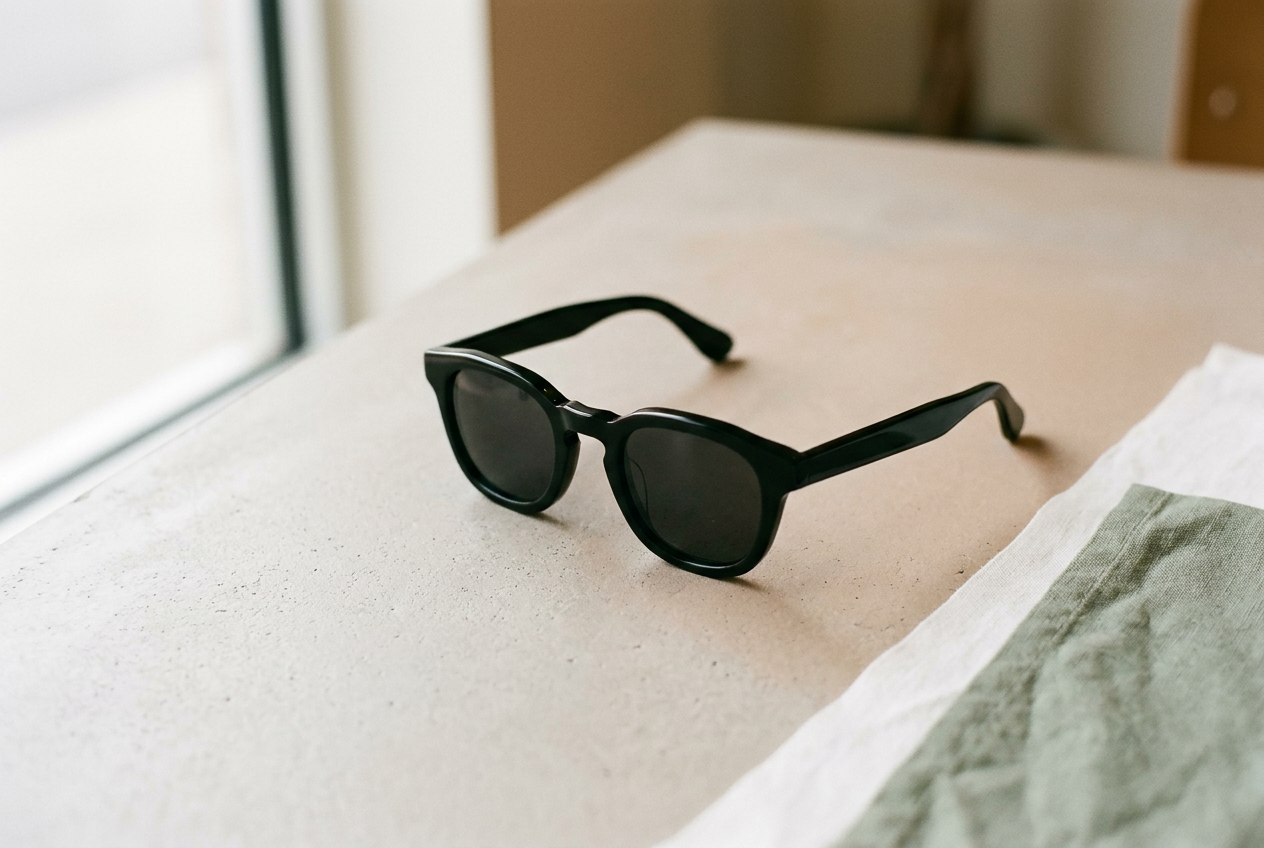
Use a glossy black, full-rim acetate pair as the working case: a keyhole bridge, thick temples, and lenses large enough to carry noticeable weight. Indoors, the frame appears level. Outside, it moves down the nose until the top rim sits below the brows, while the folded temple tips still seem snug behind the ears.
That is a bridge problem until proven otherwise.
The advice here is unisex because the relevant variables are the frame and the wearer’s facial structure, not the department in which the sunglasses were sold. Gendered labels may influence color or listed size, but they do not tell you whether the bridge will carry the frame.
The bridge carries the frame
Cellulose acetate, a thermoplastic frame material made from processed cellulose sheets, feels substantial and takes color beautifully. It is also heavier than thin metal or many injection-molded plastic frames, particularly when the rims and temples are thick. Add broad lenses and the center of gravity can pull forward.
The nose must carry most of that load. On an acetate frame without separate nose pads, the bridge is molded into the front, so its width, curve, and contact area cannot be repositioned as freely as adjustable metal pads. If the bridge touches only at two small points, perspiration reduces friction and the black frame begins its slow trip downward.
Tightening the temples, meaning the arms that extend from the frame front to the ears, attacks the movement from the side. That can help when an otherwise well-fitted pair has loose hinges or temple tips that no longer follow the head. It does not correct empty space beneath the bridge.
Excess side pressure has its own failure pattern. The temples can pinch above the ears, leave dents at the sides of the head, or bow outward at the hinges. A hard inward bend behind the ears may hold the frame temporarily, but the wearer pays for it in soreness, and the front can still pivot down because its weight remains unsupported.
Bridge width is only the opening clue
Many sunglasses have a set of measurements printed inside one temple. The middle number usually indicates the bridge width in millimeters, measured between the lenses at a defined point in the frame. It is useful for comparison within similar shapes. It is not a universal fit guarantee.
A bridge marked with the same number can sit differently when one opening is deep and rounded while another is shallow, angular, or positioned higher between the lenses. Frame makers also measure and shape their designs differently enough that the printed number should narrow a search, not end it.
Return to the black keyhole pair. A keyhole bridge has an upper opening shaped like an old-fashioned keyhole, with the frame making contact lower down on the sides of the nose. That shape can suit a higher or narrower bridge because it leaves space near the top. On the wrong nose, however, the visible opening disguises how little acetate is bearing the weight.
A saddle bridge follows the nose with a broader, more continuous curve. More contact can spread pressure and resist slipping, though broad contact is not automatically correct contact. A saddle that is too narrow can perch high and pinch. One that is too wide can settle low, bringing the lenses toward the cheeks and eyelashes.
Readers with a lower nose bridge or higher cheekbones should also look for low-bridge-fit construction, which changes the bridge geometry and often alters frame angle or temple placement so the front stays higher. The label is useful when the construction matches the face. It is not a separate style category, and it should still pass the same movement checks.
Heat exposes a marginal fit
Acetate responds to controlled heat, which is why an optician can warm and adjust it. Summer conditions are less controlled. A frame left in a hot car can become vulnerable to warping, while repeated warmth from the skin and environment may let a marginal adjustment relax over time.
Ordinary outdoor heat does not mean every acetate frame will visibly melt or lose its shape. The more common experience is subtler: skin becomes warm, sunscreen and perspiration reduce grip, and a heavy frame that was barely stable in a cool store begins moving. Heat may contribute, but it often reveals a fit weakness that was already present.
The glossy black pair makes that distinction clear. If it slides only after sunscreen is applied, cleaning the bridge and skin may restore enough friction for the day. If it sits low on clean, dry skin before the wearer has left home, the geometry is wrong. No amount of polishing changes the gap.
Never try to reshape acetate with boiling water, an open flame, or a household heat gun. Uneven heat can dull the finish, distort the frame front, loosen embedded hardware, or affect the lenses. Professional adjustment takes little time, and retailers often include basic fitting with a purchase; another optical shop may charge a modest service fee.
A five-minute fit check
Start with clean sunglasses on clean, dry skin. Place the frame where the lenses give full coverage and the top line looks intentional against the brows. Do not push the temples tightly against the head to force that position.
Look at the bridge from the front and slightly above. The acetate should make stable contact without a sharp pressure point, and the frame should not hover over the nose except where the bridge design deliberately leaves an opening. Uneven contact matters. It can explain why one lens sits higher or why one temple appears more splayed.
Lower the chin and look toward the floor over a bed or another soft surface. A tiny settling movement is less important than continuous travel. If the sunglasses move until the temple tips catch behind the ears, the ears are acting as anchors for a front that does not fit.
Next, smile and speak. Frames that rest on the cheeks may rise with facial movement, smudge quickly, or bounce before sliding back down. This can point to a bridge that positions the front too low, lenses that are too deep for the face, or both. Tightening the temples may make that vertical movement more irritating because the frame becomes trapped between cheek pressure and ear pressure.
Check the temple line last. The arms should travel back without a pronounced outward flare at the hinges, then follow the head without digging in. The bent ends should curve around the ears rather than hook aggressively under them. Remove the sunglasses after several minutes and note where marks appear.
A concentrated red spot at the bridge or temple is more useful evidence than a general feeling that the pair is “tight.
Adjust in the right order
First, confirm that the frame front is the right width. If it is much narrower than the head, the temples will bow outward and spring pressure can become uncomfortable. If it is too wide, the temples may offer little stability even when the bridge fits. An optician can refine a close fit, but adjustment cannot turn the wrong frame size into the right one.
Second, have the bridge contact assessed. Molded acetate bridges have limited adjustability compared with separate nose pads, so a major mismatch usually calls for another bridge shape. This is where trying a saddle version of the same general silhouette, or a low-bridge-fit alternative, is more productive than repeatedly bending the black pair.
Third, let an optician check frame alignment and temple angle. One temple may need leveling, or the ends may need a gentle contour so they follow the ears without clamping them. This is temple adjustment, not indiscriminate tightening. The distinction matters because the goal is stable contact distributed across the frame.
Adhesive silicone nose pads can add grip or raise a frame slightly. They are a practical rescue for inexpensive nonprescription sunglasses or a pair worn occasionally, but they collect skin oil, can become visible on translucent acetate, and need replacement when the adhesive weakens. They also move the lenses farther from the eyes, which may affect how a prescription frame feels and performs.
For prescription sunglasses, ask the dispensing optician before adding pads or changing the frame position. Lens placement is part of the optical fitting, so a home fix that raises the front or changes its angle may create a different problem.
Know when the frame is the wrong buy
A beautiful acetate frame is not worth keeping when it needs painful ear pressure to stay level. Return or exchange it if the bridge shows daylight where support should be, the lenses repeatedly touch the cheeks, or the frame drops on clean skin during the basic downward-look check.
Weight also deserves a vote. Two frames can share a bridge shape while the one with slimmer rims and smaller lenses stays put because the nose carries less material. Lightweight lenses may help in some prescriptions, but they cannot repair incompatible bridge geometry.
The alternative to the black keyhole pair does not have to look cautious. Keep the dark acetate and substantial outline if those details matter, then seek a saddle bridge with broader contact, a low-bridge-fit version, or a slightly smaller lens shape. Fit changes can be almost invisible from across the room. They are obvious by the end of a hot afternoon.
Questions people ask
Why do my acetate sunglasses fit indoors but slide outside?
Warm skin, perspiration, sunscreen, and facial oil reduce friction at the bridge. Heat can also relax a marginal acetate adjustment over time. If the frame sits correctly on clean skin and moves only outdoors, cleaning or a professional tune-up may help; if it starts low, reconsider the bridge.
Can an optician tighten sunglasses without making them hurt?
Yes, when the bridge and overall frame width already fit. An optician can align the frame, contour the temple tips, and correct a loose or uneven adjustment without clamping the sides of the head. A large bridge mismatch cannot be solved comfortably through temple pressure alone.
Are keyhole bridges more likely to slip than saddle bridges?
Not inherently. A keyhole bridge concentrates contact lower on the sides of the nose, while a saddle bridge spreads contact across a broader curve. Either can stay stable when matched to the wearer. The relevant test is where the acetate touches and whether the frame remains level during movement.
Do stick-on nose pads work on acetate sunglasses?
They can add friction and slightly raise a loose frame, making them useful as a temporary or low-cost fix. Pads also change lens position, gather oil, and eventually need replacement. For prescription sunglasses or a pronounced bridge gap, professional fitting or a different frame is the sounder choice.
One update a day
Today's fashion update, in your inbox
One fashion update each morning — no hype, no filler, just pieces worth wearing.