Silver Jewelry Is Back, but Your Bag May Decide the Switch
Silver has regained room in jewelry assortments and resale feeds, but replacing every gold piece is unnecessary. One repeated hardware detail can make mixed metals look settled.
September 14, 2026 · 8 min read
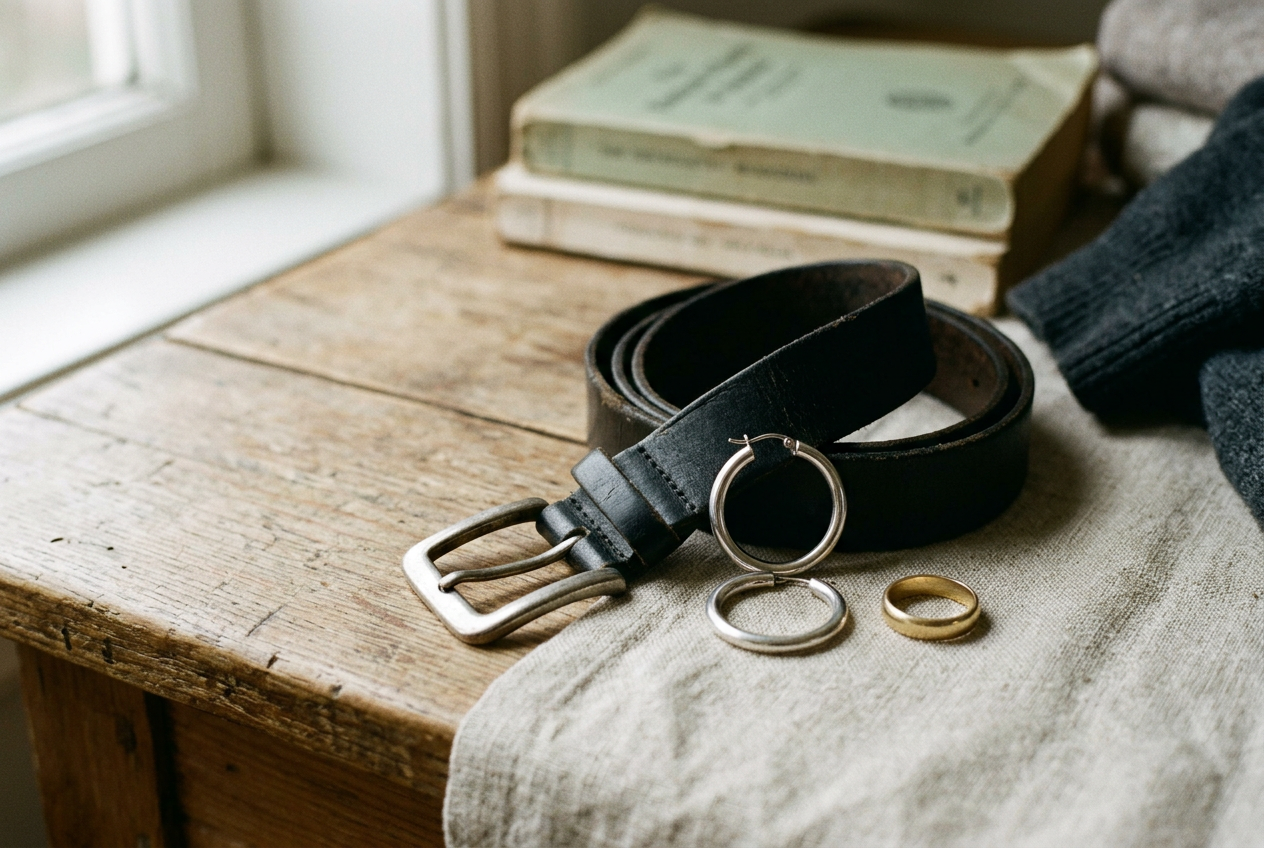
The useful object here is a pair of 20-millimeter sterling-silver hinged hoops, substantial enough to register beside a collar but small enough for an ordinary workday. Sterling silver means an alloy containing 92.5 percent silver, usually strengthened with copper; the hinged closure removes the loose butterfly backing that tends to disappear in a jewelry dish.
Wear those hoops with a gold ring and the metals can look unresolved. Add a black leather belt with a rectangular silver-tone buckle, however, and the hoops stop reading as an isolated experiment. That buckle is the decision point for this piece, because it shows why the return of silver does not automatically require a new jewelry wardrobe.
This is unisex advice. The scale and finish may change across wardrobes, but the relationship between jewelry and visible hardware does not.
What has changed in the assortment
Gold has not vanished from new-arrival pages. The shift is that silver is no longer treated as the colder alternative filed several clicks away. Public assortments at jewelry specialists including Mejuri, Monica Vinader, Pandora and Missoma show silver-colored hoops, sculptural earrings, chains and cuffs presented as core choices beside gold versions. Multi-brand retailers are also grouping silver-tone pieces into trend edits rather than leaving them to basic jewelry categories.
The silhouette matters as much as the finish. The silver pieces getting visual space are often broad hoops, curved studs, substantial chain links and smooth cuffs, forms that reflect more light than the fine gold chains that dominated everyday layering for several seasons. A narrow silver chain can disappear against clothing. A polished 20-millimeter hoop announces the metal without requiring a stack.
Silver-tone, though, describes color rather than composition. A listing using that phrase may refer to sterling silver, stainless steel, silver-plated brass or another base metal with a pale finish. Plating is a thin layer of one metal applied over another, and it will usually show wear first at moving joints, buckle corners and areas exposed to sweat. The product page matters more than the trend label.
At the accessible end, silver-plated brass buys the look for less than a pair of everyday sneakers, but its finish may dull or expose warmer metal underneath. Stainless steel generally resists tarnish and suits a piece that will meet rain or hand cream, although alloy information can be limited. Sterling silver sits in the practical middle: it tarnishes, meaning it darkens through a surface reaction with air and moisture, but a polishing cloth can restore it. White gold occupies a higher price band and may use rhodium coating to maintain a bright white surface, making it excessive for someone who only wants to test the color shift.
The 20-millimeter hoops make this material distinction visible. In sterling silver, surface scratches can be polished and the color runs through the alloy. In plated brass, repeated handling around the hinge may eventually reveal the base metal. If these are intended to become five-day-a-week earrings, sterling silver is the more defensible purchase; if they are for occasional styling, plating may be enough.
Resale shows availability, not a mandate
Resale listings add another layer to the change. Searches across The RealReal, Vestiaire Collective and eBay readily surface sterling-silver jewelry from Tiffany & Co., Georg Jensen and other established makers, along with unbranded vintage hoops, chains and cuffs. Silver is not arriving from nowhere.
It has been sitting in jewelry boxes, estate collections and marketplace inventories while yellow gold held more of the styling attention.
A listing count should not be mistaken for proof of demand. Marketplaces show what owners are offering, not only what buyers are choosing, and a dense page of silver may reflect abundant supply. The more useful signal is practical: anyone considering silver can compare secondhand construction and prices before buying a newly made trend piece.
On resale, check for a sterling mark such as “925,” clear photographs of the clasp, and measurements in millimeters rather than adjectives such as small or chunky. Earrings require extra scrutiny because marketplaces may have hygiene restrictions, missing backs or mismatched posts. A dark surface is not necessarily damage; tarnish can often be cleaned. Deep dents, a loose hinge or plating loss at an edge cannot be polished away so neatly.
The same restraint applies to designer bags. Silver-colored hardware can make an older black shoulder bag feel current, but resale descriptions are inconsistent about finish, particularly when aged, gunmetal and polished silver are treated as interchangeable. Enlarged photographs of zipper pulls and buckle corners reveal more than the color field in a listing. Heavy wear exposes the material underneath and can turn a cool hardware story into a patchwork of gray, copper and yellow.
Let hardware settle the argument
The easiest mixed-metal outfit repeats one finish twice, with enough distance between the repetitions that the connection feels deliberate. Return to the silver hoops. The black belt’s silver buckle sits lower in the outfit, giving the eye a second point without creating a matching set. A gold ring can remain because it now reads as a separate personal piece rather than evidence that the earrings were chosen by accident.
Bag hardware can do the same work more quietly. A zipper pull, chain strap or turn-lock clasp has enough reflective area to echo an earring, particularly against black, brown or navy leather. Shoe hardware tends to be smaller, but a silver buckle on a loafer or sandal can complete the repetition when the bag has minimal metal. There is no need to force all three accessory categories into agreement.
Finish is where mixing often fails. Bright, mirror-polished silver beside heavily antiqued brass creates a larger visual jump than polished silver beside polished yellow gold, even though the second pairing uses two colors. Match the level of shine first. Brushed metals, which have a softly lined rather than reflective surface, tend to sit together without demanding exact color coordination.
Scale comes next. The 20-millimeter hoops have enough width to answer a belt buckle. Tiny silver studs may not. Conversely, a broad silver cuff beside a delicate gold chain can overpower it, leaving the gold looking incidental.
Repetition works when the pieces have comparable visual weight, not necessarily comparable dimensions.
This is why replacing jewelry first can be the wrong order. Lay out the bag, belt and shoes worn most often, then note the hardware visible from standing distance. If two everyday pieces already use cool metal, the silver hoops have a wardrobe waiting for them. If almost everything has warm brass hardware and the daily watch is gold-colored, a silver purchase creates more styling work than it solves.
The purchase test
A reader considering silver needs one deliberate repeating element, not a complete conversion. Start with an item already owned and worn several times a week. The black belt with the silver-tone buckle is more useful than a special-event clutch because it can test the hoops across denim, tailoring and knitwear without asking for a new outfit.
Wear the proposed combination on three ordinary dressing days. The purpose is not to measure compliments. It is to notice whether the silver piece requires repeated substitutions elsewhere: changing the watch, rejecting the usual bag or avoiding shoes with warm hardware. If that friction persists, the trend does not fit the present wardrobe cheaply.
If the repetition works, buy at the level of wear expected. Costume jewelry is reasonable for a short experiment, though earrings need transparent material information and nickel-sensitive wearers should be wary of vague alloy descriptions. Sterling silver makes sense for frequent use and remains widely available secondhand. Implant-grade titanium, a corrosion-resistant metal used for body jewelry, is a better option for many sensitive ears, but its gray tone is usually less bright than polished silver.
The 20-millimeter hoops pass the test when the belt is already in rotation. Without that buckle, they may still work, but they ask the gold ring to carry a mixed-metal argument on its own. That is possible. It is not automatically worth spending money to prove.
Silver’s return is convincing at the assortment level and useful at the resale level, where established designs can be found without treating the finish as novel. The individual decision remains smaller. Open the closet, find the metal already attached to the objects that get worn, and let one repeated buckle or clasp determine whether the hoops fill a gap.
Questions people ask
Do all the metals in an outfit need to match?
No. Mixed metals tend to look deliberate when one finish repeats and the pieces share a similar level of shine. Silver earrings can sit beside a gold ring if a silver bag clasp, belt buckle or shoe detail gives the cool metal a second visible point.
Is sterling silver better than silver-plated jewelry?
Sterling silver is usually the better choice for frequent wear because the material remains silver-colored beneath surface scratches and can be polished when it tarnishes. Silver-plated jewelry costs less and suits an experiment, but friction at hinges, edges and clasps can eventually expose the base metal.
Can resale listings tell me whether silver is still trending?
They can show availability and the kinds of pieces returning to view, but listing volume alone does not prove buyer demand. Use resale pages to compare construction, measurements and condition, especially for established sterling-silver designs, rather than treating a crowded search result as a sales chart.
What is the smallest silver purchase that will change an outfit?
Choose one visible piece with enough scale to register, such as medium hoops or a smooth ring, then repeat the finish through hardware already owned. If no silver-colored buckle, clasp or watch appears in the regular wardrobe, test an inexpensive or secondhand piece before moving into higher-priced jewelry.
One update a day
Today's fashion update, in your inbox
One fashion update each morning — no hype, no filler, just pieces worth wearing.