Shiny Retro Runners Look Newer. Their Scuffs Arrive Faster.
Silver panels and bright nylon are replacing the quiet suede runner. The fresher finish can breathe better, but its flex points and cleaning routine deserve attention.
September 13, 2026 · 8 min read
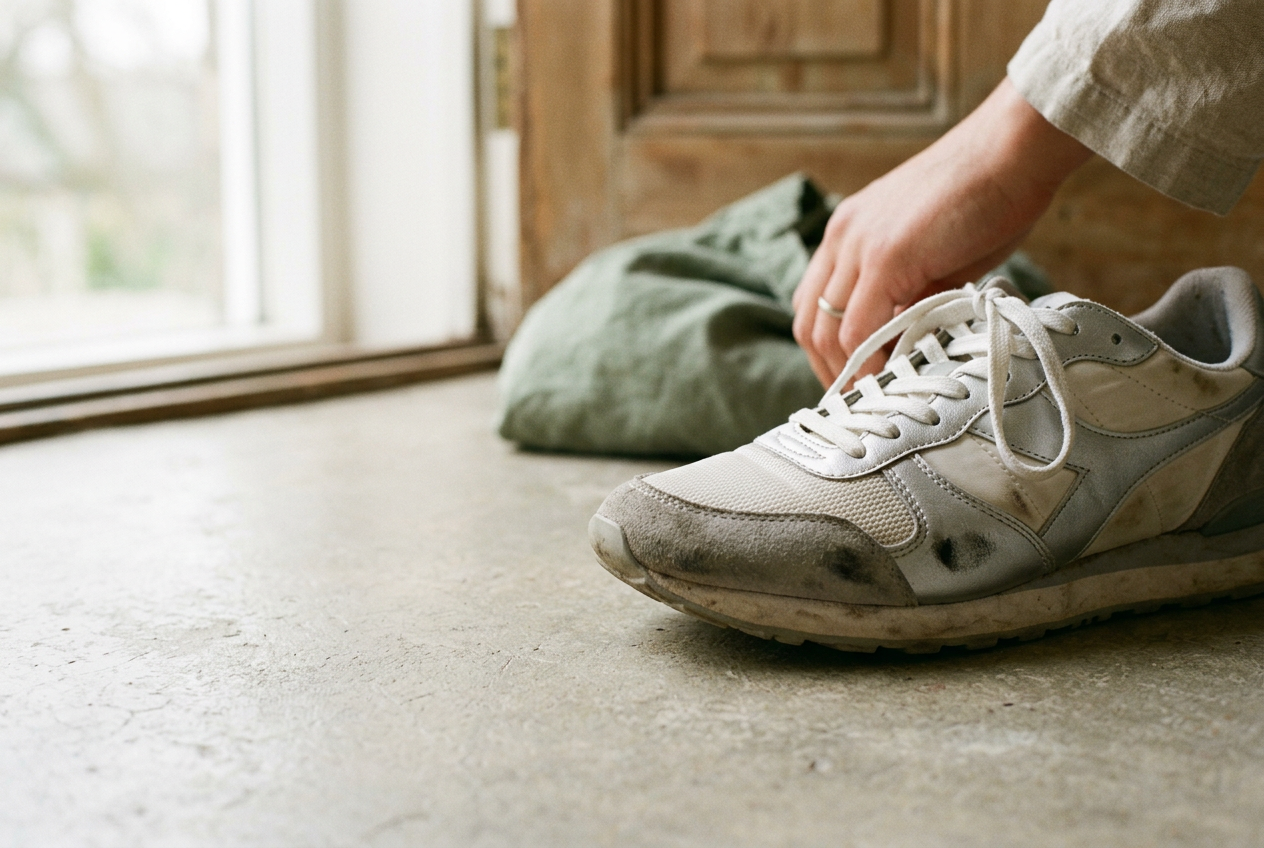
The useful case is a silver-led adidas SL 72 OG, a low-profile retro runner built around a nylon upper, suede reinforcement and bright side detailing. I wore one evaluation pair for a week of commuting and errands in dry weather, with straight jeans, loose trousers and one long day in a skirt. By the end, the shoe still looked fresh from standing height. Up close, each material had started telling a different story.
The nylon had developed shallow wrinkles over the toes but remained comfortable in warmer rooms. Dust sat in the suede nap, meaning its raised surface fibers, without looking much worse. A fine gray mark appeared along the edge of the shiny outer forefoot detail where the opposite shoe had clipped it while walking.
That small scuff is the trend in miniature. Metallic retro runners look crisper and more current than the oatmeal, rust and forest-green suede pairs that have filled casual sneaker shelves, yet the finish can reveal ordinary wear sooner, particularly when it runs across a flex point or reaches the sole edge.
This is unisex advice. Retailers may separate men’s and women’s versions or use different size scales, but material behavior does not change across wardrobes; the relevant variables are foot width, the shape of the shoe and where its overlays land.
The change is brighter than color alone
Muted suede runners have not disappeared. Their advantage is still persuasive: brushed surfaces soften color, disguise minor abrasion and sit easily beside denim, wool trousers or washed cotton. The newer silver-led shoe does something else. Light catches its panels, nylon supplies cleaner blocks of color, and the familiar running shape moves closer to the technical sneakers that made mesh and chrome finishes ordinary again.
The SL 72 OG keeps that shift readable because its profile remains slim. It does not rely on a thick sole or a complicated cage of plastic parts. Switching a brown or navy upper for silver, white nylon and reflective-looking details changes the shoe’s volume visually, even when its physical dimensions stay the same. The brighter pair attracts the eye at ankle level and makes a plain trouser hem look more deliberate.
This is why the trend has moved beyond silver as a novelty color. The material mix matters. A flat gray suede runner absorbs light and recedes; a gray nylon panel looks cleaner and slightly sportier, while a metallic synthetic overlay throws light back and outlines the shoe’s construction. Two pairs can share a palette and behave quite differently in an outfit.
The older muted runner is fading as the default, not becoming obsolete. Dark suede still earns its place when a shoe must survive careless use without looking marked. Metallic finishes are less settled. Some will age into the wider silver-sneaker category, while highly reflective color combinations may have a shorter shelf life.
Nylon handles heat, although the lining sets the limit
Nylon is the practical center of this trend. Woven thinly, it permits more air movement than a broad suede panel or a coated synthetic one, though breathability describes how readily heat and moisture pass through the upper rather than guaranteeing a cool foot. Padding, socks and the tongue construction can cancel much of that advantage.
On the evaluation pair, the nylon sections felt less enclosed than the suede-covered toe areas of comparable retro runners. The difference was noticeable indoors and after brisk walking, not dramatic. This remains a shoe with a lined upper and a fairly close fit, rather than open mesh designed for current performance running.
Nylon also flexes without forming the deep, fixed crease associated with smooth leather. It wrinkles. Those ripples were visible across the SL 72 OG toe when the shoe was off the foot, then became less obvious once it was being worn. Pale nylon has another problem: liquid can carry dirt into the weave, so an aggressive wet scrub may enlarge a small mark instead of removing it.
For a warm commute, bright nylon is the strongest reason to choose the shinier runner. A metallic shoe made mostly from coated synthetic material can look similar on a product page while breathing far less, which makes the materials line in the description more useful than the color name.
Suede remains the easiest finish to age
Suede feels less new at the moment, but it wears with more discretion. Its nap scatters light, so toe flex and small surface scratches do not form the sharp lines seen on smooth, coated panels. Dust can make pale suede look tired, yet a dry brush usually lifts the fibers and evens the color without soaking the shoe.
Placement matters more than percentage. The suede toe reinforcement on the SL 72 OG protects the nylon where curbs and feet tend to make contact, and its slightly fuzzy surface concealed the week’s light dust. A full suede toe box would reduce airflow and add visual weight. A narrow suede guard gives the shoe some tolerance without pulling it back toward the muted look the brighter versions are replacing.
Suede can also relax slightly with wear. That does not turn a narrow shoe into a wide one, but it is more accommodating than a rigid metallic overlay placed directly over the broadest part of the forefoot. People with bunions or a wide toe spread should look at panel maps, not just size charts: a stiff seam crossing a pressure point will remain there after the nylon around it softens.
Care takes patience rather than force. Let damp suede dry away from direct heat, brush it when dry and treat an isolated mark instead of washing the entire panel. Water-darkened suede can dry unevenly, especially in pale gray or saturated colors. For frequent wet-weather use, darker suede is safer, while a washable mesh runner is the lower-maintenance alternative.
Metallic panels are best used as punctuation
Most sneaker metallics are not solid metal or naturally silver leather. They are commonly a film, pigment or polyurethane coating applied to a synthetic or leather base; polyurethane is a flexible plastic used to create a smooth finished surface. The exact construction varies, but the care problem is consistent: once the top layer abrades, cleaning cannot restore the original reflectiveness.
The silver detail on my pair survived ordinary walking, but the mark near the outer forefoot stayed visible after a gentle wipe. Strong rubbing would have risked dulling a larger patch. Metallic panels at the heel or along the sidewall generally fare better because they flex less, provided they do not sit where the opposite foot regularly strikes. Silver across the entire toe is a more demanding proposition.
Creasing depends on both panel thickness and location. A thin shiny strip attached over nylon may move with the fabric. A broad coated piece can buckle into a hard line, and repeated flexing may eventually produce whitening or fine surface cracks. Product photos rarely reveal that difference, so bend the display shoe gently at the forefoot if a store permits it.
A panel that immediately folds into one sharp ridge is unlikely to become subtler with wear.
Metallic color is not evidence of premium construction. It often appears in the same general retail band as a shoe’s muted colorways, while some limited or fashion-led versions cost more without improving the sole, lining or overlay durability. Paying extra makes sense only if the specific color fills a gap in the wardrobe. The finish itself does not justify an upgrade.
The fit should decide before the shine does
Retro runners often sit lower over the toes than modern cushioned sneakers. On the SL 72 OG, the close upper held the foot neatly, but the tapered front left less spare room than the shoe’s side profile suggested. Nylon yielded at the flex point; the reinforced perimeter did not.
Do not add length automatically to solve width. Excess space can let the heel lift while the overlay still presses the forefoot. Compare the retailer’s size conversion with a pair that already fits, then check whether the widest part of the foot aligns with a soft nylon section or a fixed seam. If the model remains narrow in the correct length, a roomier retro runner is the better purchase.
The same inspection helps with comfort. These shoes are usually bought for their light profile rather than deep cushioning or strong arch support, and a thin removable insole leaves only limited space for an orthotic. A metallic colorway does not change that underlying platform. Anyone expecting the softness of a current running shoe should try both on the same walkable store floor before choosing by finish.
A practical way to buy the trend
For the longest useful life, choose a nylon base with suede around the toe and heel, then keep metallic material on side stripes or another low-flex area. That combination preserves airflow, gives vulnerable edges some protection and lets the silver register without asking it to survive every bend.
At home, start with a dry soft brush to remove grit. Wipe coated panels with a barely damp cloth and mild soap, keeping solvent cleaners and abrasive sponges away from the finish. Clean nylon locally with minimal water, blot rather than saturate it, and stuff the shoes with plain paper while they dry so the upper keeps its shape. The task takes several minutes, plus drying time.
Styling needs less work. The evaluation pair was most useful beneath dark trousers, where the silver edge remained visible without dominating, and with faded straight jeans that covered part of the upper. A full metallic toe would ask for more restraint elsewhere. Bright socks can work, though the combination makes a slim runner look busier and more trend-specific.
I remain undecided on paying more for extensive metallic coverage. The nylon-and-suede structure earns its place through temperature control and forgiving wear; a restrained silver panel updates it. Once the shine crosses the toe crease, the shoe starts charging attention for a surface that may look tired before the sole does.
Questions people ask
Are metallic retro sneakers hard to keep clean?
They are easy to wipe but difficult to restore after abrasion. Use a soft damp cloth for surface dirt and avoid vigorous rubbing, solvents or textured cleaning sponges. A scuffed metallic coating may stay dull even when it is clean, so panel placement matters more than a promise of easy care.
Which is more breathable, nylon or suede?
Thin woven nylon usually allows more heat and moisture to escape than suede, particularly across the toe box. The benefit shrinks when the shoe has a padded lining, a dense tongue or large synthetic overlays. Check the whole upper rather than assuming every nylon retro runner will feel airy.
How should suede and nylon panels be cleaned together?
Brush off dry dirt first. Treat the suede with a dedicated suede brush, then spot-clean nylon using a small amount of mild soapy water and blot it with a clean cloth. Keep both materials away from direct heat, and do not soak the shoe merely to make the panels match.
Should I size up in a low-profile retro runner?
Only if the brand’s length guidance supports it. A larger size may cause heel movement without fixing pressure from a narrow overlay. Check where the forefoot meets the seams, account for men’s and women’s size conversion, and choose a wider model when the correct length still pinches.
One update a day
Today's fashion update, in your inbox
One fashion update each morning — no hype, no filler, just pieces worth wearing.