Rounded Wedge Sandals Feel Steadier. Some Only Look It.
Curved wedges are displacing square block heels, but visual bulk does not guarantee support. The useful detail is the sole’s footprint at the ground.
Women's · August 31, 2026 · 7 min read
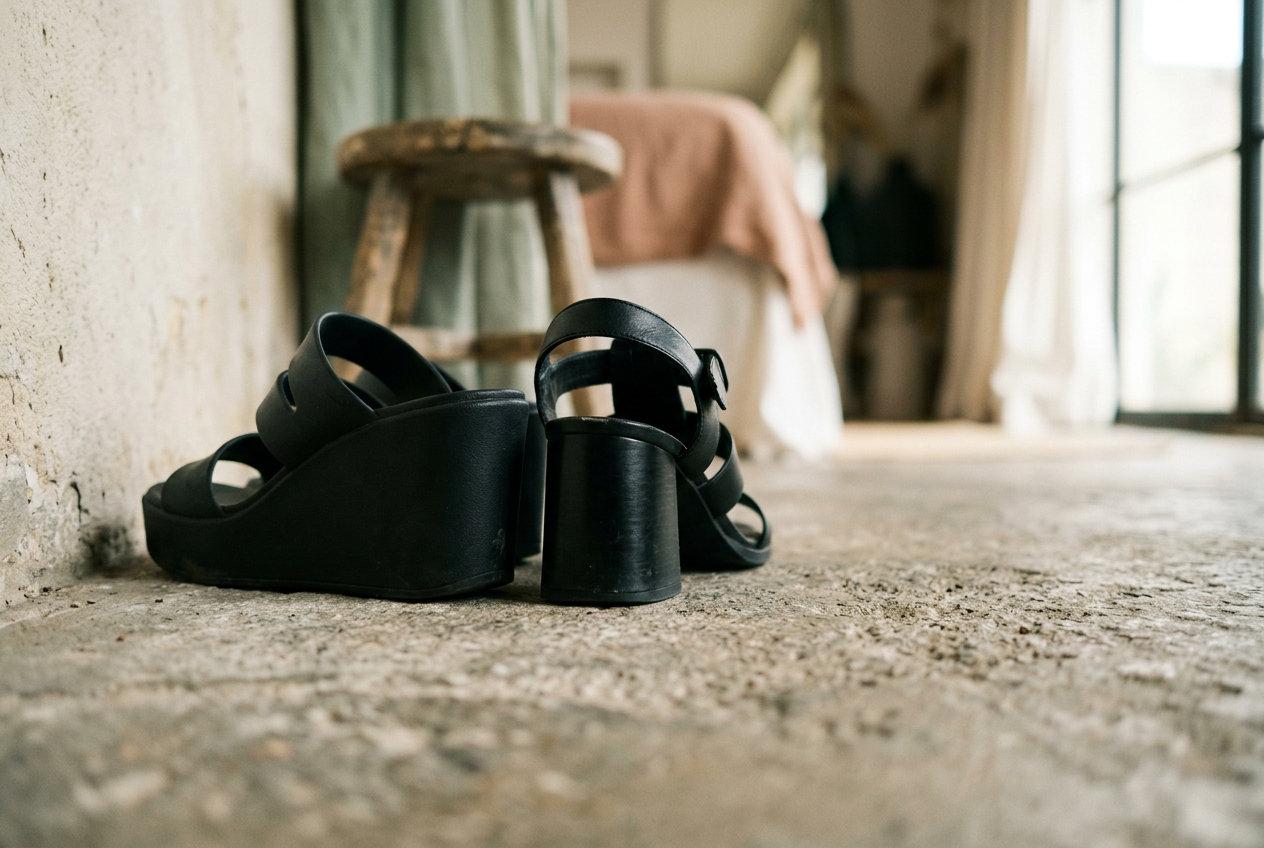
The pair I kept returning to during a week of wear was a black sandal with padded synthetic straps and a molded EVA sole, meaning the lightweight, springy plastic foam used in many casual shoes. Its wedge looked generous from the side: rounded at the back, thick through the middle and softly curved under the arch. Beside a similar-height leather sandal with a conventional block heel, it appeared to be the steadier shoe.
That was only partly true.
The EVA pair spread pressure more evenly under the heel and did not produce the distinct rear-foot impact of the block heel. On level sidewalks, the difference was welcome. Yet the wedge narrowed sharply where its underside curved inward, and on a sloped curb the foot rolled outward until the ankle strap caught it. The shoe had the volume of a platform without the full footprint of one.
That distinction matters as rounded wedges move through women’s summer assortments. The current silhouette replaces the separate, squared-off heel with a continuous sole that resembles a pebble, capsule or low arch when viewed from the side. It can be easier to walk in. It can also be a block heel disguised by foam.
The new wedge is softer in shape, not automatically underfoot
The shift away from block heels is visible in the outline before it is felt in the shoe. A block heel interrupts the line of the sole with a vertical rear column, while the newer wedge runs from forefoot to heel in one curved gesture. Even versions made from rigid resin or wrapped wood tend to have eased corners, bulbous sidewalls and an undercut arch.
This follows the broader move toward rounded footwear: oval toes, inflated soles and molded sandals that appear less formal than the sharp square-toe shoes of recent summers. A sculpted wedge also translates easily between price bands. At the designer end, the shape can be cast, lacquered or wrapped in leather. Mass-market versions, often priced in the territory of an everyday sneaker, tend to use molded foam or a hard synthetic shell bonded to a rubber outsole.
The material changes the experience. EVA reduces weight and softens impact, although a tall piece of foam may still feel rigid if the compound is dense. A hollow plastic wedge can be light but noisy on hard floors. Wood holds its shape and gives a clean sculptural line, yet it transfers more shock unless the footbed carries enough cushioning.
Leather wrapping affects appearance, not stability; the structure beneath it still decides how the shoe meets the ground.
On the black test sandal, the foam removed the hard heel strike that made the block-heel comparison pair tiring after extended standing. After a week of short city wears, however, the side-to-side behavior had not improved with familiarity. The issue was geometry rather than break-in.
A wedge can fake a broad base
The useful measurement is the contact patch, the portion of the sole that touches the ground while the shoe is loaded. A traditional block-heel sandal has two obvious contact areas: the forefoot outsole and the bottom of the heel. If that heel is wide, level and positioned under the wearer’s heel bone, its behavior is easy to read from above.
A wedge appears to add material between those points, but that middle section may hover above the floor. Deep arch cutouts, curved heel edges and a pronounced rocker, which is an upturned sole shape that encourages the foot to roll forward, can leave surprisingly little rubber in contact at any one moment. Viewed from the side, the shoe looks continuous. Viewed from underneath, it may reveal a narrow strip under the rear foot.
The black EVA pair demonstrated the trick. Its widest point sat above the ground line, where it contributed visual weight but no leverage against a sideways roll. The outsole then tapered toward a smaller oval under the heel. The ordinary block heel looked less substantial, yet its square rubber base reached farther toward both sides.
Neither arrangement wins in every setting. The wedge felt smoother moving straight ahead because there was no abrupt transition from heel to forefoot, and the broad forefoot platform limited pressure under the ball of the foot. The block heel felt more predictable on a cross slope because its rear corners met the ground sooner. A very narrow block heel would lose that advantage, while a wedge with vertical sidewalls and a full-width heel base could exceed it.
An ankle strap cannot correct a weak footprint. It may stop the shoe from leaving the foot, but when the sole tips, a thin strap transfers that movement into the ankle. On the test pair, the padded strap was comfortable on flat ground and abruptly noticeable on the curb. Tightening it one hole reduced sliding but pressed the buckle into the ankle by the end of the wear.
Ground contact is only half of stability
Heel width is the first check, not the last. The foot also needs to stay centered over that width, which depends on the footbed, upper and pitch, the height difference between heel and forefoot.
A cupped footbed with a raised rim can resist lateral sliding better than a flat, glossy insole. Suede and lightly textured leather usually grip a bare foot more effectively than smooth synthetic lining once heat and perspiration enter the equation. Deep padding feels inviting in a fitting room, though very soft foam can let the heel drift sideways under load.
Strap placement matters just as much. A secure ankle strap should meet the rear of the shoe without pulling the heel toward either edge, while the front straps need to hold the widest part of the foot rather than squeeze only the toes. Women with a narrow heel and wider forefoot may find that a fixed, nonadjustable upper centers one area and leaves the other loose. If the heel lands close to the rim during an ordinary step, the wedge is too narrow for that foot even when the labeled size is correct.
The black sandal ran true in length but generous across the front. That extra room initially read as comfort. During faster walking, the forefoot shifted diagonally across the smooth footbed, which amplified the instability created by the tapered heel base. The block-heel pair had firmer leather straps and less underfoot cushioning, but it held the foot closer to the center line.
Height also changes the judgment. A low wedge with a modest pitch can remain forgiving despite a curved outsole. Once the heel rises well above the forefoot, a narrow contact patch has more leverage over the ankle, and a thick platform can make it harder to sense an uneven paving stone before weight transfers onto it.
The useful store test starts underneath
Set the sandal on a hard, level floor rather than a padded display surface. Look at it from behind at ground height. The heel section should remain broad where it meets the floor; width located farther up the wedge is mostly decorative.
Press down inside the heel cup with one hand and try to rock the shoe from side to side with the other. Every sandal will move, but an outsole that tips onto a narrow rounded edge with little resistance deserves caution. Repeat the pressure at the forefoot. If the heel lifts or swivels while the front stays planted, the sole may twist more than its bulky profile suggests.
Then try both shoes. Stand naturally before walking, because a footbed that sends one heel toward the outside edge will show the problem under static weight. Walk across the store rather than only along its longest straight aisle, and make a slow turn. The point is not to perform a stress test.
It is to notice whether the sole turns with the foot or whether the upper has to pull the foot back over the platform.
Check the outsole material before deciding. Rubber pads at the forefoot and heel usually offer better grip than bare painted resin, although tread still needs enough depth and spacing to engage the surface. A foam wedge may use the same molded material from footbed to ground; that keeps weight down, but exposed foam can abrade faster on rough pavement and is rarely the best choice for wet tile.
Online, request or find a straight-on photograph of the outsole and a rear view. A side profile alone cannot establish stability. If the retailer supplies only angled images, assume the sculptural volume and the working footprint may differ until the pair is in hand.
The buying decision is narrower than the trend
Rounded wedges make sense for someone who likes height but finds the impact of a hard block heel tiring. Favor a broad heel base, a textured or cupped footbed and an upper that holds the forefoot without forcing the ankle strap to do all the work. A low molded wedge can also serve as an easy daytime alternative to a dress sandal, particularly when the foam is dense enough not to buckle at the arch.
Skip the premium version if most of its appeal lies in a dramatic undercut that reduces ground contact. Expensive leather wrapping or polished hardware does not recover the missing width. At the lower end, inspect bonding lines and outsole coverage; a wedge formed from one large piece may be cheap to produce, but replacing its worn contact surface is less straightforward than replacing the rubber piece on a conventional block heel.
I would choose the black EVA pair for a level dinner route or an event with extended standing, where its low weight and softer heel strike count. I would still take the block heel for broken sidewalks if its heel base remained wider than the wedge’s ground-level oval. The rounded silhouette is rising. Its practical advantage remains conditional.
Questions people ask
Are wedge sandals more stable than block heels?
They can be, especially when the wedge has a broad heel base and continuous outsole that spreads pressure from heel to forefoot. A wide block heel may still resist sideways tipping better than a sculpted wedge whose curved underside narrows where it reaches the ground.
How can
I tell whether a wedge sandal has a broad base?
Look underneath and from directly behind. The heel should stay wide at floor level rather than bulging above a smaller contact point. On a hard surface, press into the heel cup and check whether the shoe rocks quickly onto a narrow outer edge.
Do ankle straps make sculpted wedges safer to walk in?
An ankle strap keeps the shoe attached and may reduce heel lift, but it cannot widen the outsole. If the wedge tips or the footbed lets the foot slide sideways, tightening the strap often transfers pressure to the ankle without fixing the underlying instability.
Are molded EVA wedges suitable for wet sidewalks?
That depends on the outsole. EVA keeps a sandal light and tolerates water, but a smooth molded bottom may lose grip on wet tile and can abrade on rough pavement. Look for textured rubber contact pieces, then check that the straps do not loosen or stretch when damp.
One update a day
Today's fashion update, in your inbox
One fashion update each morning — no hype, no filler, just pieces worth wearing.