Peep-Toe Shoes Are Back, but the Fit Problem Never Left
Runway sightings have become retail products, yet the category remains narrow. Before buying, check whether the opening frames your toes or forces them through it.
Women's · September 1, 2026 · 8 min read
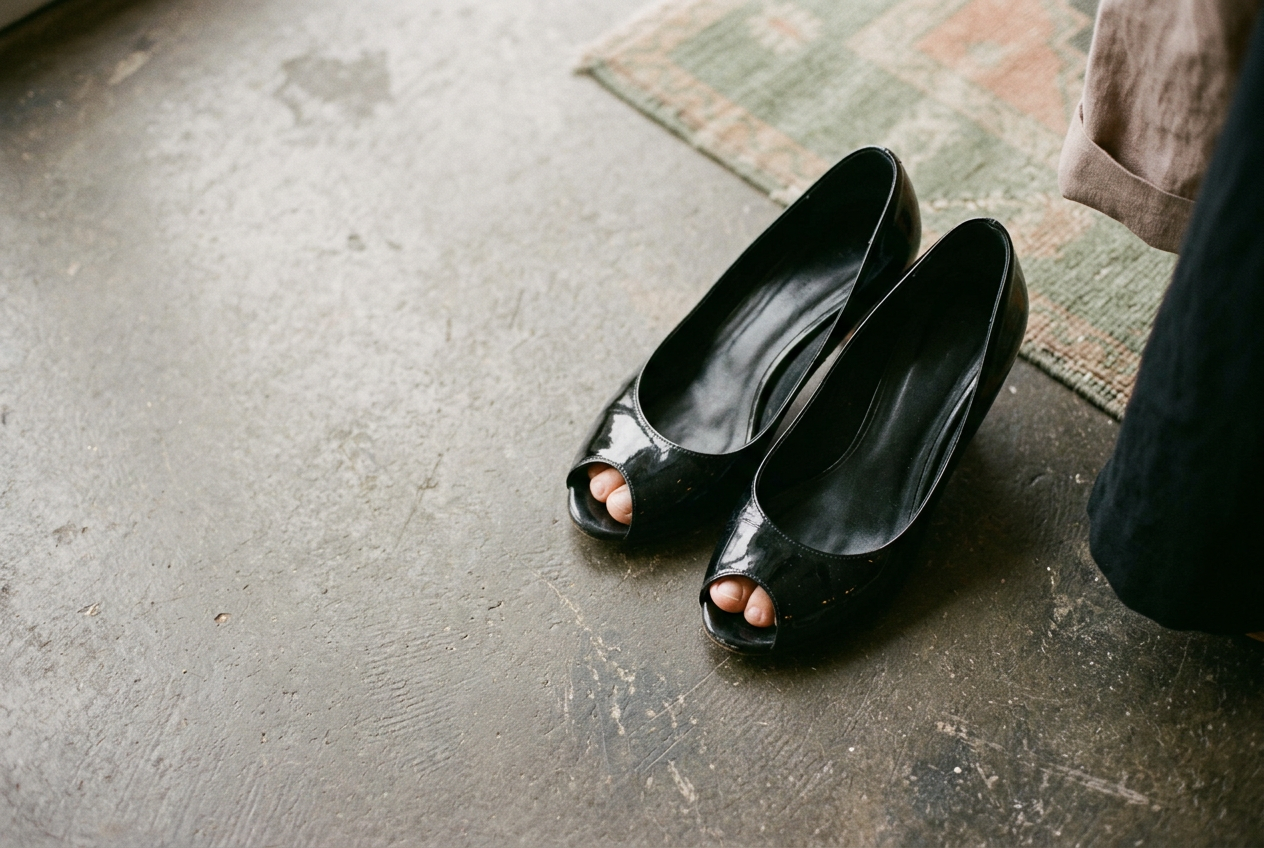
The useful object for judging this return is not a new-season novelty. It is the black patent Christian Louboutin Very Privé pump, a familiar secondhand style with a high stiletto, concealed platform and small oval opening that exposes the first two toes.
That shoe contains the whole peep-toe argument. It looks less exposed than a sandal and more deliberate than a standard pump, but its rigid patent upper, steep pitch and tightly positioned opening can push the foot forward until the aperture acts as a stop. If the opening lands cleanly around the toes, the effect is precise. If it cuts across a nail bed or lets one toe advance farther than the other, no styling decision repairs the fit.
Recent runway coverage suggests designers are interested in that tension again. Retail tells a quieter story.
The runway signal is real but concentrated
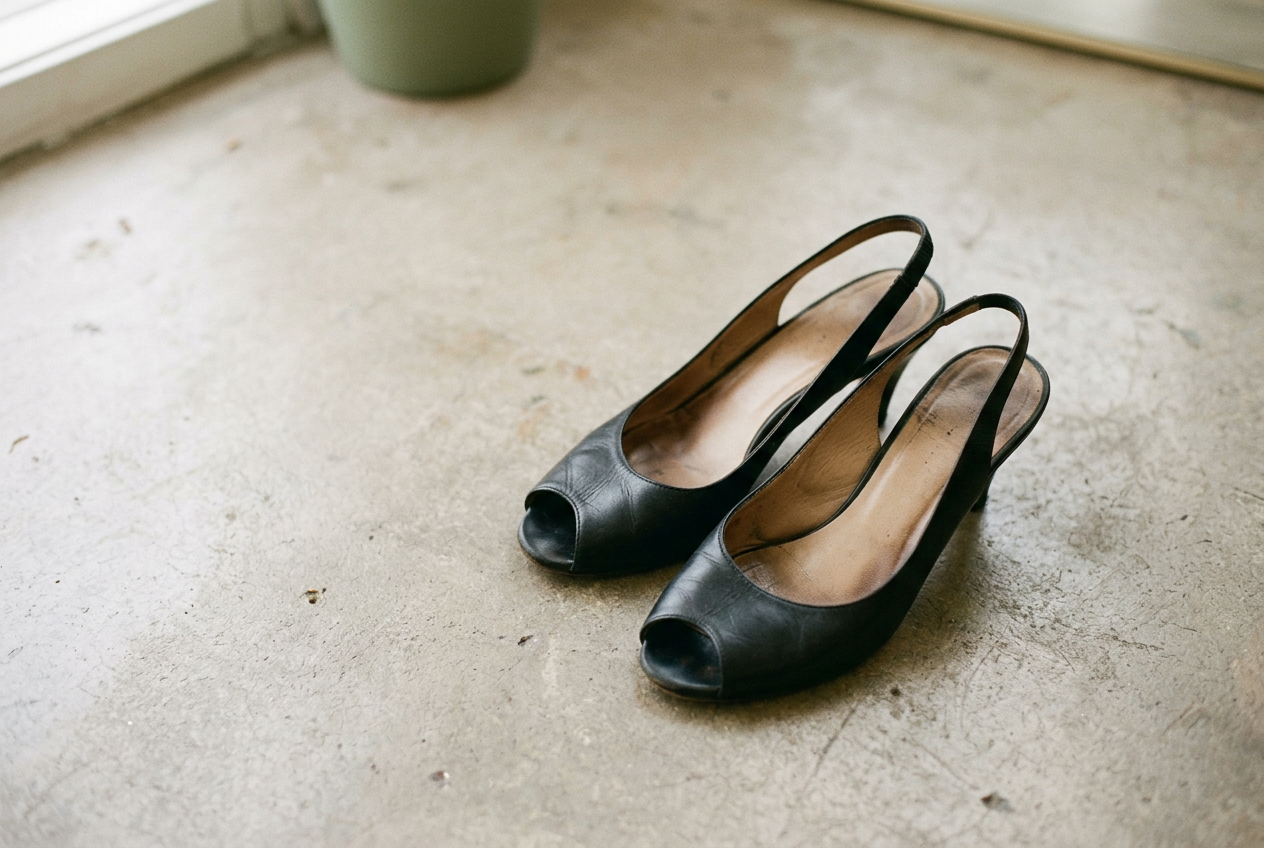
Peep-toe shapes surfaced in public coverage of recent collections from labels including Tory Burch and Miu Miu, often as part of a broader reconsideration of ladylike pumps, slingbacks and shoes that expose only a controlled section of the foot. The new versions do not all repeat the platform-heavy Very Privé formula. Some sit lower, some use softer leather, and others blur the line between a pump and a sandal.
That variety matters because a runway trend becomes wearable only after designers solve it at more than one heel height. A single severe pump can be an image-making shoe. A low slingback, a stable block heel and a softer evening mule would indicate that the silhouette is being translated for different walking habits.
We are partway there. Seasonal reporting has treated the peep toe as a returning shape rather than an isolated archival reference, but it still appears less consistently than pointed closed pumps, slim loafers or open sandals. The evidence supports “rising.” It does not yet support “default.”
The distinction is easy to miss online, where one runway close-up can circulate longer than a whole commercial season. A shoe photographed with a floor-length skirt also avoids the practical scrutiny it gets with cropped pants, when the foot’s position, the heel fit and the amount of visible toe become much harder to ignore.
Mainstream retail has products, not yet breadth
Recent product pages and seasonal assortments from Zara, Mango and other large retailers have included peep-toe heels or slingback variations, while contemporary and designer stores have carried more sculpted versions. That is meaningful translation. It shows buyers expect at least some customers to recognize the shape without needing a runway explanation.
Breadth remains the weak point. Peep-toe shoes are often buried among pumps, mules or slingbacks rather than supported as a substantial category, and many versions cluster around dress heels. A shopper seeking a moderate heel, secure back and forgiving upper still has fewer options than someone buying a conventional closed pump.
The price ladder is also awkward. High-street versions can cost less than a typical pair of leather sneakers, but they frequently use firmer synthetic uppers that offer little accommodation around the opening. Contemporary leather pairs cost several times more, although the higher price does not guarantee that the aperture will suit a particular toe arrangement. Designer versions may offer better finishing or a more considered last, meaning the foot-shaped form around which a shoe is built, yet the Very Privé remains proof that recognizable design and easy fit are separate matters.
For practical adoption, watch the middle of the market. The comeback becomes convincing when ordinary retailers carry peep toes in multiple heel heights, materials and widths across more than one season. One dramatic patent pump and a scattering of evening mules still describe a micro-trend.
The opening is the fit problem
Women’s peep-toe sizing cannot be reduced to taking a usual pump size. The key measurement is where the opening begins relative to the toes, because two feet with the same length can have different toe proportions and forefoot widths.
In the black patent Very Privé, the stiff upper resists stretching while the heel elevation sends weight toward the front. Sizing up may appear to create toe room, but extra length can let the foot travel farther down the slope, increasing pressure at the opening while loosening the heel. A gel forefoot pad can occupy some internal volume and slow that movement. It cannot relocate an aperture that sits over the wrong part of the foot.
A better fitting-room test starts late in the day, when feet are closer to their walking size. Stand in both shoes for several minutes, then walk down a slight incline if the store layout allows it. The toes should remain visible without protruding past the sole, and the edge should not press across a nail, pinch the skin between two toes or leave one toe carrying the front load.
Material changes the odds. Soft nappa leather can ease slightly around the forefoot, while suede usually feels less sharp at an edge. Patent leather and firm coated synthetics yield less, so a marginal fit is unlikely to become a good one after a week. A cobbler may stretch a tight area modestly, but cannot redesign the opening or correct a foot that continually slides forward.
There is also a grooming tradeoff, although it is smaller than the comfort issue. A tiny opening concentrates attention on exactly the toes it reveals. Chipped polish is optional to care about. Red pressure marks are not.
Resale supply shows history, not current demand
Searches across The RealReal, Vestiaire Collective and eBay return peep-toe pumps from Christian Louboutin, Jimmy Choo, Manolo Blahnik and other labels associated with earlier cycles of high platforms and event dressing. That visible supply confirms that peep toes have a substantial archive. It does not prove that shoppers are searching for them now, because listing volume records what owners want to sell as much as what buyers want to wear.
The secondhand market nevertheless offers the widest test bed. A buyer can compare the Very Privé with lower pumps, slingbacks and peep-toe booties without waiting for current retailers to expand their selections. Prices vary sharply with condition, label and age, and older pairs can sit well below comparable new designer shoes.
Condition photographs matter more here than a seller’s usual size description. Ask for a top-down image of the opening, the insole length and a side view showing the shoe’s pitch. Darkened toe impressions inside the shoe can reveal where the previous wearer’s foot stopped, while stretching or rippling around the aperture suggests sustained pressure. Heavy platform wear also changes how securely the front contacts the ground.
Do not buy a rigid patent pair merely because the resale price makes experimentation tempting. The Very Privé’s opening will not become wider in the right place through optimism, and returns on secondhand platforms may be more restricted or costly than at a mainstream store.
The practical verdict is still conditional
Peep-toe shoes have advanced beyond novelty drops. Runway repetition, commercial copies and a deep resale pool give the silhouette more support than a one-season styling stunt would have.
They are not ready for automatic adoption. The strongest current options still lean dressy, women with wider forefeet have limited room to negotiate with a fixed opening, and much of the affordable market uses materials that make a near miss painful rather than adaptable. A soft-leather slingback with an adjustable strap and moderate heel is the safer entry because it reduces forward slide and gives the upper some capacity to settle around the foot.
Anyone who already owns a well-fitting peep toe can bring it back now with straight-leg pants that finish above the shoe or a restrained midi skirt. The exposed toe is enough of a detail; the rest of the outfit does not need to reconstruct the era of the Very Privé platform.
For a new purchase, use a strict standard. If the opening feels noticeable while standing in the store, skip it. The return is established enough that another version should follow, but not broad enough to justify paying for a shoe that requires shorter walks.
Questions people ask
Are peep-toe shoes back in style?
Yes, but the return is still concentrated. Recent runway coverage and retail releases show renewed interest, while secondhand platforms offer extensive older stock. The silhouette has moved beyond a single novelty appearance, although it remains far less available than closed pumps, slingbacks and fully open sandals.
Should peep-toe shoes be sized up?
Not automatically. Extra length can allow the foot to slide forward, which increases pressure at the opening and may cause heel slip. Choose the size that holds the heel securely, then reject the shoe if the aperture cuts across a nail bed or forces the toes beyond the sole.
Which peep-toe material is easiest to wear?
Soft leather or suede usually accommodates the forefoot better than patent leather or a firm coated synthetic. Material cannot correct a badly placed opening, but a pliable upper is less likely to create a hard pressure line and may adapt slightly with wear.
Are secondhand peep-toe pumps worth buying?
They can be, especially when the listing offers returns and clear photographs of the opening, insole and sole. Older designer pairs may cost much less than new equivalents, but rigid uppers and steep platforms remain risky. Do not rely on the marked size alone, particularly with the patent Very Privé.
One update a day
Today's fashion update, in your inbox
One fashion update each morning — no hype, no filler, just pieces worth wearing.