Peep-Toe Shoes Are Back, and the Opening Decides the Fit
The renewed silhouette looks easy, but a few millimeters of exposed toe can change how a shoe holds the foot. The wearable versions control forward slide before they frame the pedicure.
Women's · August 29, 2026 · 8 min read
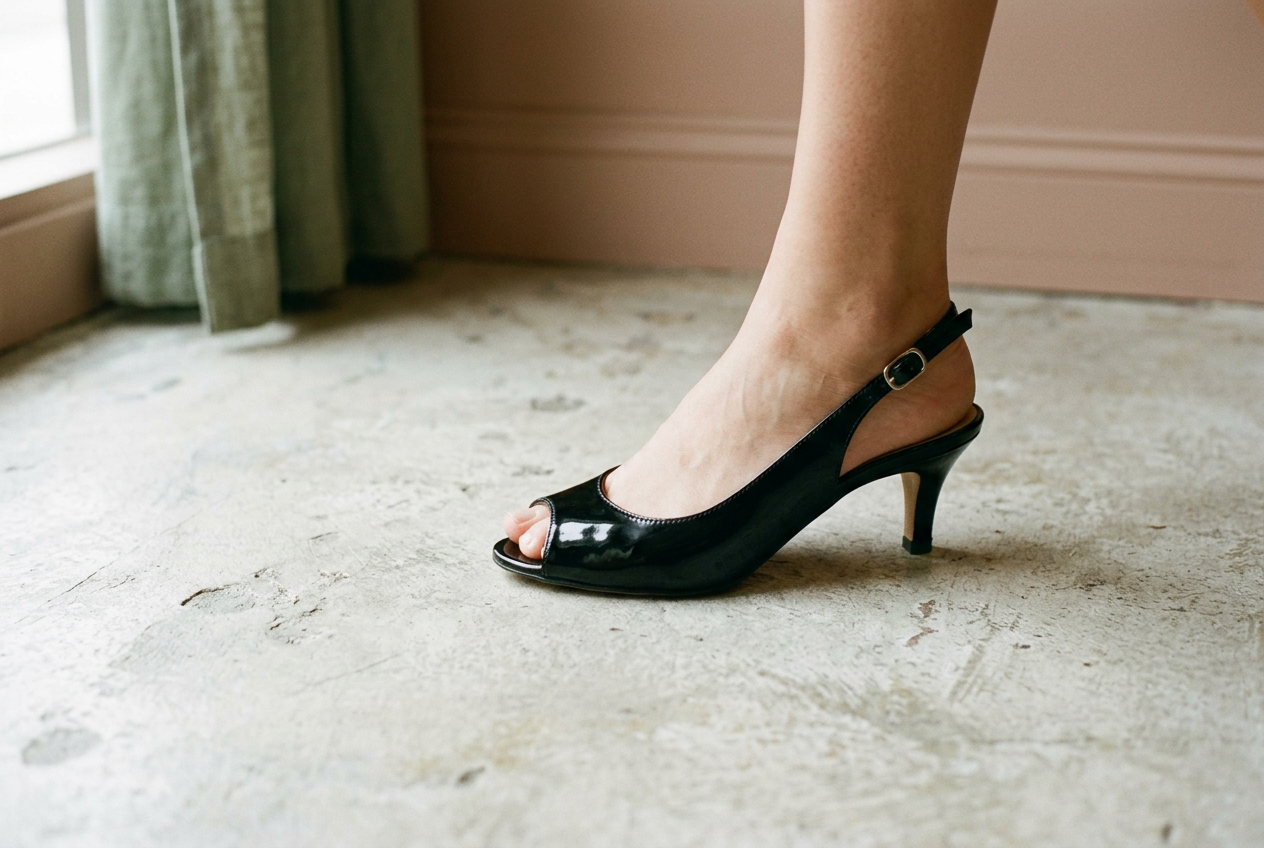
The peep toe has returned as a small adjustment with large consequences. Recent runway coverage and new-season retail edits have placed the opening on slingback pumps, compact platforms and softly structured heels, where it reads less like a revival costume than a break in an otherwise closed upper.
For women’s footwear, which is the focus here, the useful question is not whether that opening looks current. It is whether the shoe still holds the foot once the front has been cut away.
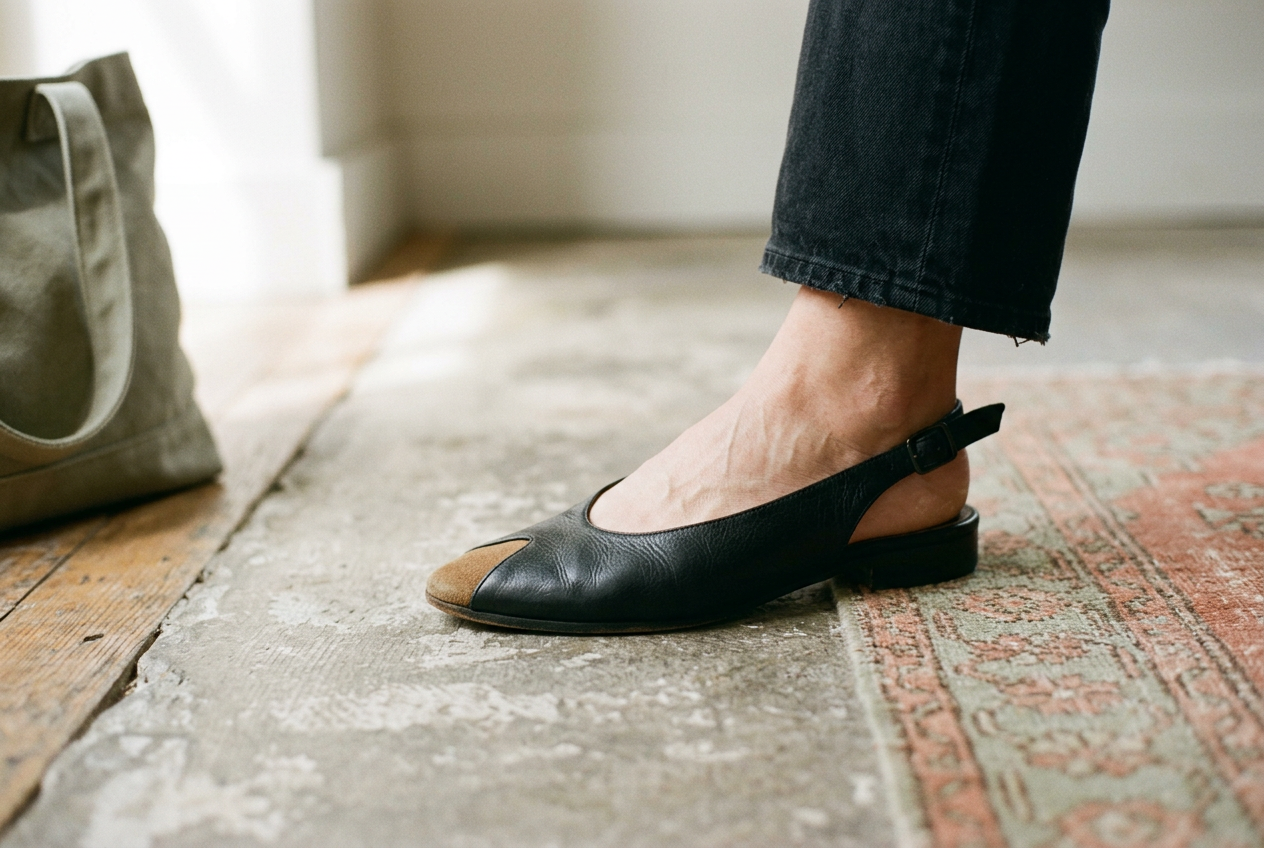
I kept returning to one archival black leather slingback during this assessment. It has an almond-shaped toe box, meaning the enclosed area around the toes, a low heel and a narrow teardrop opening that reveals the tips of the first two toes. The leather upper and lining have softened with wear, while an adjustable back strap provides the only mechanical restraint behind the heel.
Across seven short wears, including indoor standing and several walks on ordinary pavement, the shoe clarified why two near-identical peep toes can feel unrelated. The opening itself never rubbed. The foot still crept forward as the leather warmed, leaving the big toe pressed into the lower edge and the heel sitting closer to the end of the slingback strap than it had at first fitting.
That movement is the trend’s central fit problem.
The opening is part of the support structure
A closed pump contains the front of the foot with an uninterrupted upper. Cut a hole into that upper and some of its resistance disappears, particularly when the opening is broad or placed low toward the sole. The toes then have less material stopping them from moving forward under the force of each step.
This is why an opening that appears generous can become less comfortable. A broad horizontal cut may expose more of the pedicure, but it can also let the widest part of the forefoot advance until the toes meet an edge that was never meant to bear much pressure. Soft leather makes the first try-on feel forgiving, then stretches and permits more movement. Rigid patent leather resists stretching, though its edge can press sharply if the alignment is wrong from the start.
The black slingback’s teardrop opening performed better than the wide oval openings common on more literal retro pumps. Its upper edge sat above the toenails rather than across them, so the leather did not scrape the nail surface while walking. Its weakness came lower down: once the foot slid forward, the underside of the big toe met the opening’s bottom seam.
A peep toe should frame the toes that naturally reach the opening. It should not force the big toe sideways so that two symmetrical toes appear, and it should not reveal the fleshy base of several toes, which often signals that the opening is too broad or the foot has traveled too far forward.
Toe shape matters here. A tapered peep toe can be workable for a foot with a longest big toe, provided the opening follows that line. Someone whose second toe is longer may find the same cut exposes a nail edge or presses the toe downward. No styling adjustment fixes that mismatch.
Forward slide starts farther back
The toe opening gets blamed because that is where discomfort appears. The cause may sit at the instep.
The vamp, meaning the section of upper that covers the top of the forefoot, must hold the foot firmly enough to limit travel without cutting across the joints. A high vamp generally offers more control than a shallow one. A slingback helps only if its strap stays in place and the shoe does not rely on the toes to grip the sole.
On the archival pair, tightening the back strap reduced heel movement but did little to stop forward slide. The forefoot was already moving before the strap came into play, and shortening the strap further pulled the shoe against the heel without securing the instep. After a few hours, that tradeoff produced pressure at both ends.
A thin adhesive forefoot pad improved the fit more than a heel grip because it added friction beneath the ball of the foot. The pad also reduced internal depth, however, which pushed the toes slightly upward toward the opening. That fix works when the shoe is marginally roomy. It is a poor rescue for a shallow toe box.
Heel pitch matters too. Pitch is the angle that places the heel above the forefoot. As the angle steepens, gravity shifts more body weight toward the opening, so a wide cut and a high heel make a particularly unstable combination unless the shoe has a substantial vamp, an ankle strap or another firm point of restraint.
This is where editorially persuasive peep toes can fail ordinary wardrobes. A shoe photographed while standing may look balanced even when the foot would move noticeably over a ten-minute walk. Before buying, walk down a slight ramp if the store has one, then stop sharply. Toes that hit the opening during that test will not become more comfortable after the upper relaxes.
The constructions most likely to last
The easiest current version is a low or mid-height slingback with a moderate opening, a leather lining and an adjustable strap. The opening should sit above the front edge of the sole rather than cutting down to it. A lightly cushioned footbed helps, but surface grip matters more than plushness when the main problem is sliding.
A peep-toe bootie can also work because its higher vamp secures more of the foot, though the extra coverage limits warm-weather usefulness. Platforms distribute the heel angle more gently when the front platform has real depth, yet a heavy sole can make a loose upper feel less controlled as it pulls away with every step.
The least convincing translation is the very shallow mule with a broad toe opening. It removes support at the heel and front while asking the toes to keep the shoe attached. That construction can work for a short dinner or an event with little walking. It is difficult to justify at an investment price, especially when a closed mule or a strappy sandal performs the same styling job with a clearer fit logic.
Material changes the calculation. Supple calf leather can conform around the forefoot but may loosen after repeated wear. Patent leather keeps its shape and wipes clean, while its finished edges offer little tolerance for swelling. Satin looks precise in a narrow opening, though friction and moisture can mark it quickly.
Stretch mesh is more accommodating across bunions, but the toe aperture still needs a bound edge, and that binding can become the pressure point.
At the lower end of the market, inspect the opening from inside the shoe. A folded and stitched edge usually feels smoother than a raw synthetic edge with exposed adhesive. At a price roughly comparable to good leather sneakers, expect secure straps, a finished lining and an opening that is cleanly reinforced rather than merely cut into the upper.
Hosiery exposes the compromise
Peep toes have never sat comfortably with every kind of hosiery. Standard tights often place a reinforced toe panel directly in view, while the front seam can rotate as the foot slides and form a dark line across the opening.
Sheer, sandal-foot tights avoid that reinforced panel. Their low denier, a measure of fiber thickness, makes the toe area less visible, although it also leaves the fabric vulnerable where it rubs against the aperture. On the black slingback, fine tights reduced skin friction for an indoor wear but gathered slightly beneath the big toe after walking. The shoe felt smoother at first and less stable later.
Seamless-toe hosiery is the cleaner option when bare legs are impractical, provided the shoe has enough internal grip to compensate for the slippery fabric. A very narrow opening may conceal a standard toe seam, but relying on that is risky because the seam shifts during wear.
Avoid cutting ordinary tights into improvised toe-free hosiery. The unfinished edge can run, roll under the forefoot or create a ridge precisely where the shoe carries pressure. Purpose-made open-toe tights usually place a finished loop around the toes, though that loop must sit behind the shoe’s opening to remain hidden.
Bare feet are not automatically easier. Leather lining manages heat better than many synthetic linings, but an enclosed vamp can still trap moisture while the small opening provides little ventilation. A no-show liner designed for pumps may help if it stays behind the aperture; many rise too high at the front and become visible.
The fitting-room decision
Try peep toes late enough in the day that the feet are not at their smallest. Wear the hosiery planned for the shoe, fasten every strap and walk until the upper begins to warm. Then look at where the opening lands, not only how much toe it reveals.
The big toe should not bulge through the aperture. No nail should catch beneath its upper edge, and the foot should remain in roughly the same position after several brisk turns. Check the heel last. A slingback slipping because the entire foot has moved forward needs better forefoot retention, not a shorter strap.
Sizing down is rarely the clean answer. It may reduce internal length while making the toe box shallower and bringing the opening’s edge closer to the nails. Trying a narrower width can help a low-volume foot, meaning one that occupies less vertical and horizontal space inside a shoe, but only if the toe shape still follows the wearer’s foot.
The archival black slingback remains wearable for short outings with a thin forefoot pad and bare feet. It is not the pair I would choose for a full day, and the narrow opening that makes it look restrained does not cancel the slide created by its softened vamp. That leaves the return of the peep toe in a reasonable but unsettled place: the silhouette can translate beyond a photograph, though many versions ask the opening to disguise a shoe that never held the foot properly.
Questions people ask
Should peep-toe shoes fit more tightly than closed pumps?
They should hold the instep securely, but the toes still need space to lie flat. Sizing down to stop movement often pushes the nails toward the opening and increases edge pressure. Look for a higher vamp, a grippier footbed or an adjustable strap before changing size.
How much toe should show in a peep-toe shoe?
A narrow view of one or two toe tips is usually easier to control than an opening that reveals the base of several toes. The exact amount depends on foot shape, but no toe should bulge through the aperture or catch beneath its upper edge while walking.
Can peep-toe shoes be worn with tights?
Yes, although sandal-foot or seamless-toe tights look cleaner than pairs with reinforced panels. Fine hosiery reduces friction against the upper but can increase sliding underfoot, so test the combination together rather than assuming a shoe that works barefoot will fit the same way.
Are peep-toe slingbacks comfortable for walking?
They can be when the vamp secures the forefoot, the heel is moderate and the slingback stays in place without being overtightened. A broad opening, smooth footbed or steep pitch makes forward slide more likely. If the toes meet the edge on a short fitting-room walk, skip the pair.
One update a day
Today's fashion update, in your inbox
One fashion update each morning — no hype, no filler, just pieces worth wearing.