One Statement Stud Is Enough for an Asymmetrical Ear Stack
A single bold stud can organize the whole ear. The key is to repeat one detail, preserve bare skin, and check every backing against a bent ear and phone.
August 10, 2026 · 7 min read
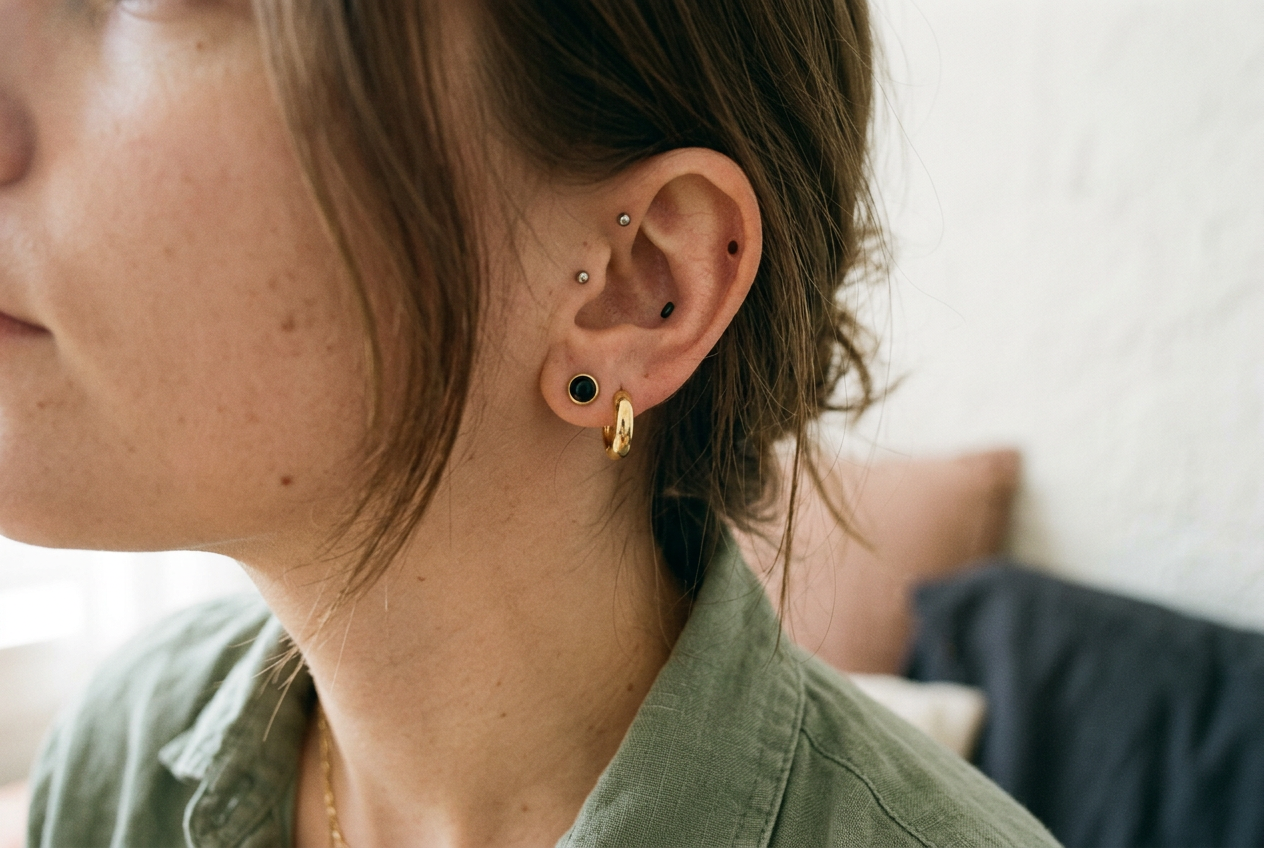
The anchor here is a round black onyx stud, roughly 7 millimeters across, set in a polished 14k yellow-gold bezel. It is large enough to cover much of my lower lobe without hanging below it, and the black center has more visual weight than a clear stone of the same size. A matching second stud would look formal. I wanted an everyday stack with uneven placement and a deliberate pause between pieces.
This advice is unisex. The useful variables are ear anatomy, piercing placement and the hardware behind each earring, rather than the part of the store where the jewelry was sold.
I worked with two healed lobe piercings on the statement side and three on the other ear. After a week of rearranging jewelry I already owned, the final stack used the onyx stud with a tiny white-metal ball above it; the opposite ear held a close yellow-gold huggie and a small black flat back, while its highest piercing stayed empty. That vacant hole mattered as much as another earring would have.
Fix the anchor before adding anything
Put the statement stud in the piercing where it sits most securely. For the onyx piece, that was the first lobe piercing. In the second hole it crowded the cartilage edge, and its friction back, the familiar clutch that slides onto a straight post, became easier to feel when I held a phone to my ear.
Look at the stud straight on and from the side. A heavy front can tip downward if the post is long or the backing is loose, which makes the setting appear larger and exposes the post above it. Tightening a friction back may level the stud, but pushing it hard against the skin trades a cleaner angle for pressure. I accepted a slight forward tilt and left a sliver of room behind the lobe.
Build around the position the stud can hold comfortably. Do not design a neat arrangement that depends on compressing the ear.
Balance scale without making a second focal point
The supporting earring above my onyx stud is a polished white-metal ball about one-third of its width. A larger ball competed with the stone, while a tiny clear crystal added sparkle without giving the eye a firm stopping point. The plain sphere worked because its outline echoed the round onyx, but its pale surface and smaller scale kept it secondary.
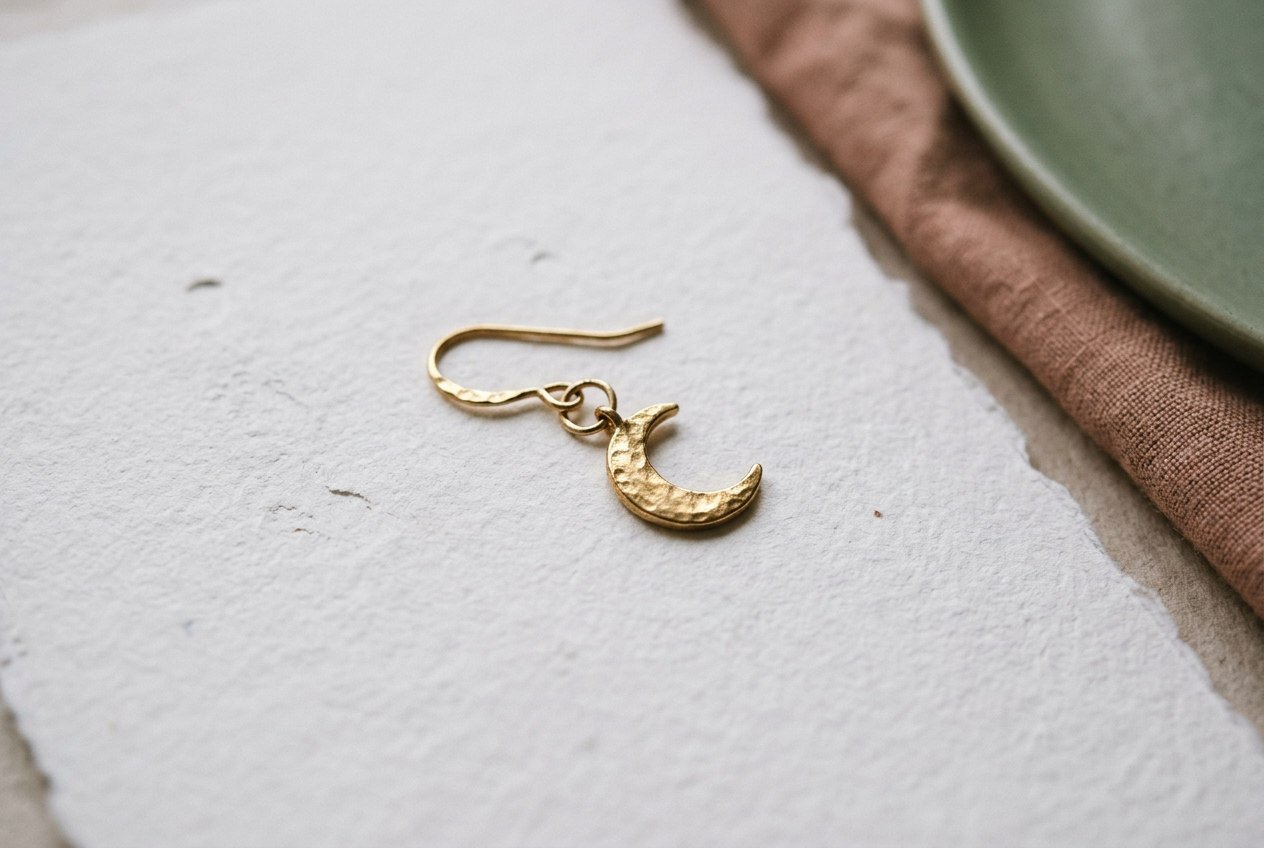
Across the face, the yellow-gold huggie could carry more size because it was separated from the anchor by the full width of the head. A huggie is a small hoop shaped to sit close to the lobe. I first tried one that dropped visibly below the ear, and the stack split into two statements. The better version was roughly 10 millimeters in outer diameter, close enough to outline the opposite lobe without becoming a dangling element.
Use a mirror, then take a straight-on phone photo. Mirrors encourage the eye to inspect each earring separately; a photograph flattens the arrangement and makes competing shapes obvious. If the supporting ear attracts attention first, reduce the hoop diameter or remove its brightest piece before shrinking the anchor side.
Repeat the finish, then repeat the dark note
Mixed metal works when one finish crosses the gap between ears. The onyx bezel is polished yellow gold, so the opposite huggie repeats that warm shine. The small earring above the onyx is a cooler metal, but it is too small to divide the arrangement into a gold side and a silver side.
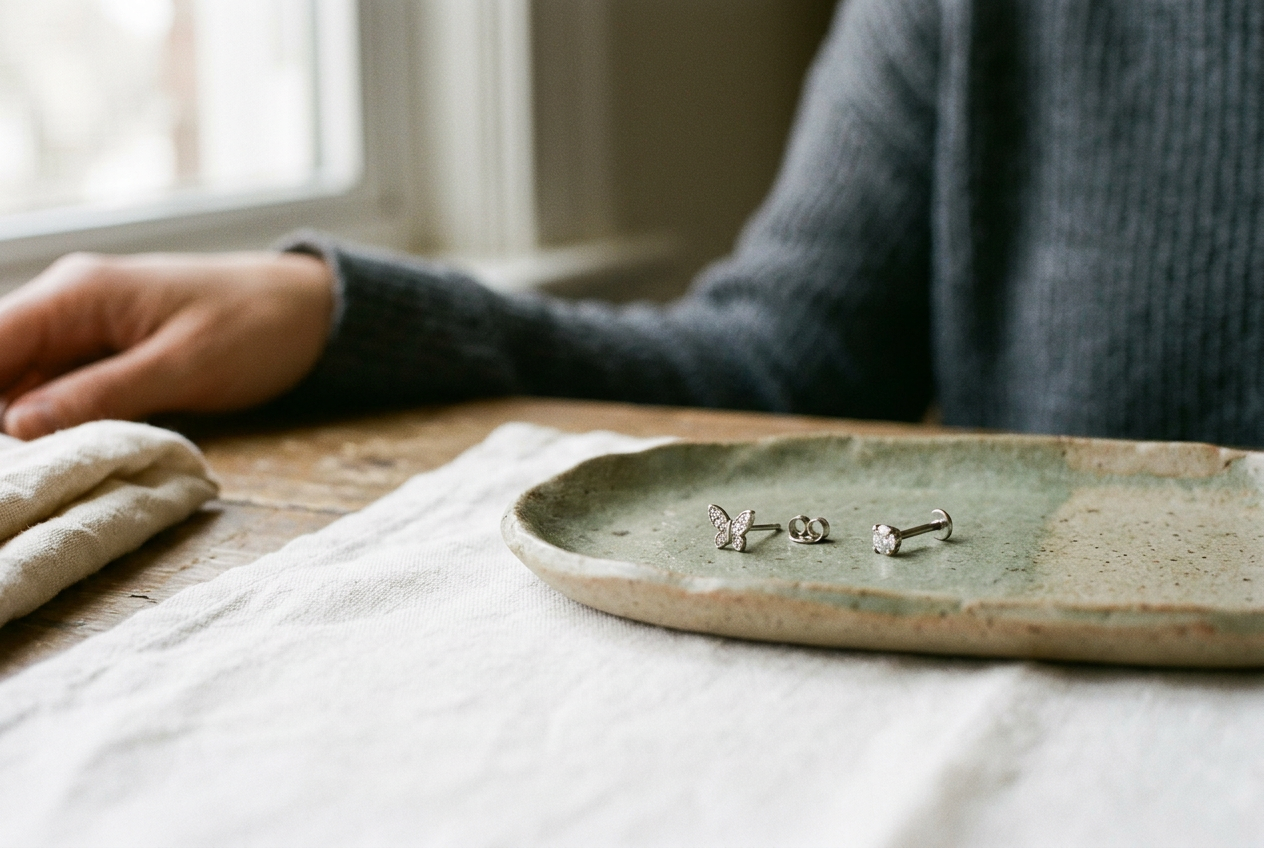
The black flat back on the huggie ear performs a different job. It repeats the dark center of the onyx without copying its round gold frame. A flat back earring, meaning the post’s backing sits flush against the lobe, also gives that busier ear a quieter profile than another hoop would.
Finish changes apparent size. A polished ball throws highlights and can read larger than a matte piece with the same measurements, while a pavé surface adds enough flicker to challenge a dark statement stone. When a stack feels crowded even though the fronts are small, replace the brightest support with brushed metal or an unadorned cabochon before buying a new anchor.
Leave enough bare skin to show the arrangement
Negative space is the visible skin between earrings. Without it, an asymmetrical stack can look like every available piercing was filled from habit.
On the statement ear, the narrow strip between the onyx bezel and the small ball was enough because the difference in scale was clear. The other ear needed a larger pause. Leaving the highest piercing empty stopped the huggie and black flat back from climbing into a dense diagonal line, and it kept the upper ear clear of the arm of my sunglasses.
An empty piercing does not need a visual partner. If the stack looks unfinished, first remove the smallest earring and live with the gap for an hour; adding another piece tends to reduce definition, especially when several fronts share the same diameter. The arrangement should remain legible from conversational distance, not only in a close-up photograph.
Check post length from the side
Front styling cannot correct hardware that is too long. Wearable length is the distance along the post between the decorative front and the backing, and even a small excess lets an earring lean, snag hair or press into the head when the ear folds.
I compared flat-back posts sold with 6-millimeter and 8-millimeter wearable lengths in the upper lobe. The shorter post sat level on my healed piercing without leaving an indentation. The longer one allowed the black front to tip toward the huggie, so two pieces that looked separate at rest touched when I bent the lobe forward. Those measurements describe this ear, not a universal fit; lobe thickness and piercing angle change the result.
A threadless labret, a straight post with a flush disc back and a push-fit decorative end, is useful here because compatible tops can move between post lengths. Implant-grade titanium, material manufactured to recognized implant standards, is the practical middle price band for plain posts and small ends. Solid 14k gold usually costs more, while plated fashion jewelry sits at the lower end but can wear through at contact points.
Spend on a correctly fitted post before replacing a decorative front that already works. For an unhealed, irritated or swollen piercing, leave the sizing change to a reputable piercer rather than forcing in shorter hardware.
Run the bend-and-phone test
The first version passed a mirror check and failed during a call. Its larger huggie touched the neighboring flat back when the phone pushed the ear inward, producing a small click and a pressure point near the second piercing. Neither piece collided while my head was upright and untouched.
With clean hands, press the outer ear toward the head as far as it moves during ordinary dressing. The fronts should not overlap, and a post should not emerge far enough to poke nearby skin. Next, hold a clean phone in the position you use for a call. Move your jaw, then turn your head.
Light contact may be tolerable for a short call, but pinching or repeated metal-on-metal contact will become distracting over a workday.
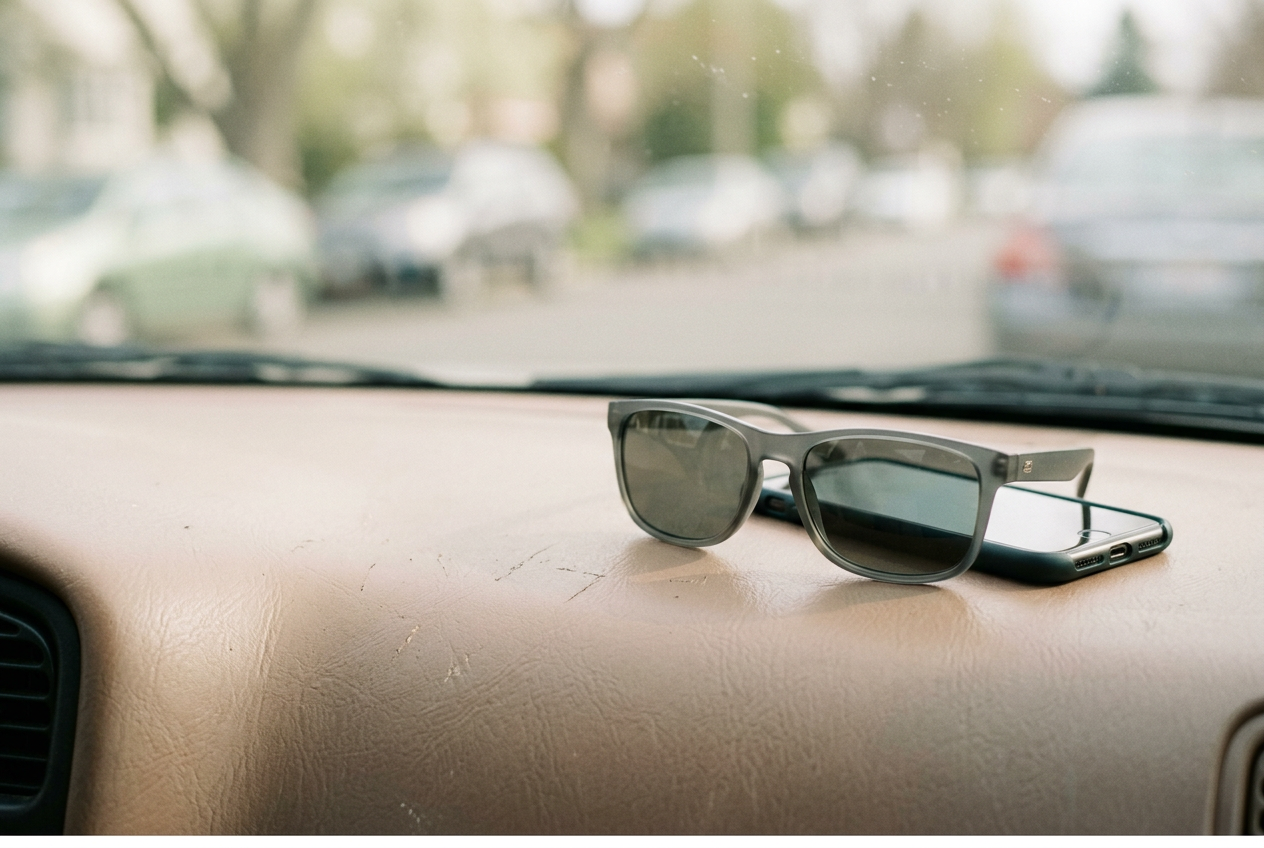
Test sunglasses and over-ear headphones separately because they load different parts of the ear. In my stack, the empty upper piercing protected the sunglasses route, while swapping the larger hoop for the close huggie fixed the phone collision. Over-ear headphones still pressed the onyx stud’s friction back after an hour, so I removed that earring for long listening sessions rather than buying another setting.
Make the final edit after ordinary wear
Wear the proposed stack through one normal day before purchasing duplicates or matching ends. Check it after pulling on a knit top, using a shoulder bag and taking a call. Those movements reveal protruding posts faster than an extended session at the mirror.
Over the evaluation week, the onyx stud remained the anchor, but nearly every supporting choice changed. The bright crystal left first. The larger hoop followed after the phone test. The final white-metal ball, close gold huggie and black flat back made the arrangement feel related without turning it into a disguised matching set.
Clean each material according to its requirements rather than soaking the assembled stack together. I wiped the onyx and gold setting with a soft damp cloth, then dried it; the removable titanium post could be cleaned separately. That small separation also made it easier to inspect the threadless connection before reinserting the top.
Questions people ask
How many earrings make an asymmetrical ear stack?
There is no required number, but four earrings across two ears were enough for this arrangement because one was visually dominant and one piercing stayed empty. Start with the statement stud and one piece opposite it. Add another only when it clarifies the relationship between scale, finish or color.
Should an asymmetrical stack mix gold and silver?
It can, provided one finish remains dominant or repeats across the ears. Here, polished yellow gold appeared around the onyx and in the opposite huggie, while the small white-metal ball acted as a quiet interruption. Equal amounts of two bright finishes made the modest stack look busier than its size suggested.
How tight should a flat back earring fit?
A flat back should sit close enough that the front does not tip or slide, but it should not compress the lobe or leave a persistent indentation. The 6-millimeter wearable length suited my healed upper lobe; another ear may need more room. Swelling, tenderness or a fresh piercing calls for assessment by a reputable piercer.
Why do earrings collide only when using a phone?
A phone pushes the outer ear toward the head, changing the angle and distance between piercings. Posts and hoops that remain separate at rest can then touch or pinch skin. Hold the phone normally, move your jaw and turn your head before committing to the stack; a smaller hoop or shorter fitted post may solve the contact.
One update a day
Today's fashion update, in your inbox
One fashion update each morning — no hype, no filler, just pieces worth wearing.