Long Shorts Change the Balance of Every Summer Shoe
Knee-grazing tailored shorts move the visual break down the leg. Hem width and exposed ankle determine whether slim sneakers, flat sandals, or thicker soles feel balanced.
Women's · September 15, 2026 · 7 min read
Long tailored shorts have changed the summer shoe calculation. An above-the-knee short leaves enough leg visible that most shoes sit apart from the clothes, but a knee-grazing hem creates a lower horizontal break, bringing the fabric and footwear into the same visual field.
This is women’s coverage, although the underlying proportion test works across wardrobes. The useful variables are not gendered: where the hem lands, how widely it hangs, how much ankle remains visible, and whether the shoe stays close to the foot or builds outward.
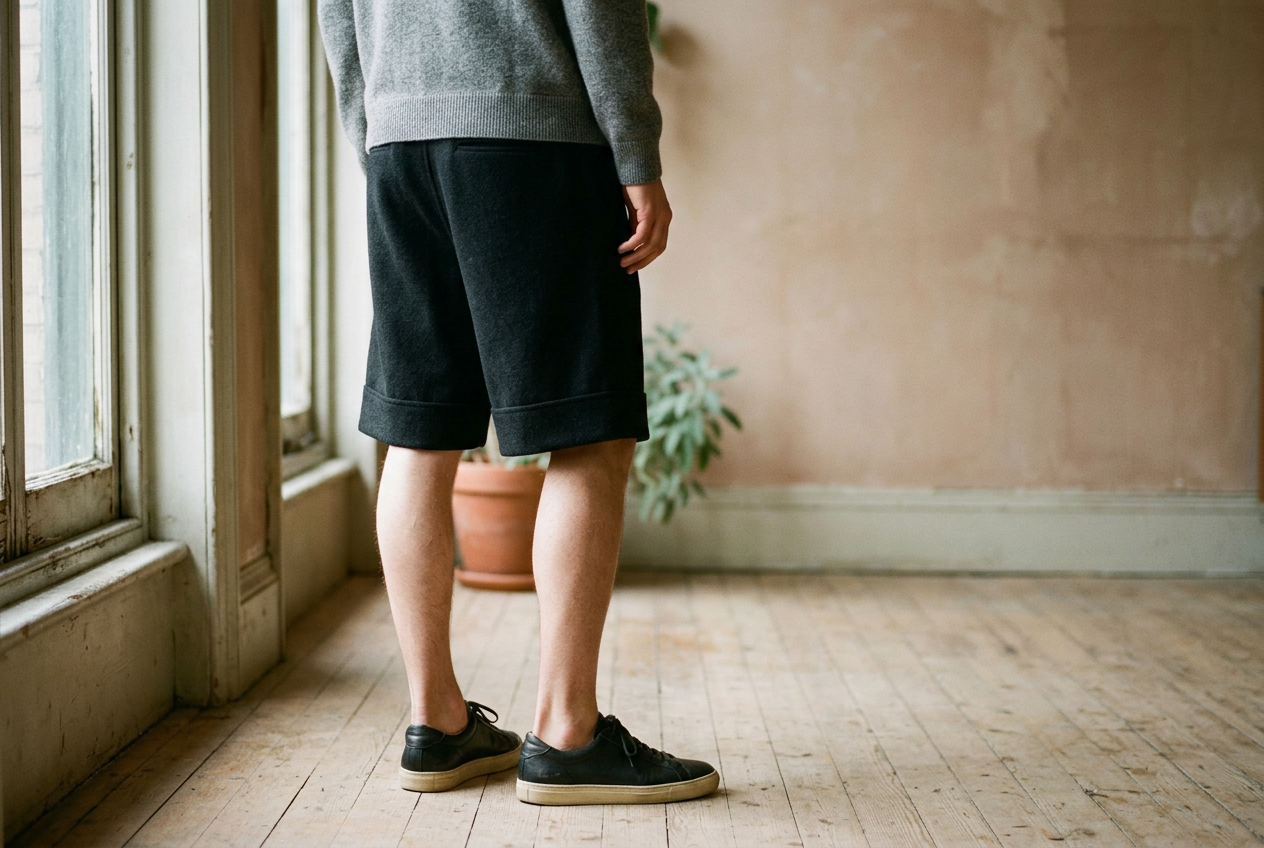
My base case was a black pair of lightweight wool-blend shorts worn through a week of outfit trials. They sit at the natural waist, have a single forward-facing pleat on each side and finish at the top of the kneecap, with enough room at the opening for the fabric to fall straight rather than catch against the leg. The blend developed light sitting creases across the lap but relaxed on a hanger overnight. That matters because a crisp, open hem reads differently from one that collapses around the knee.
I kept the shorts constant and changed the shoes: first a low-profile leather sneaker with a thin gum outsole, then a flat leather sandal, followed later by a running-inspired sneaker with a deeper foam sole. The shorts looked plausible with each. They did not tell the same story.
The hem now participates in the shoe choice
A long short puts its lowest edge near the widest part of many knees, which makes the hem opening unusually prominent. If that opening is broad, the shorts carry visual weight at the bottom and a narrow shoe can appear deliberately spare. If the fabric narrows toward the knee, a very slim shoe may seem undersized because both garment and footwear pull inward while the exposed calf sits between them.
Visible ankle acts as spacing. It gives the eye a clear interval between cloth and shoe, especially when the shoe has a low collar, meaning the upper finishes below the ankle bones. Reduce that interval with crew socks and the shoe starts to connect visually to the shorts. Sometimes that connection steadies a heavy sole.
Sometimes it produces one dense block below the waist.
The black wool-blend pair made this especially plain. Its generous hem opening worked with a small sneaker as long as the ankle stayed bare, while the same outfit with a tall dark sock lost the separation that had made the narrow shoe feel intentional. Nothing was technically wrong, but the line became compressed.
Before buying another shoe, check the shorts from the front rather than relying on a side-view mirror pose. A hem that looks straight in profile may curve inward across the front of the knee because the pleat is too shallow or the thigh fit is tight. Sitting for a minute is useful too. If the hem rides above the kneecap and remains there after standing, the shorts will behave more like a shorter Bermuda cut during an ordinary day.
Low-profile sneakers need a clean interval
Low-profile sneakers have thin soles and relatively shallow uppers, so they occupy little vertical or horizontal space. Leather and suede versions can sharpen tailored shorts, while canvas tends to relax the outfit, but the decisive detail is the gap above the shoe rather than the upper material alone.
With the test shorts, the gum-soled sneaker worked best without a visible sock. The broad black hem ended cleanly, the lower calf remained uninterrupted, and the slim shoe gave the tailoring a lighter finish than a running sneaker would. A true no-show sock can help, although it needs enough heel grip to stay below the collar; a sock that slips underfoot costs more comfort than this proportion exercise is worth.
The pairing became less convincing when I pinched the shorts inward at each outer seam to mimic a tapered cut. That small change made the shoe look detached and slight. Releasing the fabric restored the balance without altering the footwear, which is a useful reminder that the apparent shoe problem may begin several inches higher.
For shorts already owned, inspect the seam allowance, the spare fabric folded inside a seam. A tailor may be able to release a tight hem if enough material remains, though shorts with bound or very narrow internal seams offer little room. Pressing the pleats back into shape can also recover width that has been lost to wear and washing.
A low-profile sneaker is not automatically the sensible purchase. If the current wardrobe consists mainly of tapered long shorts, or if covered socks are nonnegotiable for comfort, a slightly fuller court shoe may integrate more easily. The difference can be modest. There is no need to pay premium-leather prices solely to obtain the thinnest possible outsole.
Flat sandals make the ankle do more work
A flat sandal exposes the greatest amount of foot and usually leaves the ankle completely open. Against long shorts, that exposure can preserve lightness even when the hem is broad, because the visible skin continues below the calf rather than ending at a closed upper.
The flat leather sandal gave the black shorts their clearest summer reading. Its straps were wide enough to register beneath the wool blend, while the thin outsole kept the foot close to the ground. A very fine strap would have looked more delicate, but it also would have asked the shorts to supply nearly all the visual weight.
Toe shape matters less than strap placement here. A broad strap across the forefoot holds its own beneath a wide hem, whereas a narrow thong can make the lower half feel unfinished when the shorts are structured and dark. With softer linen or washed cotton, that slightness may be the point.
Comfort sets a firmer limit. A thin leather sole gives little protection from hot pavement and may offer no meaningful arch support, while unlined straps can rub once heat and swelling set in. A sandal with a modest molded footbed will look heavier, but it may be the better choice for a day that includes real walking. Long shorts do not justify turning a commuter shoe into a dinner-only shoe.
The test pair also showed why fabric matters. Wool blend holds a clear edge above a nearly bare foot. A drooping rayon or loose linen hem can fold toward the knee, reducing the open shape that lets a flat sandal work. Starching linen is rarely worth the trouble, but a quick press and proper hanger can restore enough structure.
A thicker sole can steady a narrow hem
Chunkier sneakers introduce stack height, the amount of sole material between the foot and the ground. They can balance knee-length shorts that taper slightly because the added volume returns weight at the bottom of the outfit. This is the easiest pairing to understand in a mirror and the easiest to overdo.
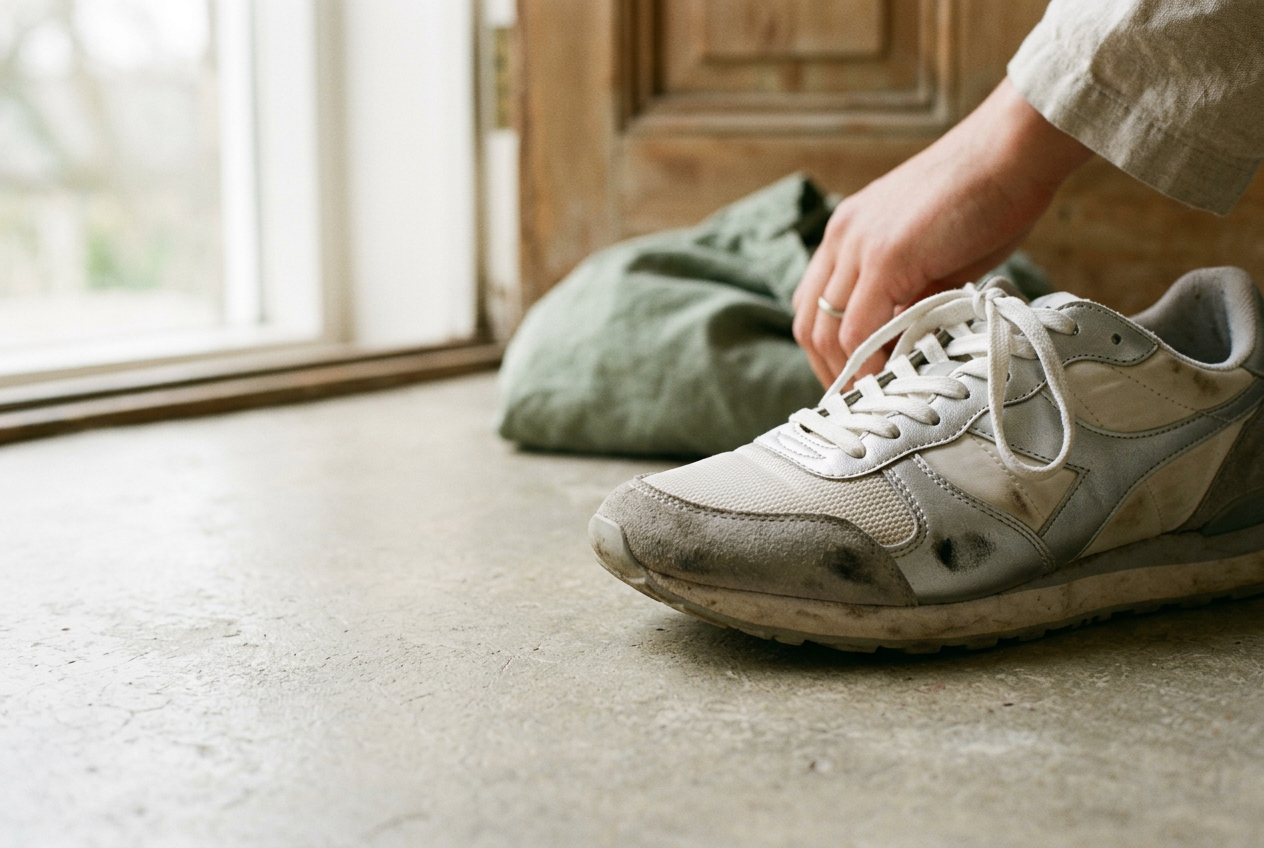
The running-inspired sneaker worked with the black shorts when I used a low sock and allowed a strip of ankle to remain visible. Its foam sidewall was deeper than the gum sole and its upper extended farther around the heel, but the open hem stopped the outfit from feeling crowded. The shoe looked grounded rather than oversized.
The only combination that repeatedly felt congested during the week was the same thick sneaker with a tall ribbed crew sock. The sock filled almost all the space between collar and hem, and its texture competed with the smooth wool blend. Folding the sock lower helped, although repeated folding can create pressure around the ankle. Swapping to a shorter sock was cleaner.
A substantial sandal behaves somewhat differently. Platform footbeds and lugged rubber outsoles add width as well as height, so they often suit shorts with a firm, straight opening. If the hem is very full, however, a broad platform can make the lower half carry more volume than the fitted waist and top. That imbalance may be desirable, but it is not neutral.
This is where I land undecided on thicker soles as the default answer to long shorts. They solve the narrow-hem problem quickly and tend to be easier for walking, yet they can flatten the distinction between tailored shorts and casual footwear. The slim sneaker preserved that tension. The heavier shoe resolved it.
A fitting-room check before another purchase
Wear or bring the shoe type you use most when trying long shorts. Stand naturally, let the pleats settle, and look at the fabric immediately above the kneecap. If the hem pulls inward, sizing up may give the opening more room, though the waist may then need alteration. A larger size is not useful when it drops the rise or shifts the pockets away from the hip.
Take one phone photo from around hip height. Low mirror angles exaggerate both the shoe and the lower leg, while a high angle makes every sole look smaller. In the photo, check whether there is a distinct interval between hem and shoe. If there is not, decide whether a lower sock or a shorter hem would restore it before replacing footwear.
The quickest at-home test is to fold the hem inward once and secure it temporarily. That reveals whether a little more knee improves the existing shoes, without committing to a permanent alteration. On the black wool-blend pair, even a modest lift made the chunky sneaker less dominant, but it also removed the long line that had made the shorts feel current. I left them alone.
That is the central tradeoff. Long shorts ask shoes to participate more visibly in the silhouette, but no category owns the correct proportion. Hem width controls how much weight the garment carries, and exposed ankle controls how clearly that weight separates from the foot.
Questions people ask
Can
I wear knee-grazing shorts with low-profile sneakers?
Yes. A slim sneaker works best when the shorts have a straight or slightly wide opening and some ankle remains visible above the collar. If the hem tapers sharply, try a fuller court sneaker or ask whether the side seams contain enough allowance to release the opening.
Where should long tailored shorts end?
A hem at the top or middle of the kneecap is the most versatile with summer shoes because it leaves part of the lower leg visible. Check the length while sitting as well as standing. Shorts that ride up and stay creased above the knee will not retain the same proportion through the day.
Do socks change how long shorts look with sneakers?
Sock height can change the pairing as much as the sneaker. A low sock preserves separation between the hem and shoe, while a crew sock visually connects them. That connection can support a thicker sole, but a dark, textured sock may crowd a wide tailored hem and reduce the visible ankle too far.
Are chunky sneakers easier to style with long shorts?
They are often easier with narrow or tapered hems because their deeper soles restore weight near the ground. They are not always better with wide shorts. Try the outfit with a low sock first, then check the front view from hip height; if the shoe extends well beyond the hem line, choose a less bulky upper.
One update a day
Today's fashion update, in your inbox
One fashion update each morning — no hype, no filler, just pieces worth wearing.