Fisherman Sandals Are Becoming Basics. Leather Has the Edge.
The closed cage toe has spread from designer novelty to everyday footwear. Leather offers the widest wardrobe range, while molded rubber and tall platforms carry sharper comfort compromises.
Women's · August 10, 2026 · 7 min read
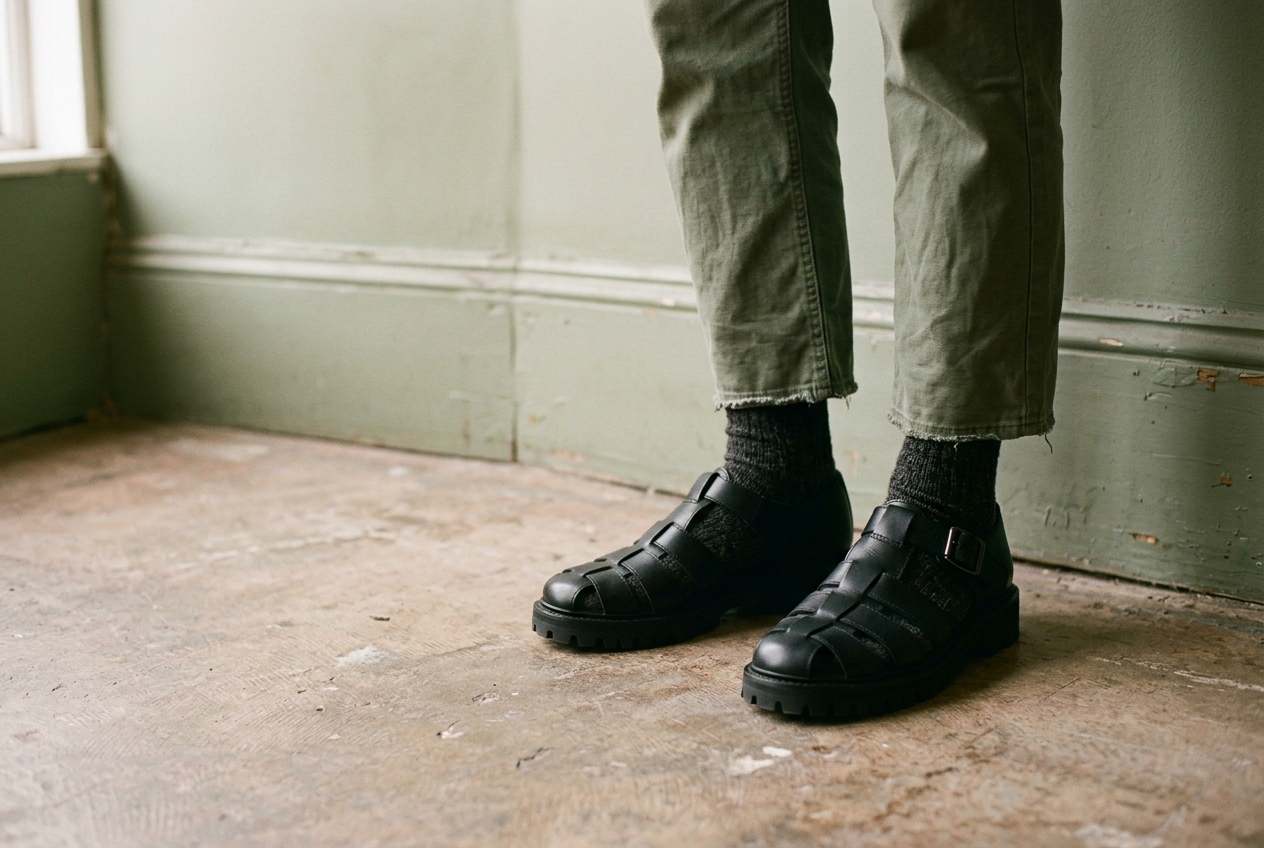
The pair that clarifies the trend is the G.H. Bass Fisherman Super Lug Sandal. Its leather strips form a closed cage over the toes, an adjustable buckle holds the ankle, and a substantial rubber outsole gives the familiar woven shape more protection than a delicate summer sandal.
It looks less like a novelty when considered as a ventilated shoe.
That distinction matters. Fisherman sandals have occupied fashion’s summer rotation for several seasons, but their present retail breadth suggests the shape is settling into a more ordinary role. Versions now appear across designer collections, traditional footwear brands, mall-level retailers, outdoor labels, and molded footwear specialists. The question is no longer whether the silhouette has arrived.
It is which construction can survive regular walking and still make sense with next year’s clothes.
This is women’s coverage, particularly where skirt lengths, trouser widths, and women’s size grading affect the choice, although the construction principles apply more widely. The Super Lug remains the reference point because it combines the features most likely to endure: recognizable leather, a toe shape that does not depend on an extreme trend, and an outsole substantial enough for pavement without becoming the entire outfit.
Retail breadth has changed the meaning
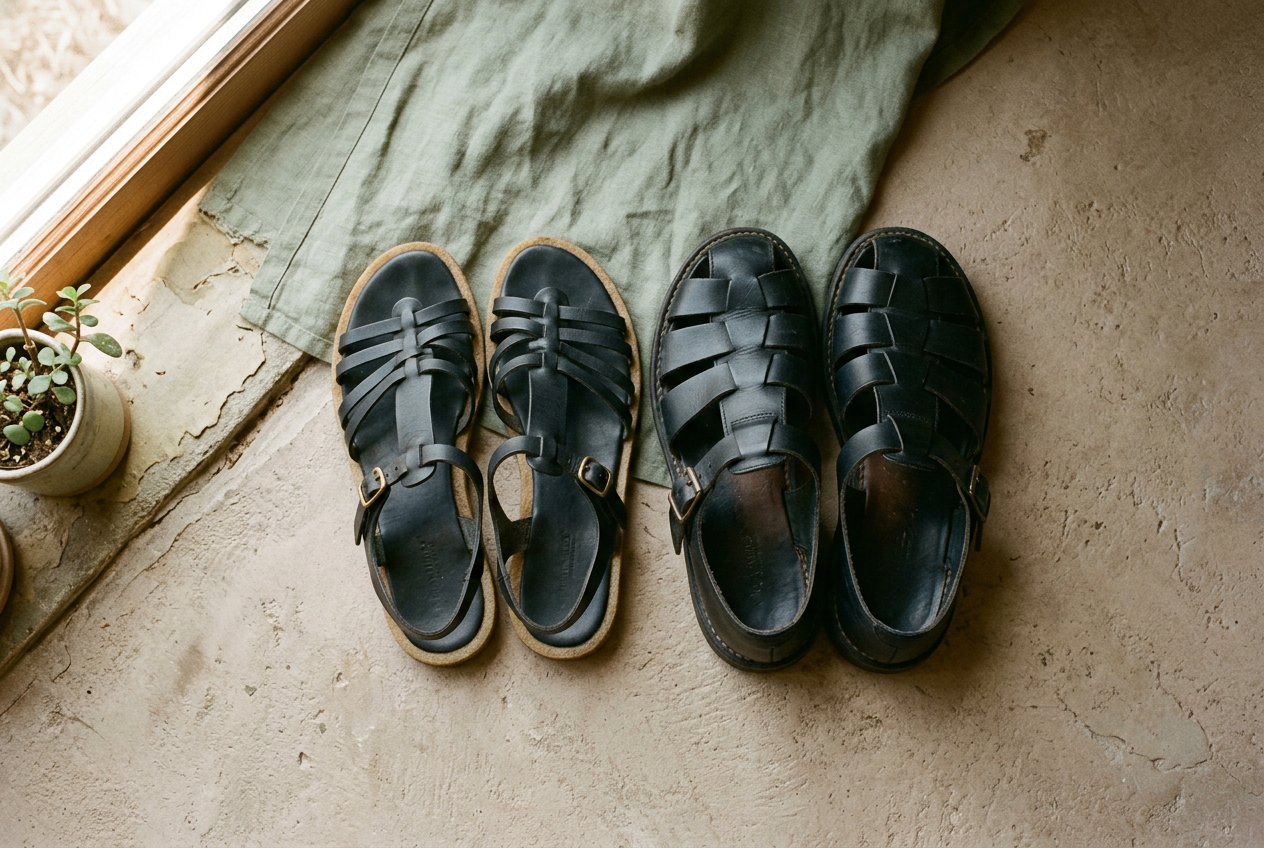
A silhouette starts behaving like a basic when brands can translate it without erasing its identity. The fisherman sandal passes that test. A closed or nearly closed toe, interlaced straps, and an ankle fastening remain legible whether the upper is polished leather or one piece of molded plastic.
The Row and Hereu have helped keep refined leather versions visible at the premium end, while longstanding shoe names and mainstream retailers offer sturdier interpretations. Melissa’s Possession sandal represents the flexible jelly branch, using the brand’s PVC-based molded material rather than stitched leather. Platform versions move through fashion retailers with less consistency, sometimes returning with a different sole height, buckle, or color each season.
Breadth alone does not guarantee permanence. It does show that the fisherman shape can absorb different materials and price bands, from molded pairs priced around casual summer footwear to leather versions that cost what a solid pair of shoes might cost, with designer editions extending far beyond that. The useful signal is repetition across categories, not the presence of one expensive runway pair.
Closed-toe leather has the strongest case
Leather fisherman sandals offer the best wardrobe range because the upper behaves like a shoe from the front. Under full-length trousers, only the closed cage toe is visible; with a skirt or shorts, the ankle strap reveals that it is a sandal. Black and dark brown versions can move into early fall with socks if there is enough internal room, while tan leather retains a more explicitly summery tone.
The material also has a predictable aging pattern. Smooth leather creases where the toes bend, softens around pressure points, and can be conditioned when it dries. A cobbler may be able to replace a buckle or reinforce a loose strap, although resoling depends on how the outsole has been attached. A cemented sole, meaning one glued directly to the upper, is often harder to replace neatly than a stitched construction.
Fit is the deciding issue. The cage should sit near the foot without cutting across the little-toe joint, and the longest toe must not press against the closed front when walking downhill. Many fisherman sandals look roomy because air shows between the straps, yet the actual toe box can taper. Wider feet should prioritize a rounded front and straighter sidewalls rather than sizing up automatically, since extra length can move the ankle strap into the wrong position.
The G.H. Bass Super Lug illustrates the compromise well. Its lug sole, an outsole cut with deep traction blocks, adds grip and separates the leather upper from dirty pavement, but the visual weight limits its use with very fluid evening clothes.
It still covers more situations than a towering platform. Straight jeans, cropped trousers, and a plain cotton dress give the shoe enough structure without requiring the rest of the outfit to repeat its heaviness.
Leather is not automatically comfortable. Stiff strap edges can abrade damp skin, dark linings may transfer color when wet, and an unpadded footbed will feel firm even after the upper breaks in. The strongest long-term purchase is a pair with finished strap edges, a secure heel cup, and enough flex at the ball of the foot to follow the walking stride.
Molded pairs win near water, then narrow the wardrobe
Flexible rubber interpretations are often described casually as jelly sandals, although many are made from PVC or another molded synthetic rather than natural rubber. Their appeal is clear: water does not soak into the upper, mud rinses away, and the cage can flex instead of demanding a leather break-in period.
Melissa’s Possession is the useful reference here. Its one-piece molded character preserves the recognizable fisherman outline while making the shoe feel playful and deliberately synthetic. That works with swimwear, cotton shorts, short dresses, and other clothes that accept a visible summer material. It becomes harder to integrate with wool trousers, tailored suiting, or a polished work dress because the glossy surface keeps reading as recreational.
Heat and moisture expose the tradeoff. A nonporous upper does not absorb perspiration, so the foot can slide forward and rub against the cage. Flexible straps may also stretch around the foot without giving meaningful support. A cushioned footbed helps underfoot, but it cannot correct an ankle strap that allows the heel to lift.
Molded pairs make sense for wet grass, beach approaches, and travel days that involve water rather than sustained city mileage. They are less convincing as the only summer sandal for someone who walks several miles at a time. Pale or translucent material can also show embedded dirt, while strong colors may date faster than the fisherman shape itself.
Platforms ask the sole to do too much
Fashion-led platforms turn the cage upper into a frame for a thick outsole. Some use rubber; others rely on EVA, a lightweight foam used to build height without the full mass of solid rubber. The lighter construction can feel promising in the hand, but sole height changes how the shoe moves.
A tall, relatively rigid platform reduces the foot’s natural bend. If the heel is not held closely, the sole can lag behind the stride and pull against the ankle strap. Side-to-side stability also matters: a broad base may look secure, yet a footbed that sits high above the ground magnifies a small roll at the edge of uneven pavement.
This category is worth buying for a deliberate proportion rather than as a general walking shoe. A platform can balance wide-leg trousers or a long, full skirt, particularly when a flat, fine-soled sandal disappears beneath the fabric. That styling effect may remain useful, but the exact combination of exaggerated tread and sole height is more exposed to seasonal change.
The Super Lug stops short of this problem. Its outsole has presence, though the foot still appears close enough to the ground that the leather cage remains the main feature. That is the line to watch: once the platform becomes more memorable than the fisherman construction, the pair belongs to a narrower fashion cycle.
Secondhand listings reveal what survives wear
Resale availability supports the idea that fisherman sandals can outlast one summer, with leather pairs from premium and established footwear brands appearing alongside molded Melissa styles and past platform releases. Availability does not prove strong resale value. It does let a buyer inspect which materials age acceptably and which versions are being moved on with little visible use.
For leather, check the interior photographs for a deep toe imprint, darkened footbed, or straps that have bowed outward. Creasing is normal. Cracked strap edges, stretched buckle holes, and separation where the upper meets the sole are more consequential. A pair already molded to a very different foot can remain uncomfortable even when the listed size is correct.
Molded sandals require a different inspection. Look for distortion at the ankle strap, splits beside the buckle, and a sole worn smooth at the heel. Platforms need level rear wear and no visible gap between sole layers. Used shoes without clear outsole and footbed photographs are not a bargain yet.
The volume of varied secondhand examples suggests recognition, not permanence on its own. Leather has the advantage because scuffs and creasing can look consistent with the material, while cloudy plastic or a compressed foam platform tends to read as damage. A repairable buckle also gives the G.H.
Bass type of construction a longer route back into use than a molded strap that has torn.
The useful buying line
Choose closed-toe leather if this will be the main summer shoe and the wardrobe includes trousers, work clothes, or transitional layers. Expect some break-in, and test the pair indoors on stairs as well as flat flooring. The heel should not lift enough to make the ankle strap saw back and forth.
Choose molded material when water resistance and easy cleaning outweigh polish. It should flex at the ball of the foot rather than fold in the middle, and the footbed needs enough texture to limit sliding. Skip a pair that already feels hot or sticky during an indoor fitting.
A high platform earns its place when the added proportion solves a recurring outfit problem. It is not the construction to buy as evidence that fisherman sandals are now a basic. The durable part of the trend is the cage toe. The more ordinary leather versions, including the Super Lug, let that shape remain visible without tying it to one exaggerated summer.
Questions people ask
Are fisherman sandals comfortable for long walks?
They can be, if the sole bends at the ball of the foot and the ankle strap prevents heel lift. Closed leather cages need enough width around the little-toe joint, while molded pairs need a textured footbed to control sliding. Tall, rigid platforms are usually the least dependable choice for uneven pavement.
Should fisherman sandals fit loosely?
No. The straps should sit close without leaving pressure marks, and the heel should remain centered when the foot bends. Visible gaps in the cage do not mean the toe box is wide. If the front pinches, look for a rounder last, meaning the foot-shaped form used to build the shoe, rather than adding unnecessary length.
Can leather fisherman sandals work beyond summer?
Black or dark brown leather can move into early fall with trousers, denim, and fine socks, provided the cage has enough room. Pale leather and glossy molded versions read more seasonally. A moderate rubber sole extends the practical window because it separates the foot from cool or damp pavement.
Are secondhand fisherman sandals worth buying?
Leather pairs can be good secondhand purchases when the straps remain straight, the buckle holes are intact, and the sole has even wear. Avoid a deeply molded footbed or separating sole. For molded and platform pairs, torn straps and compressed foam are usually more important than surface scuffs because repair options are limited.
One update a day
Today's fashion update, in your inbox
One fashion update each morning — no hype, no filler, just pieces worth wearing.