Bubble Hems Are Back. Check the Inside Ties First.
The rounded silhouette may look identical on the rack, but its hidden attachment decides whether it rebounds after sitting or develops a dropped section after cleaning.
Women's · September 22, 2026 · 8 min read
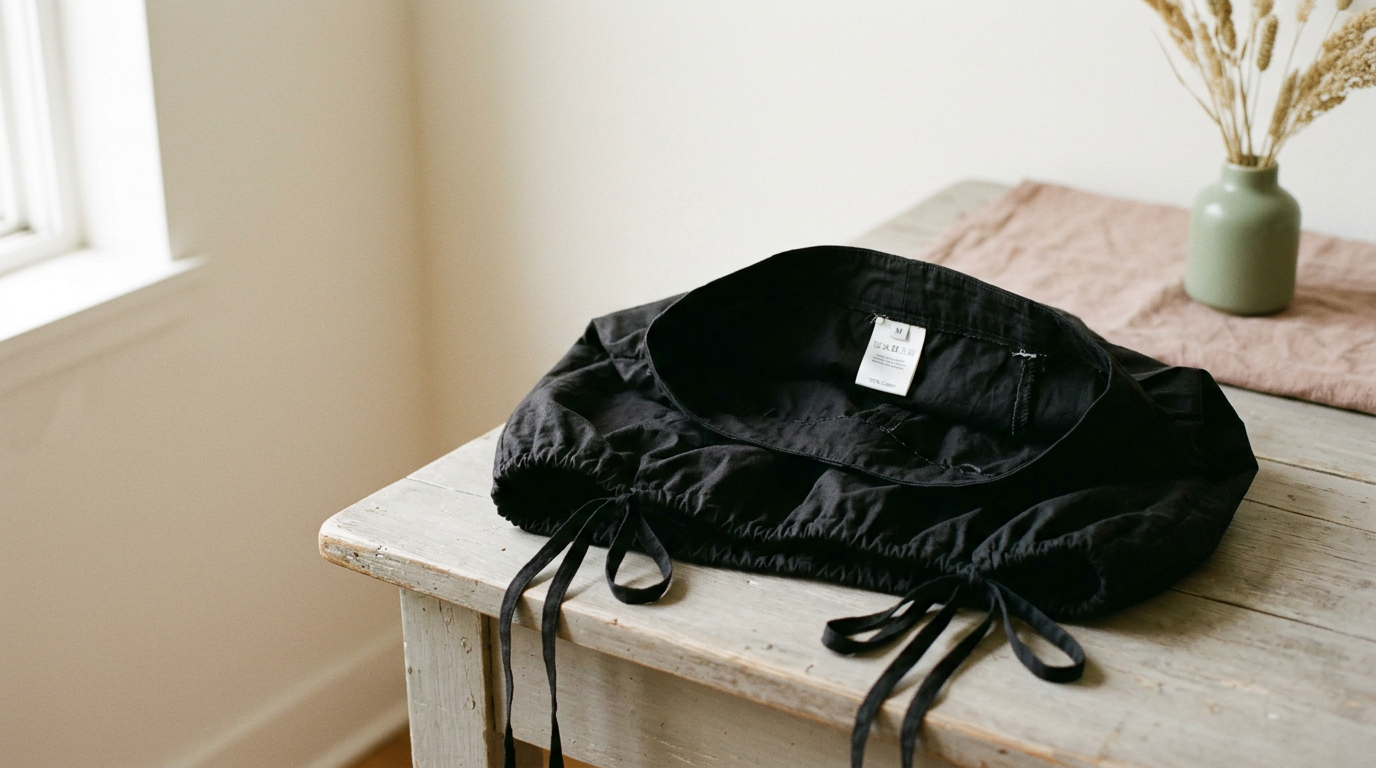
The useful case is a cotton-poplin bubble midi with four adjustable ribbons hidden between its outer skirt and lining. Each ribbon lifts one quarter of the hem, and each can be shortened again if the back settles after a day of sitting or the shell changes slightly in the wash. Turn that skirt inside out and the trend becomes less mysterious: its shelf life depends on small pieces of hardware and stitching that product photography rarely shows.
This is women's coverage, focused on the skirts and dresses now appearing across mass-market and contemporary collections. Public trend reporting has tracked the bubble hem's return from runway collections into everyday retail, but the visible silhouette tells only half the story. Two skirts can have the same rounded cotton shell and land at the same point on the calf while using very different methods to keep that shell tucked under.
One may bounce back after a commute. The other may develop a low patch behind one knee.
Start inside the hem
A bubble hem is made by attaching a longer outer layer to a shorter inner layer, causing the extra fabric to curve under rather than hang straight. Crisp cotton poplin produces a cleaner, more inflated edge; taffeta and polyester blends can hold greater volume with less weight, while soft jersey tends to make a lower, slouchier bubble.
The four-ribbon cotton midi is the version worth keeping in mind. Its ties can alter the distance between the inner and outer layers, so they control both length and fullness. Shortening all four lifts the skirt and increases the curve. Releasing them lowers the hem.
Adjusting only the back can correct settling after sitting, although large differences between tie lengths will produce visible scallops.
An elastic channel works differently. The elastic sits inside a casing, meaning a narrow fabric tunnel sewn around the hem, and gathers the edge continuously. That continuous pull is useful: there is no single unsupported section waiting to drop, and the skirt usually compresses without putting all the strain on one stitch. Good elastic also rebounds after the wearer stands.
Its weakness develops slowly. Elastic can twist inside a wide casing, lose recovery through heat and detergent exposure, or stretch more at the back where the body repeatedly presses against it. A few anchoring stitches at the side seams help prevent rotation, but they do not restore elastic that has gone slack.
Fixed tacking is the simplest hidden construction. Tacks are short groups of stitches that join selected points of the outer hem to the lining. They preserve a planned shape without drawstrings or a full elastic channel, and on a well-engineered dress with enough attachment points they can look precise. The strain, however, sits at those points.
If one tack breaks, the section around it drops farther than the rest.
That failure is repairable. It is also conspicuous.
Sitting exposes the attachment
A bubble does not need to remain rigid while someone sits. It needs to collapse without permanently redistributing its fullness, then recover when the wearer stands and smooths the shell. The distinction matters because a stiff, photogenic hem can still be uncomfortable, while a softer construction may flatten in the chair and return with little intervention.
Fixed tacks receive the sharpest test. As the skirt is trapped between the body and seat, the outer layer moves while its shorter lining has less room to follow. Widely spaced tacks concentrate that pull, especially across the back. Strong bartacks, which are dense reinforcing stitches placed across a stress point, reduce the chance of breakage but can make a failure more damaging if the surrounding fabric is thin.
Elastic distributes the load more evenly. On a lightweight mini or casual cotton dress, that may be enough reason to choose it, particularly when the garment will be packed, worn often and washed at home. Check that the elastic feels springy rather than hard, and run the hem through your fingers to detect a twist. A rolled elastic band can make one section appear narrower before the garment has even been worn.
The four inner ties demand a small reset. Before sitting, the wearer can smooth the back rather than lowering directly onto a tightly folded bubble; after standing, a hand around the hem releases fabric caught against the lining. This takes seconds, though it is still maintenance, and anyone who dislikes adjusting clothes during the day may prefer a modest elastic bubble over a dramatic tied one.
A fitting-room chair is more informative than another mirror angle. Sit for several minutes, stand without pulling the skirt into place, and look at the back and side seams first. A temporary crease in cotton is normal. A section that remains visibly lower points to an attachment imbalance, a loose tie or a tack carrying too much fabric.
Cleaning changes the geometry
The care label is the concrete detail to read before considering the price. A washable cotton shell may shrink while a polyester lining changes very little, and that difference can pull a previously level bubble into uneven sections. Even two cotton layers may respond differently if their weaves, finishes or grain directions differ.
Adjustable ties cannot prevent shrinkage, but they can compensate for a small change. On the four-ribbon midi, loosen every tie before assessing the cleaned skirt, let the garment dry according to its label, then place it on a hanger and retie opposite points to matching lengths. Working front to back before adjusting the sides makes it easier to see whether the shell itself has shifted.
Machine washing needs restraint. Follow the sewn-in instructions rather than a general fabric rule, place long ribbons in loose bows or a laundry bag if the label permits machine washing, and avoid tightening wet knots that may become difficult to release. High dryer heat is unkind to elastic and can exaggerate cotton shrinkage, so a garment marked for air-drying should not be rushed for the sake of restoring volume.
Fixed tacks offer no such recalibration. If cleaning changes the relationship between shell and lining, the owner must live with the new shape or move the attachment points. A tailor can replace a broken tack without reconstructing the whole hem, but matching the original height around a full skirt takes more judgment than sewing one loose straight hem.
Dry-clean-only construction is not automatically better. It may indicate a structured fabric, finish or mixed-fiber lining that should not meet water, and following that instruction can preserve the intended geometry. It also adds recurring cost and inconvenience to a micro-trend garment. The four-ribbon cotton midi earns more wear if its label fits the owner's real laundry habits.
The construction worth paying for
Adjustable ties are the strongest long-term proposition when the bubble is pronounced and the garment costs enough to merit repair. Look for ribbons secured into seam allowances or reinforced with bartacks, not narrow cords held by a few visible stitches. Four evenly spaced ties are more controllable than two at the side seams because the front and back can be corrected independently; additional ties can create a smoother curve, though they add more work after cleaning.
They are not an automatic investment signal. A high price does not make slippery knots dependable, and ties that hang below the lining can catch on shoes during dressing or show when the skirt moves. Pull each one gently in the fitting room. The fabric around its attachment should remain flat.
Elastic is the practical choice for a lower-priced skirt intended for frequent wear. A replaceable elastic channel is better than elastic stitched directly into multiple rows, because a repairer can open the casing and thread in a new length when recovery fades. Brand product pages do not always disclose that distinction, so the inside hem deserves inspection before the tags come off.
Fixed tacking makes most sense on a lighter bubble with ample attachment points and a stable lining. It is less persuasive on a full midi where large panels hang between widely spaced stitches. For a short-lived trend purchase, that compromise may be acceptable. It is not worth paying contemporary-label money for four tiny tacks carrying a large cotton skirt unless the brand offers unusually clear construction or repair support.
The trend itself may last; its current volume may not. A moderately rounded hem in plain black, white or dark navy can settle into a wardrobe more easily than an extremely inflated mini, yet construction remains the better predictor of physical survival. The adjustable four-ribbon midi can be lowered if the exaggerated bubble begins to feel dated. Fixed tacks preserve only the shape chosen at the factory.
A fitting-room check that takes five minutes
Start with the care label, then turn up enough of the hem to identify the attachment. For elastic, stretch a short section and confirm that it returns smoothly without crackling, twisting or leaving a loose pocket of fabric. For fixed tacks, count how the volume is distributed and inspect the fabric immediately around each stitch cluster.
With adjustable ties, compare their lengths and attachment points before changing anything. Retie one pair slightly shorter, put the garment on again and check whether the hem responds predictably rather than forming one deep lobe. Return the ties to equal lengths, sit, stand and inspect the back.
That is the usefulness test for the four-ribbon cotton midi. The ribbons cost a little time after washing and occasionally during wear, but they let the owner correct the part of a bubble hem most likely to change. If the ties are inaccessible, weakly attached or impossible to equalize, their theoretical advantage does not justify a higher price.
Questions people ask
Which bubble hem construction holds its shape best?
Adjustable inner ties offer the most control because the wearer can rebalance the front, back and sides after sitting or cleaning. A well-made elastic channel is easier day to day and distributes tension evenly, but elastic eventually loses recovery. Fixed tacks can hold a precise shape until one breaks or the layers shrink differently.
Do bubble skirts look wrinkled after sitting?
Cotton poplin and linen blends will usually show some creasing where the skirt was compressed. The more important sign is whether the hem returns to an even level after standing and smoothing it once. A persistent low section suggests a loosened tie, twisted elastic or failed tack rather than ordinary wrinkling.
Can a sagging bubble hem be repaired?
Often. A tailor can replace a broken tack, shorten or add interior ribbons, or renew elastic if it sits in an accessible casing. Repairs become harder when elastic is stitched directly through the fabric or when cleaning has distorted the shell and lining by different amounts, so bring the care label with the garment.
Should inner ties be removed before washing?
Do not cut out permanent ties. Follow the garment's care label, loosen adjustable sections and secure long ribbons so they cannot knot or wrap around other items if machine washing is allowed. After the skirt dries as directed, hang it and set opposite ties to matching lengths before making smaller corrections.
One update a day
Today's fashion update, in your inbox
One fashion update each morning — no hype, no filler, just pieces worth wearing.