Bubble-Hem Tops Ride Up More Than Skirts. The Lining Explains It.
The gathered shape has moved beyond dresses, but it is less stable on a cropped top. Lining length, elastic grip and fabric weight decide whether the volume holds or climbs.
Women's · October 27, 2026 · 7 min read
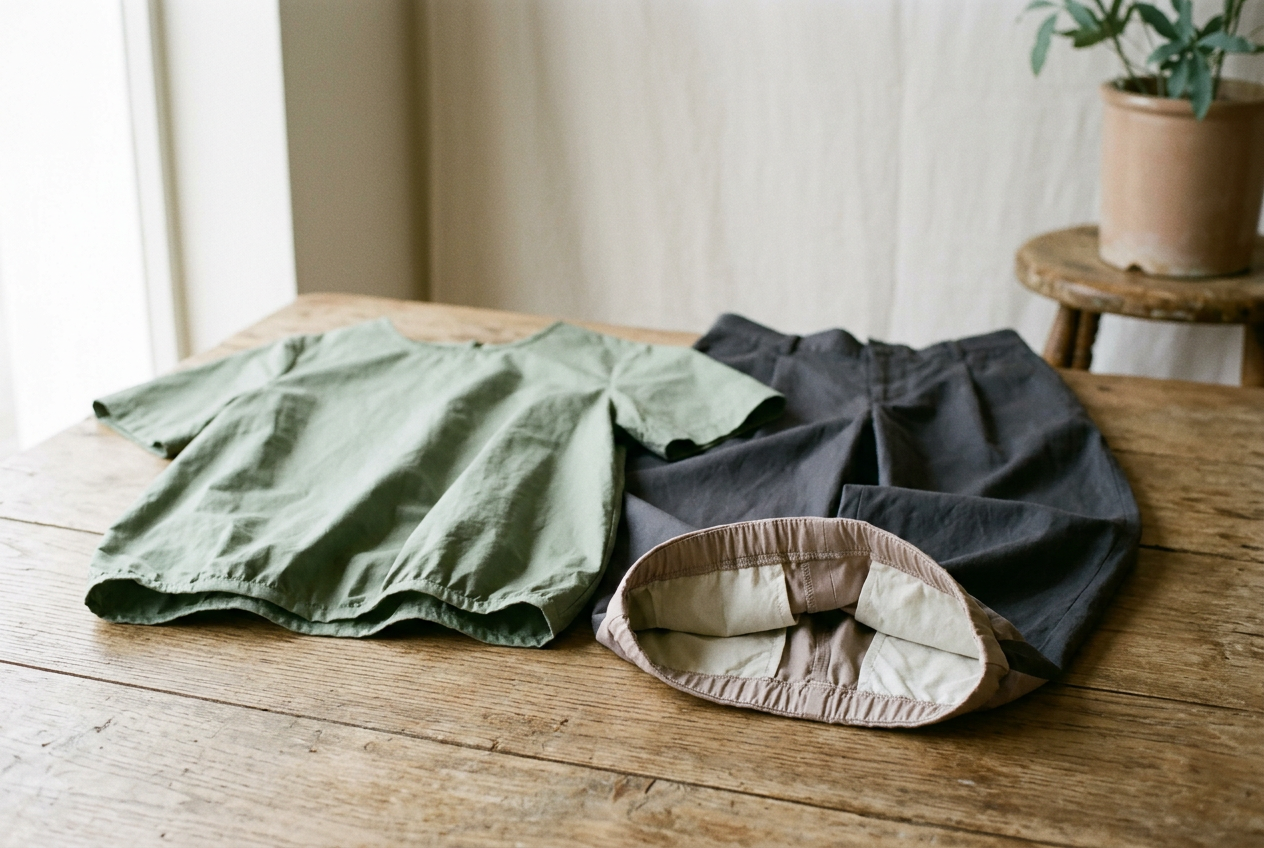
The useful test case is a women’s cropped cotton-poplin top worn with high-rise straight trousers. Its shell, meaning the visible outer fabric, extends several inches below its lining and folds back underneath; elastic gathers that lower edge against the body. On a hanger, the arrangement produces a clean, rounded pocket of volume. Raise both arms, sit down or pull a jacket over it, and the elastic can migrate from the waist toward the narrower area below the bust.
That top contains the whole bubble-hem argument. The shape looks straightforward, yet the outer layer, inner layer and gathered edge are each trying to settle somewhere different. A skirt can use its waistband and its own hanging weight to resist that movement. A top has shoulders above and a changing torso circumference below, so ordinary movement repeatedly gives the hem opportunities to climb.
The lining sets the bubble’s depth
A bubble hem is a gathered lower edge turned under and secured to a shorter inner layer, creating volume between the two. The lining does more than cover the inside. Its length establishes where the shell must turn back, which controls both the depth of the curve and the amount of loose fabric available to puff outward.
Return to the cotton-poplin top. If its shell reaches the upper hip but its lining stops near the natural waist, the difference creates a deep fold with visible volume. That can look deliberate while standing, particularly over a firm trouser waistband that gives the elastic somewhere to rest. It also leaves more fabric available to shift upward when the wearer moves.
Once the elastic settles under the ribs, the longer shell does not necessarily fall back into place without a tug.
A smaller difference between shell and lining produces a shallower bubble. It may look less dramatic in a product photograph, but it usually takes less rearranging because there is less folded fabric rolling around the lower edge. For a top intended for regular wear, this quieter construction is often the better translation of the trend.
Skirts reverse some of that calculation. A short inner layer joined to a much longer shell creates a pronounced balloon, but the skirt hangs from a fixed waistband while the shell’s weight pulls downward. The bubble can collapse against the thighs while sitting, then regain its shape after standing. That temporary flattening is different from ride-up: the hem has changed volume, but the waistband has not changed position.
The least forgiving skirt combines a very short lining with a narrow gathered opening. Its shell may look full, yet the inner layer can pull against the seat or restrict the stride, especially when the garment is sized from a waist measurement without enough room through the hips. In this women’s fit context, the inner circumference matters as much as the visible fullness.
Elastic needs enough grip, not maximum grip
Elastic tension means how strongly the elastic contracts relative to the fabric and the body opening it surrounds. Stronger tension makes a crisp gather and helps the bubble keep its outline. It also increases the chance that the hem will search for a narrower place to sit.
On the cotton-poplin top, tight elastic at the waist behaves reasonably until the torso bends or the arms lift. The edge moves upward, reaches a smaller circumference and stays there because that position asks less of the elastic. A loose elastic edge creates the opposite problem: the bubble hangs lower and may lose its rounded definition, particularly beneath the weight of poplin.
This is why stretching the hem with both hands in a fitting room tells only part of the story. The better test takes about five minutes. Put the top on with the rise of trousers or a skirt you would normally wear, lift both arms, sit, stand and add the outer layer you expect to use. If the hem rises and remains above the waistband, sizing up may add body width without correcting the elastic ratio.
A different construction is the more reliable answer.
Look for an elastic casing, a fabric channel that holds removable or replaceable elastic, rather than elastic stitched directly through several rows of fabric. A casing does not guarantee comfort, but it gives a tailor a realistic route to reducing the tension. Stitched-through elastic is harder to alter cleanly and can leave visible needle marks once removed.
A skirt’s elasticized bubble edge sits farther from the waist and usually has more room to move. Too much tension still has consequences. It can draw the hem tightly between the legs, limit a full walking stride or make a lightweight skirt creep upward against tights. A softly gathered edge attached to a roomy lining tends to hold the idea of the silhouette without making every step negotiate with it.
Fabric weight decides whether volume floats or drops
Cotton poplin has enough body to stand away from the torso, which makes it a common-sense material for a bubble top. A densely woven version also produces firm folds. If too much shell fabric is packed into a tight elastic edge, those folds can bunch rather than distribute evenly, leaving one side fuller after a bag strap or jacket presses against it.
Crisp nylon and polyester taffeta can create greater volume with less material because the fabric resists collapsing. The tradeoff is movement noise and a tendency to hold sharp creases where the wearer sits or leans. A lighter synthetic shell may recover quickly, although static can pull it toward the lining instead of letting the layers separate.
Soft jersey poses a different problem. It stretches with the elastic and often falls downward rather than forming a distinct curve, so the result can read as a bloused band instead of a bubble. Jersey may be comfortable on a top because it moves with the ribs, but paying extra for elaborate bubble construction is difficult to justify if the fabric cannot support the shape.
For skirts, a little weight is useful. Midweight cotton, technical woven fabric or a lined taffeta can hang from the waistband and return toward the knees after movement. Very light fabric needs enough internal structure to avoid twisting, while a heavy shell can drag on the lining seam and turn a rounded hem into a low, uneven fold.
The cotton-poplin top sits in the middle. Its fabric can hold the volume, yet its success still depends on a lining long enough to anchor near the waist and elastic relaxed enough to remain there. Material alone does not rescue an aggressive cut.
The wearable version reveals its inside
Product photography shows the outer curve, so the construction clues often appear in less prominent images. Look for an interior view or a description that names a full lining. A separate lining attached at the lower edge generally controls the bubble more predictably than a single layer folded into an elastic channel, though it also adds warmth and bulk.
Check where the garment is meant to finish. “Cropped” is not precise enough. A top ending at the natural waist behaves differently from one intended to overlap a high-rise waistband, and a model’s height does not reveal how the length will land on another torso. The back length is useful when a retailer provides it, but the lining length would be more revealing and is rarely listed.
In its absence, inspect whether the bubble begins close to the bust or lower on the body.
The easiest tops have a stable upper section and a relatively shallow bubble below. Straps or shoulders should not need tightening to hold the hem down; that transfers the pull upward and can make the neckline sit badly. A side zipper may preserve a fitted shape without requiring a very stretchy lower opening, while a fully elasticized body is easier to put on but more likely to move as one unit.
With skirts, inspect the lining opening and waistband before admiring the volume. A secure waistband carries the garment’s weight. Enough lining room through the seat prevents the inner layer from climbing, which would pull the bubble higher with it. Pockets add usefulness but can distort a very light shell when filled, particularly if the pocket bags are anchored only to the side seams.
The wearable translation does not need the largest possible curve. It needs to recover after sitting, stay near its intended horizontal line and allow a normal stride. A version that passes those tests may look modest beside a dramatic image-led piece, but it will spend less time being pulled back into position.
A fitting-room test catches most failures
Wear the intended base layer because smooth shapewear, a cotton tank and bare skin create different amounts of friction. For the cotton-poplin top, pair it with the actual high-rise trousers rather than relying on fitting-room jeans with an unfamiliar rise. Let the hem settle over or just above the waistband, then move without holding it in place.
After raising your arms and sitting, note where the elastic stops. If it returns to the waist, the construction is doing its job. If it remains under the bust, slides into the waistband or rotates so that one side sits higher, repeated adjustment is built into the garment. A larger size is worth trying only when the upper body also feels tight; excess width at the chest can create a new fit problem without changing the hem’s preferred resting point.
For a skirt, take a full stride and sit long enough for the shell to compress. The hem should release when you stand without the lining remaining caught above the thighs. Check the back in a mirror. A bubble that drops lower behind may indicate that the lining is too tight across the seat, not that the outer shell needs more volume.
Questions people ask
Why does a bubble-hem top keep riding up?
The elastic edge usually moves toward a narrower part of the torso after the arms lift or the body bends. A large difference between shell and lining length adds loose fabric that can travel with it, while strong elastic helps the hem remain in its new, higher position.
Are bubble skirts easier to wear than bubble tops?
Usually, because a skirt hangs from a waistband and its fabric weight pulls downward. It can still creep up when the lining is tight through the hips, the lower opening restricts the stride or lightweight fabric clings to tights, so the interior fit deserves as much attention as the visible shape.
Should I size up in a bubble-hem top?
Size up when the bust, armholes or upper body feel restrictive. If only the hem climbs, extra body width may not change the elastic tension or lining length that causes the problem. Compare another construction with a shallower bubble, a longer lining or an adjustable elastic casing.
Which fabric makes the most wearable bubble hem?
Midweight poplin and structured technical wovens hold a clear curve without requiring extreme gathering. Taffeta gives more volume but may crease or make noise, while soft jersey tends to drape like a bloused band. Whatever the fiber, check that the lining supports the shell without pulling it upward.
One update a day
Today's fashion update, in your inbox
One fashion update each morning — no hype, no filler, just pieces worth wearing.