Bubble-Hem Skirts Are Back, but Some Collapse When You Sit
Elastic can bounce back, fixed tucks hold a firmer outline, and short linings create volume with less hardware. The difference becomes clear after 20 minutes in a chair.
Women's · September 28, 2026 · 8 min read
The returning bubble hem, meaning a skirt hem turned inward so the outer fabric rounds over itself, is easy to recognize and less easy to judge. On a hanger, almost every version has volume. Once worn, the construction decides whether that volume remains evenly distributed, shifts toward the side seams, or presses into a shelf across the back.
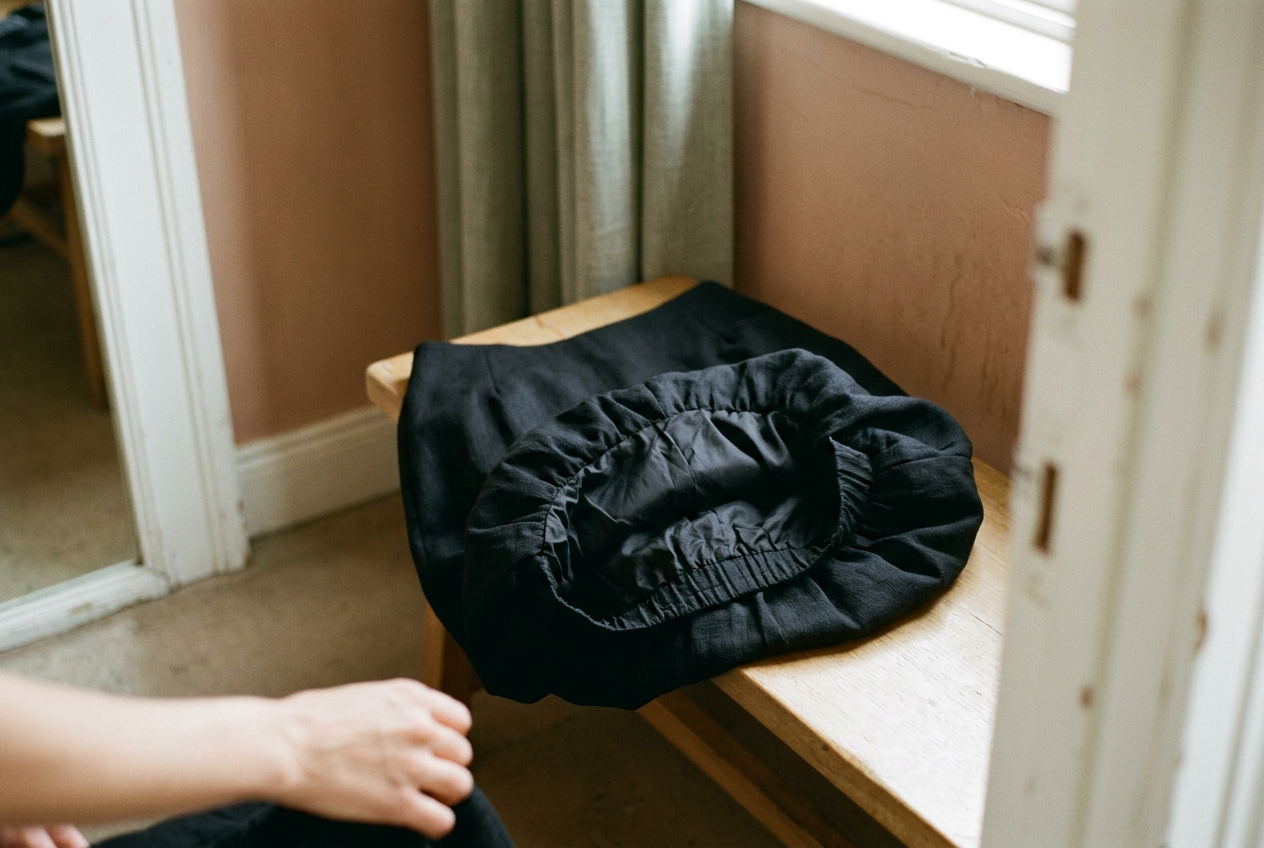
The concrete case for this assessment was a black, knee-length sample with a crisp polyester-taffeta shell, a shorter woven lining and narrow elastic concealed where the two layers met. I wore it with a fitted cotton T-shirt and flat sandals through a week that included walking, desk time and several trips in a car. It looked controlled while standing. After sitting, the front recovered with a quick shake, while the back retained a shallow horizontal crease and slightly less lift.
That small failure was useful. It showed why the silhouette cannot be assessed from the waistband or front view alone, and why two skirts with nearly identical product photographs may wear quite differently. This is women's coverage, and the fit guidance assumes a skirt designed around women's sizing, though the construction principles apply to any bubble-hem garment.
The hem is doing more work than it appears
A bubble skirt needs the outer layer to travel farther than the inner structure. The shell may be cut longer, wider or both, then pulled inward at the bottom so that surplus cloth curves outward before disappearing underneath. Fabric matters, but the method of restraint matters more.
Crisp taffeta, a tightly woven fabric with a dry, structured hand, can hold a rounded outline with relatively little help. Cotton poplin gives a quieter puff and develops sit creases. Satin may form a fluid droop rather than a distinct bubble, particularly when the skirt has a heavy lining, while soft jersey generally needs strong gathering or internal support to stop the shape falling close to the legs.
The black sample combined two common devices: its lining ended well above the shell hem, and elastic gathered the longer shell into that shorter circumference. This made the skirt forgiving in motion because the hem could expand slightly around a stride. The compromise appeared after sitting, when the elastic stretched across the chair and the shell above it compressed between body and seat.
Elastic gives movement, provided it recovers
An elasticated bubble hem usually has a narrow elastic strip sewn into a casing or directly between the shell and lining. Recovery, meaning the elastic's ability to return to its original length after stretching, determines whether the skirt springs back or stays temporarily widened.
Good elastic is not automatically thick. A narrow strip can work well when it feels firm, lies flat and is divided into evenly gathered sections. Trouble starts when the elastic is weak enough to pull several inches with almost no resistance, or when it twists inside a loose casing. The skirt may still look full on the rack because gravity distributes the gathers, but body heat and prolonged tension can leave one section flatter than another.
On the black sample, the elastic returned promptly at the front and sides. The rear section also contracted, although the taffeta above it had already taken a crease. That distinction matters: the mechanism had not failed, but the fabric had recorded the sitting position. A brief shake restored most of the shape; smoothing the back with both hands restored the rest.
This is manageable for an occasional skirt, less appealing for a workday garment worn through long meetings.
Elastic is also the easiest of these constructions to alter or repair. A dressmaker can usually replace accessible elastic, though a fully enclosed hem requires opening and resewing part of the lining. If the shell itself has been cut with little excess volume, stronger replacement elastic will pull it inward but cannot create a fuller bubble.
Fixed tucks hold shape with less forgiveness
Fixed tucks are folds that have been stitched permanently into position, usually at the hem or along an internal band. Instead of gathering continuously around the skirt, they place volume at selected points. The outline tends to look more sculptural because the fabric cannot migrate freely toward the side seams.
This version often survives sitting better when the tucks are deep, securely bar-tacked and supported by a crisp shell. A bar tack is a short, dense row of stitches used to reinforce a stress point. The skirt may crease between tucks, yet its main architecture remains visible when the wearer stands.
There is a fit tradeoff. Fixed tucks do not expand as readily around a wide stride or a close chair, so the skirt needs enough circumference before it is folded. If the hem feels tight around the thighs while walking, sizing up may improve movement without changing the intended waist position, provided the waistband can be altered or sits acceptably lower. Sizing down to sharpen the waist can make the lower structure pull open and turn a rounded hem into a series of strained points.
Look at the tuck stitching from inside. Loose thread ends, very short reinforcement and puckering around each attachment suggest that the stress is concentrated in a small area. More labor goes into clean fixed tucks than into a basic elastic casing, but price alone does not guarantee better work. Some inexpensive skirts use simple, sturdy folds; some more expensive versions spend their budget on shell fabric while leaving the internal attachment surprisingly slight.
A shorter lining makes the softest bubble
The least obvious construction uses a lining cut shorter than the shell, with both layers joined at the hem. The difference in length forces the outer fabric to blouse over the join. There may be gathers at the seam, but no elastic and no visible tucks.
This can produce an elegant, continuous curve because there are no fixed points interrupting the surface. It can also collapse most completely after sitting. The lining takes the body's weight and pulls downward, while the longer shell gets pressed flat above the join; once the wearer stands, nothing actively redistributes that fabric except gravity and movement.
A shorter lining needs enough width through the hips and seat. Turn the skirt inside out if the fitting room allows it, or reach between the layers and feel the lining's side seams. A lining that already pulls horizontally while standing will become the limiting layer when seated, even if the shell appears generous. Small side slits or extra ease in the lining can help, but an extremely short lining may ride upward and leave the bubble hanging from a narrow band around the upper thighs.
Combinations are common. The black sample's shorter lining set the vertical position of the bubble, while elastic controlled its circumference. That pairing gave it more rebound than a lining-only construction without the rigid placement of fixed tucks. It was a reasonable middle ground, though not a perfectly sculptural one.
The rack test takes less than five minutes
Start at the bottom, not the waistband. Put one hand inside the skirt and find where the outer shell ends. If it meets elastic, stretch a small section two or three times and watch whether the gathers return evenly; avoid hauling on the whole hem, which tells you little and can strain the stitching.
Next, compare the lining with the shell. A very short lining creates a larger fold of outer fabric, but it also suspends more weight from the joining seam. Check that seam for skipped stitches, raw edges escaping the overlocking and sections where the shell has been caught unevenly. Overlocking is the looped edge stitching that keeps woven fabric from fraying.
Then compress a handful of the shell for several seconds. This is not a perfect substitute for sitting, but it reveals whether a crisp fabric releases wrinkles or holds every fold. On the black taffeta sample, the crushed section retained fine lines until it was smoothed. A softer poplin may show broader creases, while a synthetic satin may release the pressure mark but lose the rounded outline sooner.
Try the skirt on and sit for at least a minute in the fitting room. Keep both feet on the floor rather than perching at the edge, since the test is meant to load the rear hem and lining. Stand without rearranging the skirt. A good result does not need to look untouched, but the volume should return to roughly the same places rather than collecting at one hip or remaining trapped under the seat.
Finally, take a full stride and use stairs if they are available. The hem should expand or move with the legs without dragging the waistband downward. Listen for stressed stitches and notice whether the lining climbs. A bubble skirt that passes the mirror test but restricts an ordinary step is unlikely to become easier after a week.
Buying the construction, not the photograph
For a defined, fashion-forward outline, fixed tucks in a crisp woven fabric make the strongest case, especially when the skirt is intended for short periods of standing and walking. Elastic suits a more mobile day and is easier to repair, but its quality is hard to infer online. A lining-only bubble gives the softest result and may be the most comfortable, although it asks the wearer to accept some collapse.
I would not pay an investment-level price for hidden elastic without examining its recovery and access points. More money becomes defensible when the skirt has a stable lining, reinforced attachments and enough internal ease to sit comfortably, not merely a dramatic product-page silhouette.
The black sample remained wearable after a week, and its minor rear crease did not become permanent. Still, it needed the same quick shake each time I stood after a long sit. That is the real decision: a sculptural skirt may require either firmer internal construction or a small amount of maintenance during the day.
Questions people ask
How can
I tell whether a bubble skirt will keep its shape?
Check what pulls the hem inward, then sit in the skirt before buying. Firm elastic should recover evenly, fixed tucks should have reinforced stitching, and a short lining should remain loose across the hips and seat rather than showing horizontal strain lines.
Is elastic or a fixed hem better for a bubble skirt?
Elastic is better for walking range and easier repair, but weak elastic can spread out after sitting. Fixed tucks hold a more deliberate outline, though they need enough hem circumference to avoid restricting movement and can place considerable stress on a few stitched points.
Should I size up in a bubble-hem skirt?
Size for comfortable room through the lining, hips and lower hem rather than for maximum puff. Sizing up can help when fixed tucks restrict the stride, but an oversized waistband may let the skirt drop and change where the bubble sits on the leg.
Can a flattened bubble hem be restored during the day?
Often. Stand, free any fabric caught beneath the lining, then shake and smooth the shell downward before letting the hem contract. If the elastic stays stretched or the lining remains twisted, the problem is structural rather than a temporary sitting crease.
One update a day
Today's fashion update, in your inbox
One fashion update each morning — no hype, no filler, just pieces worth wearing.