Your White Sneaker Midsoles May Be Clean and Still Look Yellow
Surface dirt usually comes off. Oxidized foam and discolored adhesive often do not, and forcing the issue can leave a cleaner-looking sole attached to a worse shoe.
August 10, 2026 · 8 min read
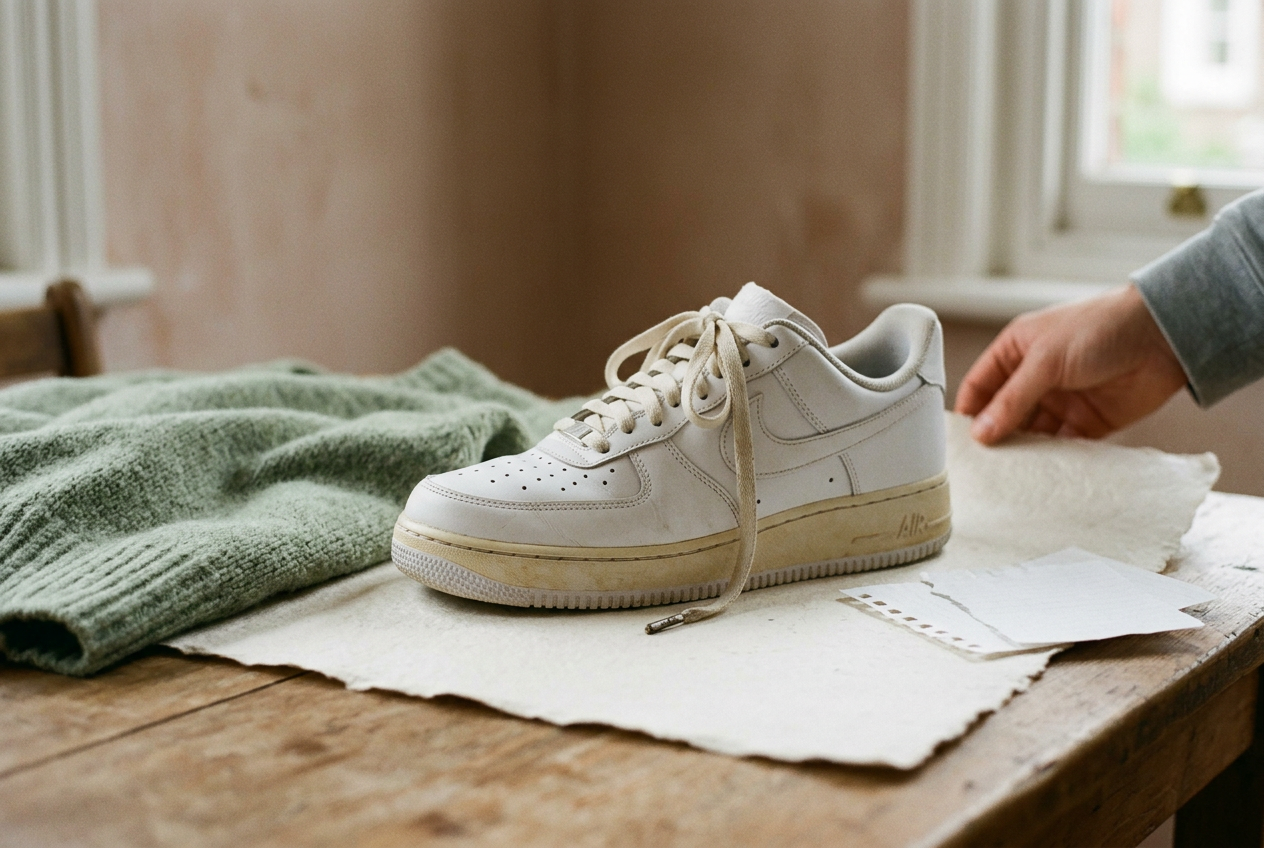
The concrete case for this guide is a white-on-white Nike Air Force 1 ’07: leather upper, foam midsole, rubber outsole and enough stitched, bonded construction to demonstrate why one bottle of sneaker whitener cannot solve every yellow mark. Nike sells variations, so check the material listing for your pair rather than assuming every shoe called an Air Force 1 is identical.
This is unisex care advice. The chemistry does not change with the size label, although a larger shoe offers considerably more white sidewall on which to contemplate your decisions.
First identify what turned yellow
Put the dry shoe beside a clean white sheet of paper in indirect daylight. Indoor bulbs can make cream rubber look yellower, while bright sun hides uneven treatment. Photograph both shoes before cleaning; memory becomes flattering once a brush appears.
Surface dirt usually looks gray, beige or patchy, collects around the forefoot and heel, and transfers to a damp white cloth. On the Air Force 1, the textured rubber edge and recessed lettering trap soil that a flat wipe misses. Dirt should respond to mild soap and light agitation.
Oxidation, meaning a material changes after reacting with oxygen and often light or heat, tends to produce a more even cream or yellow cast within the sole material. EVA, or ethylene-vinyl acetate, is a lightweight cushioning foam used in many sneaker midsoles; polyurethane foam and rubber compounds can also discolor as their polymers and additives age. The Canadian Conservation Institute’s explanations of polymer deterioration describe light, oxygen and heat as common agents of change. Cleaning the surface cannot reverse a change occurring inside the material.
Adhesive discoloration is more localized. Look for an amber line where the upper meets the sole, a yellow patch beneath translucent rubber or a stain that follows a bonded panel instead of the shoe’s contact points. Shoe cement can oxidize or migrate toward an edge, although an outside inspection cannot confirm the exact adhesive. If the mark sits under the seam, scrubbing harder merely abrades the materials above it.
There is one more possibility. Rubber additives can migrate toward the surface and create a haze called bloom, meaning ingredients within the rubber have moved outward. Bloom may wipe away, but it can return because the source remains inside the compound. That is an appearance issue unless the rubber also feels sticky, brittle or cracked.
Use the least dramatic cleaning method first
Nike’s public shoe-care guidance favors hand cleaning with a mild solution, a soft brush and air drying. Adidas publishes similar general advice and warns against relying on a washing machine for routine sneaker care. Model-specific instructions take priority, particularly with suede, nubuck, coated leather or shoes carrying waterproof membranes.
For the leather Air Force 1 case, remove the laces and insoles first. Laces can be washed separately with mild detergent; insoles should not be soaked unless the maker permits it, because wet foam and fabric can hold odor with admirable commitment.
1. Dry-brush the shoe. Use a soft shoe brush or clean, dry toothbrush to lift loose grit from stitching, tread edges and the channel above the outsole. Removing grit matters because wet scrubbing can turn it into an abrasive paste.
2. Make a low-suds solution. Add a few drops of mild liquid soap to a small bowl of lukewarm water. Avoid hot water, which can affect adhesives and finishes, and test the solution on an inconspicuous section of the upper.
“Mild” does not mean dish soap containing bleach, strong degreasers or added whitening agents.
3. Work by material. Wipe smooth leather with a barely damp microfiber cloth. Use the soft brush on rubber sidewalls and textured recesses, keeping the foam-to-upper seam damp rather than saturated.
Mesh needs even less liquid because dirty water can spread through its fibers and leave a tide mark.
4. Remove the residue. Wipe with a second cloth dampened in clean water, then blot. Soap left on a white sole attracts more soil and can create a chalky film that resembles successful whitening until the shoe dries.
5. Air-dry in shade. Stuff the shoe lightly with plain white paper to hold its shape, replacing the paper if it becomes wet. Do not use newspaper, a radiator, hair dryer or prolonged direct sun.
Expect a short cleaning session followed by overnight drying, rather than a five-minute resurrection before leaving for dinner.
Return the Air Force 1 to the sheet of white paper only after it is dry. If gray patches and scuffs have lifted but the entire foam section remains cream, the cleaning worked; the remaining color is probably not removable dirt. That distinction saves the stitching from a second, angrier round.
Treat scuffs without sanding the whole sole
A damp melamine-foam sponge, commonly sold as a magic eraser, can reduce dark transfers on rubber. It works as a fine abrasive, not as a polite little chemical miracle. Test it underneath the sole edge, use very light pressure and confine it to the scuff.
Do not drag melamine foam across leather, printed logos, painted midsoles or exposed foam. Repeated rubbing can dull a leather finish, erase surface texture and leave a smooth bright patch surrounded by older material. A soft white artist’s eraser can sometimes lift a small rubber scuff with more control, although it also needs a patch test.
Baking soda and toothpaste are often proposed as household alternatives. Both can abrade, lodge in stitching and dry into pale residue; toothpaste may also contain whitening compounds or dyes that were designed for enamel, not polyurethane. A purpose-made sneaker cleaner is easier to rinse, but it still cannot scrub oxidation out of the body of a foam.
Aggressive whitening changes the risk
Collector-style “unyellowing” treatments often use hydrogen peroxide gel plus ultraviolet light, sometimes called retrobrighting. Peroxide is an oxidizing bleach, meaning it changes colored molecules through a chemical reaction, while ultraviolet exposure speeds reactions and can alter polymers, dyes and finishes. Results vary because sneaker soles are not one standardized plastic recipe.
This treatment can make an oxidized sole look lighter, but it may produce blotches, attack stitching, dry leather or weaken an already aging material. Gel creeping above the Air Force 1’s sole line can affect the white leather finish, and masking tape is not a laboratory barrier. Repeated cycles add exposure without restoring the polymer to its original condition; the yellowing may return.
Chlorine bleach is the poorer gamble. It can yellow some synthetic materials, weaken textile fibers, corrode metal details and damage leather finishes, especially when used strong or allowed to dry in seams. Never mix bleach with ammonia, acids, vinegar or other cleaners. The fumes are a health hazard, which is a steep price for a whiter Tuesday sneaker.
Commercial sole paints and whitening pens avoid some chemical bleaching, but they cover color rather than remove it. Paint can crack at flex points and change the texture, while pens may leave an opaque stripe that looks acceptable from standing height and peculiar on the subway stairs. Use only a coating intended for that exact substrate, and keep it away from tread where added material could affect grip.
Professional sneaker restorers may offer controlled cleaning, repainting or sole work. Ask whether the proposed service cleans, bleaches or coats the midsole, and request an explanation of how the upper will be protected. For an everyday pair with intact but cream-colored foam, restoration is often harder to justify than accepting the patina and spending the money on eventual replacement.
Know when cleaning is finished
Stop if the sole feels tacky, powdery, unusually hard or brittle. Those are material-condition problems, not dirt. Deep cracks, separation at the upper or compressed cushioning also matter more than color; whitening does not renew grip, rebound or adhesive strength.
The Air Force 1 test ends when a mild wash removes transferred grime and the dry shoe still shows an even warm cast. At that point, further treatment trades construction for cosmetics. Wear the pair with off-white socks or cream trousers if the contrast bothers you, or reserve it for outfits that do not require refrigerator-white footwear. No shoe has ever become more structurally sound through denial.
For a future purchase, inspect how much exposed white foam the design carries. A gum outsole hides ground contact better, a cream midsole makes aging less obvious, and a darker rubber sidewall asks less of the cleaning cupboard. Those alternatives do not stay new forever. They merely age without issuing a color-coded announcement.
Questions people ask
Can yellow sneaker midsoles become white again?
Surface dirt and some transferred stains can come off with mild soap, water and controlled brushing. Oxidation inside foam or rubber may lighten under peroxide treatment, but results are uneven and may not last. Adhesive discoloration beneath a seam usually cannot be cleaned from the outside.
Is a magic eraser safe on white sneakers?
It can be useful on an isolated scuff on plain rubber, provided you test first and apply little pressure. Melamine foam is abrasive, so keep it off leather finishes, mesh, printed branding, painted midsoles and exposed cushioning foam. Stop once the mark fades rather than polishing the surrounding area.
Can
I put white sneakers in the washing machine?
Follow the model’s care instructions, but hand cleaning is the safer default for mixed-material sneakers. A machine saturates foam, repeatedly flexes bonded seams and can mark leather or suede; a dryer adds heat that may affect adhesives. Remove and wash laces separately instead.
Does sunlight remove yellowing from sneaker soles?
Sunlight can help peroxide-based treatments react, but ultraviolet exposure also contributes to polymer, dye and finish degradation. Leaving shoes in direct sun is therefore not a low-risk whitening method. Dry freshly cleaned sneakers in moving air and shade, then judge the color after all moisture has evaporated.
One update a day
Today's fashion update, in your inbox
One fashion update each morning — no hype, no filler, just pieces worth wearing.