Tomato Red Is Fading. Its Replacements Are Pickier.
Oxblood, cherry and cooler reds are moving into women’s assortments. Before buying, test them against the denim, neutrals and hardware already in your closet.
Women's · September 12, 2026 · 8 min read
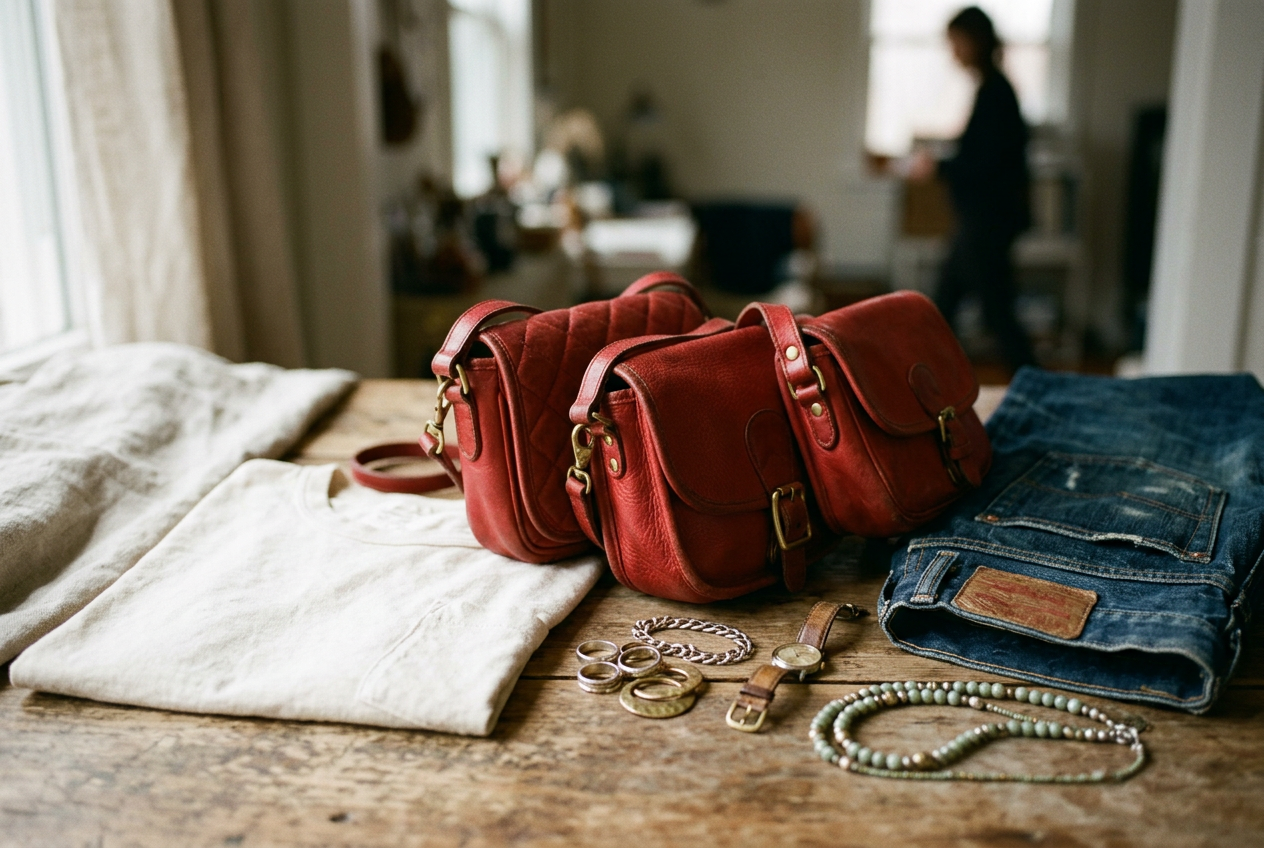
The useful object here is a small tomato-red shoulder bag in grained leather, roughly the size of a paperback, with warm brass hardware. Against a washed indigo denim jacket and an ecru T-shirt, it earns its place quickly: the orange undertone, meaning the subtle color beneath the visible red, connects with the cream and brass while standing apart from the blue.
Replace that bag with one in oxblood and the same outfit changes. The leather looks richer, but the ecru can turn yellow beside it and the faded denim may look weak. A glossy cherry bag makes the blue cleaner and the white brighter, although its sharper color competes with brass hardware. These are close reds on a product page.
They are not interchangeable in a closet.
This is women’s coverage, centered on the bags, shoes, knitwear and dresses now carrying the shift, though the comparison method also works for menswear. The point is less about finding a universally flattering red than identifying which red cooperates with clothes already doing regular service.
The red trend has moved darker and cooler
Tomato red, an orange-leaning red with the directness of a primary color, has spent several seasons translating easily from runway clothes into summer retail. It photographs clearly, survives inexpensive cotton and synthetic fabrics, and works with the light-wash denim, raffia and warm off-whites that arrive every spring. Its ease helped it move beyond statement dresses into tanks, ballet flats and compact bags.
The next phase is less tidy. Gucci’s Rosso Ancora, introduced during Sabato De Sarno’s tenure, established a deep burgundy red as a house-level color rather than an occasional accent. Runway reporting from Vogue, WWD and other fashion publications subsequently tracked burgundy, wine and oxblood across fall collections, while recent women’s assortments at retailers including Zara, Mango, COS, J.Crew and Massimo Dutti have used those names for leather goods, tailoring, knitwear and satin pieces.
Retail terminology blurs real differences. Oxblood is a very dark red with brown or purple depth, often used for leather. Cherry usually describes a clearer, juicier red that can run bright or dark. A blue-red contains a cool undertone, closer to raspberry or crimson than tomato, and may look vivid without appearing orange.
“Burgundy” gets applied across much of this territory, including products that look brown in suede, purple in knitwear or nearly black in smooth leather.
That inconsistency matters online. A dark red ribbed sweater absorbs light between the ribs, while satin reflects a pale streak that can make the same dye look cooler. Patent-effect shoes intensify red through shine. Suede scatters light across its nap, meaning the raised surface fibers, so oxblood can read as brown from one angle and plum from another.
The color name alone cannot settle the purchase.
Use denim as the first test
Start with the denim worn most often, rather than the pair that seems most fashionable. Lay the tomato-red shoulder bag beside it in indirect daylight, then place the proposed replacement in the same position or compare a full-screen retailer image with the brightness lowered. This does not produce perfect color accuracy, but it exposes the relationship that matters.
Faded light-blue denim tends to favor clear cherry and cooler blue-red. Their blue content repeats the cast of the wash, and the contrast remains crisp enough for a small bag or shoe to register. Oxblood can work, especially in polished leather, yet a very brown version may make pale denim look chalky. That is not necessarily a failure.
It produces a more autumnal outfit, even when the garment itself is a summer-weight jean.
Dark indigo gives oxblood more support. The two colors share visual weight, so a burgundy loafer or structured bag does not appear to sink below the trouser hem, and the combination accommodates black or dark brown outerwear later in the year. Cherry against indigo is livelier. It also becomes the first thing visible, which can be useful for a belt or flat but demanding in a full dress.
Mid-blue denim is the difficult middle. Tomato red usually separates cleanly from it, while purple oxblood can look muddy and blue-red can sit close enough to vibrate at the edge. If mid-wash jeans dominate the wardrobe, take them into the fitting room or wear them while opening a delivery. Ten minutes of comparison is worth more than another set of saved runway images.
The original tomato-red bag passes both the faded and mid-blue tests because its warm undertone provides separation. Its replacement should not be judged by whether it looks more current on its own. It has to improve, or at least preserve, the outfits the first bag already handled.
Neutrals reveal the undertone
The second comparison uses the neutral nearest the face or largest in the outfit: a coat, blazer, dress or everyday T-shirt. Optic white, which is a stark white without a creamy cast, makes cherry and blue-red look deliberate. It can make oxblood appear heavy unless the red has enough gloss or exposed skin breaks up the combination.
Ecru and oatmeal are kinder to tomato red because both contain warmth. Oxblood works when its brown content echoes those neutrals, but a purple burgundy may make them look dingy. Hold the colors together without adding denim or jewelry. If the neutral suddenly seems stained or yellowed, the red is asking for a different base.
Gray clarifies cooler reds. Heather gray softens cherry, and charcoal gives blue-red enough depth for office clothes without requiring black. Camel is more selective: brown oxblood often settles into it, while a high-chroma cherry, meaning a particularly intense and pure version of the color, can look detached. Neither result is objectively wrong.
One creates continuity; the other creates an accent.
Black accepts all four red families, which makes it a poor first test and a useful final one. A wardrobe built mostly on black can absorb the shift with little trouble, although surface finish becomes more important. Matte burgundy knitwear may disappear beside black wool, while patent cherry or smooth oxblood leather keeps a visible edge.
Existing accessories make the decision
Hardware is the quickest warning. The brass clasp on the tomato-red shoulder bag reinforces its warmth, just as tortoiseshell sunglasses and cognac sandals would. Move to a cool cherry bag with bright silver hardware and those accessories may begin to look inherited from another outfit. Mixing metals is ordinary; mixing color temperatures becomes noticeable when every item is small, glossy and close together.
Set the candidate red beside the bag and shoes used most during the relevant season. A cool blue-red flat can sit easily with black leather, silver jewelry and gray lenses. Brown oxblood is more cooperative with chocolate belts, antique gold and dark tortoiseshell. Cherry occupies the middle, though patent cherry demands more attention than cherry canvas or washed cotton because shine increases both contrast and visual weight.
This is where replacing tomato red can become needlessly expensive. A dress or lightweight knit in the new color may require no supporting purchase because it occupies enough space to set its own terms. A small bag often does: its success depends on straps, footwear, metal finishes and the colors touching it. Buying the supposedly versatile accessory first can lead to a second purchase made only to explain the first.
For summer, the lowest-risk experiment is a washable cotton top, scarf or simple resin accessory rather than a leather bag or tailored coat. Oxblood is the stronger investment candidate when the wardrobe already contains dark indigo, camel and brown leather. Cherry earns its place with pale denim, clean white and black. Cooler blue-red suits gray, silver and optic white, but it is the most likely to quarrel with cream, raffia and cognac.
The purchase test takes one outfit
Build the outfit that the tomato-red shoulder bag handles best: washed indigo denim, an ecru top and the shoes normally worn with both. Photograph it in daylight. Substitute the candidate color without changing anything else, then compare whether the denim looks cleaner or flatter, whether the neutral shifts yellow, and whether the shoe leather or metal hardware suddenly seems unrelated.
Keep the new red if it improves that outfit and works with one darker base already owned. Return it if it needs a different white, different denim and different hardware before it looks convincing. That is too much renovation for a color update, particularly while retailers are still using burgundy, cherry, wine and dark red as overlapping labels.
The movement away from tomato red looks established enough to notice and unsettled enough to avoid a large commitment. Oxblood has the longest seasonal reach, but it can become brown indoors. Cherry carries into summer more easily, though glossy versions have a shorter visual shelf life. Cool blue-red feels freshest against gray and light denim, and remains the hardest match for a wardrobe built around warm cream and tan.
The tomato-red bag does not need replacing merely because the runway palette has deepened. If its brass hardware, orange undertone and grained leather still connect the clothes around it, the more current choice may also be the less useful one.
Questions people ask
Is oxblood the same as burgundy?
Not consistently. Oxblood usually describes a very dark, brown-leaning red, especially in leather, while burgundy may lean brown, purple or wine-colored depending on the retailer. Check the product in daylight and against dark indigo denim rather than relying on the shade name.
Which red works best with light-wash jeans?
Clear cherry and cooler blue-red usually give light denim a cleaner contrast. Oxblood can work when the material has some polish, but a muted or brown version may make the wash look pale and dusty. Test the red with the shoes you intend to wear, since tan leather can change the balance.
Can I wear oxblood in summer?
Yes, though material and exposed skin matter. Oxblood in cotton poplin, a fine knit or a small smooth-leather accessory feels lighter than the same shade in suede or heavy wool. Pair it with white or dark indigo if cream makes the red appear too brown.
Should I replace a tomato-red accessory now?
Only if the new shade works with an outfit the old accessory already serves. Tomato red remains easier with ecru, warm metal and faded denim, so replacing it with a cooler red may create extra shopping. Compare both against one complete outfit and keep the option requiring fewer substitutions.
One update a day
Today's fashion update, in your inbox
One fashion update each morning — no hype, no filler, just pieces worth wearing.